Introduction/Overview
Dihydrocoumarin (CAS number: 119-84-6), as an important natural benzodihydropyranone compound, has long held a place in the spice industry and food additive fields. However, with the deepening of modern pharmacological research, its biological activity beyond aromatic characteristics has gradually been revealed, transforming it from a simple flavor substance into a pharmacological active molecule with potential therapeutic value. This compound naturally exists in the leguminous plant Osmanthus fragrans(Melilotus officinalis)In plants, its structure can be regarded as a reduced form of the classical coumarin skeleton. In recent years, research has focused on its activity as an inhibitor of the histone deacetylase Sirtuins family (especially SIRT1 and SIRT2), providing clues for the development of new strategies for age-related diseases, metabolic disorders, and cancer. It is worth noting that based on the cross analysis of its traditional applications from plant sources and modern pharmacological research, dihydrocoumarin exhibits multi-target potential in regulating the coagulation and fibrinolysis systems, suggesting its unique application value in the field of anticoagulant therapy. This article aims to systematically review the chemical properties, plant sources, pharmacological activities, molecular mechanisms of action, pharmacological parameters, and clinical application prospects of dihydrocoumarin, in order to provide comprehensive academic references for the in-depth development and transformation research of this natural product.
Chemical structure and physicochemical properties
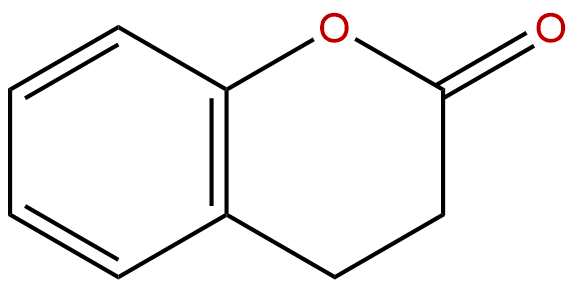
The chemical name of dihydrocoumarin is 3,4-dihydro-2H-1-benzopyran-2-one, with a molecular formula of C9H8O2 and a molecular weight of 148.1610 g/mol. The core of its structure is the combination of a benzene ring and a partially saturated hexagonal lactone ring (dihydropyranone ring). Compared to its oxidized precursor coumarin, the C3-C4 double bond of its pyran ring is reduced to a single bond. This structural difference significantly affects its physicochemical properties and biological activity.
In terms of physicochemical properties, dihydrocoumarin is a colorless to pale yellow liquid or low melting point solid with a pleasant coumarin like sweet aroma. Its lipid water partition coefficient (LogP) is 1.8751, indicating that the compound has a certain lipophilicity, but is not highly hydrophobic, which is beneficial for its penetration of cell membranes. The topologically polar surface area (TPSA) is relatively low, at 26.30 Å ², further supporting its excellent membrane permeability. The water solubility data is 0.6658 mg/mL, which belongs to the range of slightly soluble to poorly soluble, and this is a factor that needs to be considered in its formulation development. It is worth noting that its pharmacological prediction parameters show that it has a high blood-brain barrier permeability, suggesting that it may act on central nervous system targets. In addition, preliminary toxicity predictions indicate that the risk of hERG inhibition is' no ', and the Ames test result is 0.0 (indicating no mutagenic signal), providing preliminary support for its relatively good safety profile.
Plant sources and extraction methods
Dihydrocoumarin is mainly found in leguminous plants of the Osmanthus genus in nature, among which Huangxiangcao Osmanthus is one of them(Melilotus officinalis)The most famous. In this plant, dihydrocoumarin is not present in large quantities in free form, but rather its precursor - o-hydroxycinnamic acid glucoside - is formed through endogenous β - glucosidase hydrolysis and further lactonization during plant tissue damage, drying, or fermentation processes. This process also explains why the content of coumarin compounds in dried Osmanthus fragrans increases after mold growth and may cause toxicity to livestock.
Organic solvent extraction is commonly used to extract dihydrocoumarin from plant materials. Dried and crushed Osmanthus fragrans plant materials can be subjected to Soxhlet extraction or impregnation extraction using polar solvents such as methanol, ethanol, or acetone. After vacuum concentration, the crude extract can be preliminarily separated using silica gel column chromatography, and coumarin compounds can be effectively separated using gradient elution systems such as petroleum ether ethyl acetate or chloroform methanol. Further purification can be achieved by preparative high-performance liquid chromatography (HPLC) using a C18 reverse phase chromatography column with methanol water or acetonitrile water as the mobile phase. In addition, steam distillation can also be used to directly obtain volatile components from plant materials, including dihydrocoumarin. Modern extraction techniques such as supercritical CO2 fluid extraction are also suitable for the extraction of such thermosensitive aromatic compounds due to their advantages of low operating temperature, low solvent residue, and adjustable selectivity, which can obtain higher purity products.
Pharmacological activity research
The pharmacological activity research of dihydrocoumarin has expanded from early antibacterial and antioxidant studies to more complex cellular signal regulation fields, and its multifaceted biological effects are gradually becoming clear.
-
Sirtuins inhibit activity This is currently the most concerned pharmacological activity of dihydrocoumarin. Sirtuins are a class of NAD+- dependent class III histone deacetylases closely associated with lifespan regulation, metabolic stability, stress response, and tumorigenesis. Research has shown that dihydrocoumarin is an effective inhibitor of yeast Sir2p and can dose dependently inhibit human homologous proteins SIRT1 and SIRT2, with half maximal inhibitory concentrations (IC50) of 208 μ M and 295 μ M, respectively. By inhibiting SIRT1/2, dihydrocoumarin can affect the acetylation status of downstream key transcription factors such as p53, FOXO, PGC-1 α, and regulate processes such as apoptosis, metabolism, and autophagy. This provides a theoretical basis for its application in cancer treatment (such as inducing cancer cell death by deacetylating pro apoptotic proteins) and metabolic disease intervention.
-
Anticoagulant and Antithrombotic Activities Although there are relatively few studies directly targeting the anticoagulant properties of dihydrocoumarin compared to classical coumarins such as warfarin, its structural similarity and traditional use from plant sources (such as the use of Osmanthus altissima for anti edema) suggest that it may affect the coagulation system. Pharmacological network analysis suggests that its effects may be related to multiple coagulation/fibrinolysis system targets, including inhibiting tissue factor (F3) expression, affecting the activity or production of prothrombin (F2) and coagulation factors VII, IX, X (F7, F9, F10), interfering with the function of vitamin K epoxide reductase complex subunit 1 (VKORC1) (similar to warfarin action), regulating plasminogen activator inhibitor-1 (SERPINE1) levels to promote fibrinolysis, and affecting the vascular hemophilia factor (VWF) and anticoagulant protein C/protein S (PROC, PROS1) system. This multi-target characteristic may bring unique effects and safety features that are different from traditional single target anticoagulants, and is worthy of experimental verification.
-
Other biological activities Early studies have also shown that dihydrocoumarin has certain antibacterial and antifungal activities. Its antioxidant properties help to eliminate free radicals and alleviate oxidative stress damage. In addition, there are reports that it may affect the cell cycle progression and induce differentiation of certain cancer cells.
Mechanism of action and molecular targets
The research on the mechanism of action of dihydrocoumarin mainly focuses on its use as a Sirtuins inhibitor, and presents a multi-target regulatory network in anticoagulation.
-
Sirtuins inhibition mechanism Dihydrocoumarin binds competitively or conformationally to the catalytic domains of SIRT1 and SIRT2, interfering with their binding to substrate peptides or cofactor NAD+, thereby inhibiting their deacetylase activity. Inhibition of SIRT1 leads to an increase in acetylation levels of transcription factors such as p53 and NF - κ B. The former may promote cell cycle arrest and apoptosis, while the latter regulates inflammatory responses. SIRT2 inhibition mainly affects cell mitosis, microtubule dynamics, and metabolic pathways. These functions collectively constitute the molecular basis of dihydrocoumarin in the fields of anti-tumor, metabolic regulation, and neuroprotection.
-
Anticoagulant related target regulatory network The mechanism of its anticoagulant potential may involve a complex target group:
- Vitamin K cycle interference Perhaps by affecting VKORC1, it interferes with the gamma carboxylation process of coagulation factors II, VII, IX, X, as well as anticoagulant proteins C and S, causing them to lose their activity, similar to the classical mechanism of coumarin anticoagulants.
- Expression and activity regulation of coagulation factors Possible downregulation of tissue factor (F3) expression, which is a promoter of the exogenous coagulation pathway; It may also directly or indirectly inhibit the activity of key proteases such as coagulation factors Xa and IXa.
- Enhancement of fibrinolytic system By reducing the level of plasminogen activator inhibitor-1 (SERPINE1), the inhibition of tissue type plasminogen activator is relieved, thereby enhancing fibrinolysis ability.
- Regulation of vascular endothelial function May affect the secretion or function of von Willebrand factor (VWF), thereby interfering with platelet adhesion; At the same time, it may regulate the thrombomodulin protein C system (PROC, PROS1) on the surface of endothelial cells, enhancing the natural anticoagulant pathway.
This potential intervention in multiple stages of coagulation cascade (initiation, amplification, fibrin formation, and dissolution) suggests that dihydrocoumarin may have a broad-spectrum and balanced anticoagulant effect.
Evaluation of drug properties and pharmacokinetics
Based on the provided pharmacological parameters and existing literature, a preliminary evaluation of the pharmacological properties of dihydrocoumarin is conducted
- Absorption and distribution Moderate LogP values and low TPSA indicate good oral bioavailability potential, which can be effectively absorbed by the intestine through passive diffusion. Its high predictive value for blood-brain barrier permeability means that it can enter the central nervous system, which may be advantageous for targeting SIRT2 in the brain or treating central related diseases, but potential central nervous system side effects should also be considered.
- Metabolism and excretion As a derivative of coumarin, the metabolism of dihydrocoumarin in vivo may mainly be catalyzed by the liver cytochrome P450 enzyme system (such as CYP2A6) for oxidation, or it may undergo hydrolysis and ring opening. Specific experimental data is needed to clarify its metabolites and excretion pathways (kidney or bile). The interaction with classical coumarins, such as mutual inhibition or induction with CYP enzymes, deserves further investigation in development.
- Preliminary Safety Assessment Predicting the risk of hERG inhibition is a positive signal that reduces the risk of causing QT interval prolongation and apical torsion ventricular tachycardia in the heart. The negative prediction of Ames test indicates a low risk of genetic toxicity. However, it must be pointed out that these predictions are based on calculations and require comprehensive validation through actual in vitro and in vivo toxicology experiments (such as acute toxicity, subchronic toxicity, reproductive toxicity, etc.). In history, high-dose coumarin has been associated with hepatotoxicity and bleeding risks. As an analog, the long-term safety of dihydrocoumarin needs to be rigorously evaluated.
- Pharmaceutical considerations Its slight solubility in water may affect the development of injectable formulations, but it is suitable for making oral solid preparations (such as tablets, capsules) or improving bioavailability through solubilization techniques (such as cyclodextrin inclusion, nano formulations).
The complete pharmacokinetic characteristics, including absolute bioavailability, plasma protein binding rate, distribution volume, half-life, and clearance rate, need to be obtained in appropriate animal models and subsequent clinical studies.
Clinical application prospects and prospects
The diverse pharmacological activities of dihydrocoumarin bring potential application prospects in multiple therapeutic fields, but also face challenges.
-
Potential application directions:
- Antithrombotic therapy field Given its potential regulatory effect on multiple targets of the coagulation system, dihydrocoumarin may be developed as a novel multi-target anticoagulant/antithrombotic drug. Compared with existing single target drugs such as Xa factor inhibitors and direct thrombin inhibitors, its multi link intervention may provide a more balanced hemostatic and anticoagulant effect, or be suitable for complex thrombotic diseases that do not respond well to existing drugs. Further research is needed on its dose-response relationship, bleeding risk, and differences from other anticoagulants.
- tumor therapy As a SIRT1/2 inhibitor, dihydrocoumarin can be used in combination with other chemotherapy drugs or targeted drugs to induce cancer cell apoptosis, inhibit proliferation and invasion, and exert synergistic anti-tumor effects. Especially for cancer types with SIRT overexpression.
- Metabolic diseases and neurodegenerative diseases SIRT1 plays a key role in glucose and lipid metabolism, and its inhibitor may provide new ideas for diabetes, nonalcoholic fatty liver, etc. SIRT2 is associated with alpha synuclein aggregation, and inhibition of SIRT2 is considered a potential strategy for Parkinson's disease. The brain entry ability of dihydrocoumarin makes it valuable in this field.
- As a lead compound for structural optimization Its relatively simple structure provides convenience for chemical modification. By structural modification, such as introducing specific functional groups, the selectivity towards specific Sirtuin subtypes, enhancing anticoagulant activity, or improving pharmacokinetic properties can be further improved, leading to the development of more clinically advantageous derivatives.
-
Challenges and Prospects:
- Activity intensity and selectivity The reported IC50 values for inhibiting SIRT1/2 are at the micromolar level, and the activity needs to be improved. Its selectivity towards SIRT1 and SIRT2 is limited, and in the future, it is necessary to develop inhibitors with higher subtype selectivity through rational drug design guided by structural biology.
- In depth elucidation of the mechanism of action and safety Especially its multi-target anticoagulant mechanism requires detailed in vitro biochemical experiments and in vivo disease model validation. The risk of bleeding, interactions with other drugs, and long-term toxicity must be rigorously evaluated.
- Formulation development To solve its water solubility problem and develop stable formulations suitable for different routes of administration.
- Clinical translational research The successful transition from preclinical research to clinical trials requires significant resource investment and rigorous experimental design to confirm its effectiveness and safety.
Conclusion
Dihydrocoumarin, a natural molecule derived from Osmanthus fragrans, has evolved from a traditional spice ingredient to a potential drug lead compound with rich pharmacological activity and clear molecular targets. Its core activity as a Sirtuins inhibitor and potential association with multiple key targets in the coagulation system reveal its potential applications in multiple disease fields such as anti-tumor, antithrombotic, and metabolic regulation. Although it still faces challenges in terms of activity intensity, selectivity, and complete pharmacological evaluation, its multi-target action characteristics provide a unique approach for developing new therapeutic drugs. Future research should focus on enhancing its efficacy and selectivity through structural optimization, using systems pharmacology and experimental methods to deeply elucidate its complex network of action, and conducting systematic preclinical safety and pharmacological evaluations. With the continuous deepening of research, dihydrocoumarin and its derivatives are expected to take a solid step on the road of transforming natural products into modern drugs, providing new candidate strategies for the treatment of related diseases.