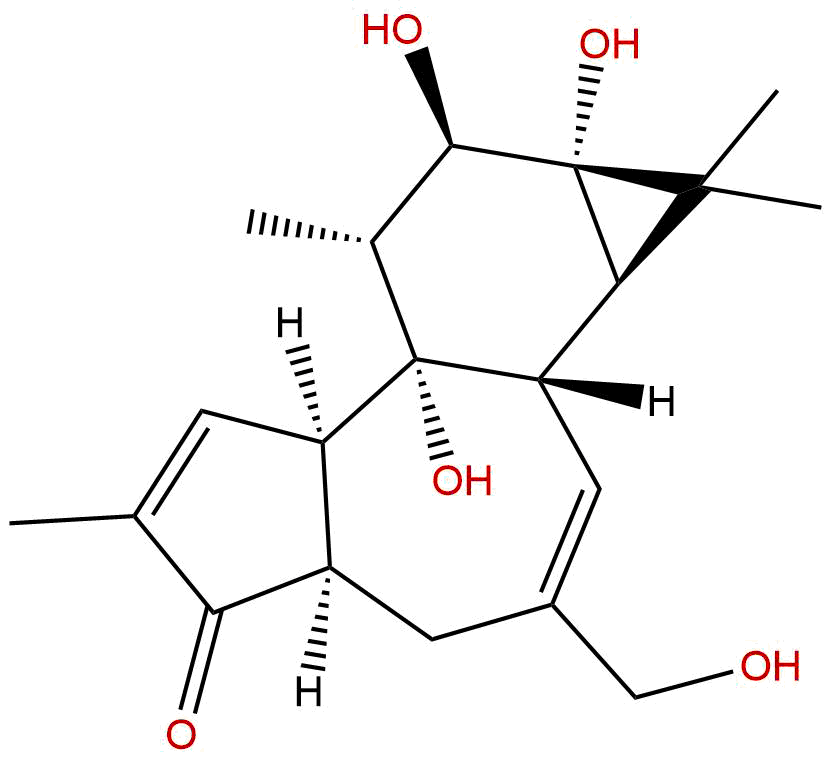


Product name: 4-Deoxy-4α-phorbol
Synonym name:
Catalogue No.: BP2243
Cas No.: 37415-57-9
Formula: C20H28O5
Mol Weight: 348.439
Botanical Source:
Type of Compound: Diterpenoids
Purity: 95%~99%
Analysis Method: HPLC-DAD or/and HPLC-ELSD
Identification Method: Mass, NMR
Packing: Brown vial or HDPE plastic bottle
Storage: Store in a well closed container, protected from air and light. Put into refrigerate or freeze for long term storage.
Whenever possible, you should prepare and use solutions on the same day. However, if you need to make up stock solutions in advance, we recommend that you store the solution as aliquots in tightly sealed vials at -20℃. Generally, these will be useable for up to two weeks.
The product could be supplied from milligrams to grams
Inquire for bulk scale.
For Reference Standard and R&D, Not for Human Use Directly.
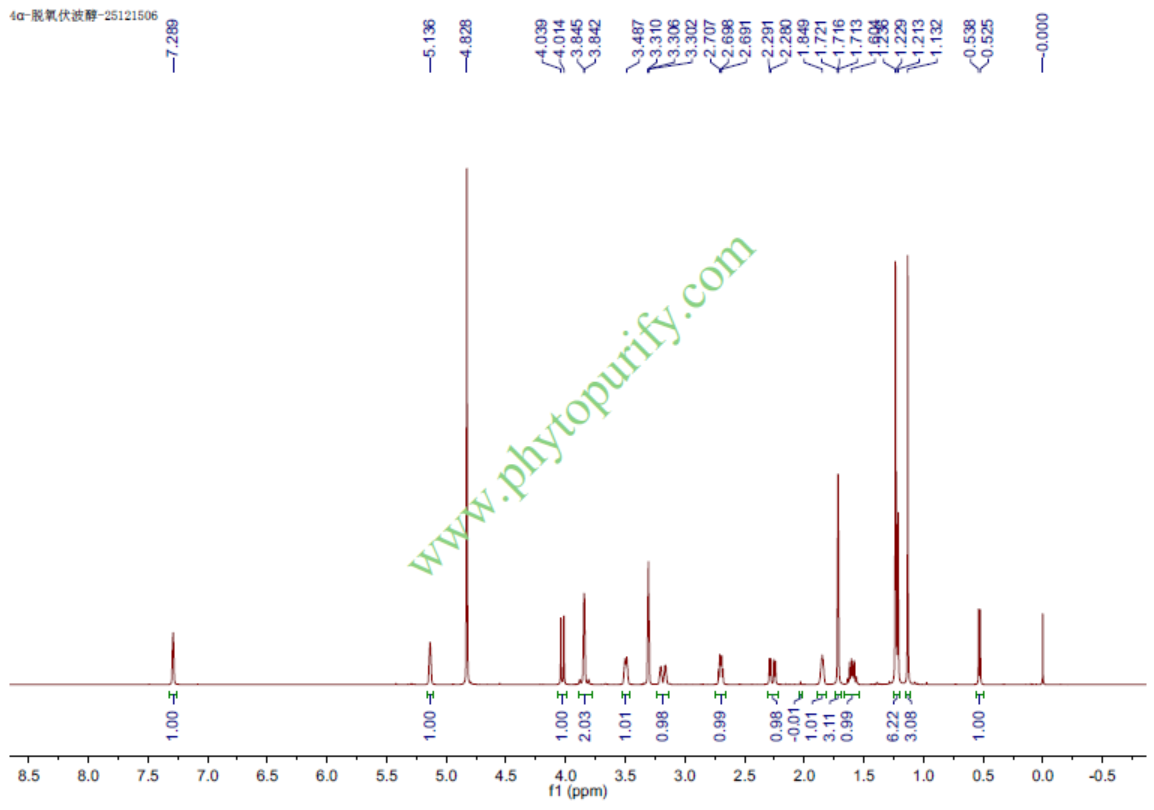
HNMR of 4-Deoxy-4α-phorbol
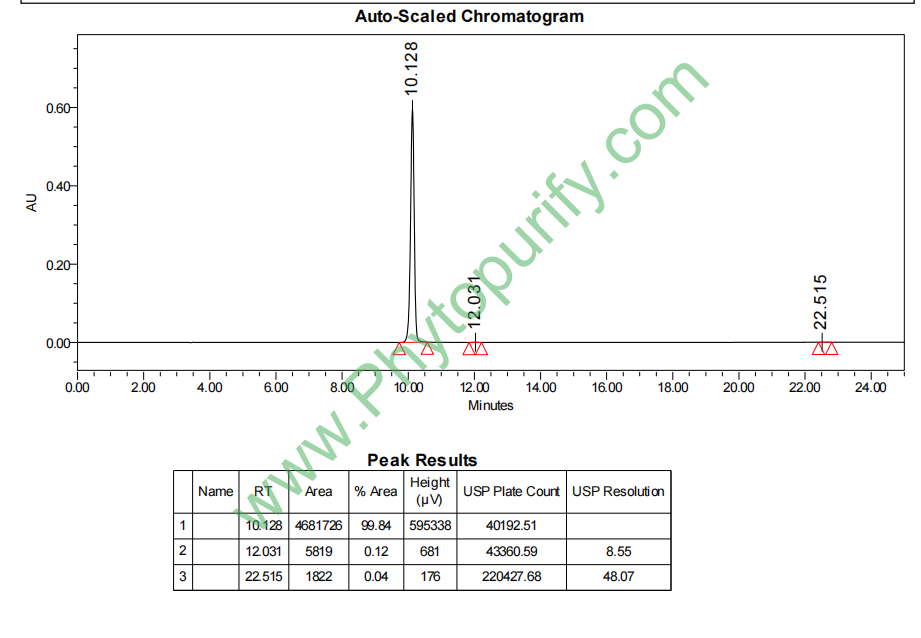
HPLC of 4-Deoxy-4α-phorbol
Storage conditions:Short-term storage at 2~8℃, long-term storage at -20 ~ -80℃
97.9900
1.1279
1.1279
.9331
1.8986
19.9357
Low
41.9876
5.2533
No
No
No
No
No
No
0.0
Yes
Yes
Yes
Yes
Natural products, as an important source of drug discovery, play an irreplaceable role in the long history of human struggle against diseases. From the classic analgesic morphine to the antimalarial drug artemisinin, from the lipid-lowering drug lovastatin to the anticancer drug paclitaxel, the diverse secondary metabolites in nature provide a continuous source of lead compounds for modern drug development. Among the diverse natural product families, terpenoid compounds from Euphorbiaceae and Thymelaeaceae plants, such as Phorbol esters and their derivatives, have long been a research hotspot in the fields of chemical biology and medicinal chemistry due to their unique chemical structure and significant biological activity.
The most well-known property of phorbol ester compounds is that they act as potent activators of protein kinase C (PKC), mimicking the function of endogenous second messenger diacylglycerol (DAG), thereby regulating various key physiological processes such as cell proliferation, differentiation, apoptosis, and inflammatory response. However, it is precisely this potent PKC activation ability that has led many phorbol ester compounds (such as the classic 12-O-tetradecanoyl-phorbol-13-acetate, TPA) to exhibit strong pro-inflammatory and tumor promoting effects, greatly limiting their direct medicinal value. Therefore, the search and development of phorbol ester derivatives that retain beneficial pharmacological activities (such as anti-inflammatory and immune regulation) but eliminate the risk of promoting cancer has become an important direction of research in this field.
4-Deoxy-4 α - phorbol (CAS number: 37415-57-9) is an important natural product that stands out in this context. As a deoxygenated derivative of phorbol alcohol, its most prominent structural feature is the hydrogen atom with an alpha configuration at the C-4 position, rather than the hydroxyl group commonly found in phorbol alcohol's parent nucleus. This seemingly minor structural change has resulted in a significant difference in its biological activity. Unlike classical phorbol esters such as TPA, 4 α - deoxyvopol and its derivatives typically do not exhibit or only exhibit extremely weak PKC activation ability, thereby avoiding tumor promoting activity. However, surprisingly, these compounds have shown great potential in anti-inflammatory and immune regulation, especially in the treatment of autoimmune diseases such as psoriasis.
In recent years, with the continuous deepening of understanding of the pathogenesis of psoriasis and the continuous development of natural product chemistry and pharmacology research, 4 α - deoxyvopol and its related compounds (such as the diterpenoid type compounds isolated from Euphorbia plants) have received increasing attention. Research has shown that these compounds can exert multi pathway and multi-target therapeutic effects by regulating multiple signaling pathways and targets closely related to the pathological process of psoriasis, such as AMPK, STAT3, RARs, RORC, TRPV1, etc. Its unique pharmacological characteristics, combined with the good physicochemical properties and safety demonstrated by preliminary pharmacological evaluation, make it a highly promising lead compound for the development of new anti psoriasis drugs. This article will provide a systematic review of 4 α - deoxyvopol from the aspects of chemical structure, plant origin, pharmacological activity, mechanism of action, pharmacological evaluation, and clinical application prospects, aiming to provide reference for in-depth research in this field.
4 α - Deoxyvopol belongs to the typical Tiglian type diterpenes, with a core skeleton of a 5/7/6/3 tetracyclic structure. The skeleton consists of four rings: A, B, C, and D: ring A is a seven membered ring, ring B is a five membered ring, ring C is a six membered ring, and ring D is a three membered ring. This highly oxidized four ring skeleton endows Phobos alcohol compounds with complex stereochemistry and rich chemical reactivity.
The chemical name of 4 α - deoxyvopol is (1aR, 1bS, 4aS, 7aS, 8R, 9R, 9aS) -1a, 1b, 4,4a, 7a, 7b, 8,9,9a-decahydroxy-4a, 7b-dihydro-1,1,6,8-tetramethyl-5H-cyclopropa [3,4] benzo [1,2-e] azulen-5-one, with a molecular formula of C ₂ ₀ H ₂ ₈ O ₅ and a molecular weight of 348.4390 g/mol. The key feature of its structure lies in its difference from Phorbol: in Phorbol, the C-4 position (located on the A ring) is a β - configured hydroxyl group, while in 4 α - deoxy Phorbol, the hydroxyl group at this position is replaced by a hydrogen atom, which is in the α - configuration. This structural modification directly affects the polarity and spatial conformation of the molecule, thereby determining its interaction mode with biological targets, especially PKC. In addition, the molecule also contains multiple hydroxyl groups (such as C-9 and C-20 hydroxyl groups) and a carbonyl group (C-3 position), which are key sites for its glycosylation, esterification, and other derivatization reactions, and are also important foundations for its biological activity.
In terms of physicochemical properties, 4 α - deoxyvopol exhibits moderate lipophilicity. The calculated oil-water partition coefficient (LogP) is 1.1279, indicating that it has certain partition ability in both aqueous and lipid phases, which is beneficial for its absorption and transmembrane transport in organisms. Its topological polar surface area (TPSA) is 97.9900 Å ², which reflects the sum of polar atoms (such as oxygen atoms) and polar groups (such as hydroxyl groups) in the molecule. Generally, oral medications with TPSA values between 60-140 Å ² have good intestinal absorption capacity, therefore the TPSA value of 4 α - deoxyvopol suggests its potential as an oral medication. Its water solubility (LogS) is 0.9331, indicating moderate solubility in water. In addition, the predictive model shows that the compound is not easily able to cross the blood-brain barrier (BBB), indicating a lower risk of central nervous system side effects. In terms of safety prediction, the compound has a low risk of inhibiting hERG potassium ion channels, and the Ames test result is negative (0.0), indicating a low risk of mutagenicity. These preliminary pharmacological parameters provide positive signals for the further development of 4 α - deoxyvopol.
4 α - deoxynivalenol and its structural analogues are mainly found in Euphorbiaceae and Thymelaeaceae plants. The Euphorbiaceae family is a vast genus of plants, comprising approximately 300 genera and over 8000 species, widely distributed in tropical and subtropical regions worldwide. Among them, Euphorbia is one of the largest genera, and many species are used in folk medicine to treat diseases such as skin diseases, inflammation, tumors, and infections. For example, Euphorbia kansui, Euphorbia lathyris, Euphorbia ebracteolata, and other famous medicinal plants are also the main sources of phorbol esters. Some species of plants in the Rosaceae family, such as Daphne and Wikstroemia, are also rich in these active diterpenes.
The extraction of 4 α - deoxyvopol from these plants usually follows the classic process of natural product chemistry. Firstly, the dried plant material (usually roots, stems, or whole plants) is crushed and then extracted using organic solvents. Due to the lipophilicity of phorbol esters, commonly used extraction solvents include methanol, ethanol, ethyl acetate, or their mixed solvents. In order to improve extraction efficiency, methods such as cold soaking, percolation, or ultrasound assisted extraction are often used. The crude extract is obtained by filtering and concentrating the extract under reduced pressure.
The crude extract contains a large amount of lipid soluble impurities (such as chlorophyll, oil, wax, etc.) and other types of secondary metabolites. Therefore, systematic separation and purification are required. Liquid liquid extraction is a commonly used purification method as the first step, usually using solvents of different polarities such as petroleum ether, chloroform, ethyl acetate, and n-butanol for sequential extraction, to separate the crude extract into different polar fractions. Phobos esters are usually enriched in the extraction sites of moderately polar ethyl acetate or chloroform.
The subsequent separation and purification mainly rely on various chromatographic techniques. Silica gel column chromatography is the most commonly used method, which achieves preliminary separation by gradient elution using solvent systems such as chloroform methanol and petroleum ether ethyl acetate in different ratios. For compounds with more similar structures, they need to be refined in combination with reversed-phase silica gel column chromatography (such as ODS), gel column chromatography (such as Sephadex LH-20) and high performance liquid chromatography (HPLC). In modern separation technology, preparative HPLC has become a key means of obtaining high-purity monomeric compounds (such as 4 α - deoxyvopol) due to its high resolution and degree of automation. The separated compounds were structurally identified using spectroscopic techniques such as nuclear magnetic resonance spectroscopy (NMR), mass spectrometry (MS), infrared spectroscopy (IR), and ultraviolet spectroscopy (UV).
It is worth noting that the content of 4 α - deoxyvopol in plants is usually low and often coexists with various structurally similar phorbol esters, which poses challenges for its large-scale preparation. Therefore, in addition to extracting from natural plants, chemical synthesis or semi synthetic methods are also important ways to obtain this compound and its derivatives. By using more abundant sources of phorbol alcohol or other diterpene precursors as raw materials for selective deoxygenation or functional group conversion, 4 α - deoxyphorbol alcohol and its analogues can be efficiently prepared, providing a material basis for in-depth structure-activity relationship research and drug development.
The pharmacological activity research of 4 α - deoxyvopol mainly focuses on anti-inflammatory, immune regulation, and therapeutic potential for specific diseases, with psoriasis being the most prominent research.
Anti inflammatory and immune regulatory activity
Early studies have found that 4 α - deoxyvopol and its derivatives (such as Kansuinine compounds isolated from Gansu) exhibit significant inhibitory effects in various inflammatory models. They can inhibit macrophage inflammatory responses induced by lipopolysaccharides (LPS) or phorbol esters (such as TPA), reduce the production of pro-inflammatory cytokines such as tumor necrosis factor - α (TNF - α), interleukin-1 β (IL-1 β), and interleukin-6 (IL-6). This anti-inflammatory activity is in stark contrast to the pro-inflammatory effects of classic phorbol esters (such as TPA), indicating that changes in the C-4 structure are key to its functional reversal. In addition, these compounds can also regulate the activation and differentiation of T cells, such as inhibiting the differentiation of Th17 cells, which are key pathogenic factors in autoimmune diseases such as psoriasis, and their secreted IL-17.
Antipsoriatic activity
Psoriasis is a chronic, recurrent inflammatory skin disease mediated by the immune system, characterized by excessive proliferation and abnormal differentiation of keratinocytes, as well as infiltration of inflammatory cells in the dermis. In recent years, multiple studies have confirmed the therapeutic potential of 4 α - deoxyvopol and its analogues in psoriasis models.
* In vitro cell model In keratinocytes (such as HaCaT cells), 4 α - deoxynivalenol can inhibit abnormal proliferation and differentiation induced by a mixture of cytokines (such as TNF - α, IFN - γ, IL-17A, IL-22). It can downregulate the expression of psoriasis related biomarkers such as keratin 16, S100A7, DEFB4, etc., and restore the normal differentiation program of keratinocytes.
* animal model In the classic imiquimod (IMQ) induced psoriasis like mouse model, local or systemic administration of 4 α - deoxyvopol can significantly alleviate psoriasis like skin lesions such as erythema, scales, and thickening. Histopathological analysis showed that the compound can reduce epidermal thickness (spinous hypertrophy), decrease inflammatory cell infiltration (especially neutrophils and T cells), and improve keratinization. Its efficacy is comparable to first-line treatment drugs such as calcipotriol and dexamethasone, and it exhibits better safety in certain aspects.
Other pharmacological activities
In addition to anti-inflammatory and anti psoriasis activities, there are also studies reporting that 4 α - deoxyvopol and its derivatives have other biological activities, such as antiviral (such as anti HIV), anti-tumor (showing cytotoxicity to certain tumor cell lines), and neuroprotective effects. However, these activities typically require higher concentrations and their selectivity is not as prominent as in anti-inflammatory and immunomodulatory aspects. Therefore, the current research focus is still on its use as an anti-inflammatory and immunomodulatory agent, especially in the development of anti psoriasis drugs.
The molecular mechanism by which 4 α - deoxyvopol exerts its pharmacological activity is multi-layered and multi-target, which is highly consistent with the complex pathological network of psoriasis. The core of its mechanism of action lies in its ability to regulate multiple key signaling pathways and transcription factors, and these targets are key nodes in the pathogenesis of psoriasis.
1. Regulating the AMPK signaling pathway
AMP activated protein kinase (AMPK) is a core sensor of cellular energy metabolism and has been found to have important anti-inflammatory and immune regulatory functions in recent years. In psoriasis, AMPK activity is often inhibited. Research has shown that 4 α - deoxyvopol can activate AMPK (PRKAA1). Activated AMPK inhibits excessive cell proliferation and inflammatory response by phosphorylating downstream effector molecules such as acetyl CoA carboxylase (ACC) and mammalian rapamycin target protein (mTOR). The activation of AMPK is considered to be one of the important mechanisms by which 4 α - deoxyvopol exerts its anti psoriasis effect.
2. Inhibit the STAT3 signaling pathway
Signal transducer and activator of transcription factor 3 (STAT3) is a core transcription factor in the pathogenesis of psoriasis. Multiple pro-inflammatory cytokines (such as IL-6, IL-22, IL-17) and growth factors drive the excessive proliferation of keratinocytes and the production of inflammatory factors by activating STAT3. 4 α - deoxynivalenol can significantly inhibit the phosphorylation (Tyr705 site) and nuclear translocation of STAT3, thereby blocking its transcriptional activity. By inhibiting STAT3, this compound can downregulate the expression of various psoriasis related genes, such as genes encoding antimicrobial peptides, chemokines, and cytokines.
3. Regulating the activity of retinoic acid receptors (RARs) and RORC
Retinoic acid receptors (RARs, including RARA and RARG) and retinoic acid associated orphan receptor C (RORC) are members of the nuclear receptor superfamily, playing critical roles in regulating cell differentiation, proliferation, and immune response. In psoriasis, the RARs signaling pathway is abnormal, and RORC is a key transcription factor for Th17 cell differentiation. 4 α - deoxyvopol may regulate the activity of these nuclear receptors directly or indirectly. For example, it may serve as a ligand or regulator for RARs, restoring normal differentiation of keratinocytes; At the same time, it can inhibit the transcriptional activity of RORC, thereby suppressing the differentiation of Th17 cells and the production of IL-17, which is a key link in its immune regulatory role.
4. Regulating TRPV1 channel
Transient receptor potential vanillic acid subtype 1 (TRPV1) is a non selective cation channel primarily expressed on sensory neurons, but also present in keratinocytes and immune cells. The activation of TRPV1 is associated with itching, pain, and neurogenic inflammation. In psoriasis, TRPV1 expression is upregulated and participates in the vicious cycle of itching and inflammation. 4 α - deoxynivalenol has been found to inhibit the activity of TRPV1, which may alleviate itching symptoms in psoriasis patients and alleviate neurogenic inflammation.
5. Affects PKC and NF - κ B pathways
Although 4 α - deoxyvopol does not activate the classical PKC subtype, it may affect the PKC signaling network through other mechanisms. More importantly, it can inhibit the activation of the NF - κ B pathway. NF - κ B is the core transcription factor of inflammatory response, controlling the expression of a large number of pro-inflammatory cytokines, chemokines, and adhesion molecules. 4 α - deoxyvopol inhibits the phosphorylation and degradation of I κ B α, preventing the nuclear translocation of NF - κ B (such as RELA/p65), thereby reducing the production of inflammatory mediators.
6. Other targets
In addition, the study suggests that 4 α - deoxyvopol may affect cell pyroptosis and IL-1 β maturation by regulating the activity of CASP1 (cysteine aspartate protease 1), as well as regulating cell proliferation by affecting the activity of TOP2A (topoisomerase II α). These multi-target modes of action enable 4 α - deoxyvopol to intervene in the pathological process of psoriasis from multiple levels, including inhibiting excessive proliferation of keratinocytes, promoting their normal differentiation, inhibiting Th17 cell-mediated immune responses, reducing inflammation and itching, thereby exerting a comprehensive therapeutic effect.
The evaluation of drug properties is a crucial step in pushing natural products from laboratory discoveries to clinical applications. Based on the provided parameters and existing research, a preliminary evaluation of the pharmacological properties of 4 α - deoxyvopol is conducted.
Physical and chemical properties and drug like properties
As mentioned earlier, the molecular weight (348.44 Da), LogP (1.13), TPSA (97.99 Å ²) and other parameters of 4 α - deoxyvopol all conform to the Lipinski's Rule of Five (molecular weight<500, LogP<5, hydrogen bond donor<5, hydrogen bond acceptor<10). Its water solubility (LogS=0.93) is moderate, which is beneficial for formulation development. These physicochemical properties indicate that 4 α - deoxyvopol has the basic chemical characteristics to become an oral medication.
Pharmacokinetic (ADME) prediction
* absorb Based on its good lipid solubility and moderate water solubility, it is predicted that its oral absorption will be good. Its TPSA value also supports its good intestinal permeability.
* distribution Predict that its plasma protein binding rate may be high. The low permeability of the blood-brain barrier (BBB) is an important advantage in avoiding central nervous system side effects, which is particularly important for patients with chronic skin diseases such as psoriasis who require long-term medication.
* Metabolism Phobos esters typically undergo extensive liver metabolism, mainly involving ester bond hydrolysis, hydroxylation, glucuronidation, and other reactions. 4 α - deoxyvopol contains multiple hydroxyl groups and is a potential substrate for phase II metabolic enzymes such as UGTs. Its metabolic stability needs further experimental verification.
* excretion Metabolites and small amounts of prototype drugs may be mainly excreted through bile and urine.
safety evaluation
* HERG inhibition Predict no risk of hERG inhibition, indicating a lower risk of causing QT interval prolongation and fatal arrhythmias (such as apical torsion ventricular tachycardia) in the heart.
* Ames test The result is negative (0.0), indicating that it does not have direct mutagenicity, which is an important positive signal in drug safety evaluation.
* Skin irritation Unlike classic pro-inflammatory phorbol esters (such as TPA), 4 α - deoxyvopol typically does not cause or only causes mild skin irritation when applied topically. This is a huge advantage for its development as an external anti psoriasis drug.
* Long term toxicity At present, there is insufficient data on the long-term toxicity studies of 4 α - deoxyvopol. Given its structural similarity with phorbol alcohol, although lacking PKC activation and pro cancer activity, systematic long-term toxicity studies are still needed, including potential effects on organs such as skin, liver, and kidneys, as well as reproductive toxicity and carcinogenicity assessments.
Pharmacokinetic experimental data
At present, there is relatively limited in vivo pharmacokinetic (PK) research data on 4 α - deoxyvopol. Preliminary animal experiments (such as mice and rats) have shown that after oral or intraperitoneal injection, the compound can be absorbed and reach detectable concentrations in plasma. Its half-life (t ₁/₂) may be short, indicating the need to design appropriate dosing regimens (such as multiple daily doses or the use of sustained-release formulations) to maintain effective therapeutic concentrations. After local administration (such as skin application), the drug can reach a higher local concentration in the skin layer (especially the epidermis and dermis) with lower systemic exposure, which is beneficial for improving efficacy and reducing systemic side effects. More in-depth research is needed on detailed PK parameters such as Cmax, Tmax, AUC, bioavailability, etc.
The unique pharmacological activity and preliminary good drug formation of 4 α - deoxyvopol have opened up broad prospects for its application in the treatment of psoriasis.
Potential as a novel anti psoriasis drug
The existing treatment options for psoriasis include topical medications (such as glucocorticoids, vitamin D3 derivatives), phototherapy, systemic drugs (such as methotrexate, cyclosporine), and biologics (such as TNF - α inhibitors, IL-17/IL-23 inhibitors). However, these therapies all have their own limitations, such as long-term side effects, reduced efficacy, high costs, and poor response from some patients. Therefore, there is an urgent need to develop new, efficient, safe, and economical therapeutic drugs in clinical practice.
4 α - deoxyvopol and its derivatives are expected to fill this gap. Its advantages lie in:
1. Multi-target effect By simultaneously regulating multiple key targets such as AMPK, STAT3, RARs, RORC, TRPV1, etc., it is possible to intervene more comprehensively and effectively in the complex pathological network of psoriasis, which may be superior to single target drugs.
2. Good security Lack of PKC activation and pro cancer activity, and preliminary prediction of no genotoxicity, its safety is superior to traditional phorbol esters. When applied locally, the systemic exposure is low, which is expected to reduce systemic side effects.
3. Combining anti-inflammatory and immune regulatory effects It can directly inhibit the abnormal proliferation of keratinocytes and regulate the immune response mediated by Th17 cells, controlling the disease from the source.
4. Potential anti itch effect By inhibiting the TRPV1 channel, it may effectively alleviate the common stubborn itching in psoriasis patients and improve their quality of life.
Future research directions
Despite the bright prospects, there are still many challenges to truly convert 4 α - deoxyvopol into a clinical drug, and future research should focus on the following aspects:
1. In depth study on the mechanism of action It is necessary to use gene knockout, knock in animal models, and more advanced molecular biology techniques to accurately elucidate the specific molecular mechanisms and upstream and downstream signaling networks that regulate various targets in vivo.
2. Pharmacokinetic and toxicological studies of the system Comprehensive preclinical ADME and toxicology studies must be conducted, including single and repeated dose toxicity, reproductive toxicity, genetic toxicity, carcinogenicity, and skin local tolerance studies, to fully evaluate its safety.
3. Structure Activity Relationship (SAR) Research and Structural Optimization Using 4 α - deoxyvopol as the lead compound, the structure is systematically modified through chemical synthesis or semi synthesis methods (such as esterification, glycosylation, oxidation at different sites), aiming to discover candidate drugs with stronger activity, higher selectivity, more stable metabolism, and lower toxicity. For example, developing prodrug strategies to improve its bioavailability or skin retention.
4. Formulation development Developing suitable dosage forms for psoriasis is crucial. External preparations (such as ointment, cream, gel and patch) are preferred. It is necessary to study the effects of different matrices and transdermal absorption enhancers on the transdermal permeability of drugs in order to achieve optimal local efficacy and minimal systemic absorption. Oral or injectable forms can also be used as alternative treatment options for moderate to severe psoriasis.
5. Clinical translational research After completing sufficient preclinical research, clinical trials should be actively promoted. Firstly, conduct Phase I clinical trials to evaluate its safety, tolerability, and pharmacokinetic characteristics in healthy volunteers. Subsequently, phase II/III clinical trials were conducted to validate its efficacy and safety in psoriasis patients, and compared head to head with existing standard therapies.
6. Expand indications Given its anti-inflammatory and immunomodulatory mechanisms, the therapeutic potential of 4 α - deoxyvopol and its derivatives may not be limited to psoriasis. In the future, its application in other Th17 cell-mediated autoimmune diseases (such as ankylosing spondylitis, inflammatory bowel disease, multiple sclerosis) and chronic inflammatory diseases (such as atopic dermatitis, asthma) can be explored.
As a unique member of the phorbol alcohol family, 4 α - deoxy phorbol has achieved a magnificent transformation from a "devil" that promotes inflammation and cancer to an "angel" that regulates inflammation and immunity through subtle changes in its C-4 structure. It precisely regulates key links in the pathogenesis of psoriasis through multi-target and multi pathway mechanisms, including abnormal proliferation and differentiation of keratinocytes, excessive activation of Th17 cells, and loss of control of the inflammatory network. The preliminary pharmacological evaluation also provides positive evidence for its safety, indicating its enormous potential as a novel anti psoriasis drug.
However, the road from natural products to clinical drugs is still long and challenging. The in-depth study of 4 α - deoxyvopol is not only expected to bring new treatment options for psoriasis patients, but also provide a classic example for understanding the relationship between the structural diversity and biological activity of natural products. Through the interdisciplinary integration and collaborative research of chemistry, biology, pharmacology, and medicine, we have reason to believe that 4 α - deoxyvopol and its derivatives will eventually emerge from the laboratory and become another treasure in the treasure trove of human efforts to overcome diseases. Future research will continue to focus on the refined analysis of its mechanism of action, comprehensive optimization of drug properties, and ultimate realization of clinical translation, writing a new chapter for this ancient and novel natural molecule.
