


Product name: Crotonoside
Synonym name: 2-Hydroxyadenosine
Catalogue No.: BP0408
Cas No.: 1818-71-9
Formula: C10H13N5O5
Mol Weight: 283.244
Botanical Source: Occurs in the seeds of Croton tiglium. Also the nudibranch Diaulula sandiegensis
Physical Description: Powder
Type of Compound: Alkaloids
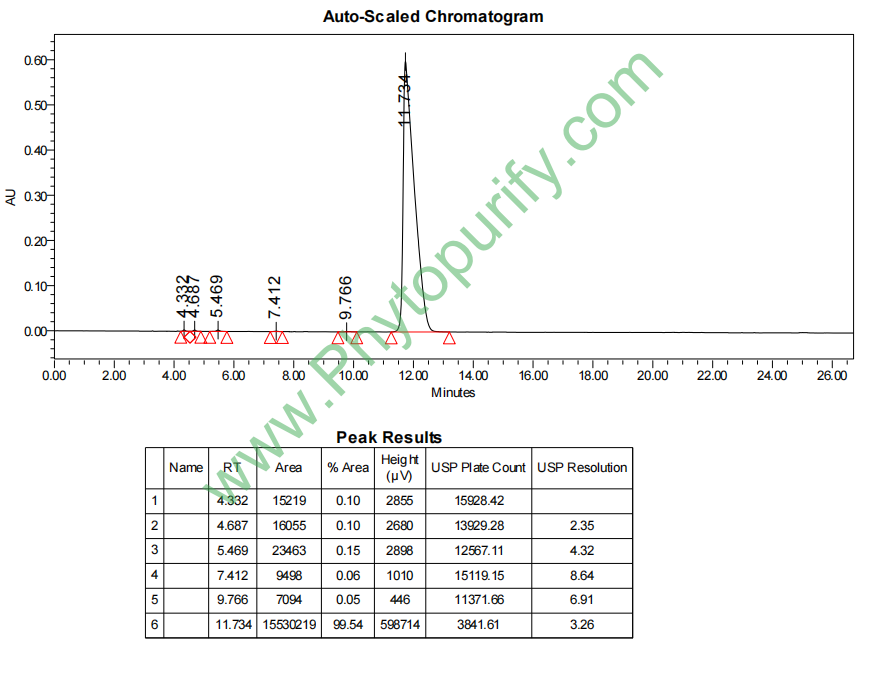
Purity: 95%~99%
Analysis Method: HPLC-DAD or/and HPLC-ELSD
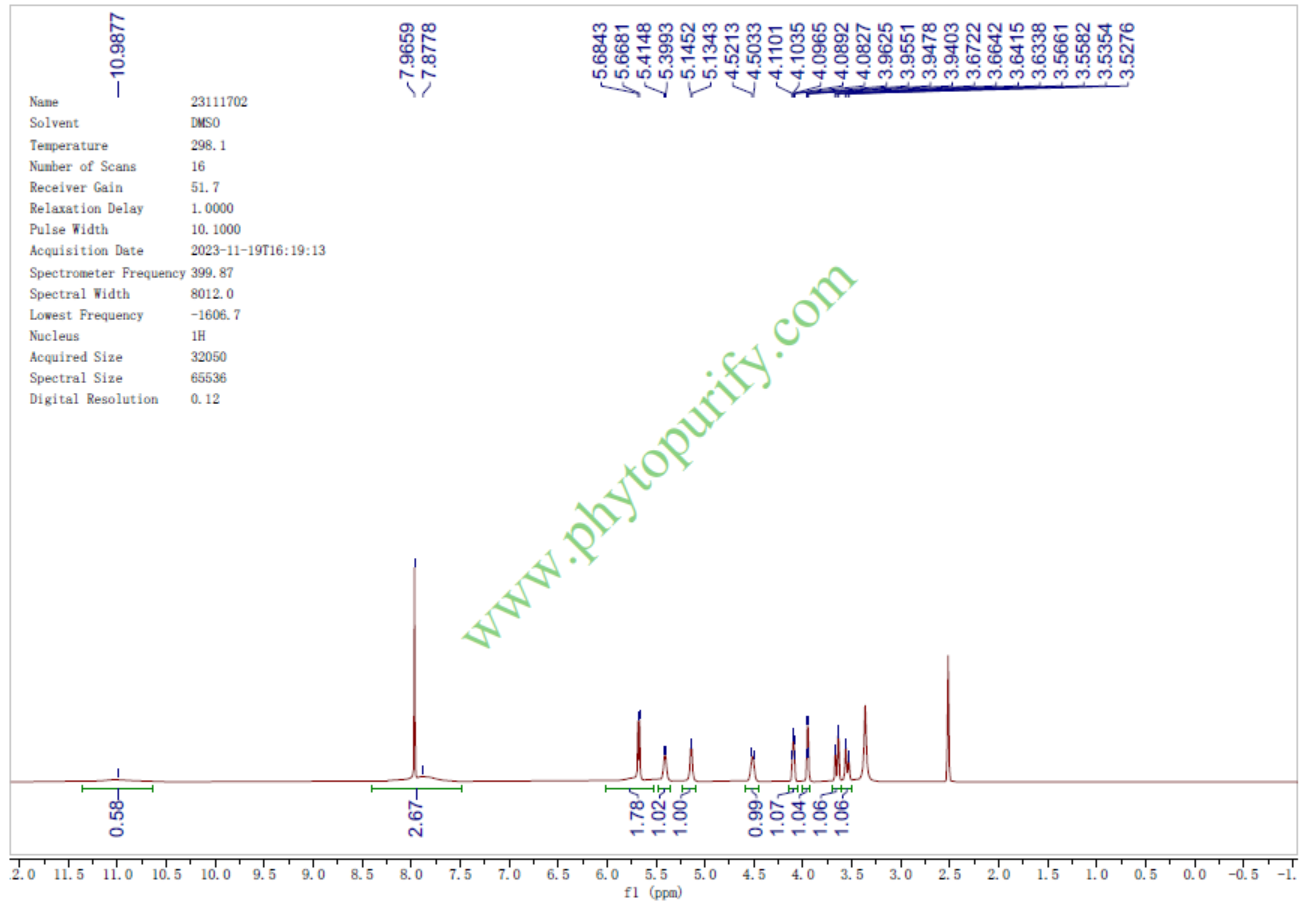
Identification Method: Mass, NMR
Packing: Brown vial or HDPE plastic bottle
Storage: Store in a well closed container, protected from air and light. Put into refrigerate or freeze for long term storage.
Whenever possible, you should prepare and use solutions on the same day. However, if you need to make up stock solutions in advance, we recommend that you store the solution as aliquots in tightly sealed vials at -20℃. Generally, these will be useable for up to two weeks.
The product could be supplied from milligrams to grams, up to kilograms
Inquire for bulk scale.
Descriptions:
2-Hydroxyadenosine (crotonoside) and 2-aminoadenosine are 2-Halogenated derivatives of adenosine, are potent depressors, and they are slightly less potent than adenosine. [1]
Crotonoside is one compound of an antitumor and immunity-regulating pharmaceutical composition of traditional Chinese medicine. [2]
References:
[1] Phillis J W, Edstrom J P. Life Sci, 1976, 19(7):1041-53.
[2] Zhou C, Zhou C X, Mao X. World Intellectual Property Organization. 2010-12-29 .
[3] Jin F, Ren Y Z, Chen Y L, et al. Chinese Journal of Experimental Traditional, 2013, 19 (02): 90-3.
HPLC of Crotonoside
HNMR of Crotonoside
Storage conditions:Short-term storage at 2~8℃, long-term storage at -20 ~ -80℃
159.5100
-1.7098
-1.7106
1.9930
.3716
.2725
Low
18.6887
3.9266
Yes
No
No
No
Yes
No
1.2
Yes
No
Yes
No
Acute myeloid leukemia (AML) is an invasive malignant tumor of the hematopoietic system characterized by abnormal proliferation and differentiation arrest of immature myeloid cells in the bone marrow. Despite the continuous progress of treatment methods such as chemotherapy, targeted therapy, and hematopoietic stem cell transplantation, the overall prognosis of AML patients is still not ideal, especially for relapsed/refractory patients and populations with specific gene mutations (such as FLT3-ITD), where treatment options are limited and drug resistance is prone to occur. Therefore, discovering lead compounds with novel mechanisms of action from natural products has become one of the important strategies for the development of anti AML drugs.
Crotonoside, CAS number 1818-71-9, is a natural nucleoside compound isolated from the Chinese herbal medicine Cajanus cajan (L.) Millsp. As a traditional medicinal plant, Mu Dou is commonly used in folk medicine to clear heat, detoxify, promote blood circulation, and remove blood stasis. In recent years, with the in-depth research on the active ingredients of pigeon pea, coumarin has attracted much attention due to its selective inhibitory activity in AML cells. Preliminary studies have shown that coumarin can simultaneously inhibit FMS like tyrosine kinase 3 (FLT3) and histone deacetylase 3/6 (HDAC3/6), both of which play key roles in the occurrence and development of AML. FLT3 mutation is one of the most common genetic abnormalities in AML, closely associated with poor prognosis; The abnormal expression of HDACs promotes the proliferation and survival of leukemia cells by altering chromatin structure and gene expression. The characteristic of "one stone, multiple birds" action of Bazin makes it an attractive new lead compound for studying AML treatment. This article aims to provide a systematic review of the chemical structure, plant origin, pharmacological activity, mechanism of action, pharmacological properties, and application prospects of coumarin in the treatment of AML.
The chemical name of Bazin is 1- β - D-ribofuranosyl-4-amino-2 (1H) - pyrimidinone, which is a modified nucleoside analogue. Its molecular formula is C9H13N3O5 and its molecular weight is 283.2440 g/mol. Its core structure is composed of β - D-ribose and a modified pyrimidine base connected by a glycosidic bond. Unlike common cytidine or uridine, its base portion is 4-amino-2 (1H) - pyrimidinone, and this unique structure is the material basis of its biological activity.
From the analysis of physical and chemical properties, coumarin exhibits typical hydrophilic characteristics. The calculated lipid water partition coefficient (LogP) is -1.7098, indicating strong hydrophilicity and poor lipid solubility. The topologically polar surface area (TPSA) is as high as 159.51 Å ², mainly attributed to the presence of multiple hydrogen bond donors (- NH2, - OH) and acceptors (C=O, O) in the molecule. The theoretical water solubility value is 1.9930 mg/mL, indicating good solubility in water. These parameters collectively determine the distribution characteristics of coumarin in the body: its ability to penetrate the lipid bilayer is weak, and its blood-brain barrier (BBB) permeability is predicted to be "low", meaning it is not easily able to enter the central nervous system. In the preliminary safety screening, coumarin did not show significant hERG potassium channel inhibitory activity (predicted as' no '), indicating a low potential risk of arrhythmia. The Ames test value is 1.2, slightly higher than 1, indicating a weak mutagenic risk signal under standard testing conditions, but further experimental verification is still needed. Overall, coumarin has good water solubility and preliminary safety signals, but its poor membrane permeability may pose a challenge to its oral bioavailability.
Bazin is mainly isolated from the leaves or whole plant of the Chinese herbal medicine Cajanus cajan (L.) Millsp. Wooden beans, also known as tree beans or three leaf beans, are plants of the legume family and are widely planted in tropical and subtropical regions. They are also distributed in southern China. Its medicinal history is long, as recorded in classics such as the Compendium of Materia Medica. It is commonly used to treat injuries caused by falls, bruises, swelling, and pain. Modern research also shows that it has various biological activities such as antioxidant, anti-inflammatory, and antibacterial.
The extraction and separation of coumarin usually follow the conventional process of natural product chemistry. Firstly, the dried wood bean plant material is crushed and subjected to reflux extraction or ultrasound assisted extraction using polar solvents (such as methanol, ethanol, or ethanol water mixed solutions) to fully extract polar components including coumarin. The extract is concentrated under reduced pressure to obtain a crude extract. Subsequently, preliminary enrichment was carried out using macroporous adsorption resin column chromatography (such as D101, AB-8 type), with water ethanol gradient elution commonly used. Bazin usually appears in the eluted portion with a higher water phase ratio. Further refinement and purification rely on techniques such as normal or reverse phase silica gel column chromatography and preparative high-performance liquid chromatography (HPLC). The use of a reverse phase C18 chromatography column combined with water methanol or water acetonitrile as the mobile phase is an effective method for separating and purifying coumarin. The chemical structure can be ultimately identified by nuclear magnetic resonance (NMR, including 1H-NMR and 13C-NMR), mass spectrometry (MS), and comparison with literature data. Optimizing the extraction solvent, temperature, time, and using modern separation techniques such as high-speed countercurrent chromatography can help improve the yield and purity of coumarin, providing material support for its subsequent pharmacological research.
The core pharmacological activity of coumarin is focused on anti-tumor effects, especially showing significant potential in hematological malignancies.
1. Anti acute myeloid leukemia (AML) activity:
Bazin exhibits significant proliferation inhibition and induces apoptosis in various AML cell lines, such as MV4-11, MOLM-13, HL-60, THP-1, etc. It is worth noting that its inhibitory effect on AML cells carrying FLT3-ITD mutations (such as MV4-11, MOLM-13) is particularly sensitive, with half maximal inhibitory concentration (IC50) values typically at the micromolar level, significantly lower than its toxic concentration on normal peripheral blood mononuclear cells or hematopoietic stem/progenitor cells, demonstrating a certain degree of selectivity. This selective toxicity is crucial for the development of drugs targeting AML with minimal bone marrow toxicity.
2. Multi target anti-tumor potential:
In addition to its specific effect on AML, the potential anti-tumor spectrum of coumarin may be more extensive. Its chemical structure, as a nucleoside analogue, may interfere with DNA/RNA metabolism. Related target prediction and preliminary research suggest that coumarin may exert its effects by affecting multiple targets closely related to tumor occurrence and development, including:
* Apoptosis regulatory protein Like myeloid leukemia factor 1 (MCL1) and B-cell lymphoma 2 (BCL2), they are key negative regulators of cell apoptosis, and their overexpression is closely related to tumor cell drug resistance.
* signal transducing molecule Signal transducer and activator of transcription factor 3 (STAT3), whose sustained activation promotes tumor cell proliferation, survival, and immune escape.
* Extracellular matrix degrading enzyme Like matrix metalloproteinase 2 (MMP2), it is involved in tumor invasion and metastasis.
* DNA Topoisomerase TOP1 and TOP2A are targets of many chemotherapy drugs.
* Hypoxia inducible factor 1 alpha (HIF1 alpha)Participate in tumor adaptation to hypoxic microenvironment.
* Mitogen activated protein kinase 1 (MAPK1/ERK2)Regulating cell growth and differentiation.
* Estrogen related pathways For example, estrogen receptor α (ESR1) and aromatase (CYP19A1) may also have research value in hormone dependent tumors (such as breast cancer).
These broad potential target associations suggest that coumarin may exert anti-tumor effects through multiple pathways and links, but its specific activity and selectivity for solid tumors still require extensive experimental confirmation.
Preliminary progress has been made in the molecular mechanism study of the anti AML activity of coumarin, with its core being the simultaneous targeting of two key pathways, FLT3 and HDACs.
1. Inhibition of FLT3 kinase activity:
FLT3 is a type III receptor tyrosine kinase expressed in early hematopoietic progenitor cells. FLT3-ITD mutation leads to constitutive activation, continuously activating downstream signaling pathways such as PI3K/AKT, RAS/MAPK, and STAT5, driving abnormal proliferation and survival of leukemia cells. Research has shown that coumarin can directly bind to the FLT3 kinase domain in a competitive or non competitive manner, inhibiting its autophosphorylation and kinase activity. This leads to a significant decrease in the phosphorylation levels of downstream key signaling molecules such as p-AKT, p-ERK, and p-STAT5, inducing cell cycle arrest (usually in the G0/G1 phase) and initiating mitochondrial dependent apoptosis pathways, manifested as activation of caspase-3/9, cleavage of PARP, and alterations in the balance of BCL-2 family proteins.
2. Inhibit HDAC3/6 activity:
Histone deacetylases (HDACs) tighten chromatin structure and inhibit gene transcription by removing acetyl groups from histone tails. HDAC3 and HDAC6 are often overexpressed in AML and are associated with poor prognosis. HDAC3 mainly participates in nuclear transcriptional regulation, while HDAC6 mainly acts on cytoplasmic proteins such as alpha microtubule protein and heat shock protein 90. Bazin has been shown to inhibit the enzymatic activity of HDAC3 and HDAC6, but not necessarily all class I/II HDACs, demonstrating a certain subtype selectivity. HDAC3 inhibition leads to an increase in histone H3 and H4 acetylation levels, which may reactivate the expression of certain tumor suppressor genes (such as p21 ^ CIP1/WAF1). HDAC6 inhibition leads to an increase in the acetylation level of its substrate α - tubulin, affecting cytoskeletal dynamics and potentially interfering with the chaperone function of HSP90, promoting the degradation of oncogenic client proteins such as FLT3 and AKT. HDAC6 inhibition can also enhance the sensitivity of cells to proteasome inhibitors.
3. Synergistic effect of dual inhibition:
The dual inhibition of FLT3 and HDAC3/6 by Bazin may produce a synergistic anti leukemia effect. On the one hand, HDAC inhibitors can downregulate the expression of FLT3 and enhance the sensitivity of FLT3 inhibitors. On the other hand, inhibition of the FLT3 signaling pathway may alter the epigenetic state of cells, making them more susceptible to HDAC inhibition. This strategy of simultaneously attacking driver mutations (FLT3) and epigenetic regulatory factors (HDACs) is expected to more effectively induce apoptosis in leukemia cells and may overcome resistance to monotherapy.
4. Interactions with other potential targets:
Although FLT3 and HDAC3/6 are currently well studied targets, the direct effects of Bazin on the aforementioned targets such as MCL1 and STAT3 still need to be further validated. These targets may be located downstream of FLT3/HDAC and are part of its effects, or they may be targets of independent action of coumarin through other unknown pathways. The structure of its nucleoside analogues also suggests that it may be incorporated into nucleic acids or affect nucleotide metabolism, providing more dimensions for mechanism research.
Based on computational predictions and limited preliminary experimental data, a preliminary evaluation of the pharmacological properties of coumarin is conducted
Prediction of pharmacokinetic properties:
* absorb Due to its high hydrophilicity (low LogP) and high polar surface area (TPSA), the oral absorption of coumarin may be poor, and passive transmembrane diffusion may be limited. It may rely on nucleoside transporters (such as ENT, CNT) in the intestine for active uptake, but its transport efficiency and specificity need to be studied. It is predicted that its oral bioavailability may be low.
* distribution Moderate molecular weight, but high polarity may result in a smaller distribution volume, mainly distributed in hydrophilic chambers such as blood and extracellular fluid. The low permeability of the blood-brain barrier limits its effect on central nervous system leukemia, but it may also reduce related neurotoxicity.
* Metabolism As a nucleoside analogue, Bazin may be easily metabolized and degraded by nucleoside enzymes (such as cytidine deaminase) or P450 enzyme systems in the intestine and liver, resulting in reduced systemic exposure. The metabolites and their activities need to be clarified.
* excretion Expected to be primarily excreted in urine through the kidneys in the form of prototypes or metabolites.
Advantages and challenges of pharmaceutical properties:
* Advantage:
1. Natural source, novel structure As a natural product, it has structural diversity and good biocompatibility as a starting point.
2. Dual action mechanism Simultaneously targeting FLT3 and HDAC may produce a synergistic effect and reduce the risk of drug resistance.
3. Selective toxicity It shows selectivity towards FLT3-ITD mutant AML cells and may have a wider therapeutic window.
4. Preliminary safety There is no significant hERG inhibition signal, indicating a low risk of Ames induced mutations.
* challenge:
1. Physical and chemical property limitations Strong polarity and poor lipid solubility may result in poor oral absorption and cell membrane permeability.
2. Metabolic stability May be easily degraded by enzymes and have a short half-life in the body.
3. Lack of pharmacokinetic data At present, there is almost no detailed experimental data on its absorption, distribution, metabolism, and excretion (ADME) in the body.
4. Potential off target effects It is necessary to comprehensively evaluate its impact on other kinases, HDAC subtypes, and normal cellular function.
improvement strategy To improve its medicinal properties, structural modifications may be considered. For example, acylation, alkylation, or preparation of prodrugs (such as esterification prodrugs) on the ribose moiety to increase lipid solubility, improve membrane permeability, and oral bioavailability; Modify the base portion to enhance its affinity, selectivity, and metabolic stability towards the target.
As a lead compound with dual inhibitory mechanisms against AML, the clinical application prospects of Bazin are promising, but the road ahead is long.
1. Potential application directions:
* Single drug or combination therapy for FLT3-ITD mutant AML As a novel dual function FLT3/HDAC inhibitor, Bazin or its optimized derivatives are expected to be used for the treatment of patients who are resistant or intolerant to existing FLT3 inhibitors (such as perindopril and Girotinib). Combined use with chemotherapy drugs (such as cytarabine) or other targeted drugs (such as BCL-2 inhibitor vinaclor) may result in synergistic effects.
* A new option for epigenetic therapy Its HDAC3/6 selective inhibitory properties may result in a different efficacy and safety profile compared to broad-spectrum HDAC inhibitors such as vorinostat, reducing common toxicity such as thrombocytopenia.
* Exploration of other hematological or solid tumors Based on its multi-target prediction, its activity against other malignant tumors (such as lymphoma, multiple myeloma, and some solid tumors) that rely on STAT3, MCL1, and other targets can be explored.
2. Future research focus:
* In depth mechanism elucidation Chemical biological methods such as affinity fishing, molecular docking, and site directed mutagenesis need to be used to confirm the direct interaction sites and patterns with FLT3 and HDAC3/6. Elucidate how its dual inhibition synergistically regulates downstream signaling networks and epigenetic landscapes.
* Preclinical development of the system Including: ① Structural optimization and structure-activity relationship research to improve pharmacokinetic properties and enhance therapeutic efficacy; ② Comprehensive in vivo pharmacological evaluation was conducted to validate its anti leukemia activity in FLT3-ITD humanized mouse AML models, among others; ③ Complete standardized preclinical pharmacokinetic and toxicological studies and evaluate their safety window.
* Exploration of biomarkers Search for biomarkers that predict the efficacy of Bazin (such as FLT3 mutation status, HDAC3/6 expression levels, specific gene signatures) for patient stratification in future clinical trials.
* Research on Combination Medication Strategy Systematically evaluate its potential and regimen for combination therapy with existing standard therapies or other mechanism of action drugs.
Bazin is a structurally novel natural nucleoside compound discovered from traditional Chinese medicine pigeon pea. Its unique value lies in its ability to simultaneously inhibit two key targets in AML pathogenesis - FLT3 kinase and HDAC3/6, exhibiting selective growth inhibition and pro apoptotic activity in FLT3-ITD mutant AML cells, demonstrating great potential as an anti AML lead compound. Although the understanding of its mechanism of action has initially formed a framework, and its calculation as pharmacological parameters suggests its potential for development, we must be aware that there are still many challenges from lead compounds to clinical candidate drugs, especially its poor drug like properties (such as low fat solubility) and lack of systematic in vitro and in vivo ADME/T data. Future research should focus on optimizing its structure through rational medicinal chemistry methods, while enhancing its activity and selectivity, and striving to improve its pharmacokinetic properties; And conduct in-depth preclinical efficacy, pharmacological, and toxicological evaluations of the system. The discovery of coumarin once again confirms the importance of natural products as a source of innovative drugs. Its subsequent research may not only bring new therapeutic hope for AML patients, but also provide new ideas and templates for the development of multi-target and synergistic anti-tumor drugs.
