


Synonym name: Cocarcinogen A1; Cocarcinogen C3; Phorbol-12-Myristate-13-Acetate
Catalogue No.: BP0021
Cas No.: 16561-29-8
Formula: C36H56O8
Mol Weight: 616.836
Botanical Source: croton oil Croton tiglium
Purity: 95%~99%
Analysis Method: HPLC-DAD or/and HPLC-ELSD
Identification Method: Mass, NMR
Packing: Brown vial or HDPE plastic bottle
Can be supplied from milligrams to grams.
For Reference Standard and R&D, Not for Human Use Directly.
Inquire for bulk scale.
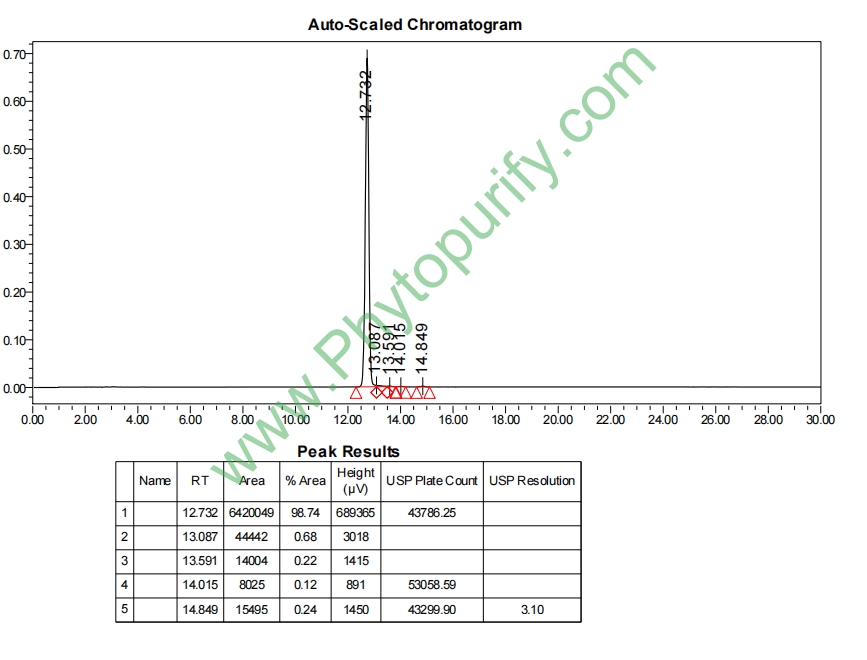
HPLC of 12-O-tetradecanoyl phorbol-13-acetate
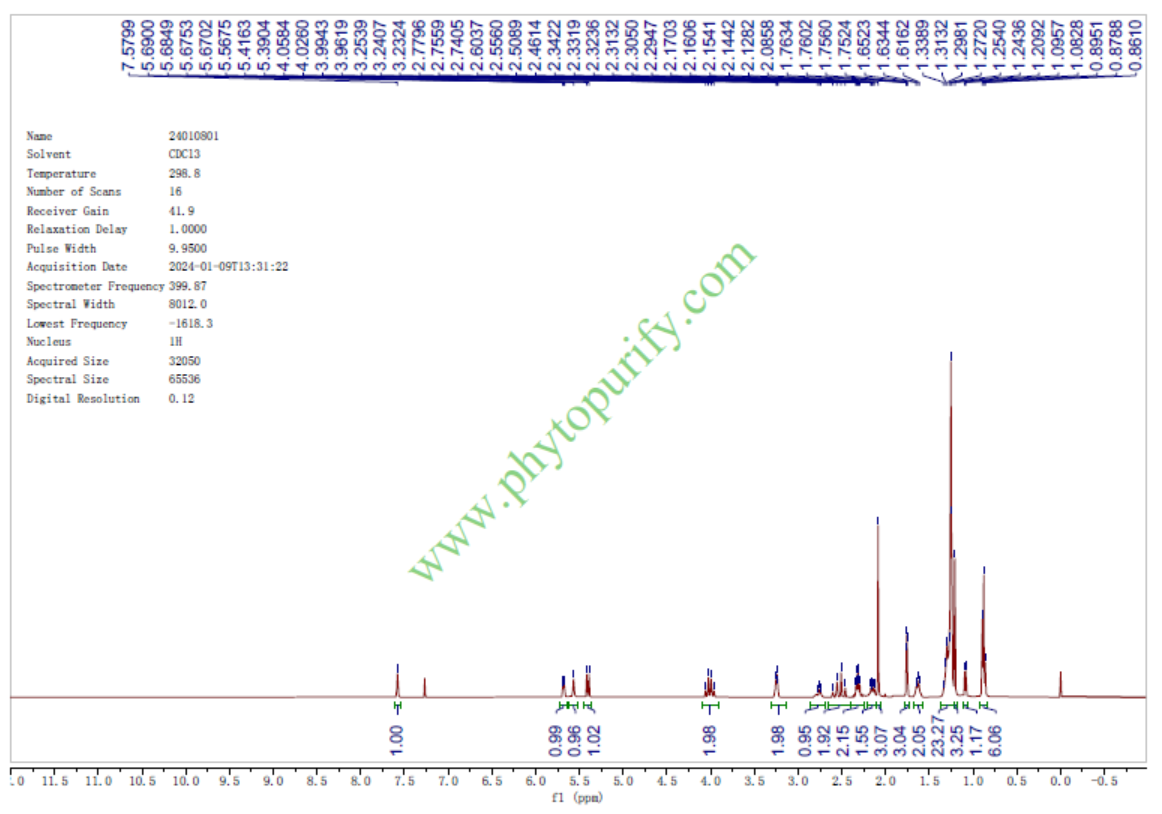
HNMR of 12-O-tetradecanoyl phorbol-13-acetate
Storage conditions:Short-term storage at 2~8℃, long-term storage at -20 ~ -80℃
119.8000
6.0000
5.5000
Low
No
No
No
Unknown
No
Positive
Phorbol-12-Myristate-13-ACetate (PMA) is a typical natural product compound, belonging to the class of phorbol alcohol diterpenoid esters. It was first isolated and identified from Croton tiglium seed oil. As a potent activator of protein kinase C (PKC), fumarate plays a crucial role in various biological processes such as cell signal transduction, tumorigenesis, immune regulation, and cell differentiation. Its unique biological activity makes it an important tool molecule in cell biology and pharmacology research, especially in the field of tumor promoter research, which has milestone significance. In recent years, with the in-depth analysis of its mechanism of action, the potential application value of voxelate in cardiovascular disease, immune inflammation, and cellular metabolism regulation has gradually emerged, becoming one of the hotspots in natural product pharmacology research.
This article will provide a systematic review of the chemical structure and physicochemical properties, plant sources and extraction methods, pharmacological activities and mechanisms of action of voxystrobin, with a focus on exploring its molecular targets and signaling pathways. Combined with drug evaluation and pharmacokinetic characteristics, the potential and challenges of its clinical application will be discussed, aiming to provide comprehensive and authoritative reference materials for researchers in the field of natural product pharmacology.
The chemical name of Vorbol-12-myristate-13-acetate, CAS number 16561-29-8, molecular formula C36H56O8, with a molecular weight of approximately 600.8. Its structure is based on the core skeleton of phorbol, which is manifested by the substitution of the 12th hydroxyl group by myristate and the 13th hydroxyl group by acetate in the molecule of phorbol, forming a diterpenoid compound with double esterification. This structure endows Vopol ester with high lipophilicity, with a LogP value of approximately 6.0, indicating its strong lipophilicity and facilitating penetration of cell membranes.
The topological polar surface area (TPSA) of Voodol ester is 119.8 Å ² and contains 8 hydrogen bond acceptors, indicating its polarity and hydrogen bonding ability. However, its high lipophilicity may limit its solubility in aqueous phase. Its blood-brain barrier permeability is low, indicating limited distribution in the central nervous system. There is no clear data on its hepatotoxicity and cardiotoxicity, but the Ames test is positive, indicating a possible genetic toxicity risk. In addition, voxystrobin does not exhibit hERG channel inhibition, reducing its risk of arrhythmia.
Vobol esters have good chemical stability, but they are prone to ester bond hydrolysis under strong acid or alkali conditions. The cyclopropane ring and polyhydroxy substituents in its structure provide key binding sites for its biological activity, especially closely related to the binding activity of protein kinase C.
Vorboester is mainly present in the seed oil of Croton tiglium and is the main active ingredient in the seed oil of this plant. Croton belongs to the Euphorbiaceae family and is widely distributed in tropical and subtropical regions of Asia. Its seed oil has significant biological activity due to its high concentration of phorbol alcohol diterpenoid esters.
Traditional extraction methods usually use solvent extraction combined with column chromatography purification technology. The specific process includes:
Modern technologies such as ultrasound assisted extraction and supercritical CO2 extraction have also been applied to improve the extraction efficiency and purity of fumarate. In addition, the analysis of biosynthetic pathways and the development of genetic engineering technology have provided new research directions for the biosynthesis of voxystrobin.
Vorbonate, as a potent tumor promoter, was first studied in the field of tumor biology. By activating protein kinase C (PKC), voxelate can promote the proliferation and transformation of tumor cells, enhance the malignant phenotype of cells, and is widely used in rodent skin cancer models as a promoter of tumor development.
Vorbonate can induce proliferation in various cell lines, including skin fibroblasts, tumor cells, and immune cells. It activates the PKC signaling pathway, regulates cell cycle proteins and transcription factors, promotes cell transition from G1 phase to S phase, enhances DNA synthesis and cell division. Vorbonate can also induce the expression of pro-inflammatory cytokines and growth factors, promoting the formation of the tumor microenvironment.
Vorbonate plays an important regulatory role in immune cell function. Research has shown that voxystrobin can induce differentiation of monocyte line THP-1 cells into macrophage like phenotypes, characterized by morphological changes and functional enhancements such as increased phagocytic ability and cytokine secretion. This mechanism of action provides an important tool for studying immune cell activation and inflammatory response.
In recent years, voxetine has attracted attention in cardiovascular disease research. It affects myocardial cell metabolism and function by regulating key molecules such as AMPK (5 'AMP activated protein kinase), EHMT2 (histone methyltransferase), PTPN1 (protein tyrosine phosphatase 1), etc. The role of voxetine in heart failure models suggests that it may be involved in myocardial remodeling and energy metabolism regulation, but the specific mechanism still needs to be further studied.
Vorbonate has also been found to activate the SphK (sphingosine kinase) and NF - κ B signaling pathways, participating in cell survival, inflammatory response, and apoptosis regulation. In addition, its activation effect on transcription factor AP-1 has been confirmed, further expanding its scope of influence in the cellular signaling network.
The core mechanism of action of fumarate is to simulate the activation of protein kinase C (PKC) family by diacylglycerol (DAG). PKC is a type of lipid dependent serine/threonine protein kinase that regulates various physiological processes such as cell proliferation, differentiation, apoptosis, and metabolism.
Vobol ester can bind with high affinity to the C1 domain of PKC, inducing its translocation from the cytoplasm to the cell membrane and activating its kinase activity. The distribution and function of different subtypes of PKC vary in cells. After activation of PKC by Vopol ester, multiple downstream signaling pathways are triggered, including MAPK, NF - κ B, AP-1, etc., leading to gene expression regulation and changes in cellular function.
Vorbonate can also activate sphingosine kinase (SphK), promote the production of sphingosine-1-phosphate (S1P), and regulate cell proliferation and survival. S1P, as an important lipid signaling molecule, is involved in inflammatory response, angiogenesis, and immune regulation.
Vorbonate activates NF - κ B transcription factors through a PKC dependent mechanism, promoting the expression of pro-inflammatory cytokines such as TNF - α and IL-1 β, enhancing inflammatory response and immune cell activation. This mechanism has significant implications in the tumor microenvironment and cardiovascular disease.
In disease models such as heart failure, voxelate affects multiple key targets:
The pharmacological evaluation of voxystrobin reveals its advantages and limitations in drug development. Its molecular weight is 600.8, which is relatively large, and its LogP value is 6.0, indicating high lipid solubility and facilitating cell membrane penetration. However, it may lead to poor water solubility and affect oral bioavailability. The TPSA is 119.8 and the number of hydrogen bond acceptors is 8, indicating moderate polarity, but higher polarity and lipophilic binding may limit its distribution in vivo.
The low permeability of the blood-brain barrier indicates that voxetine is not easily able to enter the central nervous system, limiting its application in neurological diseases. The data on liver toxicity and cardiac toxicity are not yet clear and require further systematic evaluation. A positive Ames test indicates a potential genetic toxicity risk, and caution should be exercised regarding its safety.
Vorbonate does not inhibit hERG channels, reducing the risk of drug-induced arrhythmia, which is a positive signal in cardiovascular drug development. Its pharmacokinetic characteristics still lack systematic research, and it is speculated that its in vivo metabolism is mainly mediated by ester bond hydrolysis and liver metabolic enzyme mediated redox reactions. The half-life and bioavailability need to be further clarified.
Although the carcinogenic risk of Vorbonate as a tumor promoter limits its direct clinical application, its unique biological activity and molecular mechanism provide important insights for drug development in multiple fields.
Vobol ester, as an activator of PKC, is widely used in tumor biology research, helping to reveal the signaling pathways of tumor occurrence, development, and metastasis, and promoting the development of targeted therapeutic drugs for tumors.
The differentiation of immune cells and expression of inflammatory factors induced by voxelate provide a model for studying the mechanisms of immune and inflammatory diseases. In the future, reducing toxicity through structural modification or developing its derivatives may achieve clinical translation of immunomodulators.
Vorbonate regulates AMPK and related targets, indicating its potential application value in cardiovascular diseases such as heart failure. In the future, by combining drug delivery systems and structural optimization, voxelated compounds are expected to become novel candidate drugs for myocardial protection and metabolic regulation.
The current research focus is on designing derivatives with low toxicity and high selectivity based on the relationship between the structure and activity of fumarate. By improving water solubility and reducing genetic toxicity through molecular modification, combined with nanocarrier technology, targeted delivery can be achieved, enhancing clinical application prospects.
Vobolester, as a natural compound, occupies an important position in pharmacological research due to its unique structure and strong biological activity. Its ability to activate PKC and related signaling pathways makes it an important tool for tumor promoters and cell biology research. Although its potential genetic toxicity and carcinogenic risks limit its direct clinical application, the value of voxetine in immune regulation, cardiovascular disease, and signal transduction mechanism research cannot be ignored.
In the future, by delving into the mechanism of action of voxystrobin and combining it with modern drug design and delivery technologies, it is expected to develop safe and effective derivatives of voxystrobin and expand their applications in clinical treatment. The study of voxystrobin not only enriches the theoretical basis of natural product pharmacology, but also provides valuable molecular templates and ideas for the development of new drugs.
