


Product name: Atractylenolide I
Synonym name: 8,9-Dehydroasterolide
Catalogue No.: BP0214
Cas No.: 73069-13-3
Formula: C15H18O2
Mol Weight: 230.307
Botanical Source: Atractylodes macrocephala
Physical Description:
Type of Compound: Sesquiterpenoids
Purity: 95%~99%
Analysis Method: HPLC-DAD or/and HPLC-ELSD
Identification Method: Mass, NMR
Packing: Brown vial or HDPE plastic bottle
Storage: Store in a well closed container, protected from air and light. Put into refrigerate or freeze for long term storage.
Whenever possible, you should prepare and use solutions on the same day. However, if you need to make up stock solutions in advance, we recommend that you store the solution as aliquots in tightly sealed vials at -20℃. Generally, these will be useable for up to two weeks.
The product could be supplied from milligrams to grams
Inquire for bulk scale.
Chengdu Biopurify Phytochemicals Ltd. is a leading company in the research, development, manufacture and marketing of High Quality Phytochemicals and Extracts(especially Active Ingredients from Traditional Chinese Medicine,TCM), Natural Active Pharmaceutical Ingredients worldwide.
The main services:
A. Supply active ingredients and reference standards of TCM, from mgs to kgs scale
B. Custom extraction and purification, target Herb Active Ingredients
C. Custom synthesis and semi-synthesis for Natural Active Ingredients
D. CR(contract research), CM(contract manufacture) and PD(process development) services from lab scale, pilot scale to commercial scale(GMP is also available)
E. TCM compounds library for drug screen,more than 3000 compounds available, many of them are rare and unique.
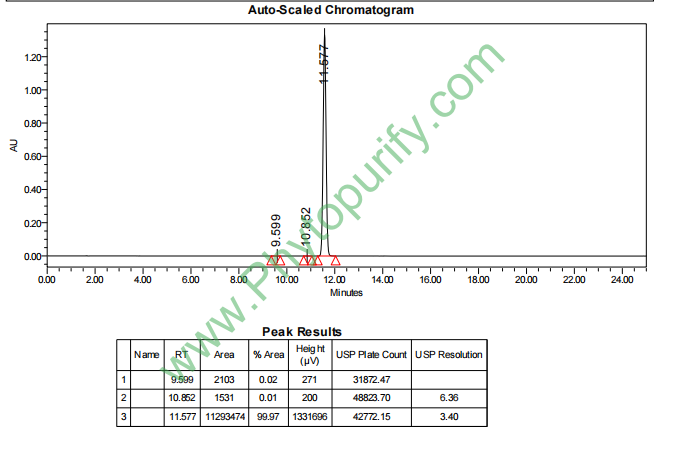
HPLC of Atractylenolide I
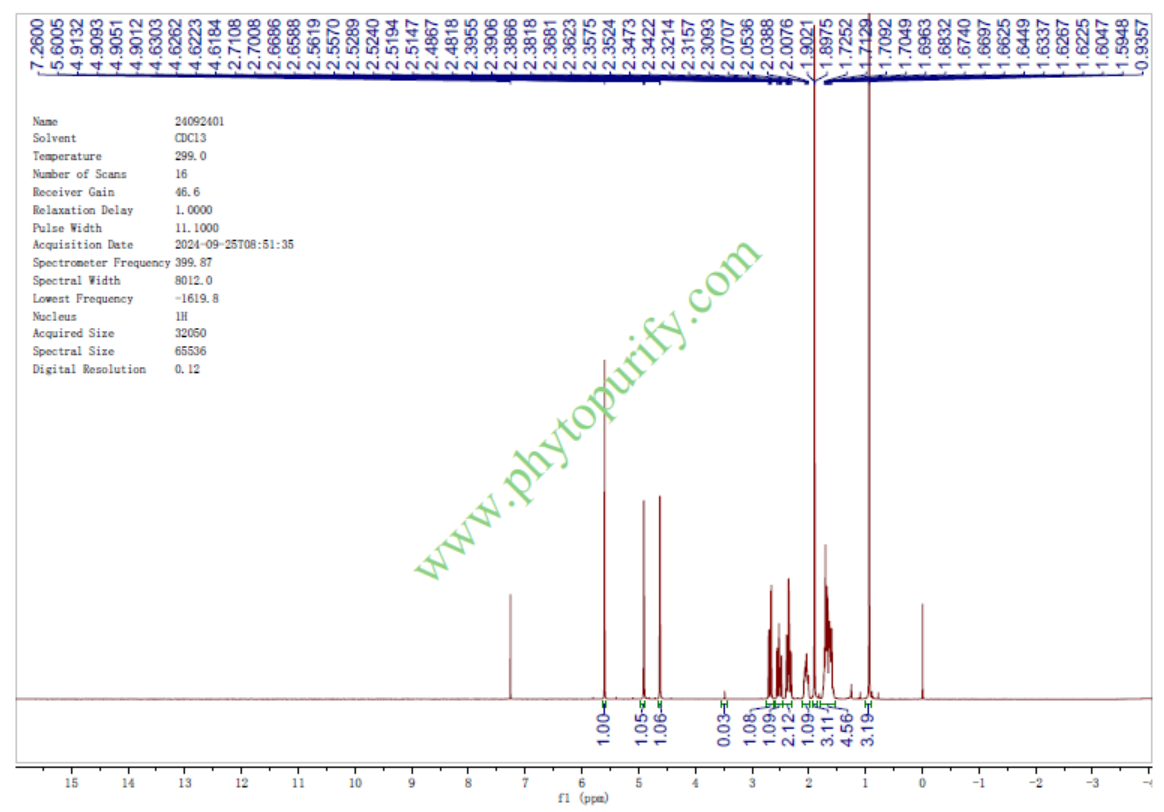
HNMR of Atractylenolide I
Storage conditions:Short-term storage at 2~8℃, long-term storage at -20 ~ -80℃
26.3000
3.6499
3.6497
.0263
7.9674
15.7213
High
83.0671
4.4458
No
Yes
No
No
Yes
No
0.0
No
Yes
Yes
Yes
Atractylenolide I is a traditional Chinese medicine derived from Atractylodes macrocephala(Atractylodes macrocephala The sesquiterpene lactones isolated from the dried rhizomes of Koidz. have a CAS number of 73069-13-3. As one of the main active ingredients of Atractylodes macrocephala, Atractylodes macrocephala I has long been widely studied by pharmacological researchers. Traditional Chinese medicine theory holds that Atractylodes macrocephala has the effects of invigorating the spleen and qi, drying dampness and promoting diuresis, stopping sweating and stabilizing pregnancy. Modern research has gradually revealed its active substance basis, among which Atractylodes macrocephala lactone I plays a crucial role. Research has shown that Atractylodes macrocephala I exhibits a broad spectrum of biological activities, including but not limited to neuroprotection, anti allergy, anti-inflammatory, and significant anti-cancer effects. In recent years, with the development of molecular pharmacology and network pharmacology, its mechanism of action has been continuously deepened, for example, it has been identified as an antagonist of Toll like receptor 4 (TLR4) and can effectively inhibit the phosphorylation activation of JAK2/STAT3 signaling pathway in melanoma A375 cells. Of particular note is that in the pathological network of complex fibrotic diseases such as cirrhosis, Atractylodes macrocephala I has been predicted or confirmed to regulate multiple key targets such as STAT3, MMP2, NFE2L2, TNF - α, demonstrating the potential for multi-target and multi pathway intervention. This article aims to systematically review the chemical properties, pharmacological activities, molecular mechanisms of action, drug properties, and application prospects of Atractylodes macrocephala I in related diseases, especially liver cirrhosis, in order to provide comprehensive scientific references for the in-depth research and development of this natural product.
The molecular formula of Atractylodes macrocephala I is C15H18O2, with a molecular weight of 230.3070. Its chemical structure belongs to the eucalyptol type sesquiterpene lactone, with a core skeleton of a decahydronaphthalene ring system and containing an alpha, beta unsaturated gamma lactone ring, which is the key pharmacophore for its various biological activities. This structural feature enables it to interact with various enzymes and receptors within living organisms.
In terms of physicochemical properties, the lipid water partition coefficient (LogP) of Atractylodes macrocephala I is 3.6499, indicating its good lipophilicity, which facilitates its penetration into cell membranes but may also affect its solubility in aqueous media. Its topological polar surface area (TPSA) is relatively low, at 26.3000 Å ², further confirming its low molecular polarity. The water solubility data (0.0263 mg/mL) confirms that it belongs to a poorly soluble compound, which is a key consideration in formulation development. The noteworthy pharmacological prediction parameters show that Atractylodes macrocephala I has high blood-brain barrier permeability, which provides a material basis for its central nervous system protective effect. In addition, key early safety warning indicators show that the hERG channel inhibition risk is "no", and the Ames mutagenicity test risk value is 0.0, indicating a low risk of cardiac and genetic toxicity and a good starting point for development safety.
Atractylodes macrocephala I is mainly derived from the Asteraceae plant Atractylodes macrocephala(Atractylodes macrocephala Dry rhizomes of Koidz. As one of the famous "Eight Flavors of Zhejiang", Baizhu is mainly produced in Zhejiang, Hunan, Anhui and other places in China. The medicinal parts of Atractylodes macrocephala not only contain Atractylodes macrocephala I, but also Atractylodes macrocephala II and III, as well as various components such as volatile oils and polysaccharides, which together form the material basis of the pharmacological effects of Atractylodes macrocephala.
Efficient and high-purity extraction of Atractylodes macrocephala I from plant materials is a prerequisite for research and application. The commonly used extraction and separation methods currently include:
1. Solvent extraction method The most commonly used method is to use organic solvents (such as ethanol, methanol) for reflux extraction or ultrasound assisted extraction. Ethanol is often used as the preferred solvent due to its low toxicity and high extraction efficiency. The crude extract is concentrated under reduced pressure to obtain a paste.
2. Chromatographic separation and purification After obtaining the crude extract, it needs to be purified through systematic chromatographic separation technology. Silica gel column chromatography is commonly used for preliminary separation, with gradient elution using solvent systems such as petroleum ether ethyl acetate or chloroform methanol in different ratios. Subsequently, further refinement was carried out using methods such as preparative thin layer chromatography (PTLC), reverse phase medium pressure liquid chromatography (MPLC), or high-performance liquid chromatography (HPLC) to obtain high-purity Atractylodes macrocephala monomer I. In recent years, liquid-liquid distribution chromatography techniques such as high-speed counter current chromatography (HSCCC), which do not require solid carriers, have also been applied for the separation of lactones in Atractylodes macrocephala due to their high recovery rate and avoidance of irreversible adsorption of samples.
3. Modern extraction techniques Supercritical CO2 fluid extraction technology has also been attempted for the extraction of volatile oils and lactones from Atractylodes macrocephala due to its advantages of low temperature, no solvent residue, and adjustable selectivity, but the equipment cost is relatively high.
Numerous in vitro and in vivo pharmacological experiments have confirmed that Atractylodes macrocephala I exhibits diverse and significant biological activities.
Anti inflammatory and immune regulatory activity Atractylodes macrocephala I is a clear anti-inflammatory agent. It can significantly inhibit the excessive production of nitric oxide (NO), prostaglandin E2 (PGE2), and pro-inflammatory cytokines (such as TNF - α, IL-1 β, IL-6) in macrophages induced by lipopolysaccharide (LPS). Its anti-inflammatory effect is closely related to antagonizing the TLR4 signaling pathway, which is a key receptor for recognizing LPS and initiating innate immune responses. By blocking TLR4, Atractylodes macrocephala I can upstream inhibit the activation of inflammatory core pathways such as NF - κ B.
Neuroprotective activity Thanks to its excellent blood-brain barrier penetration ability, Atractylodes macrocephala I has shown protective effects in neurological disease models. Research reports that it can alleviate neuroinflammation and neuronal apoptosis induced by β - amyloid protein in Alzheimer's disease models; In the model of cerebral ischemia-reperfusion injury, it can reduce infarct size and improve neurological deficits, and its mechanism involves antioxidant stress and inhibition of apoptosis pathways.
Antitumor activity Atractylolide I has growth inhibition and apoptosis promoting effects on many tumor cell lines, including lung cancer, gastric cancer, colorectal cancer, breast cancer and melanoma. For example, in melanoma A375 cells, it can induce cell cycle arrest and apoptosis. Its anti-cancer effect has the characteristic of multi pathway synergy.
Anti fibrotic and liver cirrhosis related activities Regarding the complex pathological process of liver cirrhosis, research has shown that Atractylodes macrocephala I has potential intervention value. In hepatic stellate cell (HSC) activation models and animal liver fibrosis models, Atractylodes macrocephala I can inhibit HSC proliferation and activation, and reduce the deposition of extracellular matrix (such as collagen). Its function is related to downregulating pro fibrotic factors (such as TGF - β 1), inhibiting the imbalance of matrix metalloproteinases (MMP2) and their inhibitors (TIMP1), and alleviating liver inflammation.
Other activities In addition, Atractylodes macrocephala I also has anti allergic effects (such as stabilizing mast cell membranes and reducing histamine release), regulating gastrointestinal motility (bidirectional regulation), and certain antioxidant stress resistance.
The pharmacological effects of Atractylodes macrocephala I are not achieved through a single target, but through the regulation of a complex cellular signaling network, exhibiting multi-target characteristics. The core mechanism of action will be elucidated by combining liver cirrhosis related targets as follows:
Antagonism of TLR4/NF - κ B inflammatory axis TLR4 is a key molecule that connects innate immunity with chronic inflammation. As a TLR4 antagonist, Atractylodes macrocephala I can directly or indirectly interfere with the binding of LPS to TLR4 or the recruitment of downstream adaptor proteins, thereby inhibiting the activation of the NF - κ B signaling pathway. The activation subunit RELA/p65 of NF - κ B is blocked from entering the nucleus, resulting in reduced transcription of a large number of pro-inflammatory factors such as TNF - α and IL-6. In the process of liver cirrhosis, endotoxins generated by gut microbiota translocation continuously activate TLR4 on Kupffer cells in the liver, driving inflammation and fibrosis. Atractylodes macrocephala I has a clear intervention effect on this link.
Inhibition of JAK2/STAT3 signaling pathway STAT3 is a key transcription factor in the occurrence and development of liver cirrhosis and liver cancer. Atractylodes macrocephala I has been shown to effectively reduce the phosphorylation levels of JAK2 and STAT3 in A375 cells and various other cancer cells and activated HSCs. Phosphorylated STAT3 forms dimers and enters the nucleus, regulating the expression of genes related to cell proliferation, survival, and angiogenesis (such as Bcl-2, Cyclin D1, VEGF). Inhibition of this pathway is an important mechanism for the anti-tumor and anti fibrotic effects of Atractylodes macrocephala I.
Regulating oxidative stress and Nrf2 pathway Nuclear factor E2 related factor 2 (NFE2L2/Nrf2) is a core regulator of the cellular antioxidant defense system. Under oxidative stress, Nrf2 translocates to the nucleus, activating gene expression of a series of antioxidant enzymes and phase II detoxifying enzymes. Atractylodes macrocephala I can activate the Nrf2 pathway, enhance cellular antioxidant capacity, alleviate liver cell damage and HSC activation caused by the accumulation of reactive oxygen species (ROS), which is crucial for alleviating the progression of liver cirrhosis.
Affects other liver cirrhosis related targets:
In summary, Atractylodes macrocephala I forms a multi-target regulatory network for anti-inflammatory, antioxidant, and anti fibrotic effects by synergistically acting on core signaling nodes such as STAT3, NF - κ B, and Nrf2, thus exerting potential therapeutic effects in complex diseases such as cirrhosis.
Despite the significant pharmacological activity of Atractylodes macrocephala I, its development from a lead compound to a drug still requires systematic pharmacological evaluation.
Absorption, distribution, metabolism, excretion (ADME):
Preliminary evaluation of safety Based on computational predictions, Atractylodes macrocephala I has no significant risk of hERG channel inhibition (indicating a low risk of cardiac QT interval prolongation) and Ames mutagenicity risk, which is a positive early safety signal. However, comprehensive preclinical safety evaluations are still needed, including assessments of acute toxicity, chronic toxicity, reproductive toxicity, and potential risks (such as increased infection risk) based on their mechanisms of action (such as potent immunosuppression).
Pharmaceutical Science Challenge Solving the problem of poor water solubility is the core of formulation development. The new drug delivery system can not only improve its pharmacokinetic properties, but also potentially achieve targeted delivery (such as targeting activated HSCs or tumor tissues), enhance efficacy, and reduce systemic side effects.
The diverse biological activities of Atractylodes macrocephala I provide broad prospects for its application in various disease fields, especially in the prevention and treatment of chronic inflammation related diseases and tumors.
Application prospects in the field of cirrhosis and liver disease Cirrhosis lacks specific anti fibrotic drugs. The multi-target intervention of Atractylodes macrocephala I in key pathways of inflammation, oxidative stress, and fibrosis makes it a highly promising candidate drug for anti liver fibrosis. Future research can focus on: ① constructing animal models of liver cirrhosis that are more closely related to clinical practice (such as those developed from NASH) to verify their long-term efficacy; ② To explore the combination medication scheme with existing antiviral drugs (such as those used for hepatitis B cirrhosis) or symptomatic drugs; ③ Develop a liver targeted delivery system to increase local drug concentration in the liver and reduce systemic exposure.
Potential in tumor treatment In addition to directly inhibiting tumor cells, Atractylodes macrocephala I, as a JAK2/STAT3 and TLR4/NF - κ B pathway inhibitor, can regulate the tumor microenvironment, inhibit tumor associated inflammation and immune escape, and may enhance the efficacy of existing chemotherapy drugs or immune checkpoint inhibitors. Its combination with conventional therapies is worth exploring.
Application in neurodegenerative diseases Its neuroprotective and anti-inflammatory properties, combined with good brain entry ability, provide new possibilities for the treatment of Alzheimer's disease, Parkinson's disease, stroke, and other conditions.
Challenges and Future Directions:
As an active sesquiterpene component of traditional Chinese medicine Atractylodes macrocephala, Atractylodes macrocephala I has become a star molecule in natural product pharmacology research due to its extensive pharmacological activities such as anti-inflammatory, neuroprotective, anti-tumor, and anti liver fibrosis. The study of its mechanism of action has progressed from a single phenomenon description to the level of multi-target signal network regulation, especially in key pathways such as antagonizing TLR4, inhibiting JAK2/STAT3, and activating Nrf2, providing a modern scientific basis for explaining its traditional efficacy and developing new indications. Despite facing challenges such as poor water solubility in drug development, early safety predictions are good, and modern formulation technology and structural optimization strategies are expected to overcome these obstacles. Looking ahead to the future, in-depth research on Atractylodes macrocephala I will not only help promote its clinical translation as a new type of multi-target therapeutic drug (especially for complex diseases such as cirrhosis), but also provide a classic example for exploring modern innovative drugs from traditional Chinese medicine, which has important scientific significance and application value.
