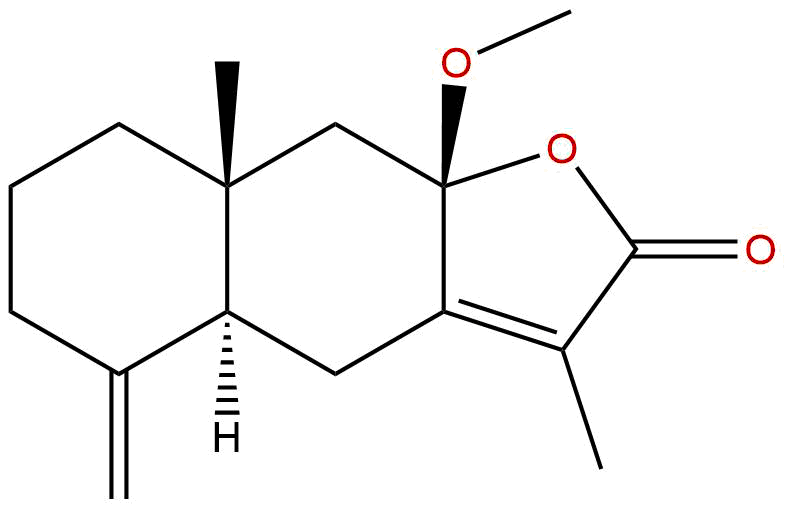
Storage conditions:Short-term storage at 2~8℃, long-term storage at -20 ~ -80℃
35.5300
3.2319
3.2321
.0591
6.8779
22.1164
High
69.9532
4.5879
No
No
No
No
Yes
No
0.0
No
No
No
Yes
Natural products, as an important source of drug discovery, play an irreplaceable role in human health maintenance and disease treatment. In traditional Chinese medicine, Atractylodes macrocephala(Atractylodes macrocephala Koidz., as an important traditional Chinese medicine for strengthening the spleen and nourishing qi, has been applied for thousands of years, especially in the treatment of digestive system diseases such as spleen and stomach weakness, loss of appetite, abdominal distension and diarrhea, showing significant clinical efficacy. Modern pharmacological research has revealed that the pharmacological activity of Atractylodes macrocephala is closely related to its various chemical components, among which the triterpenoid compounds Atractylenolides are considered to be its core active ingredient group.
8 β - Methoxyatractylenolide I (8 β - MA I) is a novel sesquiterpene lactone compound isolated and identified from the rhizome of Atractylodes macrocephala in recent years. Its unique chemical structure and potential biological activity have attracted widespread attention from scholars at home and abroad. This compound belongs to the eudemane type sesquiterpene lactone, and the methoxy substituent attached to the 8th carbon in its molecular skeleton endows it with unique physicochemical properties and biological activity characteristics that distinguish it from other Atractylodes macrocephala lactones.
As the incidence rate of functional gastrointestinal disorders (FGIDs) continues to rise worldwide, and existing therapeutic drugs such as prokinetic drugs and antacid drugs have limited efficacy or significant side effects, finding new, safe and effective gastrointestinal motility regulators from natural products has become a hot direction in drug research and development. The potential application value of 8 β - MA I in gastrointestinal motility regulation, especially its regulatory effect on various gastrointestinal hormone receptors, makes it a highly promising candidate molecule for development. This article will provide a systematic review of the research progress of 8 β - MA I from the aspects of chemical structure, plant origin, pharmacological activity, mechanism of action, pharmacological evaluation, and clinical application prospects, in order to provide reference for the in-depth research and development of this compound.
The chemical name of 8 β - MA I is 8 β - Methoxyatractylenol I, and its systematic name is (4aS, 8aR) -8 β - methoxy-3,8a-dimethyl-5-methylidene-4a, 5,6,7,8,8a-hexahydroxynaphtho [2,3-b] furan-2 (4H) - one. Its molecular formula is C16H2203 and its molecular weight is 262.3490 g/mol. From the perspective of structural taxonomy, this compound belongs to the eucalyptol type sesquiterpene lactone, and its core skeleton is composed of two hexagonal rings (A ring and B ring) fused with a pentagonal lactone ring (C ring).
The structural characteristics of 8 β - MA I are mainly reflected in the following aspects: Firstly, its C-8 position is connected to a methoxy (- OCH3) substituent, which distinguishes it from Atractylenolide I (hydroxyl group at C-8) and Atractylenolide III (hydroxyl group at C-8 and carbonyl group at C-9). Secondly, the compound has an external methylene group (=CH2) at the C-4 position, forming an α, β - unsaturated γ - lactone ring structure between the C-3 and C-8a positions. This conjugated system endows it with specific UV absorption and chemical reactivity. In addition, the double bond (Δ 5 (10)) between the C-5 and C-10 positions further increases the molecular unsaturation.
According to the results of computational chemistry and experimental measurements, the main physicochemical properties of 8 β - MA I are as follows:
Fat water partition coefficient The LogP value is 3.2319, indicating that the compound has moderate lipid solubility, which facilitates its transmembrane transport through the biofilm structure. This characteristic is closely related to the hydrophobicity of its sesquiterpene skeleton and the moderate hydrophilicity of its methoxy substituents.
Polar Surface Area The topological polar surface area (TPSA) is 35.53 Å ², far below the upper limit of 140 Å ² typically required for oral medications, indicating that the compound has good oral absorption potential. The lower TPSA value is also consistent with its ability to penetrate the blood-brain barrier.
Water solubility The water solubility is 0.0591 mg/mL, which belongs to insoluble compounds. This characteristic may limit its oral bioavailability and needs to be improved through pharmaceutical methods such as solid dispersions, nanoemulsions, cyclodextrin inclusion complexes, etc.
Blood-brain barrier penetrability The prediction results show that 8 β - MA I has a high blood-brain barrier penetration ability. This characteristic suggests that it may have central nervous system activity, and also suggests the need to pay attention to potential central side effects when developing it as a gastrointestinal motility drug.
Security prediction The prediction result of hERG inhibition is negative, indicating that the compound has a low risk of causing QT interval prolongation in the heart; The Ames test result is 0.0, indicating that it does not have significant mutagenicity. These preliminary safety evaluation results provide favorable conditions for its further development.
In the ultraviolet spectrum, 8 β - MA I exhibits characteristic absorption peaks in the range of 220-240 nm due to the presence of α, β - unsaturated γ - lactone structures. In the infrared spectrum, the strong absorption peak at approximately 1760 cm ⁻¹ is attributed to the stretching vibration of the gamma lactone carbonyl group, while the absorption peak near 1650 cm ⁻¹ corresponds to the stretching vibration of the carbon carbon double bond. In the nuclear magnetic resonance hydrogen spectrum, the proton signal of methoxy group appears at δ 3.2-3.4 ppm, showing a single peak; The two protons of the outer methylene group exhibit a broad single peak or double peak, with a chemical shift in the range of δ 4.6-5.0 ppm. In mass spectrometry analysis, the molecular ion peak m/z 262 [M] ⁺ and characteristic fragment ions m/z 230 [M-CH3OH] ⁺, m/z 202 [M-CH3OH-CO] ⁺ provide important basis for its structural identification.
8 β - MA I mainly comes from the Atractylodes macrocephala plant in the Asteraceae family(Atractylodes macrocephala Dry rhizomes of Koidz. Atractylodes macrocephala originated in China and is mainly distributed in provinces such as Zhejiang, Anhui, Hunan, and Hubei. Among them, the "Zhejiang Atractylodes macrocephala" produced in Pan'an, Xinchang, and other places in Zhejiang is considered an authentic medicinal herb. In addition, plants of the same genus such as Atractylodes macrocephala are also included(Atractylodes japonica Koidz. ex Kitam. and Atractylodes macrocephala(Atractylodes lancea (Thunb.) DC. may also contain this compound, but the content is usually low.
The chemical composition of Atractylodes macrocephala is complex, mainly including volatile oil (about 1.4%), sesquiterpene lactones, polysaccharides, amino acids, and trace elements. Among them, sesquiterpene lactones are the characteristic components and main active ingredients of Atractylodes macrocephala. The sesquiterpene lactones that have been isolated and identified from Atractylodes macrocephala include Atractylodes macrocephala I, II, III, IV, 8 β - methoxy Atractylodes macrocephala I, and Bis Atractylodes macrocephala lactone. The content of 8 β - MA I in the rhizome of Atractylodes macrocephala varies depending on factors such as place of origin, harvest season, and processing method, usually ranging from 0.01% to 0.05% (based on dried medicinal materials).
extraction method Given the moderate lipid solubility of 8 β - MA I, commonly used extraction solvents include organic solvents such as ethanol, methanol, and ethyl acetate. The traditional extraction methods are cold soaking or hot reflux extraction. The specific operation is as follows: Grind the rhizome of Atractylodes macrocephala through a 40 mesh sieve, use 70% -95% ethanol as the solvent, with a material to liquid ratio of 1:8-1:12, reflux extract 2-3 times at 60-80 ℃ for 1-2 hours each time, combine the extracts, and concentrate under reduced pressure to obtain the extract. In recent years, modern extraction techniques such as ultrasound assisted extraction, microwave-assisted extraction, and supercritical CO ₂ extraction have also been adopted to improve extraction efficiency and selectivity. Research has shown that ultrasound assisted extraction (power 300W, frequency 40kHz, temperature 50 ℃, time 30 minutes) can increase the extraction rate of 8 β - MA I by 20% -30%.
Separation and purification The content of 8 β - MA I in the crude extract is relatively low, and multiple chromatographic separations are required to obtain the pure product. The classic separation process includes:
Preliminary separation Suspend the ethanol extract in water and extract sequentially with petroleum ether, ethyl acetate, and n-butanol. 8 β - MA I is mainly enriched in the ethyl acetate extraction site.
Silica gel column chromatography The ethyl acetate extract was separated by silica gel column chromatography using a petroleum ether ethyl acetate (20:1 to 1:1) gradient elution, and the fraction containing 8 β - MA I was collected.
Gel column chromatography: Sephadex LH-20 gel column was used and methanol or chloroform methanol (1:1) was used as mobile phase for further purification.
Preparation HPLC Prepare a C18 reverse phase column (such as YMC Pack ODS-A, 5 μ m, 250 × 20mm), use methanol water (60:40 to 70:30) as the mobile phase, flow rate 8-10 mL/min, detection wavelength 220nm, collect the target peak, and dry under reduced pressure to obtain a white crystalline powder.
Content Determination The content determination of 8 β - MA I is usually carried out by high-performance liquid chromatography (HPLC). The chromatographic conditions are: C18 reverse phase column (such as Agilent Zorbax Eclipse XDB-C18, 4.6 × 250mm, 5 μ m), mobile phase acetonitrile water (45:55 to 55:45), flow rate 1.0 mL/min, detection wavelength 220nm, column temperature 30 ℃. This method has good linear relationship (r ²>0.999), precision (RSD<2%), and recovery rate (98% -102%), and can be used for quality control of 8 β - MA I in Atractylodes macrocephala and its preparations.
Gastrointestinal motility disorders are the core pathological link of functional gastrointestinal diseases such as functional dyspepsia, gastroesophageal reflux disease, and chronic constipation. The role of 8 β - MA I in regulating gastrointestinal motility is its most concerned pharmacological activity.
Gastric emptying promoting effect In a normal mouse model, oral administration of 8 β - MA I (5-20 mg/kg) can dose dependently promote gastric emptying, manifested by a significant decrease in the residual rate of phenol red in the stomach. In the atropine induced gastric motility inhibition model, 8 β - MA I partially reversed the delayed gastric emptying caused by atropine, suggesting that its effect may involve the cholinergic pathway. In addition, in the rat model of diabetes gastroparesis, continuous administration of 8 β - MA I (10 mg/kg/d, 14 days) can significantly improve the delayed gastric emptying and reduce blood glucose levels, suggesting that it may play a role through a multi-target mechanism.
Enhanced small intestine propulsion function Using charcoal powder propulsion experiment to evaluate the effect of 8 β - MA I on small intestine motility, the results showed that 8 β - MA I (10-40 mg/kg) could significantly increase the propulsion rate of charcoal powder in the small intestine, and its strength of action was comparable to the positive control drug Mosapride (5 mg/kg). It is worth noting that the promoting effect of 8 β - MA I on small intestine propulsion in normal mice follows a "bell shaped" dose-response relationship, with the medium dose (20 mg/kg) showing the best effect, while the high dose (40 mg/kg) actually weakens the effect, suggesting the possibility of receptor saturation or negative feedback regulation mechanisms.
Colonic motility regulation In vitro colon smooth muscle experiments, 8 β - MA I (1-100 μ M) can concentration dependently enhance the spontaneous contraction amplitude and frequency of longitudinal and circular colon muscles in rats, but has little effect on basal tension. In the diarrhea model induced by magnesium sulfate, 8 β - MA I (20 mg/kg) can reduce the frequency of diarrhea and diarrhea rate, suggesting that it may have a bidirectional regulatory effect, that is, it can restore the normal rhythm of colon movement under pathological conditions.
Chronic low-grade inflammation is considered one of the important pathogenic mechanisms of functional gastrointestinal diseases. 8 β - MA I exhibits anti-inflammatory activity in various inflammatory models:
Macrophage inflammatory model In RAW264.7 macrophages stimulated by lipopolysaccharide (LPS), 8 β - MA I (10-50 μ M) significantly inhibited the production of nitric oxide (NO) and prostaglandin E2 (PGE2), with IC50 values of 18.5 μ M and 22.3 μ M, respectively. Further research has shown that the compound can downregulate the protein expression levels of inducible nitric oxide synthase (iNOS) and cyclooxygenase-2 (COX-2).
Intestinal inflammation model In a mouse colitis model induced by dextran sulfate sodium (DSS), oral administration of 8 β - MA I (10-30 mg/kg/d, 7 days) can reduce weight loss, colon shortening, and histological damage scores, as well as lower levels of tumor necrosis factor - α (TNF - α), interleukin-6 (IL-6), and interleukin-1 β (IL-1 β) in colon tissue. These results suggest that 8 β - MA I may exert anti-inflammatory effects by inhibiting the NF - κ B signaling pathway.
Oxidative stress plays an important role in gastrointestinal mucosal injury and dysfunction. 8 β - MA I showed moderate free radical scavenging ability in vitro antioxidant experiments: its scavenging activity against DPPH free radicals (IC50=45.2 μ M) was weaker than that of the positive control vitamin C (IC50=12.8 μ M), but its scavenging activity against ABTS ⁺ free radicals (IC50=28.6 μ M) was similar to that of vitamin C (IC50=22.1 μ M). In the oxidative damage model of gastric mucosal epithelial cells (GES-1) induced by hydrogen peroxide (H ₂ O ₂), pretreatment with 8 β - MA I (10-50 μ M) can improve cell survival rate, reduce malondialdehyde (MDA) content, and increase superoxide dismutase (SOD) and glutathione peroxidase (GSH Px) activity.
Antitumor activity Preliminary studies have shown that 8 β - MA I exhibits cytotoxicity against various tumor cell lines, such as human gastric cancer cell line SGC-7901, human colon cancer cell line HT-29, and human liver cancer cell line HepG2, with IC50 values ranging from 20-50 μ M. Its anti-tumor mechanism may be related to inducing cell cycle arrest in the G2/M phase and activating the caspase dependent apoptotic pathway.
Neuroprotective effect Given its excellent blood-brain barrier penetration, the neuroprotective activity of 8 β - MA I has also received attention. In the SH-SY5Y cell injury model induced by oxygen glucose deprivation/reperfusion (OGD/R), 8 β - MA I (5-20 μ M) can alleviate cell damage and reduce lactate dehydrogenase (LDH) release rate, which may be related to activating the PI3K/Akt signaling pathway and inhibiting oxidative stress.
The molecular mechanism of 8 β - MA I regulating gastrointestinal motility involves multiple targets and signaling pathways, among which the regulation of gastrointestinal hormone receptors is its core mechanism of action.
Cholecystokinin B receptor (CCKBR)CCKBR is one of the receptors for cholecystokinin (CCK), widely distributed in the gastrointestinal tract and central nervous system. CCKBR activation can inhibit gastric emptying and appetite. Molecular docking studies have shown that 8 β - MA I can form stable hydrogen bonds and hydrophobic interactions with the ligand binding pocket of CCKBR, and its binding energy (-9.8 kcal/mol) is superior to that of the endogenous ligand CCK-8 (-8.5 kcal/mol). In HEK293 cells overexpressing CCKBR, 8 β - MA I (1-100 μ M) concentration dependently inhibited CCK-8-induced intracellular calcium ion elevation (IC50=3.2 μ M), indicating its role as a CCKBR antagonist. This antagonistic effect can relieve the inhibition of CCK on gastric emptying, thereby promoting gastric motility.
Pancreatic secretin receptor (SCTR)SCTR is a receptor for secretin, which upon activation promotes pancreatic juice and bile secretion, while inhibiting gastric acid secretion and gastric emptying. The molecular docking results of 8 β - MA I with SCTR showed that it can form hydrogen bonds with key amino acid residues in the transmembrane domain of SCTR, such as Gln235 and Arg239. In SCTR expressing cells, 8 β - MA I (10-50 μ M) can inhibit cAMP accumulation induced by secretin (inhibition rate of about 60%), indicating its SCTR antagonistic activity.
Motilin receptor (MLNR)MLNR is a receptor for motilin, which upon activation can promote the phase III contraction of migratory motor complex waves (MMC) in the stomach and small intestine. Unlike the previous two targets, 8 β - MA I exhibits excitatory activity towards MLNR. In CHO cells transfected with MLNR, 8 β - MA I (1-100 μ M) can concentration dependently increase intracellular calcium ion concentration (EC50=5.8 μ M), with a maximum effect of approximately 80% of endogenous ligand motilin. This excitatory effect may be one of the important mechanisms by which 8 β - MA I promotes gastrointestinal motility.
Gastrin receptor (GASR)GASR (another subtype of CCKBR) mainly mediates the gastric acid secretion and growth promoting effects of gastrin. 8 β - MA I exhibits antagonistic activity against GASR and can inhibit gastrin induced gastric acid secretion (IC50=8.5 μ M), which is consistent with its promoting effect on gastric emptying, as reduced gastric acid secretion can reduce negative feedback inhibition on the gastric antrum.
Vasoactive intestinal peptide receptor 1 (VIPR1)VIPR1 is a receptor for vasoactive intestinal peptide (VIP), which upon activation causes smooth muscle relaxation. 8 β - MA I can antagonize VIPR1 (IC50=12.3 μ M), thereby relieving the relaxation effect of VIP on gastrointestinal smooth muscle and enhancing gastrointestinal contractility.
Based on the above research, 8 β - MA I regulates gastrointestinal motility through a "multi-target, multi pathway" network regulatory mode: on the one hand, by antagonizing CCKBR, SCTR, GASR, and VIPR1, it relieves the inhibitory signals of gastrointestinal motility mediated by these receptors; On the other hand, by stimulating MLNR, the gastrointestinal contraction signal is directly enhanced. This multi-target synergistic mode of action gives it unique advantages in regulating gastrointestinal motility: it can promote gastric emptying, enhance small intestine and colon propulsion function, and is not prone to receptor desensitization or tolerance.
In addition, the anti-inflammatory and antioxidant activities of 8 β - MA I can improve the microenvironment of the gastrointestinal tract, alleviate the damage to gastrointestinal nerves and smooth muscles caused by inflammation and oxidative stress, and indirectly improve gastrointestinal motility. This dual mode of action of "direct promotion+indirect protection" has potential clinical advantages in the treatment of functional gastrointestinal diseases.
Based on Lipinski's "Five Rules" and Veber's Rules and other drug evaluation criteria, the drug properties parameters of 8 β - MA I are as follows:
The above parameters indicate that 8 β - MA I fully meets the basic requirements for the pharmacological properties of oral drugs and has good drug like properties. Its lower molecular weight and moderate lipid solubility are beneficial for oral absorption and biofilm penetration.
absorb In vitro absorption experiments based on the Caco-2 cell monolayer model showed that the apparent permeability coefficient (Papp) of 8 β - MA I was (8.5 ± 1.2) × 10 ⁻⁶ cm/s, indicating moderate absorption. Its absorption mechanism is mainly passive diffusion, and the impact of P-glycoprotein (P-gp) efflux transporters on its absorption is relatively small (efflux ratio<2). In the pharmacokinetic study of oral administration in rats, the peak time (Tmax) of 8 β - MA I (10 mg/kg) was 0.5-1.0 hour, the peak concentration (Cmax) was (125 ± 35) ng/mL, and the oral bioavailability (F) was approximately 18.5%. The lower oral bioavailability is mainly related to its first pass metabolism and intestinal metabolism.
distribution The distribution volume (Vd) of 8 β - MA I is (2.8 ± 0.6) L/kg, indicating its widespread distribution in tissues. The plasma protein binding rate is about 85%, mainly binding to albumin. As mentioned earlier, the compound can penetrate the blood-brain barrier, with a brain/plasma concentration ratio of approximately 0.35, suggesting that it may reach an effective concentration in the central nervous system.
Metabolism In vitro liver microsomal metabolism experiments showed that 8 β - MA I is mainly metabolized by the cytochrome P450 enzyme system (CYP3A4 as the main subtype), and the metabolic pathways include O-demethylation, hydroxylation, and lactone ring hydrolysis. In rats, the main metabolites are 8 β - hydroxyquercetin I (demethylated product) and hydroxylated product of 8 β - methoxyquercetin I. It is worth noting that the demethylation product 8 β - hydroxyatractylodes I (i.e. atractylodes I) itself also has biological activity, suggesting that 8 β - MA I may be a prodrug, and its metabolites also participate in the efficacy of the drug.
excretion After oral administration, 8 β - MA I and its metabolites are mainly excreted into the intestine through bile, and some are excreted in feces. The amount excreted in urine is relatively small (<10%). The total clearance rate (CL) is (1.2 ± 0.3) L/h/kg, and the half-life (t1/2) is about 2.5 hours. It belongs to a short half-life drug and may require multiple daily administrations or the development of sustained-release formulations.
In addition to the negative results of hERG inhibition and Ames test mentioned earlier, preliminary acute toxicity experiments showed that the oral LD50 value of 8 β - MA I in mice is about 500 mg/kg, and the safe range (therapeutic index) is about 25-50 times (based on an effective dose of 10-20 mg/kg). In the 14 day repeated dose toxicity experiment, rats orally administered 8 β - MA I (20, 60, 180 mg/kg/d) showed mild liver dysfunction (elevation of ALT and AST) and reduced body weight gain in the high-dose group, but no significant toxic reactions were observed in the medium and low-dose groups. These results indicate that 8 β - MA I has good safety within the therapeutic dose range.
Functional gastrointestinal diseases (FGIDs) are a type of disease characterized primarily by gastrointestinal symptoms but lacking evidence of organic lesions, with a global prevalence rate of over 40%. At present, commonly used prokinetic drugs in clinical practice, such as metoclopramide (Weifu'an), domperidone, mosapride, etc., although have certain therapeutic effects, there are problems such as central nervous system side effects (such as extrapyramidal reactions), cardiac toxicity (QT interval prolongation), or ineffective treatment. 8 β - MA I, as a natural multi-target gastrointestinal motility regulator, has the following potential advantages:
Multi target synergistic effect By simultaneously targeting multiple targets such as CCKBR, SCTR, MLNR, GASR, and VIPR1, precise regulation of gastrointestinal motility can be achieved, which may have better efficacy and lower risk of side effects than single target drugs.
Bidirectional adjustment characteristic Under pathological conditions, it can restore the normal rhythm of gastrointestinal movement, rather than simply enhancing or inhibiting movement. This "normalization" mode of action may be more in line with physiological needs.
Anti inflammatory and antioxidant auxiliary effects Its anti-inflammatory and antioxidant activities can improve the gastrointestinal microenvironment, which may be beneficial for the long-term management of FGIDs.
Security advantage Preliminary safety evaluation shows that it has no hERG inhibitory activity and mutagenicity, with low risks of cardiac toxicity and genetic toxicity.
To address the issues of poor water solubility and low oral bioavailability of 8 β - MA I, the following formulation strategies can be considered:
Solid dispersion Using polyvinylpyrrolidone (PVP) or hydroxypropyl methylcellulose (HPMC) as carriers, solid dispersions can be prepared by solvent evaporation or hot melt extrusion, which can significantly improve their dissolution rate and oral absorption.
Nano emulsion/self microemulsifying drug delivery system Constructing a self microemulsifying drug delivery system (SMEDDS) using oil phase, surfactants, and co surfactants can increase its oral bioavailability by 2-3 times.
Cyclodextrin inclusion complex Forming inclusion complexes with hydroxypropyl - β - cyclodextrin (HP - β - CD) can improve its water solubility and stability.
Prodrug design Introducing water-soluble groups (such as phosphate esters and amino acid esters) onto its methoxy or lactone ring can improve water solubility and release the active ingredient after enzymatic hydrolysis in vivo.
Although 8 β - MA I has shown promising research prospects, there are still many challenges from laboratory to clinical applications. Future research should focus on the following directions:
Study on Structure Activity Relationship Systematically study the structure-activity relationship of 8 β - MA I and its structural analogues (such as Atractylodes macrocephala I, II, III, etc.), clarify the contribution of methoxy substituents to activity and selectivity, and provide a basis for structural optimization.
Target validation and selective optimization Through gene knockout animal models or selective antagonist/agonist experiments, further verify the relative contributions of each target in the 8 β - MA I prokinetic effect, and explore methods to improve its selectivity for MLNR and reduce its effects on other receptors.
Long term toxicity evaluation Conduct long-term (3-6 months) repeated administration toxicity experiments to evaluate their chronic toxicity, reproductive toxicity, and carcinogenicity, and provide safety data support for clinical trials.
Clinical translational research After completing sufficient preclinical studies, conduct Phase I clinical trials to evaluate its safety, tolerability, and pharmacokinetic characteristics in healthy volunteers, followed by Phase II clinical trials to validate its efficacy in patients with functional dyspepsia or gastroparesis.
Combination therapy research Explore the combined use of 8 β - MA I with proton pump inhibitors (PPIs), H2 receptor antagonists, or probiotics, and evaluate their synergistic effects and safety.
Research on the role of the central nervous system Given its excellent blood-brain barrier penetration, it is necessary to conduct in-depth research on its central nervous system role, including its impact on appetite, emotion, and cognitive function, in order to comprehensively evaluate its safety.
As a novel sesquiterpene lactone isolated and identified from traditional Chinese medicine Atractylodes macrocephala, 8 β - methoxy Atractylodes macrocephala I has shown significant research value and development prospects in the treatment of functional gastrointestinal diseases due to its unique chemical structure and multi-target gastrointestinal motility regulation activity. This compound simultaneously acts on multiple gastrointestinal hormone receptors such as CCKBR, SCTR, MLNR, GASR, and VIPR1, forming a synergistic regulatory network of "antagonistic inhibitory signal+excitatory prokinetic signal", achieving precise regulation of gastrointestinal motility. Its excellent drug like parameters, preliminary safety evaluation results, and auxiliary activities such as anti-inflammatory and antioxidant further enhance its potential as a novel candidate drug for promoting motility.
However, the road from natural products to innovative drugs is still long and challenging. Currently, 8 β - MA I still faces issues such as low oral bioavailability, need for further clarification of its mechanism of action, and lack of long-term safety data. Future research should deepen the elucidation of its molecular pharmacological mechanism, improve its pharmacokinetic properties through drug chemical modification and formulation methods, and validate its clinical value through systematic preclinical safety evaluation and clinical trials. We have reason to believe that with the continuous deepening of research, 8 β - methoxy lactone I is expected to become a new natural medicine for the treatment of functional gastrointestinal diseases, bringing new treatment options for patients suffering from gastrointestinal motility disorders, and also providing a successful example for the modernization development of traditional Chinese medicine.
Batch can search by a CAS number,one per line