Introduction/Overview
Natural products, as an important source of drug discovery, play an indispensable role in the long history of human struggle against diseases. Danshen is a treasure trove of traditional Chinese medicine(Salvia miltiorrhiza Bunge is undoubtedly a shining pearl. For thousands of years, Danshen has been widely used to treat cardiovascular and cerebrovascular diseases, inflammatory diseases, and various gynecological disorders. Modern pharmacological research reveals that the active ingredients of Salvia miltiorrhiza can be mainly divided into two categories: water-soluble phenolic acid compounds (such as salvianolic acid A, B) and lipid soluble diterpenoid compounds of salvianolic acid (such as salvianolic acid IIA, cryptotanshinone, etc.). These ingredients endow Danshen with multiple pharmacological activities such as anti-inflammatory, antioxidant, anti-tumor, anti fibrotic, and excellent cardiovascular protection.
In the family of tanshinone compounds, Neocryptotanshinone is a relatively late recognized but highly valuable member for research. As a natural diterpenoid quinone compound isolated from Salvia miltiorrhiza, neotanshinone has a unique chemical structure, with its parent nucleus being ortho naphthoquinone or para naphthoquinone structure, endowing it with unique electronic properties and biological activity. Although its research popularity is not as high as that of tanshinone IIA or cryptotanshinone, in recent years, with the advancement of separation technology and the deepening of activity screening, the potential of neocryptotanshinone in anti-inflammatory, antioxidant, and cardiovascular protection has gradually emerged, attracting widespread attention from scholars at home and abroad.
One of the core pharmacological mechanisms of Xin Yin Dan Shen ketone is its ability to effectively inhibit the activation of nuclear factor kappa B (NF - κ B) and downregulate the expression of inducible nitric oxide synthase (iNOS). NF - κ B is the core transcription factor of inflammatory response, regulating the gene expression of numerous pro-inflammatory cytokines, chemokines, and adhesion molecules. INOS is a key enzyme that produces a large amount of nitric oxide (NO) under inflammatory stimulation. Excessive NO reacts with superoxide anions to produce peroxynitrite, leading to tissue damage and exacerbation of inflammation. Therefore, by inhibiting the NF - κ B/iNOS signaling pathway, neotanshinone exhibits strong anti-inflammatory potential. In addition, its cardiovascular protective effect is closely related to the regulation of multiple key targets (such as SELP, HMGCR, PPARG, ACE, AKT1, etc.), suggesting that it may exert a comprehensive effect through multiple targets and pathways.
This article aims to systematically review the research progress of neotanshinone, starting from its chemical structure and physicochemical properties, explore its plant origin and extraction methods, deeply analyze its pharmacological activity, mechanism of action, and molecular targets, and evaluate its pharmacokinetic characteristics based on its pharmacological parameters. Finally, the clinical application prospects are discussed, in order to provide comprehensive scientific basis for the further development and utilization of this natural product.
Chemical structure and physicochemical properties
chemical structure
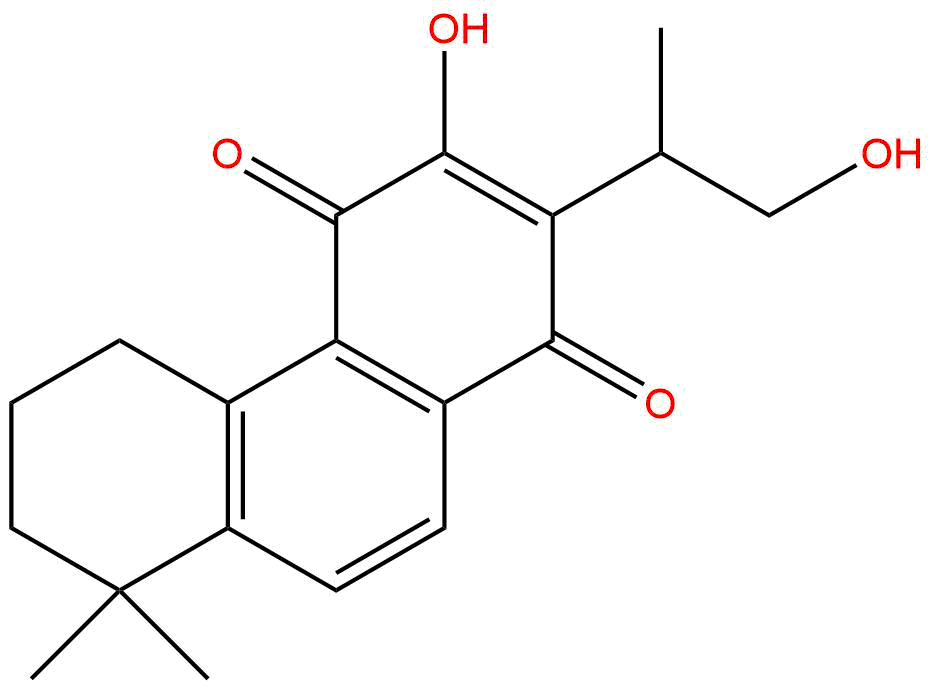
Xin Yin Dan Shen ketone belongs to the abietane type of diterpenoid compounds, and its core skeleton is a fused ring system consisting of four rings (A, B, C, D). Specifically, its structural feature lies in a tricyclic diterpene parent nucleus (A, B, C rings), where the C ring is a quinone or orthoquinone structure, which is a common feature of tanshinone compounds. The compound with a similar structure to neotanshinone is cryptotanshinone, but the difference lies in the oxidation state or substitution mode of the furan ring (D ring). The D ring of neotanshinone is a dihydrofuran ring, rather than the furan ring in tanshinone. This subtle structural difference leads to significant differences in their physicochemical properties and biological activities. Its precise chemical structure is usually described as: 1,2,6,7,8,9-hexahydro-1,6,6-trimethyl-pheno [1,2-b] furan-10,11-dione. Its molecular formula is C ₁₉ H ₂₂ O ₄.
Physicochemical properties
The physicochemical properties of Xinyin Tanshinone determine its absorption, distribution, metabolism, and excretion (ADME) process in the body, and are key parameters for evaluating its pharmacological properties.
-
Molecular weight and LogP The molecular weight of Xin Yin Dan Shen ketone is 314.3810 g/mol, which belongs to the category of small molecule compounds and meets the requirement of molecular weight (<500) in Lipinski's Rule of Five for oral drugs. Its lipophilic water partition coefficient (LogP) is 3.3044, indicating that the compound has a moderate degree of lipophilicity. This lipophilicity makes it easy to penetrate biological membranes, facilitating binding to intracellular targets such as NF - κ B, but may also result in lower solubility in aqueous environments such as blood.
-
Topological Polarity Surface Area (TPSA)TPSA is 74.6000 Å ². TPSA is an important indicator for measuring the ability of compounds to penetrate cell membranes, especially the blood-brain barrier (BBB). It is generally believed that compounds with TPSA less than 90 Å ² are more likely to penetrate the BBB. The TPSA of neotanshinone is 74.6 Å ², which theoretically has the potential to penetrate the BBB. However, actual evaluations show that its BBB penetration is "low", which may be related to its intramolecular hydrogen bonds, specific spatial conformation, or substrate properties of transport proteins.
-
Water solubility The water solubility of Xinyin Danshen ketone is extremely low, only 0.0150 mg/mL. This is a common problem among many natural polycyclic aromatic compounds and one of the main bottlenecks in their pharmacological development. Low water solubility means that it is difficult to effectively dissolve in the gastrointestinal tract after oral administration, resulting in low bioavailability. Therefore, developing suitable drug delivery systems (such as liposomes, nanoparticles, cyclodextrin inclusion complexes, etc.) is the key to improving their clinical application value.
-
Stability As a quinone compound, neotanshinone is sensitive to light, heat, and oxidation conditions. During storage and experimentation, it is necessary to avoid light, low temperatures, and isolate air to prevent degradation or oxidative deterioration.
Plant sources and extraction methods
Plant-based
The main plant source of Xinyin Tanshinone is Danshen, a plant of the Salvia genus in the Lamiaceae family(Salvia miltiorrhiza Bunge)。 The dried roots and rhizomes of Danshen are commonly used medicinal materials in traditional Chinese medicine, mainly produced in Sichuan, Shandong, Henan, Shaanxi and other places in China. In addition to Salvia miltiorrhiza, other plants of the Salvia genus, such as Southern Salvia miltiorrhiza(Salvia bowleyana Dunn)、 Ganxi Sage(Salvia przewalskii Maxim. may also contain trace amounts of neotanshinone, but the content is much lower than that of genuine Danshen. The content of neotanshinone in Danshen roots is usually lower, much lower than Danshentong IIA and neotanshinone, which is also one of the reasons for its limited early research. Its content is influenced by various factors, including the variety, origin, harvesting time, growth period, and processing methods of Danshen.
extraction method
Due to the lipophilic characteristics of salvianolic acid, its extraction is usually carried out using organic solvent extraction and combined with modern chromatographic techniques for separation and purification.
-
Traditional solvent extraction method The most classic method is to use high concentration ethanol (such as 95% ethanol) or methanol for reflux extraction or cold soaking extraction of Danshen medicinal powder. After vacuum concentration of the extract, the total salvianolic acid extract was obtained. Due to its low polarity, neotanshinone often co dissolves with tanshinone IIA, cryptotanshinone, and other lipophilic compounds.
-
Liquid liquid extraction and crude separation Disperse the total extract in water and perform liquid-liquid extraction using low polarity organic solvents such as petroleum ether and ethyl acetate. Xin Yin Dan Shen ketone is mainly enriched in the ethyl acetate or dichloromethane extraction layer, thereby separating from a large amount of water-soluble impurities.
-
Modern chromatographic separation technology This is a key step in obtaining high-purity neotanshinone.
- Silica gel column chromatography The most commonly used separation method. Use different ratios of petroleum ether ethyl acetate or chloroform methanol mixed solvents for gradient elution. New salvianolic acid is usually eluted in the medium polarity range.
- Preparation type high performance liquid chromatography (Prep HPLC)For components that are difficult to completely separate by silica gel column chromatography, a reverse phase C18 column can be used to perform isocratic or gradient elution with methanol water or acetonitrile water systems, which can efficiently and quickly obtain high-purity (>98%) new salvianolic acid monomers.
- High Speed Counter Current Chromatography (HSCCC)As a liquid-liquid distribution chromatography technique, HSCCC avoids irreversible adsorption of samples on solid stationary phases and is particularly suitable for separating structurally similar tanshinone compounds. It has the advantages of high sample recovery and large preparation capacity.
-
New Extraction Technology In order to improve extraction efficiency and reduce solvent consumption, technologies such as ultrasound assisted extraction, microwave-assisted extraction, and supercritical fluid extraction (SFE) have also been explored in recent years. For example, by using supercritical CO ₂ extraction and adjusting pressure and temperature, lipid soluble tanshinone components can be selectively extracted, and the product has no solvent residue, making it environmentally friendly.
Pharmacological activity research
The pharmacological activity research of Xin Yin Dan Shen ketone mainly focuses on its anti-inflammatory, antioxidant, and cardiovascular protective effects, which are interrelated and together constitute its potential medicinal value.
anti-inflammatory activity
Inflammation is a defensive response of the body to harmful stimuli, but uncontrolled chronic inflammation is a common pathological basis for various diseases such as cardiovascular disease, neurodegenerative diseases, and cancer. Xinyin Tanshinone exhibits significant anti-inflammatory activity.
- Inhibit macrophage inflammatory response In the RAW264.7 macrophage model stimulated by lipopolysaccharide (LPS), neotanshinone can dose dependently inhibit the production of NO and prostaglandin E ₂ (PGE ₂). NO and PGE ₂ are key mediators of inflammatory response, catalyzed by iNOS and cyclooxygenase-2 (COX-2), respectively. Research has shown that neotanshinone downregulates the mRNA and protein expression levels of iNOS and COX-2 by inhibiting the nuclear translocation of NF - κ B.
- Inhibit pro-inflammatory cytokines Xinyin Tanshinone can significantly reduce the secretion of pro-inflammatory cytokines such as tumor necrosis factor - α (TNF - α), interleukin-1 β (IL-1 β), and interleukin-6 (IL-6) induced by LPS. These cytokines are important amplifiers in the inflammatory cascade response.
- In vivo anti-inflammatory model In animal models, neotanshinone also showed anti-inflammatory effects. For example, in the rat model of toe swelling induced by carrageenan or the mouse model of increased intra-abdominal capillary permeability induced by acetic acid, administration of neotanshinone can effectively alleviate inflammatory reactions.
antioxidant activity
Oxidative stress is the result of an imbalance between the production of reactive oxygen species (ROS) and the antioxidant defense system, and is closely related to inflammation, aging, and various diseases. The quinone structure of neotanshinone endows it with electron accepting ability, thereby exhibiting antioxidant properties.
- Directly eliminate free radicals In vitro chemical experiments have shown that neotanshinone can effectively scavenge 1,1-diphenyl-2-trinitrophenylhydrazine (DPPH) free radicals, 2,2 '- diazobis (3-ethylbenzothiazoline-6-sulfonic acid) (ABTS) cationic free radicals, and superoxide anion free radicals.
- Activate antioxidant enzymes New salvianolic acid can upregulate the expression of a series of antioxidant enzymes, such as superoxide dismutase (SOD), catalase (CAT), and glutathione peroxidase (GPx), by activating the nuclear factor E2 related factor 2 (Nrf2)/antioxidant response element (ARE) signaling pathway, thereby enhancing the endogenous antioxidant defense ability of cells.
- Protect cells from oxidative damage In the cell oxidative damage model induced by hydrogen peroxide (H ₂ O ₂) or tert butyl hydroperoxide (t-BHP), pretreatment with neotanshinone can significantly improve cell survival rate, reduce lactate dehydrogenase (LDH) release and malondialdehyde (MDA) production, and protect cell membrane integrity.
Cardiovascular protective activity
This is the most promising field for the development of neotanshinone, whose effects involve multiple levels and targets.
- Anti atherosclerosis Atherosclerosis is a chronic inflammatory disease. Neocryptotanshinone can down regulate the expression of vascular cell adhesion molecule-1 (VCAM-1) and intercellular adhesion molecule-1 (ICAM-1) by inhibiting NF - κ B pathway, thereby reducing the adhesion and migration of monocytes to endothelial cells, which is an early key step in the formation of atherosclerosis. In addition, it may also affect lipid metabolism and foam cell formation by regulating PPARG and HMGCR.
- Inhibit the proliferation of vascular smooth muscle cells Abnormal proliferation and migration of vascular smooth muscle cells (VSMCs) are important causes of vascular remodeling and restenosis. Xinyin Tanshinone can inhibit the AKT1 signaling pathway and prevent platelet-derived growth factor (PDGF) - induced VSMC proliferation and migration.
- Anti myocardial ischemia-reperfusion injury In the myocardial ischemia-reperfusion model, neotanshinone can activate the AKT1/NOS3 (eNOS) pathway, promote the production of nitric oxide (NO), dilate coronary arteries, improve myocardial blood flow, and inhibit myocardial cell apoptosis. At the same time, its antioxidant activity also helps to eliminate the large amount of ROS generated during reperfusion and alleviate myocardial injury.
- Antithrombotic New salvianolic acid may exert antithrombotic effects by inhibiting the expression of P-selectin (SELP), reducing platelet activation and aggregation, and affecting the coagulation fibrinolysis system. The regulation of ADRB2 and KCNH2 may also affect cardiac function and rhythm.
Mechanism of action and molecular targets
The pharmacological activity of Xin Yin Dan Shen ketone is not derived from a single target, but is regulated through a multi-target and multi pathway network. The core mechanism can be summarized as follows:
Core signaling pathway: NF - κ B/iNOS
This is the most critical mechanism of the anti-inflammatory effect of Xin Yin Dan Shen ketone. In the resting state, NF - κ B binds to its inhibitory protein I κ B and exists in an inactive form in the cytoplasm. When cells are stimulated by inflammation such as LPS and TNF - α, I κ B kinase (IKK) is activated, leading to phosphorylation and ubiquitination degradation of I κ B. The released NF - κ B immediately translocates into the nucleus and binds to the κ B site on the target gene promoter, initiating the transcription of a series of pro-inflammatory genes such as iNOS, COX-2, TNF - α, IL-6, VCAM-1, ICAM-1, etc. Xin Yin Dan Shen ketone can inhibit the activity of IKK or directly prevent the degradation of I κ B, thereby blocking the activation of NF - κ B and ultimately downregulating the expression of downstream inflammatory mediators. Inhibiting iNOS and reducing excessive production of NO is an important effector of its anti-inflammatory effect.
Cardiovascular protection related target network
The protective effect of Xinyin Danshen ketone on the cardiovascular system is a comprehensive manifestation of its multi-target regulation:
- SELP (P-selectin)SELP is an adhesion molecule stored in platelet alpha granules and endothelial cell Weibel Palade bodies. Under inflammation or thrombotic stimulation, SELP rapidly expresses on the cell surface, mediating the rolling adhesion of white blood cells and platelets. Xin Yin Dan Shen ketone inhibits SELP expression, which helps with anti-inflammatory and anti thrombotic effects.
- HMGCR (3-hydroxy-3-methylglutaryl-CoA reductase)HMGCR is the rate limiting enzyme in cholesterol biosynthesis and a target of classic lipid-lowering drugs such as statins. Whether neocryptotanshinone directly inhibits HMGCR activity remains to be confirmed, but it may play an anti atherosclerotic role by indirectly regulating cholesterol metabolism.
- PPARG (Peroxisome proliferator activated receptor gamma)PPARG is a key nuclear receptor that regulates adipocyte differentiation, glucose and lipid metabolism, and inflammatory response. Activation of PPARG can improve insulin resistance and has anti-inflammatory effects. Xin Yin Dan Shen ketone may act as an agonist or regulator of PPARG, participating in the improvement of metabolic disorders.
- ACE (angiotensin-converting enzyme)ACE is a key enzyme in the renin-angiotensin system (RAS), catalyzing the conversion of angiotensin I into the potent vasoconstrictor angiotensin II. Inhibiting ACE is an important strategy for treating hypertension and heart failure. Xin Yin Dan Shen ketone may have ACE inhibitory activity, thereby exerting antihypertensive and target organ protective effects.
- AKT1 (protein kinase B alpha)AKT1 is a core signaling molecule for cell survival, proliferation, and metabolism. In cardiomyocytes and endothelial cells, phosphorylation activation of AKT1 (p-AKT) can inhibit apoptosis and promote survival. Xinyin Tanshinone activates AKT1, which in turn phosphorylates eNOS (NOS3) to produce NO, exerting cardioprotective and vasodilatory effects.
- ADRB2 (β 2-adrenergic receptor)ADRB2 is mainly distributed in the smooth muscle of the heart and blood vessels, and its activation can cause increased heart rate and vasodilation. The regulation of ADRB2 by Xin Yin Dan Shen ketone may affect cardiac function and vascular tone.
- KCNH2 (potassium voltage-gated channel subfamily H member 2, hERG)The hERG channel is responsible for repolarization of action potentials in myocardial cells. Drug inhibition of hERG channels can lead to prolonged QT interval and increased risk of arrhythmia. The pharmacological evaluation shows that neotanshinone does not inhibit hERG, which is an important safety advantage.
- NOS3 (endothelial nitric oxide synthase, eNOS)ENOS is mainly expressed in endothelial cells, producing NO, maintaining vasodilation, inhibiting platelet aggregation, and leukocyte adhesion. New salvianolic acid activates eNOS through the AKT1 pathway, which is one of the core components of its cardiovascular protective effect.
- ICAM1 & VCAM1 The expression of these two cell adhesion molecules on endothelial cells is regulated by NF - κ B. Neocryptotanshinone inhibits NF - κ B, down regulates ICAM-1 and VCAM-1, prevents monocytes and lymphocytes from adhering to and passing through endothelium, which is the key mechanism of anti atherosclerosis.
Evaluation of drug properties and pharmacokinetics
Drugability assessment
Based on the provided parameters, the pharmacological properties of neotanshinone exhibit significant advantages and disadvantages.
-
Advantage:
- Low molecular weight:314.38 Da, Complies with the five rules for classified drugs.
- LogP moderate 3.30, good lipophilicity, conducive to membrane penetration.
- No risk of hERG inhibition This is an important guarantee for cardiac safety, reducing the risk of fatal arrhythmias (apical torsion to ventricular tachycardia) caused by medication.
- Ames test negative The Ames test result is 0.6 (usually<2 is considered negative), indicating that it does not have significant mutagenicity and has a low risk of genetic toxicity.
-
disadvantage:
- Very poor water solubility 0.015 mg/mL is the largest drug barrier. This directly leads to poor oral absorption and low bioavailability.
- Low blood-brain barrier penetration Although TPSA is not high, its actual BBB penetration is low, which limits its application in the treatment of central nervous system diseases. However, it may be an advantage for cardiovascular drugs that need to avoid central side effects.
pharmacokinetics
At present, there are relatively few detailed research reports on the pharmacokinetics of neotanshinone in vivo. However, based on its physicochemical properties and metabolic characteristics of similar compounds (such as neotanshinone), its general outline can be inferred:
- absorb Poor oral absorption and low bioavailability. The main reason is the low dissolution rate caused by poor water solubility, as well as the possible first pass effect. Metabolic enzymes (such as CYP450) and transporters (such as P-glycoprotein) in the intestine may also limit their absorption.
- distribution Due to its lipophilicity, neotanshinone is widely distributed in the body, possibly mainly in blood rich tissues such as the liver, heart, lungs, and kidneys. Its plasma protein binding rate may be high.
- Metabolism The main metabolic site is the liver. Its metabolic pathways may include:
- Phase I metabolism Cytochrome P450 enzyme systems (such as CYP3A4, CYP2C9) mediate oxidative reactions such as hydroxylation, dehydrogenation, etc. Its quinone structure may also be reduced to hydroquinone.
- Phase II metabolism Combined with glucuronic acid, sulfuric acid, etc., it forms a more water-soluble complex that is easier to excrete from urine or bile.
- excretion Metabolites are mainly excreted into the intestine through bile, and some may be reabsorbed through the enterohepatic circulation. A small amount is excreted in its original form or metabolite form through the kidneys and urine.
Clinical application prospects and prospects
The unique pharmacological activity and relatively clear molecular mechanism of Xinyin Tanshinone have shown broad application prospects in multiple therapeutic fields, but at the same time, it also faces enormous challenges.
Potential application areas
- cardiovascular disease This is the most core application direction. Based on its multiple effects of anti-inflammatory, antioxidant, inhibiting VSMC proliferation, protecting endothelial function, and anti thrombosis, neocryptotanshinone is expected to be developed as a candidate drug for treating atherosclerosis, coronary heart disease, myocardial infarction, hypertension, heart failure and other diseases. Especially, it has unique advantages in the prevention and treatment of myocardial ischemia-reperfusion injury by activating the AKT/eNOS pathway and inhibiting the NF - κ B pathway.
- Inflammatory diseases Its strong anti-inflammatory activity makes it suitable for treating various chronic inflammatory diseases, such as rheumatoid arthritis, inflammatory bowel disease, chronic obstructive pulmonary disease, etc. By inhibiting NF - κ B and downstream inflammatory mediators, it is expected to alleviate disease symptoms and delay disease progression.
- Metabolic diseases: By regulating PPARG, HMGCR and other targets, neocryptotanshinone may be beneficial to improve insulin resistance and regulate dyslipidemia, thus playing a role in the treatment of type 2 diabetes and non-alcoholic fatty liver disease (NAFLD).
Challenges and Solutions Faced
-
The issue of bioavailability This is the biggest obstacle to the clinical application of neotanshinone. The solution strategy includes:
- Drug delivery system Develop new formulations such as liposomes, nanoparticles, solid dispersions, phospholipid complexes, etc. to improve their water solubility and oral bioavailability.
- Prodrug design Introducing hydrophilic groups (such as phosphate groups and amino acids) into its molecules to make prodrugs, which are then released in vivo through enzymatic hydrolysis or hydrolysis.
- Structural modification On the basis of maintaining the core pharmacophore, the molecule is chemically modified by introducing polar groups to improve water solubility while maintaining or enhancing activity.
-
Target selectivity and safety Although the Ames and hERG test results are good, whether their regulation of multiple targets (such as ACE, HMGCR, PPARG) will produce off target effects and the safety of long-term use still need to be evaluated through systematic in vivo toxicology studies.
-
Source issue New hidden tanshinone has low content in Danshen and high natural extraction cost. In the future, it is necessary to develop efficient chemical synthesis or semi synthesis routes, or to use biotechnology (such as genetic engineering, cell culture) for large-scale production.
Conclusion
As an important natural diterpenoid quinone compound in Danshen, Xinyin Tanshinone has shown extraordinary potential in the fields of anti-inflammatory and cardiovascular protection due to its unique chemical structure and clear pharmacological mechanism. It exerts its core anti-inflammatory effect by inhibiting the NF - κ B/iNOS signaling pathway and regulating it through regulation SELP、HMGCR、PPARG、ACE、AKT1、NOS3、ICAM1、VCAM1 Multiple targets closely related to cardiovascular function form a complex protective network. Its pharmacological evaluation showed a good safety signal (no hERG inhibition, no mutagenicity), but its extremely low water solubility is the main bottleneck for its clinical translation.
Future research should focus on: 1) further elucidating the molecular mechanisms and network regulation rules of its multi-target effects; 2) Using advanced pharmaceutical chemistry and pharmacology methods to solve its water solubility and bioavailability issues; 3) Conduct systematic in vivo pharmacological and toxicological evaluations to validate its therapeutic efficacy and safety in models of cardiovascular disease and other conditions. With the gradual resolution of these issues, the "new star" of Xinyin Danshen ketone, an ancient traditional Chinese medicine, is expected to move from the laboratory to clinical practice and make new contributions to human health.