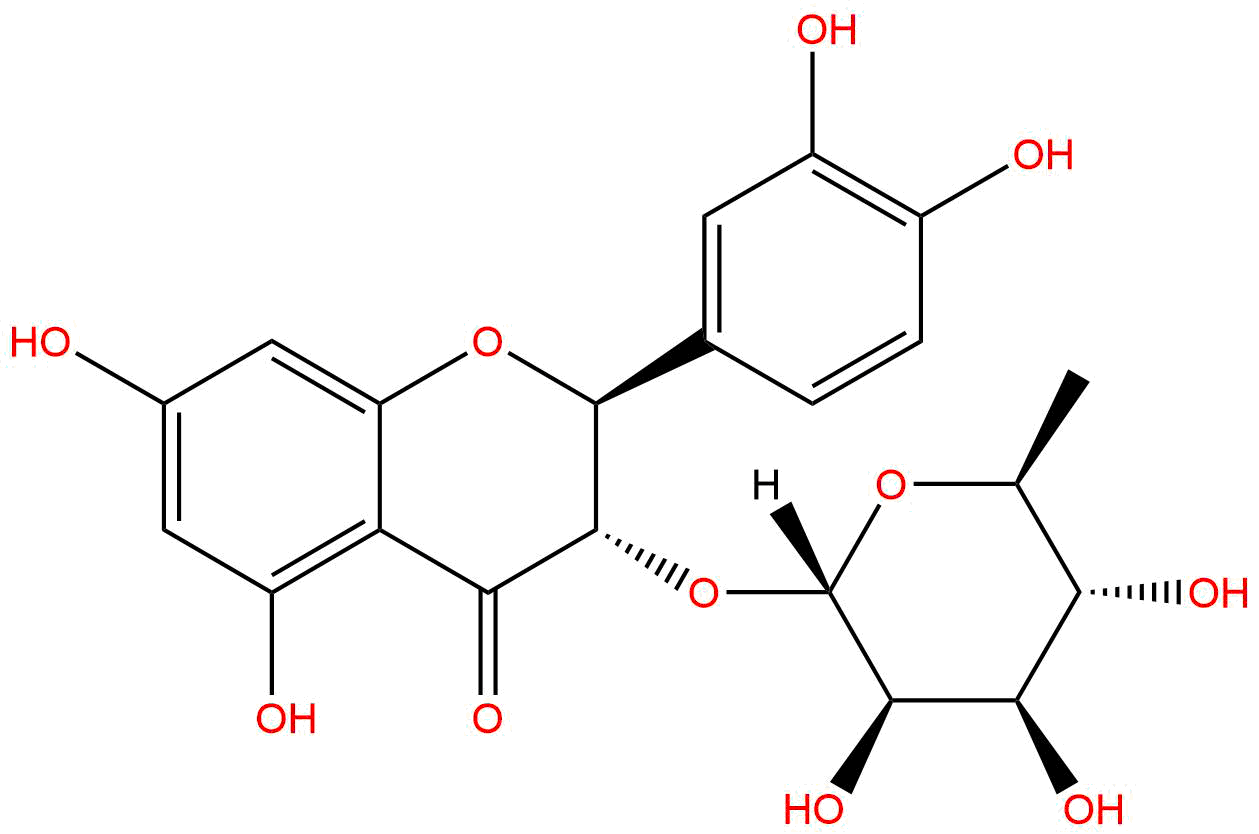


Product name: Neoastilbin
Synonym name: Dihydroquercetin 3-O-a-L-rhamnoside; Neosmitilbin
Catalogue No.: BP4119
Cas No.: 54081-47-9
Formula: C21H22O11
Mol Weight: 450.396
Botanical Source: Engelhardtia roxburghiana Wall.leaf
Type of Compound: Flavonoids
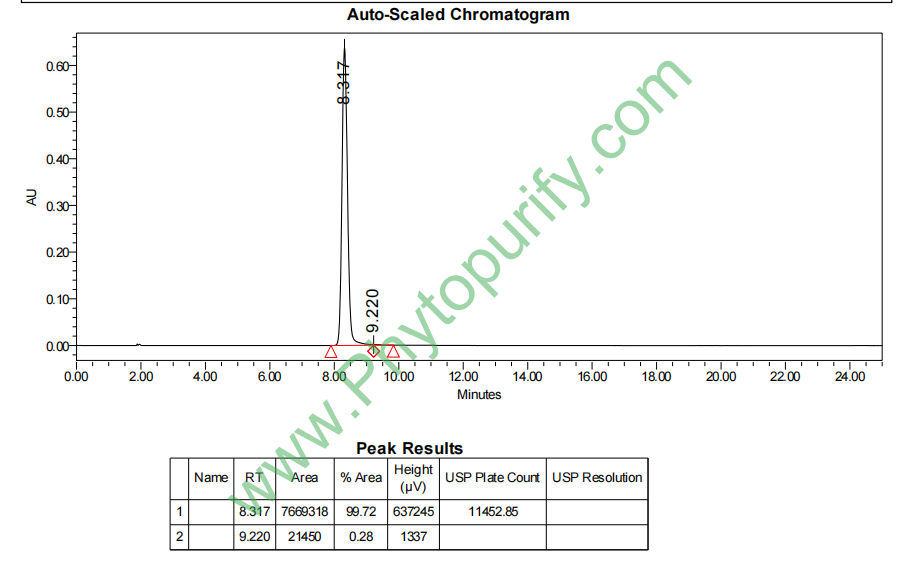
Purity: 95%~99%
Analysis Method: HPLC-DAD or/and HPLC-ELSD
Identification Method: Mass, NMR
Packing: Brown vial or HDPE plastic bottle
Storage: Store in a well closed container, protected from air and light. Put into refrigerate or freeze for long term storage.
Whenever possible, you should prepare and use solutions on the same day. However, if you need to make up stock solutions in advance, we recommend that you store the solution as aliquots in tightly sealed vials at -20℃. Generally, these will be useable for up to two weeks.
The product could be supplied from milligrams to grams
Inquire for bulk scale.
Chengdu Biopurify Phytochemicals Ltd. is a leading company in the research, development, manufacture and marketing of High Quality Phytochemicals and Extracts(especially Active Ingredients from Traditional Chinese Medicine,TCM), Natural Active Pharmaceutical Ingredients worldwide.
The main services:
A. Supply active ingredients and reference standards of TCM, from mgs to kgs scale
B. Custom extraction and purification, target Herb Active Ingredients
C. Custom synthesis and semi-synthesis for Natural Active Ingredients
D. CR(contract research), CM(contract manufacture) and PD(process development) services from lab scale, pilot scale to commercial scale(GMP is also available)
E. TCM compounds library for drug screen,more than 3000 compounds available, many of them are rare and unique.
HPLC of Neoastilbin
Storage conditions:Short-term storage at 2~8℃, long-term storage at -20 ~ -80℃
186.3700
.4996
.3486
3.8902
.4831
.2040
Low
77.3957
4.3503
Yes
No
Yes
No
Yes
No
0.6
Yes
No
Yes
No
Neoastilbin (CAS number: 54081-47-9) is a naturally occurring flavanone glycoside compound belonging to the 4 '- hydroxyflavanone family. structurally, it is a derivative of () - paclitaxel linked to the α - L-rhamnose moiety via a glycosidic bond at position 3. As an enantiomer of Astilbin, it has attracted widespread attention in the field of natural product pharmacology. Its unique chemical structure endows it with various biological activities, especially showing significant potential in the field of anti-inflammatory. In recent years, with the in-depth study of the pharmacological mechanisms of natural products, the pharmacological properties, mechanism of action, and pharmacological evaluation of Xinluo Xinfu glycoside have gradually become clear, becoming an important candidate molecule for the development of new anti-inflammatory drugs.
This article aims to systematically review the chemical structure and physicochemical properties, plant sources, and extraction methods of Xinluo Xinfu Glycoside, with a focus on analyzing its pharmacological activity and molecular mechanism of action. Pharmacokinetic analysis will be conducted based on drug parameters, and its clinical application prospects and future research directions will be explored, providing theoretical basis and practical guidance for natural product pharmacology and new drug development.
Xinluo Xinfu Glycoside is a flavanone glycoside with a molecular formula of C21H2O_11 and a molecular weight of 450.3960. Its core structure is a tetrahydroxyflavanone skeleton, with a 3-hydroxy group connected by a glycosidic bond to an α - L-rhamnose unit, belonging to monosaccharide derivatives. Structurally, Xinxin is a 3-O - α - L-rhamnoside product of () - paclitaxel, which forms an enantiomeric relationship with Xinxin.
In terms of physical and chemical properties, the LogP value of Xinluo Xinfu glycoside is 0.4996, indicating that it has low lipid solubility and strong hydrophilicity, which is in line with the typical characteristics of flavonoid glycosides. Its topological polar surface area (TPSA) is as high as 186.37 Å ², indicating that the molecule has a large number of polar groups, which may affect its cell membrane permeability and bioavailability. The water solubility index is 3.8902, indicating that it has good solubility in the aqueous phase, which is beneficial for absorption after oral administration. The low permeability of the blood-brain barrier indicates its limited distribution in the central nervous system. The hERG channel inhibition experiment showed a negative result, indicating a low risk of cardiac toxicity. The Ames mutagenicity test score is 0.6, indicating a low risk of genetic toxicity and good safety.
Overall, the chemical structure of Xinluo Xinfu glycoside determines its good water solubility and safety, but its high polarity and low lipid solubility may limit its oral bioavailability and tissue distribution, which needs to be improved through drug formulation optimization or structural modification.
Xinluoxinfu glycoside is mainly found in various Chinese medicinal materials and plants, especially in the leaves and rhizomes of Astilbe plants, which are rich in content. This type of plant is widely distributed in temperate regions of Asia and is an important source of traditional herbs. In addition to the genus Loricariin, Loricariin has also been reported to exist in other flavonoid rich plants.
The extraction method usually uses polar solvents such as ethanol or methanol aqueous solution for extraction, combined with ultrasound assisted extraction or hot reflux extraction techniques to improve extraction efficiency. After filtration and concentration, the extraction solution is separated and purified using liquid-liquid partitioning, column chromatography (such as silica gel column, C18 reverse phase column), and high performance liquid chromatography (HPLC). The high-purity Xinluoxinfu glycoside can be further purified and identified by reverse phase HPLC.
In recent years, green extraction techniques such as supercritical CO2 extraction and microwave-assisted extraction have been introduced to reduce the use of organic solvents and extraction time while maintaining the stability of active ingredients. In addition, molecular imprinting technology and immunoaffinity chromatography have also been developed for highly selective separation of neonicotinoid glycosides, improving purification efficiency.
The anti-inflammatory effect of Xinluo Xinfu glycoside is one of its most significant pharmacological activities. Multiple in vitro and in vivo experiments have shown that Xinxin can significantly inhibit the expression and release of various pro-inflammatory factors, including tumor necrosis factor alpha (TNF - α), interleukin-6 (IL-6), inducible nitric oxide synthase (NOS2), and cyclooxygenase-2 (PTGS2). Its anti-inflammatory effect has been validated in inflammatory models such as lipopolysaccharide (LPS) - induced macrophage inflammatory response and mouse foot swelling model.
Xinluo Xinfu glycoside exhibits immunomodulatory effects by regulating signaling pathways such as STAT3 and NF - κ B, affecting the activation of immune cells and the production of inflammatory mediators. Its regulation of inflammation related protein CASP1 (caspase-1) and plasma channels TRPV1 and TRPA1 suggests its potential role in regulating neuroinflammation and pain transmission.
As a polyhydroxyflavanone glycoside, neonicotinoid glycoside has excellent free radical scavenging ability, which can alleviate oxidative stress damage and protect cells from oxidative stress-induced apoptosis. Its antioxidant effect provides an important molecular basis for its anti-inflammatory and cell protective effects.
Some studies have shown that Xinluo Xinfu Glycoside may have multiple biological activities such as antibacterial, anti-tumor, and neuroprotective effects, but related research is still in the preliminary stage and the mechanism has not been fully elucidated, requiring further systematic research and verification.
The anti-inflammatory effect of Xinluo Xinfu glycoside involves the regulation of multiple signaling pathways and molecular targets, mainly including:
IL-6/STAT3 pathway Xinluo Xinfu glycoside inhibits the expression of IL-6 and the phosphorylation of downstream STAT3, blocks pro-inflammatory signaling, reduces the release of inflammatory factors, and inhibits the spread of inflammatory reactions.
NF - κ B signaling pathway By inhibiting the activation and nuclear translocation of NF - κ B, reducing the expression of inflammation related genes such as TNF - α and PTGS2, and alleviating the production of inflammatory mediators.
CASP1 regulation Xinluo Xinfu glycoside affects CASP1 activity, regulates inflammasome activity, and inhibits the maturation and release of pro-inflammatory cytokines such as IL-1 β.
TRPV1/TRPA1 ion channel Regulating the activity of these pain and inflammation related ion channels to alleviate neuroinflammation and related pain symptoms.
NOS2 and PTGS1/PTGS2 By inhibiting the expression of inducible nitric oxide synthase and cyclooxygenase, reducing the production of nitric oxide and prostaglandins, and alleviating inflammatory reactions.
The synergistic effects of these multiple targets and pathways endow Xinluo Xinfu glycoside with significant anti-inflammatory and immune regulatory abilities, reflecting its typical characteristics as a natural product with complex mechanisms of action.
The pharmacological parameters of Xinluo Xinfu Glycoside indicate that it has certain potential for drug development:
Molecular weight and polarity The molecular weight of 450.3960 is within the moderate range of drug molecules, but a higher TPSA (186.37 Å ²) suggests strong polarity, which may affect oral absorption and cell membrane permeability.
Fat solubility and water solubility The LogP value of 0.4996 indicates strong hydrophilicity, which is beneficial for the development of water-soluble drug formulations, but may limit lipid soluble mediated membrane absorption. The water solubility index of 3.8902 supports its good solubility in aqueous phase.
Blood-brain barrier penetrability Low penetration limits its application in central nervous system diseases, but also reduces the potential risk of central neurotoxicity.
safety indicator The negative inhibition of hERG channel and low mutagenicity in Ames test suggest that neonicotinoid has good cardiac safety and genetic toxicity safety.
In terms of pharmacokinetics, there is currently limited systematic research on Xinluoxinfu glycoside. Preliminary data suggests that its oral bioavailability is limited, possibly due to high polarity and glycosidic structure leading to low intestinal absorption efficiency. The metabolic pathway is speculated to be mainly through the hydrolysis of glycosidic bonds by gut microbiota, releasing the flavanone nucleus, which is then metabolized by the liver enzyme system and excreted. In the future, systematic in vivo pharmacokinetic and metabolic studies need to be conducted to clarify their absorption, distribution, metabolism, and excretion (ADME) characteristics, providing a basis for clinical development.
Xinluo Xinfu glycoside, as a natural flavonoid glycoside with significant anti-inflammatory activity, has the potential to become a new type of anti-inflammatory drug. Its multi-target mechanism of action meets the treatment needs of modern multifactorial inflammatory diseases, especially suitable for adjuvant therapy of chronic inflammation, autoimmune diseases, and related pain symptoms.
The future clinical application prospects are mainly reflected in the following aspects:
Treatment of inflammatory diseases Including rheumatoid arthritis, inflammatory bowel disease, chronic obstructive pulmonary disease, etc., utilizing their properties of inhibiting inflammatory mediators and regulating immune responses to alleviate disease progression.
Neuroinflammation and Pain Management By regulating the TRPV1/TRPA1 channels, new therapeutic strategies may be provided for neuropathic pain and inflammatory pain.
Combination therapy strategy As an adjuvant drug, it can be used in combination with existing anti-inflammatory drugs to reduce side effects and enhance therapeutic efficacy.
However, the clinical research on Xinluoxinfu glycoside is still in its infancy and lacks systematic clinical trial data. Future research should focus on:
Optimize drug formulations to improve oral bioavailability and in vivo stability;
Systematically evaluate its safety and toxicological characteristics;
Conduct preclinical animal models and human clinical trials to verify their efficacy and safety;
Thoroughly analyze its metabolic pathways and drug interactions to guide rational drug use.
In addition, structural modification and derivative development also provide broad space for enhancing its efficacy and drug properties.
Xinluo Xinfu glycoside, as a structurally unique natural flavonoid glycoside, has shown significant research value and development potential in the field of natural product pharmacology due to its significant anti-inflammatory and immune regulatory activities. Its multi-target and multi pathway mechanism of action provides new ideas for the treatment of complex inflammatory diseases. Although its clinical application is still in the exploratory stage, based on its good safety and pharmacological activity, it is expected to become an important candidate molecule for new anti-inflammatory drugs in the future.
With the advancement of extraction and purification technology and the deepening of pharmacokinetic research, the drug development prospects of Xinluo Xinfu Glycoside will become even clearer. The clinical research and structural optimization of the system will be the key to promoting its clinical translation. In summary, Xinluo Xinfu glycoside not only enriches the types of anti-inflammatory drugs in natural products, but also provides valuable examples for the pharmacological research of natural products, which is worthy of further exploration and development.
