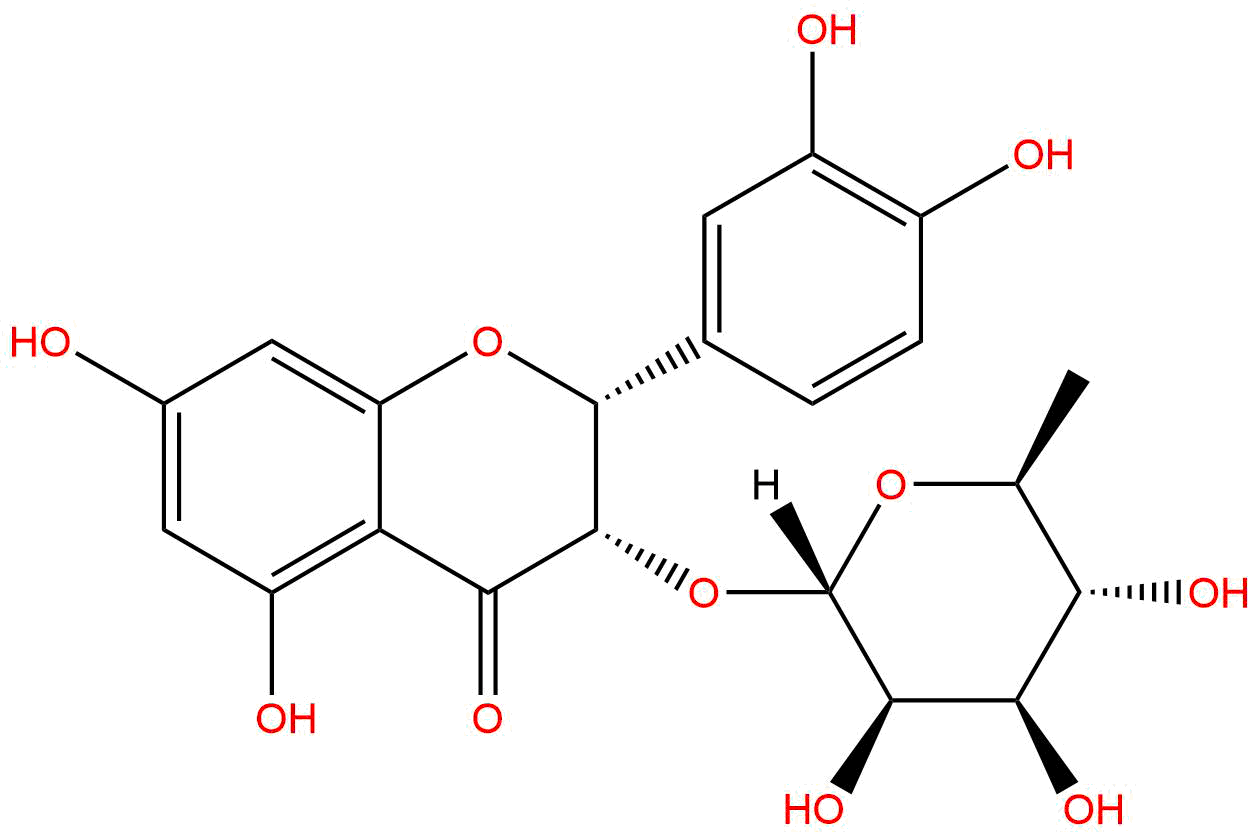


Product name: Isoastilbin
Synonym name:
Catalogue No.: SBP01764
Cas No.: 54081-48-0
Formula: C21H22O11
Mol Weight: 450.396
Botanical Source: Engelhardtia roxburghiana Wall.leaf
Type of Compound: Flavonoids
Purity: 95%~99%
Analysis Method: HPLC-DAD or/and HPLC-ELSD
Identification Method: Mass, NMR
Packing: Brown vial or HDPE plastic bottle
Storage: Store in a well closed container, protected from air and light. Put into refrigerate or freeze for long term storage.
Whenever possible, you should prepare and use solutions on the same day. However, if you need to make up stock solutions in advance, we recommend that you store the solution as aliquots in tightly sealed vials at -20℃. Generally, these will be useable for up to two weeks.
The product could be supplied from milligrams to grams
Inquire for bulk scale.
For Reference Standard and R&D, Not for Human Use Directly.
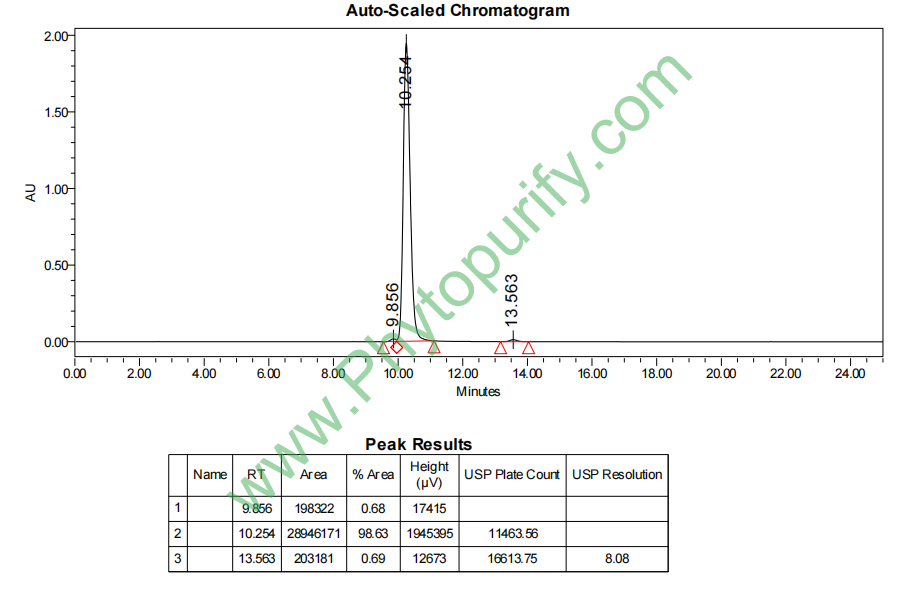
HPLC of Isoastilbin
Storage conditions:Short-term storage at 2~8℃, long-term storage at -20 ~ -80℃
186.3700
.4966
.3458
3.9382
.4767
.2044
Low
77.4357
4.3503
Yes
No
Yes
No
Yes
No
0.6
Yes
No
Yes
No
Isoastilbin, also known as a dihydroflavonol glycoside compound, has a CAS number of 54081-48-0, a molecular formula of C21H22O11, and a molecular weight of approximately 450.40 g/mol. As a natural active product, it is mainly isolated from various medicinal plants, such as those commonly used in traditional Chinese medicine Huangqiye Engelhardtia Roxburghiana and Astragalus(Astrolus membranaceus) and Smilax glabra Rhizoma Smilacis Glabrae and others. In recent years, with the deepening of natural product chemistry and pharmacology research, isosorbide has attracted much attention due to its wide range of biological activities. Existing research reveals that it not only has significant antioxidant and anti-inflammatory Characteristic and can effectively suppress Glucosyltransferase(GTase) and tyrosinase The activity of tyrosinase, with an IC50 value of 54.3 μ g/mL for inhibiting GTase. In addition, isoflavones also exhibit neuroprotection、antimicrobial and anti-apoptotic Wait for multiple pharmacological effects to make it Alzheimer disease、Inflammatory diseases and Skin pigmentation It has significant value in research in related fields. This article will systematically expound the scientific connotation and application potential of this compound from its chemical structure, plant origin, pharmacological mechanism, medicinal evaluation, and research prospects.
The chemical structure of isosorbide belongs to the class of dihydroflavonol glycosides, and its SMILES is expressed as: C [C @ @ H] 1O C@@HC@HC@H[C@H]1O。 This structure indicates that the compound is composed of a dihydroflavonol core (i.e. flavan-3-ol structure) connected to a sugar group (usually glucose) through a glycosidic bond, and there are multiple chiral centers in the molecule, giving it a specific stereoconfiguration. This structural feature is closely related to its biological activity, for example, the sugar moiety may affect its water solubility and target recognition ability.
From the perspective of physicochemical properties, the molecular weight (MW) of isosorbide is 450.3960 g/mol, slightly higher than the common range for small molecule drugs (usually<500 Da), but still within an acceptable range. Its topological polar surface area (TPSA) is 186.3700 Å ², which reflects the presence of multiple hydroxyl (- OH) and glycosidic bonds in the molecule, leading to strong polarity and potentially affecting its transmembrane permeability. The coefficient of lipophilicity (LogP) is 0.4966 and the LogD is 0.3458, indicating that the compound has moderate lipophilicity and tends towards a hydrophilic environment. The water solubility parameter is 3.9382 (usually measured in mg/mL or log mol/L), indicating a certain solubility in water, which is beneficial for formulation development. Taking all these parameters into consideration, isosorbide is in line with Lipinski's Five Rules Most of the conditions in the study (such as MW<500, number of hydrogen bond donors<5, number of hydrogen bond acceptors<10), but higher TPSA may pose a challenge to its oral bioavailability and require further optimization.
One of the main plant sources of isoflavones is Huangqiye(Engelhardtia roxburghiana), Belonging to the Juglandaceae family. Huangqi has a long history in traditional Asian medicine and is commonly used to treat inflammation, infections, and skin diseases. For example, in southern China, Huangqi leaves are often used for decoction or external application to alleviate symptoms such as rheumatic pain, ulcers, and eczema. Modern plant chemistry research has confirmed that Huangqi leaves are rich in flavonoids, among which isoflavones, as one of the key active ingredients, may be closely related to their traditional therapeutic effects.
In addition, isoflavones are also present in other medicinal plants, such as Astragalus(Astrolus membranaceus) and Smilax glabra(Rhizoma Smilacis glabrae)。 Huangqi is known as the "Holy Medicine for Tonifying Qi" in traditional Chinese medicine, commonly used to enhance immunity, resist fatigue, and fight inflammation; Tubia cocos is commonly used to relieve dampness, detoxify, and promote joint health. The traditional applications of these plants are mostly related to anti-inflammatory, antioxidant, and immune regulation, and the discovery of abscisic acid provides a scientific basis for these traditional effects. Through modern extraction and separation techniques, such as chromatography, isoquercetin can be efficiently obtained from these plants, laying the foundation for their pharmacological research and drug development.
The pharmacological activities of isoflavones are extensive, mainly involving anti-inflammatory, antioxidant, neuroprotective, antimicrobial, and enzyme inhibition aspects. Its mechanism of action is closely related to multiple molecular targets. According to database information, potential targets of isosorbide include TNF(Tumor necrosis factor)PTGS2 Prostaglandin endoperoxide synthase 2 (COX-2)NFKB1(Nuclear factor kappa B)IL6(interleukin-6) and IL1B(Interleukin-1 β). These targets are the core regulatory factors of inflammation and immune response, therefore the function of isosorbide anti-inflammatory The effect may be achieved through multiple pathways:
Overall, isoflavones exert pharmacological effects through multiple targets and pathways, and have potential therapeutic value in inflammation related diseases such as arthritis, dermatitis, and neurodegenerative diseases. However, the specific pathways of action and in vivo effects still require further experimental verification.
The evaluation of drug properties is a key step in determining whether a compound can be developed into a drug. Based on the provided parameters, the potential for drug development of isosorbide is analyzed as follows:
Overall, isoflavones have good pharmacological activity and partial pharmacological characteristics, but their permeability, protein binding rate, and potential toxicity need to be focused on in subsequent optimization. Compliant with Lipinski's rules but with deviations, it suggests that it may be more suitable as a lead compound for structural modification.
At present, research on isosorbide is still in the preclinical stage, mainly focusing on in vitro and animal model validation of its activity. In the field of anti-inflammatory, studies have shown that it reduces inflammation by regulating the NF - κ B and COX-2 pathways; In neuroscience, its protective effect against Alzheimer's disease is becoming a hot topic, which may be achieved by inhibiting amyloid aggregation and tau protein phosphorylation. In addition, in dermatology and dentistry, its tyrosinase and GTase inhibitory activities provide new ideas for the development of whitening cosmetics or anti caries drugs.
However, research also faces challenges: firstly, there is insufficient in vivo pharmacokinetic data for isosorbide, such as the need for systematic evaluation of absorption, distribution, metabolism, and excretion (ADME) characteristics; Secondly, although its mechanism of action involves multiple targets, its specificity is not strong, which may lead to off target effects; Finally, natural extraction yields are limited, and chemical synthesis or bioengineering methods need to be further developed to increase supply.
Future directions include: 1)structural optimization Improve its permeability and stability through chemical modification, such as glycosylation modification or introduction of lipophilic groups; 2)Deepening mechanism Using omics techniques and molecular docking, clarify the details of its interactions with targets such as TNF and IL6; 3)clinical translation Conduct standardized toxicology and pharmacodynamics experiments to explore their clinical application potential in inflammatory diseases, neurodegenerative diseases, or skin diseases. With the revival of natural product drug development, isosorbide is expected to become a candidate molecule for multi-target therapeutic agents, providing a new natural choice for modern medicine.
Article Summary As a natural dihydroflavonol glycoside, isoflavones have shown broad prospects in pharmaceutical research due to their multiple activities such as anti-inflammatory, antioxidant, neuroprotective, and enzyme inhibition. Despite the challenges of permeability and toxicity in drug development, through structural optimization and mechanism research, it is expected to develop into an innovative drug for treating inflammation, neurodegenerative diseases, and related infections. Future research should focus on its in vivo effects and clinical translation to fully explore the medical value of this natural product.
