Introduction/Overview
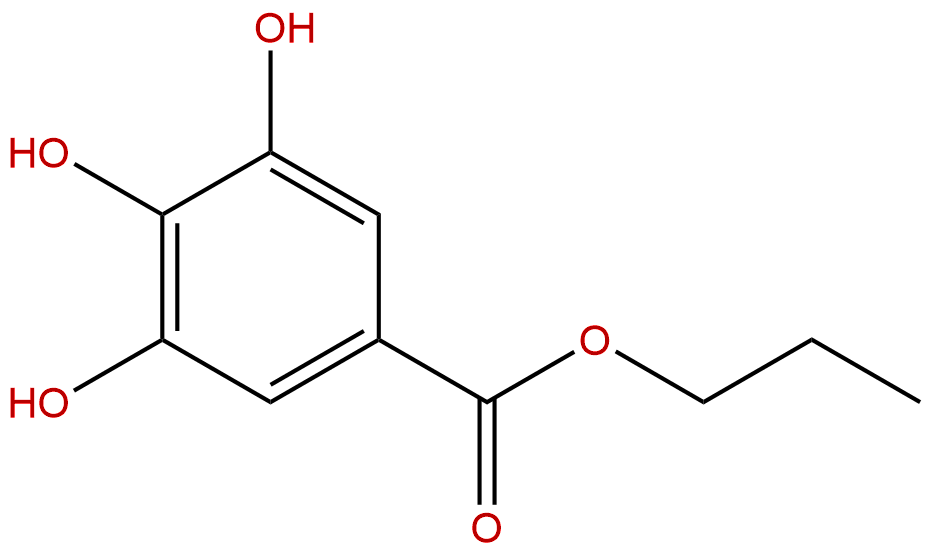
Propyl gallate (PG), chemical name 3,4,5-trihydroxybenzoic acid propyl ester, CAS number 121-79-9, is an artificially synthesized phenolic antioxidant. Since the mid-20th century, it has been widely used in the food, cosmetics, and pharmaceutical industries as an additive to prevent oil rancidity and extend product shelf life due to its excellent ability to inhibit lipid peroxidation. However, with the continuous deepening of modern pharmacological research, the role of PG has far exceeded its simple "preservative" function. Numerous studies have shown that PG exhibits multiple biological activities including anti-inflammatory, anti-tumor, cardioprotective, and neuroprotective effects, transforming it from an ordinary food additive to a potential drug lead compound with significant research value. Its core antioxidant properties form the basis of most of its pharmacological activities by activating the endogenous antioxidant defense system. This article aims to systematically review the chemical properties, pharmacological activities, molecular mechanisms of action, pharmacological characteristics, and clinical application prospects of propyl gallate, in order to provide comprehensive academic references for the in-depth development and transformation research of this compound.
Chemical structure and physicochemical properties
The molecular formula of propyl gallate is C10H12O5, with a molecular weight of 212.2010. Its chemical structure consists of two core functional groups: a benzoic acid backbone (i.e. gallic acid group) connected to three adjacent phenolic hydroxyl groups (3,4,5- positions), and a straight chain propyl group (- C3H7) connected by ester bonds. This structure is the decisive factor in its biological activity.
- Antioxidant activity center The adjacent triphenylhydroxyl structure is a powerful electron donor that can effectively neutralize free radicals (such as reactive oxygen species (ROS) and reactive nitrogen species (RNS)), interrupt free radical chain reactions, and exhibit direct antioxidant capacity.
- Lipophilic regulation Compared with the parent gallic acid, the introduction of propyl groups significantly increases the lipid solubility of the molecule. The calculated lipid water partition coefficient (LogP) is approximately 2.0363, indicating that PG has a certain lipophilicity, which facilitates its penetration into the lipid bilayer of the cell membrane and acts on intracellular targets, while also explaining its excellent antioxidant properties in the lipid system.
- Solubility and polarity The topological polar surface area (TPSA) of PG is 86.99 Å ². Its water solubility is relatively limited, about 2.0134 mg/mL, but it has good solubility in organic solvents such as ethanol, propylene glycol, and oils. This amphiphilic property (which combines certain hydrophilicity and lipophilicity) has a significant impact on its distribution and metabolism in organisms.
- Stability PG is relatively stable under acidic and neutral conditions, but may undergo oxidation or decomposition in alkaline environments, high temperatures, light, and the presence of metal ions such as Fe ³ ⁺ and Cu ² ⁺.
Plant sources and extraction methods
Strictly speaking, propyl gallate is not a natural product directly extracted from plants, but a semi synthetic derivative based on natural ingredients as templates. Its precursor, gallic acid, is widely present in nature.
- Plant-based Gallic acid is a secondary metabolite of various plants, rich in gallnuts (formed by aphids parasitizing on plants such as Rhus chinensis), pomegranate peels, tea leaves, oak bark, grape seeds, and various Chinese medicinal herbs (such as rhubarb and peony bark). These natural sources provide a sufficient raw material foundation for the large-scale production of gallic acid and its derivatives, including PG.
- Extraction and synthesis:
- Extraction of Gallic Acid Traditional methods include water extraction, organic solvent extraction (such as ethanol, acetone), as well as modern technologies such as ultrasound assisted extraction, microwave-assisted extraction, and supercritical CO ₂ extraction, aimed at improving extraction efficiency and purity.
- The synthesis of propyl gallate In industry, esterification is mainly used for synthesis. Using gallic acid and n-propanol as raw materials, in the presence of acidic catalysts such as concentrated sulfuric acid and p-toluenesulfonic acid, the Fischer esterification reaction is carried out by heating to generate PG. After the reaction, purification is carried out through neutralization, water washing, crystallization, recrystallization and other steps. In recent years, environmentally friendly processes such as enzyme catalyzed esterification and solvent-free synthesis have also been explored in pursuit of green synthesis.
Pharmacological activity research
Numerous in vitro and in vivo studies have confirmed that PG has broad and significant pharmacological activities, mainly attributed to its powerful antioxidant and anti-inflammatory properties.
- Antioxidant damage This is the core basic activity of PG. It can directly scavenge DPPH radicals, ABTS ⁺ radicals, superoxide anions (O ₂⁻), hydroxyl radicals (· OH), etc., and effectively inhibit lipid peroxidation, protein carbonylation, and DNA oxidative damage induced by Fe ² ⁺/ascorbic acid, AAPH, etc. In cell models, PG can significantly enhance the survival rate of cells under oxidative stress.
- anti-inflammatory effect PG exerts anti-inflammatory effects by inhibiting the production of pro-inflammatory mediators. Research has shown that PG can significantly reduce the expression levels of nitric oxide (NO), prostaglandin E2 (PGE2), as well as cytokines such as tumor necrosis factor - α (TNF - α), interleukin-6 (IL-6), and interleukin-1 β (IL-1 β) in macrophages stimulated by lipopolysaccharides (LPS). In animal models such as carrageenan induced paw swelling in rats and acetic acid induced increased peritoneal capillary permeability in mice, PG also exhibits clear anti-inflammatory activity.
- Antitumor activity The anti-tumor effect of PG involves multiple pathways. It can induce cell cycle arrest (often at G0/G1 stage) and apoptosis in a variety of cancer cells (such as liver cancer, breast cancer, lung cancer, colon cancer cells). The mechanism of promoting apoptosis is related to upregulating pro apoptotic proteins (such as Bax), downregulating anti apoptotic proteins (such as Bcl-2), activating caspase cascade reactions, and inducing a decrease in mitochondrial membrane potential. In addition, PG can also inhibit the migration, invasion, and angiogenesis of cancer cells, indicating its potential for anti metastasis.
- Cardioprotective effect In animal models such as myocardial ischemia/reperfusion injury and doxorubicin induced cardiomyopathy, PG can alleviate myocardial tissue oxidative damage, inhibit inflammatory cell infiltration, reduce myocardial cell apoptosis, thereby improving heart function and reducing myocardial infarction area. Its protective effect is closely related to the activation of endogenous antioxidant pathways.
- Other activities The study also suggests that PG has potential activities such as neuroprotection (against beta amyloid toxicity, MPTP induced Parkinson's like injury), liver protection (against acetaminophen or CCl ₄ - induced liver injury), and antibacterial activity.
Mechanism of action and molecular targets
The multiple pharmacological activities of PG do not exist in isolation, but are achieved by acting on key signaling pathways and molecular target networks, with the core being the regulation of cellular redox balance.
-
Core pathway: Nrf2/ARE signaling pathway This is the main mechanism by which PG exerts antioxidant and cell protective effects. At rest, the transcription factor NFE2L2 (NRF2) binds to its cytoplasmic inhibitory protein Keap1 and is degraded by ubiquitination. When electrophilic substances such as PG or oxidative stress are present, the conformation of Keap1 changes, and NRF2 stabilizes and translocates to the nucleus. In the nucleus, NRF2 binds to antioxidant response elements (ARE) and initiates gene transcription of a series of downstream phase II detoxifying enzymes and antioxidant proteins.
- Key target genes:
- SOD1(Superoxide dismutase 1, cytoplasm) and SOD2(Mitochondria): Catalyzes the dismutation of superoxide anions into hydrogen peroxide and oxygen, serving as the first line of defense against oxidation.
- CAT(Catalase): Decomposes hydrogen peroxide into water and oxygen to prevent its conversion into more toxic · OH.
- GPX1(Glutathione Peroxidase 1): Using reduced glutathione (GSH) to reduce hydrogen peroxide and lipid peroxides, maintaining cellular redox homeostasis.
- HMOX1(Heme oxygenase-1): Degradation of heme produces biliverdin, carbon monoxide, and iron ions. biliverdin and its reduced product bilirubin are potent endogenous antioxidants.
By upregulating these proteins, PG systematically enhances the antioxidant defense ability of cells, which is the common molecular basis for its anti-inflammatory, anti-tumor, organ protective and other activities.
-
Inhibition of advanced glycation end products (AGEs) precursors PG can effectively inhibit the formation of active carbonyl compounds such as acrolein, glyoxal, and methylglyoxal. These compounds are by-products of glucose metabolism and lipid peroxidation. They can cross link with proteins to form AGEs and participate in the pathological process of diabetes complications, aging and various chronic diseases. The role of PG provides a basis for its application in metabolic diseases.
-
Regulating the inflammatory signaling pathway The anti-inflammatory effect of PG is related to its inhibition of the nuclear factor kappa B (NF - κ B) and mitogen activated protein kinase (MAPK) pathways. It can inhibit the degradation of I κ B α, prevent the nuclear translocation of NF - κ B p65 subunit, thereby downregulating the expression of COX-2, iNOS, and various inflammatory cytokines. Meanwhile, PG can also inhibit the phosphorylation of p38 MAPK, JNK, and ERK.
-
Multiple mechanisms inducing apoptosis of tumor cells In addition to the oxidative stress pathway, PG can also affect survival promoting signaling pathways such as PI3K/Akt and STAT3, inhibit their activity, and promote cancer cell apoptosis. In some cases, PG induced autophagy is also involved in its anti-tumor effects.
Evaluation of drug properties and pharmacokinetics
Based on the provided pharmacological parameters and existing research, the preliminary evaluation of the pharmacological properties of PG is as follows:
- Molecular characteristics The molecular weight is 212.2, which complies with the Rule of Five and has good oral absorption potential. A moderate LogP value (~2.04) balances its membrane permeability and water solubility requirements.
- Absorption and distribution PG can be absorbed through the gastrointestinal tract after oral administration. Its ester bond structure may be hydrolyzed to some extent by intestinal esterases, releasing gallic acid and propanol. Due to its LogP value, PG has a certain degree of tissue permeability, but Low blood-brain barrier permeability This may limit its direct therapeutic effect on central nervous system diseases, but also reduce the potential risk of central nervous system side effects.
- Metabolism and excretion PG mainly undergoes II binding reactions in the body, such as glucuronidation and sulfation, forming more water-soluble metabolites that are excreted through the kidneys and urine. The half-life of its prototype drug in the body is relatively short.
- Preliminary Safety Assessment:
- Genotoxicity:Ames test result is negative (0.0)This indicates that under the conditions of this experiment, PG has no mutagenicity, which is an important safety advantage.
- cardiotoxicity: Data display No hERG inhibition It suggests that the risk of causing QT interval prolongation and tip twisting ventricular tachycardia is relatively low.
- Other As a food additive, PG is considered safe within the prescribed dosage range (usually 0.01% -0.02% of food fat content). However, at high doses, some studies have reported that it may cause gastrointestinal irritation or allergic reactions. The chronic toxicity of long-term high-dose use still needs to be evaluated more systematically.
Overall, PG has a good drug like basis and preliminary safety data, but further optimization of its metabolic stability (prolonging half-life) and targeting is needed to improve its efficacy as a therapeutic drug.
Clinical application prospects and prospects
The transformation of PG from food additives to therapeutic candidates has unique advantages and broad prospects, but also faces challenges.
-
Potential application areas:
- Adjuvant therapy for chronic diseases related to oxidative stress Such as non-alcoholic fatty liver disease (NAFLD), atherosclerosis, diabetes and its complications (nephropathy, retinopathy). PG can alleviate oxidative damage, a core pathological process, at its root by activating the Nrf2 pathway.
- Supplementary interventions for inflammatory diseases Such as arthritis, colitis, etc. Its anti-inflammatory mechanism is clear and complementary to the pathways of action of NSAIDs.
- Chemotherapy prevention and adjuvant therapy for tumors As a low toxicity natural derivative, PG can be used for tumor chemoprevention in high-risk populations or in combination with conventional chemotherapy/radiotherapy to enhance efficacy and reduce side effects (such as cardiac toxicity and liver damage).
- In the field of food and health products Continue to serve as antioxidants and develop functional foods with specific health claims.
-
Challenges and Prospects Faced:
- Bioaccumulation and Formulation Optimization PG has limited water solubility and fast metabolism. Future research needs to improve formulation techniques, such as preparing nanoparticles, liposomes, cyclodextrin inclusion complexes, prodrugs, etc., to enhance their solubility, stability, and targeting, and prolong their action time.
- Enhancement of activity and specificity By modifying the phenolic hydroxyl or propyl groups of PG, a series of derivatives were synthesized to screen for new compounds with stronger activity, higher selectivity towards specific targets (such as Nrf2), and more stable metabolism.
- In depth study on the mechanism of action It is necessary to utilize omics technologies (proteomics, metabolomics) and gene editing tools to comprehensively elucidate the systemic pharmacological network and potential off target effects of PG in multi disease models.
- Strict preclinical and clinical evaluation Despite having a good safety record as a food additive, there is still a lack of clinical trial data on the systemic toxicology, pharmacokinetics, and efficacy required for high-dose, long-term administration as a drug, which is a necessary path towards clinical application.
- Combination therapy strategy Explore the synergistic effects of PG with other drugs such as chemotherapy and anti-inflammatory drugs, and develop new combination therapy regimens.
Conclusion
Propyl gallate (PG) is a typical case of successful rediscovery from a "functional additive" to a "biologically active molecule". Its clear chemical structure, excellent antioxidant capacity, and multiple pharmacological activities such as anti-inflammatory, anti-tumor, and organ protection derived from it have attracted much attention in the fields of natural product pharmacology and medicinal chemistry. Research on the mechanism of action reveals that the core of PG lies in activating the body's innate Nrf2/ARE defense system, reshaping the antioxidant capacity of cells at the transcriptional level. This provides a novel strategy for treating numerous chronic diseases based on oxidative stress as a common pathological basis. Although optimization is still needed in terms of drug development, such as metabolic stability and targeting, its good safety foundation (such as no genetic toxicity, no hERG inhibition) has laid the foundation for its further development. In the future, through structural modification, dosage form innovation, and in-depth translational medicine research, propyl gallate and its derivatives are expected to move from the laboratory to clinical practice, from the dining table to the pharmacy, and contribute new strength to human health.