Introduction/Overview
The intestinal barrier is a key defense line for maintaining the body's homeostasis, and its integrity is closely related to the occurrence and development of inflammatory bowel disease, irritable bowel syndrome, metabolic diseases, and even neurodegenerative diseases. In recent years, natural products have shown great potential in the field of intestinal barrier repair due to their multi-target and low toxicity characteristics. Oligosaccharides, as an important class of natural active substances, not only possess prebiotic properties but also directly regulate the function of intestinal epithelial cells, making them a research hotspot. Among numerous oligosaccharides, Fructo oligosaccharides DP14 (FOS-DP14) has attracted much attention due to its unique degree of polymerization and significant biological activity.
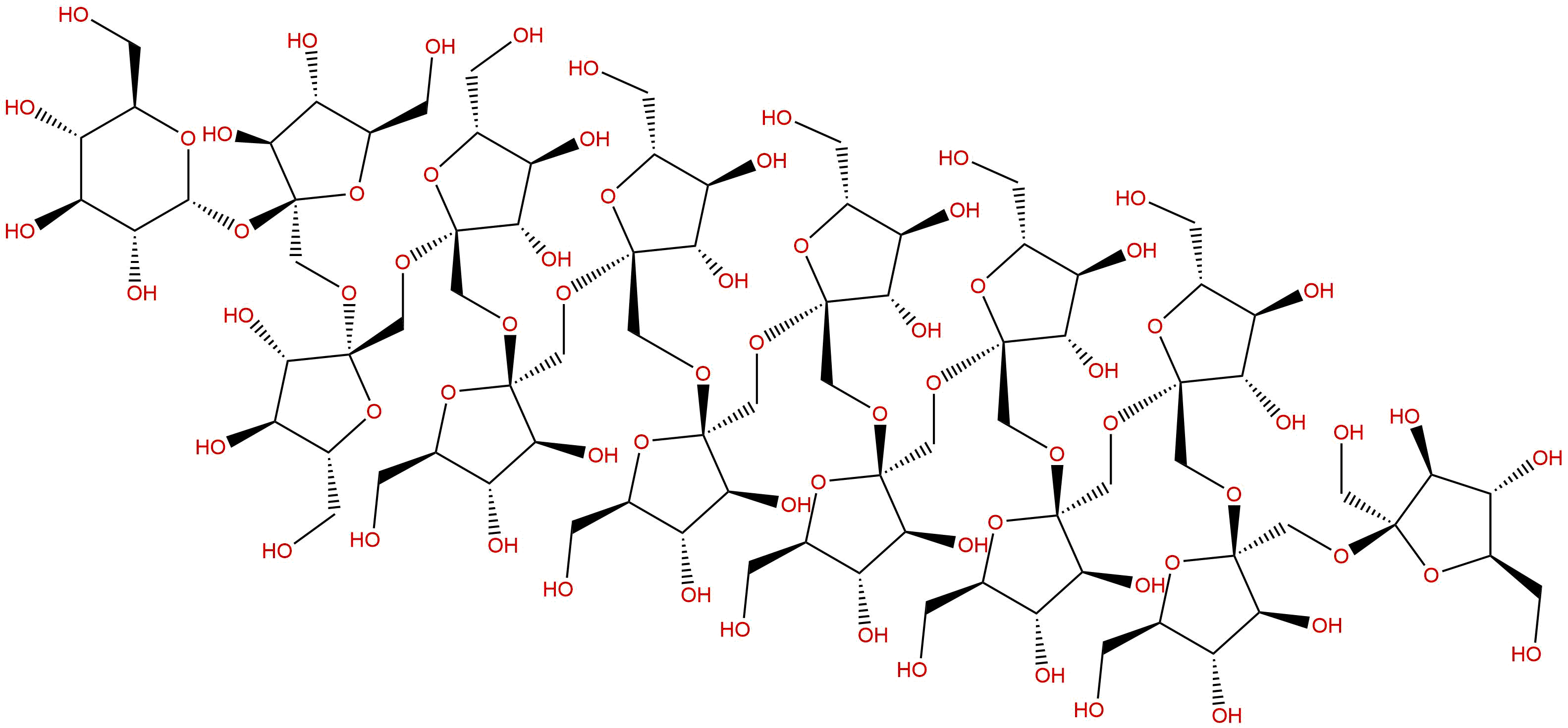
Sugar cane fourteen sugar is a linear oligosaccharide composed of 14 fructose units connected by β - (2 → 1) glycosidic bonds, with the end linked by α - (1 → 2) bonds to glucose residues. Its molecular formula is C ₈₄ H ₁₄₂ O ₇₁, with a molecular weight of up to 2287.9890 Da. This compound was originally derived from the traditional Chinese medicine Atractylodes macrocephala(Atractylodes lancea (Thunb.) DC. was isolated from the rhizome and belongs to the Fructo oligosaccharides (FOS) family, which has a high degree of polymerization. Unlike common low degree of polymerization FOS (such as cane trisaccharide and cane tetrasaccharide), DP14 has unique physicochemical properties and biological activities due to its long-chain structure.
Modern pharmacological research has shown that cane fruit fourteen sugar exhibits excellent efficacy in intestinal barrier repair. It can significantly upregulate the expression of mucin MUC2, tight junction protein OCLN (Occludin), CLDN1 (Claudin-1), TJP1 (ZO-1), and antimicrobial peptide REG3G, thereby enhancing the intestinal barrier function in multiple dimensions. This mechanism of action makes it potentially valuable in the treatment of intestinal inflammatory diseases such as ulcerative colitis and Crohn's disease. In addition, its good water solubility (26.6052 mg/mL) and extremely low blood-brain barrier permeability suggest that it may mainly act locally in the intestine, with a lower risk of systemic side effects.
This article will provide a systematic review of cane fruit fourteen sugar from the aspects of chemical structure and physicochemical properties, plant sources and extraction methods, pharmacological activity, mechanism of action, medicinal evaluation, and clinical application prospects, aiming to provide reference for the in-depth research and development of this natural product.
Chemical structure and physicochemical properties
The chemical structure of cane fourteen sugar belongs to the high polymerization degree member of the fructooligosaccharides family. Its basic skeleton is composed of 14 D-fructose units linearly connected by β - (2 → 1) glycosidic bonds, with an α - D-glucose residue at the end of the chain connected by an α - (1 → 2) bond. This structural feature gives it a similarity to inulin, but with a clearer degree of polymerization. The precise molecular formula is C ₈₄ H ₁₄₂ O ₇₁, with a molecular weight of 2287.9890 Da, belonging to the category of high molecular weight oligosaccharides.
From the perspective of physical and chemical properties, cane fourteen sugar exhibits typical hydrophilic oligosaccharide characteristics. The calculated lipid water partition coefficient LogP is -5.9784, indicating that the compound has extremely strong hydrophilicity and is almost insoluble in lipid solvents. The topological polar surface area (TPSA) is as high as 1139.33 Å ², which is much higher than the typical threshold for oral drugs (<140 Å ²), indicating extremely poor transmembrane passive diffusion ability. The water solubility parameter is 26.6052 mg/mL, which can form a clear solution at room temperature, providing convenience for its application in liquid formulations.
It is worth noting that the molecular weight of cane fourteen sugar (about 2.3 kDa) is located exactly at the boundary region between oligosaccharides and polysaccharides. This molecular weight range allows it to retain both the prebiotic activity of oligosaccharides and the mucosal adhesion properties of certain high molecular weight polysaccharides. Compared with low degree of polymerization FOS (such as DP3-DP5), the molecular chain of DP14 is longer, which may form a more complex spatial conformation, thereby affecting its interaction with intestinal receptors or transporters.
In terms of stability, the β - (2 → 1) glycosidic bond of cane fruit tetrasaccharides has a certain resistance to acid hydrolysis, but partial degradation may still occur under strong acid (pH<3) or high temperature (>100 ° C) conditions. Its reducing end is a glucose residue, therefore it has a certain degree of reducibility, but is relatively stable under neutral pH conditions. These properties have important guiding significance for their extraction, purification, and formulation process design.
Plant sources and extraction methods
Fourteen sugar cane fruit was originally derived from the Asteraceae plant Atractylodes macrocephala(Atractylodes lancea)Isolation and identification from the rhizome. Atractylodes macrocephala, as a traditional Chinese medicine, has the effects of drying dampness and strengthening the spleen, dispelling wind and dispelling cold. It is commonly used to treat digestive system diseases such as dampness obstructing middle burner, abdominal distension and diarrhea. Modern research has confirmed that oligosaccharides in Atractylodes macrocephala are one of the important material foundations for its intestinal protective effects. Except for Atractylodes macrocephala, other plants in the Asteraceae family such as burdock(Arctium lappa)Chrysanthemum taro(Helianthus tuberosus)And chicory(Cichorium intybus)Similar high degree of polymerization fructooligosaccharides may also exist in plants rich in inulin, but DP14 has a relatively high content in Atractylodes macrocephala and is easy to isolate and purify.
The extraction of cane fourteen sugars from Atractylodes macrocephala is usually done by water extraction and alcohol precipitation method. The specific process includes: crushing the dried rhizomes of Atractylodes macrocephala, soaking them in hot water (60-80 ° C), filtering and collecting the extract; Add ethanol to a final concentration of 70-80%, and let it stand at low temperature to precipitate polysaccharides and oligosaccharides; After centrifugal separation, the precipitate is redissolved in water and small molecule impurities are removed by ultrafiltration or dialysis; Finally, gel column chromatography (such as Sephadex G-25 or Bio Gel P-2) was used for fractionation and purification, and oligosaccharide components with different degrees of polymerization were used. Due to the large molecular weight of DP14, its elution sequence on the gel column is earlier, and it can be effectively separated from the low degree of polymerization FOS.
In recent years, efficient preparative liquid chromatography (HPLC) technology has also been applied to the purification of DP14. Accurate separation of FOS with different degrees of polymerization can be achieved by using amino bonded silica gel column or carbon-18 reverse phase column, with acetonitrile water system as the mobile phase. Mass spectrometry techniques such as MALDI-TOF-MS or ESI-MS are used to identify the molecular weight of the target component and ensure the purity of DP14.
It is worth noting that due to the usually low content of DP14 in natural plants (about 0.1-0.5% of the dry weight of Atractylodes macrocephala), large-scale preparation still faces challenges. Enzymatic synthesis or microbial fermentation may become alternative pathways for obtaining high-purity DP14 in the future. For example, by using fructosyltransferase as a substrate with sucrose, FOS with specific polymerization degrees can be selectively synthesized by controlling reaction conditions. However, the efficient enzymatic synthesis of DP14 still needs further optimization.
Pharmacological activity research
The pharmacological activity research of cane fruit fourteen sugar mainly focuses on intestinal barrier protection and repair. Existing evidence suggests that DP14 can enhance intestinal barrier function through multiple pathways, including promoting mucus secretion, strengthening tight junctions, regulating immune responses, and maintaining intestinal microbiota homeostasis.
Promote mucosal barrier repair MUC2 is the main mucin secreted by intestinal goblet cells, which constitutes the key skeleton of the intestinal mucus layer. Experiments have shown that DP14 can significantly upregulate the mRNA and protein expression levels of MUC2 in colon epithelial cells. In a mouse model of colitis induced by dextran sulfate sodium (DSS), oral administration of DP14 (100-200 mg/kg/d) can effectively restore damaged mucus layer thickness and reduce bacterial translocation. This effect may be related to the activation of the EGFR/STAT3 signaling pathway in goblet cells by DP14.
Strengthen tight connections The tight junction proteins OCTN, CLDN1, and TJP1 are key molecules that maintain the permeability between intestinal epithelial cells. DP14 treatment can significantly increase the expression of the above-mentioned proteins in the Caco-2 monolayer cell model, reduce the transepithelial electrical resistance (TEER) value, and decrease the permeability of fluorescein sodium. In vivo experiments, DP14 can reverse the decrease in tight junction protein expression induced by DSS or TNBS and alleviate intestinal inflammation. It is worth noting that DP14 has a particularly significant upregulation effect on CLDN1, suggesting that it may regulate the expression of this protein through specific mechanisms.
Inducing the expression of antimicrobial peptides REG3G (Regenerating islet derived protein 3 gamma) is a C-type lectin like antimicrobial peptide that is mainly secreted by Paneth cells and intestinal epithelial cells in the intestine, and has the function of killing Gram positive bacteria. DP14 can significantly upregulate the expression of REG3G and enhance the intestinal defense against pathogenic bacteria. This effect may be mediated through the MyD88 dependent TLR signaling pathway and indirectly regulated by gut microbiota metabolites such as short chain fatty acids.
Anti inflammatory and immune regulation In addition to directly acting on intestinal epithelial cells, DP14 can also regulate the intestinal immune microenvironment. In RAW264.7 macrophages, DP14 pretreatment can inhibit LPS induced production of TNF - α, IL-6, and NO, while promoting the secretion of anti-inflammatory factor IL-10. In the colitis model, the MPO activity and neutrophil infiltration in the colon tissue of mice treated with DP14 were reduced, indicating its anti-inflammatory activity.
Regulation of gut microbiota As a high degree of polymerization FOS, DP14 is not easily hydrolyzed by small intestinal digestive enzymes and can fully reach the colon for fermentation and utilization by intestinal microbiota. 16S rRNA sequencing analysis shows that DP14 can increase beneficial bacteria such as Lactobacillus(Lactobacillus)And Bifidobacterium(Bifidobacterium)Reduce the relative abundance of pathogenic bacteria such as Desulfovibrio while minimizing the potential pathogenic bacteria(Desulfovibrio)The proportion. This microbial regulation may indirectly promote intestinal barrier repair by producing short chain fatty acids, especially butyric acid.
Mechanism of action and molecular targets
The mechanism by which cane fruit fourteen sugar repairs the intestinal barrier involves multiple molecular targets and signaling pathways, exhibiting characteristics of multi-target and network regulation.
Transcriptional regulation of MUC2 The MUC2 promoter region contains multiple transcription factor binding sites, including STAT3, NF - κ B, and Sp1. DP14 can enhance transcriptional activity by activating EGFR receptors, phosphorylating STAT3 (Tyr705), promoting the binding of STAT3 to the MUC2 promoter. In addition, DP14 can inhibit HDAC activity, increase histone H3 acetylation levels, and place the MUC2 gene locus in an open chromatin state, thereby promoting its expression.
Assembly and stability of tight junction proteins The expression of OCTN, CLDN1, and TJP1 is regulated by multiple signaling pathways. DP14 can reduce the degradation of tight junction proteins by activating the AMPK pathway, phosphorylating MLCK, and inhibiting the phosphorylation of myosin light chain. Meanwhile, DP14 can upregulate the activity of PKC Zeta and promote the localization and assembly of CLDN1 on the cell membrane. It is worth noting that the regulation of CLDN1 by DP14 may involve the Wnt/β - catenin signaling pathway, as CLDN1 is one of the target genes of β - catenin/TCF, and DP14 can promote nuclear translocation of β - catenin.
Induction mechanism of REG3G The expression of REG3G is mainly regulated by the gut microbiota and its metabolites. DP14, as a prebiotic, can promote the growth of specific gut microbiota (such as segmented filamentous bacteria SFB), which can activate the production of IL-22. After binding to IL-22R on the surface of intestinal epithelial cells, IL-22 activates STAT3 signaling and directly induces REG3G transcription. In addition, DP14 itself may directly recognize intestinal epithelial cells through TLR2 or TLR4, triggering a MyD88 dependent signaling cascade and upregulating REG3G expression.
Cross dialogue of signal pathways The role of DP14 is not to activate a single pathway in isolation, but to achieve intestinal barrier repair through the synergistic effect of multiple pathways. For example, activation of AMPK not only stabilizes tight junctions, but also promotes autophagy, clears damaged organelles, and maintains intestinal epithelial cell homeostasis. STAT3 simultaneously regulates the expression of MUC2 and REG3G, forming a synergistic defense network of mucus antimicrobial peptides. In addition, DP14 induced short chain fatty acids (especially butyric acid) can act as HDAC inhibitors, affecting the expression of multiple barrier related genes through epigenetic regulation.
Visualization of target network From a systems biology perspective, the target network of DP14 can be summarized as a "core periphery" structure. The core targets include MUC2, OCLN, CLDN1, TJP1, and REG3G, which directly participate in intestinal barrier function. Peripheral targets include signaling molecules such as EGFR, AMPK, STAT3, PKC Zeta, TLR2/4, as well as gut microbiota and metabolites, which indirectly regulate the expression and function of core targets. This multi-level and multi-target regulatory mode endows DP14 with intestinal protective effects superior to single target drugs.
Evaluation of drug properties and pharmacokinetics
Based on computational pharmacology and experimental data, a systematic evaluation of the pharmacological properties of cane fruit fourteen sugar was conducted.
Analysis of drug properties According to Lipinski's five rules, the molecular weight of DP14 (2287.99 Da) far exceeds the threshold of 500 Da, the LogP (-5.98) is much lower than 5, and the number of hydrogen bond donors (71 hydroxyl groups) and acceptors (71 oxygen atoms) also far exceeds the rule limit. Therefore, DP14 does not meet the drug class standards for traditional oral small molecule drugs. However, for natural oligosaccharides, their mode of action is closer to that of biological agents or nutritional supplements, rather than classical small molecule drugs. Its high hydrophilicity and high molecular weight make it difficult for it to passively diffuse through the cell membrane, but it can be partially absorbed through sugar transporters (such as GLUT2, SGLT1) on intestinal epithelial cells or cell bypass pathways.
Absorption, Distribution, Metabolism, and Excretion (ADME):
- absorb The oral bioavailability of DP14 is extremely low. Its molecular weight and hydrophilicity determine that it is difficult to absorb through passive diffusion. Partial DP14 may be actively transported through glucose transporters (such as SGLT1) on intestinal epithelial cells, but the transport efficiency is limited. Most DP14 will reach the colon intact and be fermented and utilized by the gut microbiota.
- distribution Due to its large molecular weight and strong hydrophilicity, DP14 is difficult to penetrate the blood-brain barrier (predicted value: low) and also difficult to enter the interior of cells. Its distribution volume may be small, mainly limited to the intestinal lumen and mucosal surface.
- Metabolism DP14 is not hydrolyzed by human digestive enzymes such as alpha amylase and sucrase, but can be gradually degraded into short chain FOS and fructose by beta fructosidase in the colon. Its metabolites, such as short chain fatty acids, may exert indirect pharmacological effects.
- excretion Unabsorbed DP14 is mainly excreted in its original form with feces. The small amount absorbed may be filtered by the kidneys and excreted in urine in its original form or metabolite form.
safety evaluation:
- HERG inhibition The predicted results show that DP14 has no hERG potassium channel inhibitory activity (No), indicating a low risk of cardiac toxicity.
- Ames test The Ames test result is 1.2 (negative), indicating that DP14 has no mutagenicity.
- acute toxicity In animal experiments, DP14 has a high oral LD50 value (>5000 mg/kg) and a wide safety window.
- Long term toxicity Long term high-dose intake of DP14 may cause gastrointestinal discomfort such as bloating and diarrhea, which is consistent with the common side effects of FOS substances, but is usually tolerable.
Formulation strategy Given the low oral bioavailability of DP14, its formulation design should focus on increasing local intestinal concentration and targeting. Possible strategies include enteric coating (to avoid gastric acid degradation), nanoliposomes (to improve mucosal adhesion), and co delivery of probiotics (to enhance activity through probiotic fermentation). In addition, DP14 can be added as a functional food ingredient to yogurt, beverages, or health supplements to exert its prebiotic and intestinal protective effects.
Clinical application prospects and prospects
The unique mechanism of action of cane fruit fourteen sugar in the field of intestinal barrier repair has opened up broad prospects for its clinical application.
Inflammatory bowel disease (IBD)One of the core pathological features of IBD (including ulcerative colitis and Crohn's disease) is intestinal barrier dysfunction. DP14 can repair damaged barriers in multiple dimensions and reduce inflammation by upregulating MUC2, tight junction protein, and REG3G. Animal experiments have confirmed its efficacy, and future clinical studies are needed to validate its safety and effectiveness in IBD patients. Considering the low oral bioavailability of DP14, it may be more suitable as an adjuvant therapy or intervention for maintaining remission in IBD.
Irritable bowel syndrome (IBS)IBS patients often have increased intestinal permeability and low-grade inflammation. The prebiotic properties and barrier repair effects of DP14 may help improve abdominal pain, bloating, and bowel movements in IBS patients. Especially for diarrheal IBS (IBS-D), DP14 may exert its antidiarrheal effect by strengthening tight junctions and reducing water and electrolyte secretion.
Metabolic diseases Damage to the intestinal barrier is closely related to metabolic endotoxemia and insulin resistance. DP14 may improve metabolic disorders by repairing barriers and reducing LPS translocation. In obese mouse models, DP14 supplementation can reduce serum LPS levels, alleviate adipose tissue inflammation, and improve glucose tolerance. The potential application of DP14 in nonalcoholic fatty liver disease (NAFLD) and type 2 diabetes can be explored in the future.
Diseases related to dysbiosis of gut microbiota DP14, as a high degree of polymerization FOS, can selectively promote the growth of Bifidobacterium and Lactobacillus, and regulate the structure of gut microbiota. This characteristic makes it potentially applicable in diseases related to dysbiosis, such as antibiotic associated diarrhea, recurrent Clostridium difficile infection, and autism spectrum disorder (ASD).
Challenges and Prospects:
- Large scale preparation DP14 has a low content in natural plants and is difficult to synthesize chemically, which limits its large-scale application. In the future, efficient enzymatic synthesis or microbial fermentation processes need to be developed to reduce costs.
- Clinical Evidence At present, research on DP14 mainly remains at the cellular and animal levels, lacking high-quality human clinical trial data. Randomized controlled trials are needed to clarify their clinical efficacy and optimal dosage.
- Formulation development How to improve the intestinal targeting and stability of DP14 is the key to formulation development. New delivery systems such as nanotechnology and microencapsulation may provide solutions.
- Security monitoring Although DP14 has good safety, long-term high-dose intake may cause intestinal discomfort. A comprehensive safety assessment system needs to be established, especially for tolerance studies targeting special populations such as children and the elderly.
Conclusion
As a highly polymerized fructooligosaccharide isolated from Atractylodes macrocephala, cane fourteen sugar has shown significant potential in the field of intestinal barrier repair due to its unique chemical structure and multi-target mechanism of action. It enhances intestinal barrier function from three levels: mucosal layer, tight junction, and antibacterial defense, by upregulating the expression of key targets such as MUC2, OCLN, CLDN1, TJP1, and REG3G. Its good water solubility, low toxicity, and prebiotic properties make it an ideal candidate molecule for developing intestinal health products.
Although research on DP14 is still in its early stages, facing challenges such as large-scale preparation, clinical validation, and formulation development, its unique pharmacological activity and safety advantages have attracted widespread attention. With the deepening of synthetic biology, nanotechnology, and clinical translational research, cane fruit fourteen sugar is expected to move from laboratory to clinical application, providing a new natural drug choice for the prevention and treatment of intestinal barrier dysfunction related diseases. In the future, we look forward to more interdisciplinary collaborations to advance the basic research of this natural product towards clinical translation, ultimately benefiting patients.