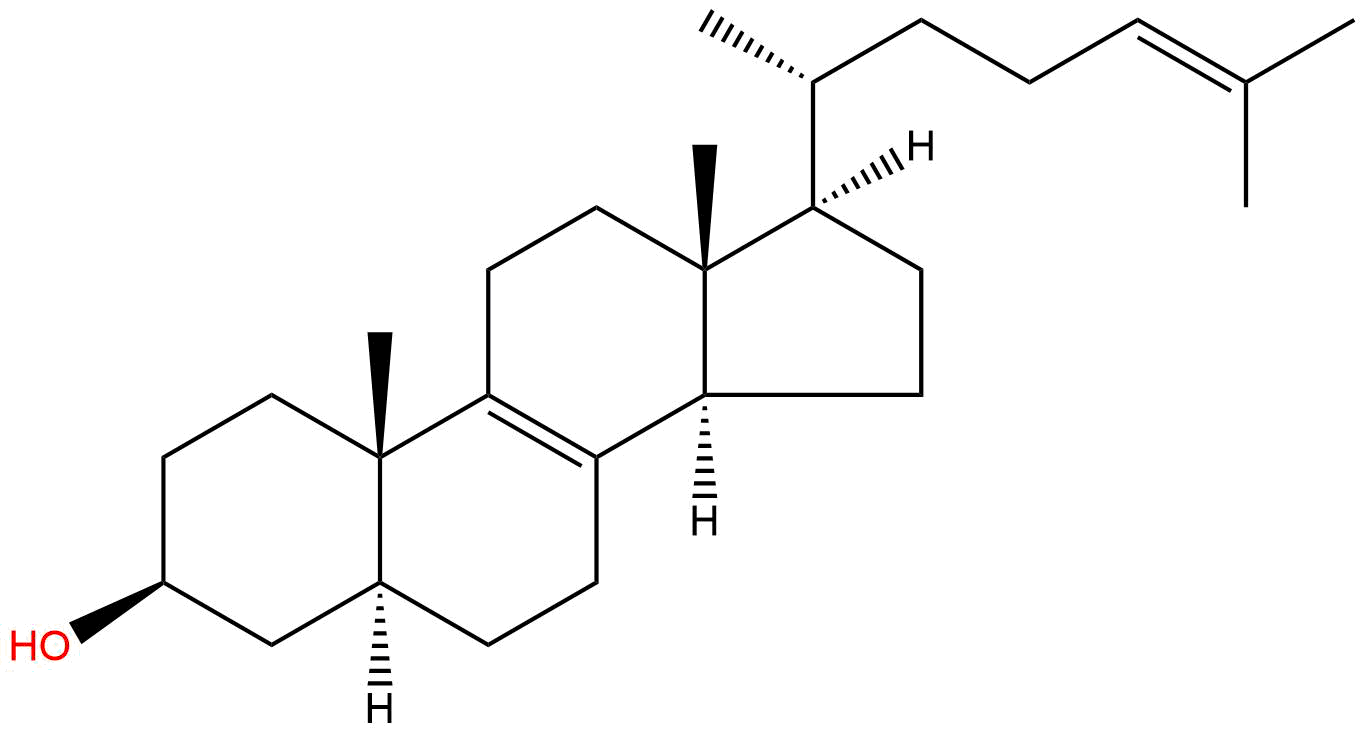


Product name: Zymosterol
Synonym name: Cholest-8,24-dien-3β-ol
Catalogue No.: BP2098
Cas No.: 128-33-6
Formula: C27H44O
Mol Weight: 384.648
Botanical Source:
Type of Compound: Steroids
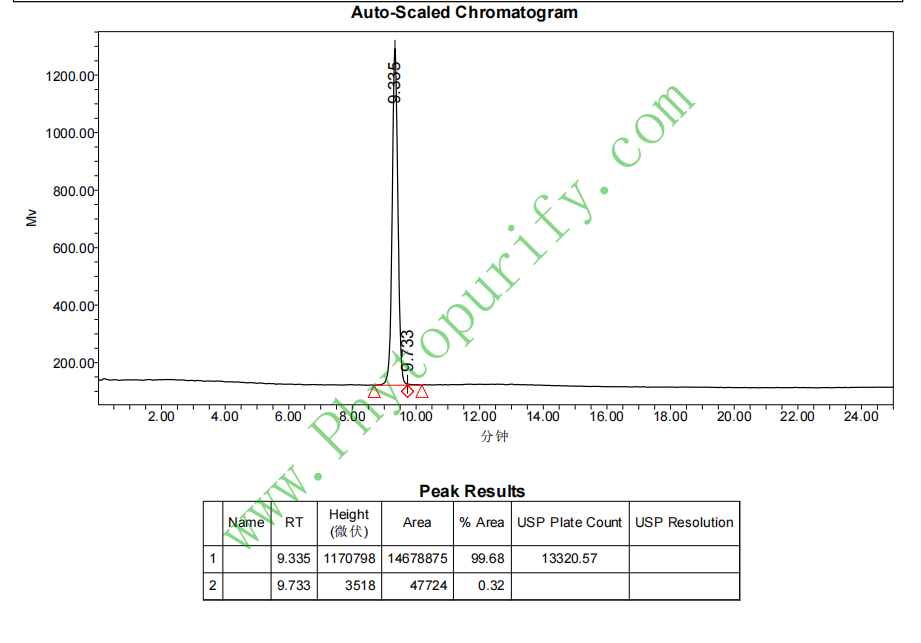
Purity: 95%~99%
Analysis Method: HPLC-DAD or/and HPLC-ELSD
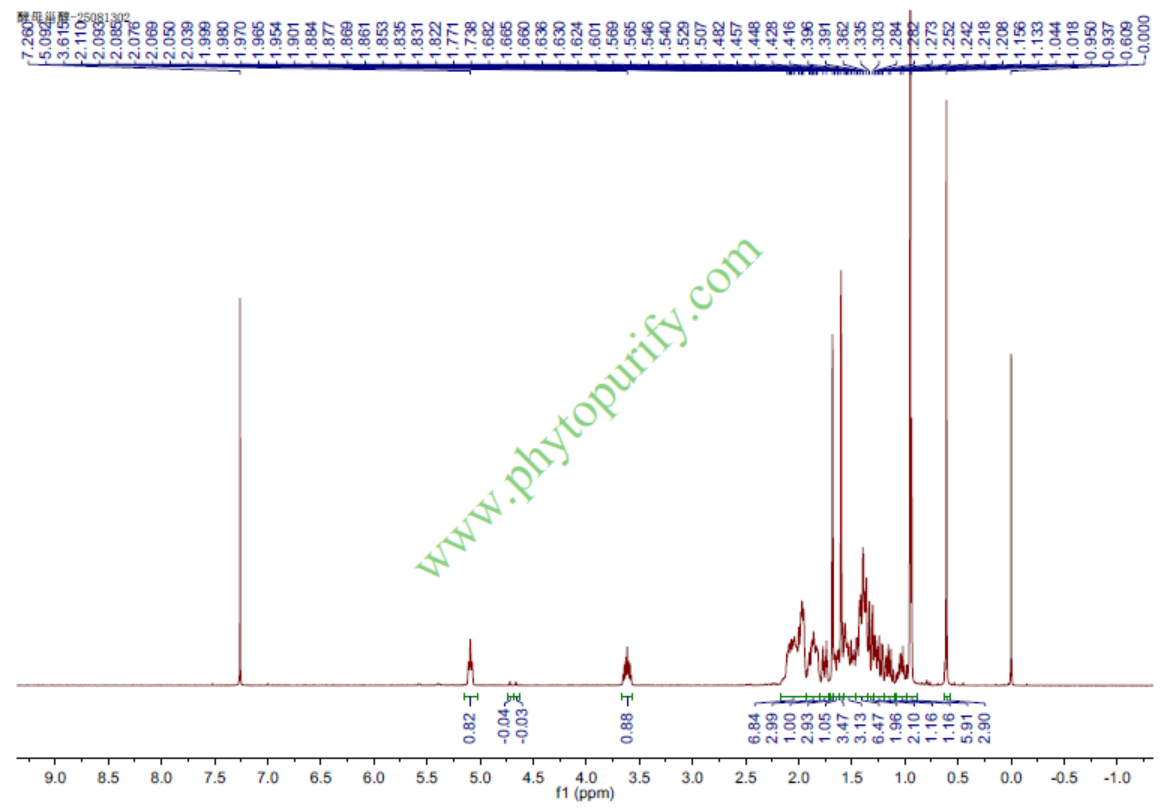
Identification Method: Mass, NMR
Packing: Brown vial or HDPE plastic bottle
Storage: Store in a well closed container, protected from air and light. Put into refrigerate or freeze for long term storage.
Whenever possible, you should prepare and use solutions on the same day. However, if you need to make up stock solutions in advance, we recommend that you store the solution as aliquots in tightly sealed vials at -20℃. Generally, these will be useable for up to two weeks.
The product could be supplied from milligrams to grams
Inquire for bulk scale.
For Reference Standard and R&D, Not for Human Use Directly.
Zymosterol is an sterol intermediate in the biosynthesis of cholesterol. Cholesterol is a major component of all biological membranes; ~25% of total brain lipid is Cholesterol. Zymosterol was also found to be located in the plasma membrane of cultured human fibroblasts via labeling studies.
HPLC of Zymosterol
HNMR of Zymosterol
Storage conditions:Short-term storage at 2~8℃, long-term storage at -20 ~ -80℃
20.2300
7.8426
7.8426
.0001
9.0343
6.3485
High
93.4636
4.5069
No
No
No
No
No
No
0.0
No
No
No
No
Zymosterol (CAS number: 128-33-6), as a key intermediate metabolite in the cholesterol biosynthesis pathway, has attracted widespread attention in the field of natural product pharmacology in recent years. Cholesterol, as an important component of cell membranes and a precursor of various bioactive molecules, plays a crucial role in regulating its synthesis and metabolism to maintain cellular homeostasis and physiological functions. Yeast sterols, as precursors of cholesterol, mainly exist in the cytoplasmic membrane and participate in the cyclic metabolism of cholesterol in cells. Its unique biosynthetic position and molecular structure endow it with potential biological functions in regulating lipid metabolism, cell membrane fluidity, and signal transduction.
In recent years, as the incidence rate of hyperlipidemia and related metabolic diseases continues to rise, research on key intermediates of cholesterol metabolism has gradually become an important direction of new treatment strategies. Yeast sterols have shown potential in regulating blood lipids and improving lipid metabolism disorders by regulating various lipid metabolism related targets, such as ABCA1, HMGCR, PPARG, etc. This article aims to systematically review the chemical structure and physicochemical properties, sources and extraction methods, pharmacological activity and mechanism of action, drug evaluation and pharmacokinetic characteristics of yeast sterols, and explore their prospects and challenges in clinical applications, providing theoretical basis and reference for subsequent basic and clinical research.
Zymosterol has the chemical formula C27H44O and a molecular weight of 384.6480. Its structure belongs to steroid compounds, with a typical four ring steroid skeleton and a side chain structure similar to cholesterol, but with specific differences in ring structure and double bond positions. The structural formula of yeast sterols shows the presence of double bonds at positions C-8 and C-24, endowing them with unique chemical reactivity and biological functions.
In terms of physical and chemical properties, the LogP value of yeast sterols is as high as 7.8426, indicating its high hydrophobicity and insolubility in water (solubility of about 0.0001 mg/mL), which is highly consistent with its localization in the cell membrane. Its polar surface area (TPSA) is only 20.2300, indicating that the molecular polarity is low and conducive to penetrating the lipid bilayer membrane. The high permeability of the blood-brain barrier suggests that it may have certain effects or potential effects on the central nervous system. The negative result of hERG channel inhibition experiment indicates a low risk of cardiac toxicity. The Ames mutagenicity test result is 0.0, indicating that its genotoxicity risk is extremely low and has a good safety basis.
Although yeast sterols are called "yeast sterols", they are widely present in various eukaryotes, especially in yeast and other fungal microorganisms with high levels. Its main source is yeast fermentation products, which are gradually synthesized from acetyl CoA through biosynthetic pathways. In addition, trace amounts of yeast sterols can also be detected in certain plant oils and plant cell membranes as precursors or metabolic intermediates of plant sterols.
Extraction methods often use organic solvent extraction combined with chromatographic techniques. The commonly used extraction steps include:
In recent years, with the development of green chemistry and process optimization, supercritical CO2 extraction and membrane separation technologies have also been attempted to improve the extraction efficiency and purity of yeast sterols.
Yeast sterols, as intermediates in cholesterol biosynthesis, have pharmacological activities mainly focused on regulating lipid metabolism and cell membrane function. Numerous in vitro cell experiments and animal model studies have shown that yeast sterols have potential pharmacological effects in regulating blood lipid levels, anti-inflammatory effects, and improving metabolic syndrome.
Regulating cholesterol metabolism
Yeast sterols regulate the expression of the key cholesterol synthesis enzyme HMGCR (3-hydroxy-3-methylglutaryl-CoA reductase) through feedback, inhibiting excessive cholesterol synthesis and maintaining intracellular cholesterol homeostasis. It also promotes ABCA1 mediated cholesterol efflux, enhances high-density lipoprotein (HDL) production, and improves plasma cholesterol composition.
Antihyperlipidemic effect
Animal models showed that yeast sterol could significantly reduce the levels of serum total cholesterol, low-density lipoprotein cholesterol (LDL-C) and triglycerides, and alleviate atherosclerosis. Its mechanism of action involves regulating the PPARG (peroxisome proliferator activated receptor gamma) and NR1H3 (hepatic X receptor alpha) signaling pathways, promoting fatty acid metabolism and lipid clearance.
Anti inflammatory and antioxidant effects
Yeast sterols exhibit the ability to inhibit the release of inflammatory factors such as TNF - α and IL-6 in cell models, alleviate oxidative stress damage, and protect cells from lipid peroxidation and inflammation mediated damage.
Cell membrane stability and signal transduction
As an important component of the plasma membrane, yeast sterols regulate membrane fluidity and lipid raft structure, affecting membrane protein function and cell signaling, thereby regulating cell proliferation, differentiation, and metabolic activities.
The pharmacological effects of yeast sterols depend on their interactions with various molecular targets related to lipid metabolism, mainly including:
HMGCR (3-hydroxy-3-methylglutaryl-CoA reductase)
As the rate limiting enzyme for cholesterol synthesis, HMGCR is a key target for yeast sterols to regulate cholesterol synthesis. Yeast sterols inhibit HMGCR activity through a negative feedback mechanism, reducing excessive cholesterol synthesis.
ABCA1 (ATP binding cassette transporter A1)
ABCA1 mediates the transport of cholesterol and phospholipids to apolipoprotein A1, which is crucial for the generation of high-density lipoprotein. Yeast sterols promote the expression and function of ABCA1, enhance cholesterol efflux, and improve reverse cholesterol transport.
PPARG (Peroxisome proliferator activated receptor gamma)
PPARG regulates fatty acid metabolism and lipid storage, and yeast sterols promote fatty acid oxidation and lipid metabolism balance by activating the PPARG pathway.
NR1H3 (liver X receptor alpha) and NR1H4 (farnesol X receptor)
These two nuclear receptors regulate cholesterol metabolism, lipid synthesis, and inflammatory response. Yeast sterols regulate their activity, coordinate lipid metabolism and inflammatory response.
CETP (Cholesterol Ester Transfer Protein)
CETP regulates the transfer of cholesterol esters between plasma lipoproteins and affects the composition of blood lipids. Yeast sterols may optimize lipoprotein metabolism by regulating CETP activity.
NPC1L1 (Nimapek C-type receptor 1-like 1 protein)
NPC1L1 mediates intestinal cholesterol absorption. Yeast sterols may affect their expression or function, reducing cholesterol absorption.
HNF4A (hepatocyte nuclear factor 4 alpha) and FASN (fatty acid synthase)
HNF4A regulates the expression of liver lipid metabolism genes, while FASN is involved in fatty acid synthesis. Yeast sterols affect lipid synthesis and metabolic balance by regulating these targets.
LDLR (Low Density lipoprotein receptor)
LDLR mediates the clearance of plasma LDL cholesterol. Yeast sterols promote LDLR expression, enhance LDL clearance, and lower blood lipid levels.
In summary, yeast sterols regulate the lipid metabolism network through multi-target and multi pathway synergistic effects, exerting their anti hyperlipidemia and metabolic regulatory functions.
The pharmacological evaluation of yeast sterols shows that they have certain advantages and challenges:
Molecular weight and hydrophobicity
The molecular weight is 384.6480, belonging to medium-sized molecules. A high LogP value (7.8426) indicates its extremely strong hydrophobicity, which may lead to limited oral bioavailability, and extremely low water solubility (0.0001 mg/mL), placing high demands on the formulation process.
Blood-brain barrier permeability
The high blood-brain barrier penetrability suggests its potential role in the central nervous system, but attention should also be paid to the potential risk of central neurotoxicity.
safety indicator
The hERG channel has no inhibitory effect and reduces the risk of cardiac toxicity; The Ames test is negative, indicating low risk of genotoxicity and good safety.
Pharmacokinetic characteristics
At present, there is relatively little systematic pharmacokinetic research on yeast sterols. It is speculated that due to their strong hydrophobicity and wide distribution in the body, they may mainly accumulate in lipid rich tissues such as liver, adipose tissue, and brain tissue. The metabolic pathway may involve the steroid metabolizing enzyme system in the liver, but the specific metabolites and clearance mechanisms still require further research.
Formulation Challenge
Low water solubility and high hydrophobicity limit its oral absorption, and new drug delivery systems such as nanocarriers, liposomes, or solid dispersions are expected to improve its bioavailability.
As a key intermediate in cholesterol synthesis, yeast sterols have multiple mechanisms of regulating lipid metabolism, demonstrating their potential application value in the treatment of hyperlipidemia and related metabolic diseases. In the future, its clinical development can be carried out from the following aspects:
Prevention and treatment of hyperlipidemia and atherosclerosis
By regulating cholesterol synthesis and efflux, yeast sterols have the potential to become a novel lipid-lowering drug or adjuvant therapy, particularly suitable for patients with poor tolerance or efficacy to traditional statins.
Metabolic syndrome and abnormal glucose and lipid metabolism
Its activation of PPARG and nuclear receptor pathways can help improve insulin resistance and lipid metabolism disorders, and has the potential to treat metabolic syndrome.
Neurodegenerative diseases
Due to its high blood-brain barrier permeability, yeast sterols may affect cholesterol metabolism in the brain, participate in neuroprotection or neuroinflammation regulation, and their role in neurodegenerative diseases such as Alzheimer's disease can be explored in the future.
Drug development strategy
Given its physicochemical properties, it is necessary to optimize the administration method and dosage form design, and use modern formulation technologies such as nanotechnology, liposomes, and solid dispersions to improve bioavailability and targeting.
Safety and Toxicology Research
Further systematic toxicology and pharmacokinetic studies are key to clinical translation, ensuring the safety and effectiveness of long-term medication.
Potential for combination therapy
The combined use of yeast sterols with lipid-lowering drugs such as statins and bile acid binders may have a synergistic effect, reducing the dosage of monotherapy and minimizing side effects.
Yeast sterols, as important intermediate metabolites in cholesterol biosynthesis, are not only key components of cell membrane structure, but also exhibit unique pharmacological activities in lipid metabolism regulation and related disease prevention and treatment. Its multi-target mechanism of action provides new ideas and potential targets for the treatment of hyperlipidemia and metabolic diseases. Despite its high hydrophobicity and low water solubility posing challenges to drug development, yeast sterols are expected to become important candidate molecules for future natural product drug development with advances in formulation technology and in-depth pharmacokinetic studies. Future research should focus on the systematic pharmacological mechanism analysis, safety evaluation, and clinical translation, promoting its application in the field of metabolic diseases and contributing new treatment strategies to public health.
