| Catalog No | Package | Original Price | Price | Inventory | Quantity | Operating |
|---|---|---|---|---|---|---|
| BP4028-5mg | 5mg | $420.00 | Sign in |
|


Product name: Minimolide F
Synonym name:
Catalogue No.: BP4028
Cas No.: 1367351-41-4
Formula: C19H26O5
Mol Weight: 334.412
Botanical Source:
Type of Compound:
Purity: 95%~99%
Analysis Method: HPLC-DAD or/and HPLC-ELSD
Identification Method: Mass, NMR
Packing: Brown vial or HDPE plastic bottle
Storage: Store in a well closed container, protected from air and light. Put into refrigerate or freeze for long term storage.
Whenever possible, you should prepare and use solutions on the same day. However, if you need to make up stock solutions in advance, we recommend that you store the solution as aliquots in tightly sealed vials at -20℃. Generally, these will be useable for up to two weeks.
The product could be supplied from milligrams to grams
Inquire for bulk scale.
For Reference Standard and R&D, Not for Human Use Directly.
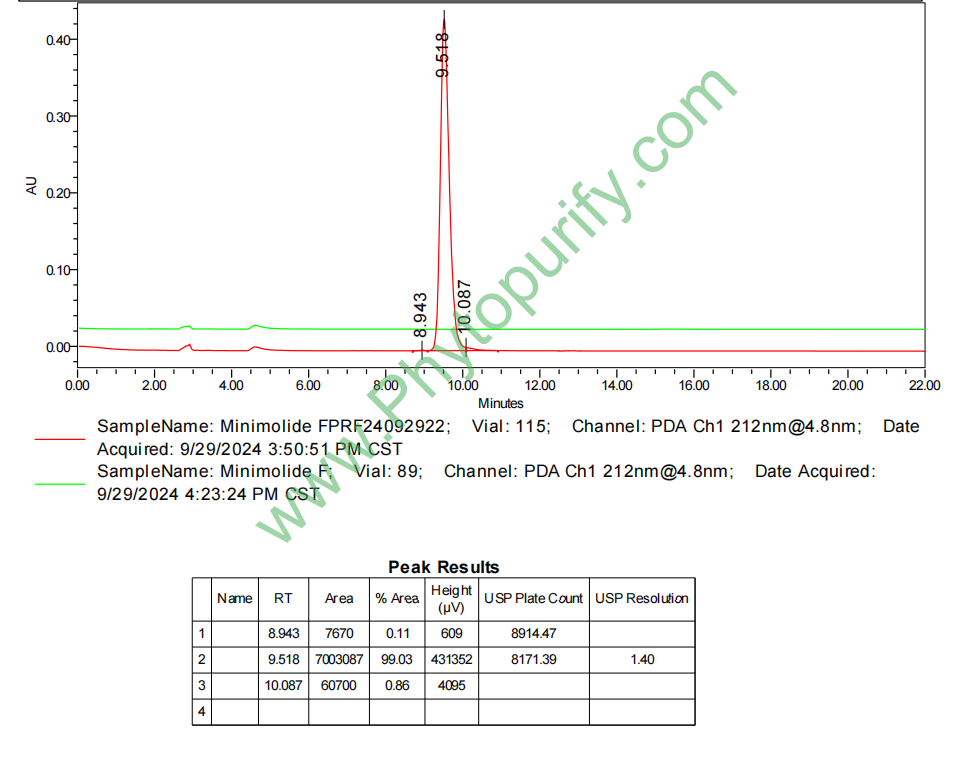
HPLC of Minimolide F
Storage conditions:Short-term storage at 2~8℃, long-term storage at -20 ~ -80℃
65.1300
2.7604
2.7605
.0658
4.3821
4.4860
High
65.1498
5.3922
No
No
No
No
Yes
No
0.0
No
No
No
Yes
With the increasing importance of natural products in the field of new drug development, sesquiterpenes have become a research hotspot due to their unique chemical structures and diverse biological activities. Minimolide F, as a novel sesquiterpene lactone, exhibits significant pharmacological activity in the fields of anti-tumor and anti-inflammatory, especially in the inhibition of nasopharyngeal carcinoma cells, demonstrating potential application value. Nasopharyngeal carcinoma, as a malignant tumor with regional high incidence, has limited treatment options and a high recurrence rate, and there is an urgent need to develop new effective drugs. The discovery of Minimolide F provides new ideas and directions for the research of natural anti-cancer drugs.
This review aims to systematically summarize the chemical structure and physicochemical properties, plant sources, and extraction methods of Minimlide F, elaborate on its pharmacological activity and mechanism of action, evaluate its drug properties and pharmacokinetic characteristics, explore its clinical application prospects, and strive to provide comprehensive and authoritative reference materials for researchers in related fields.
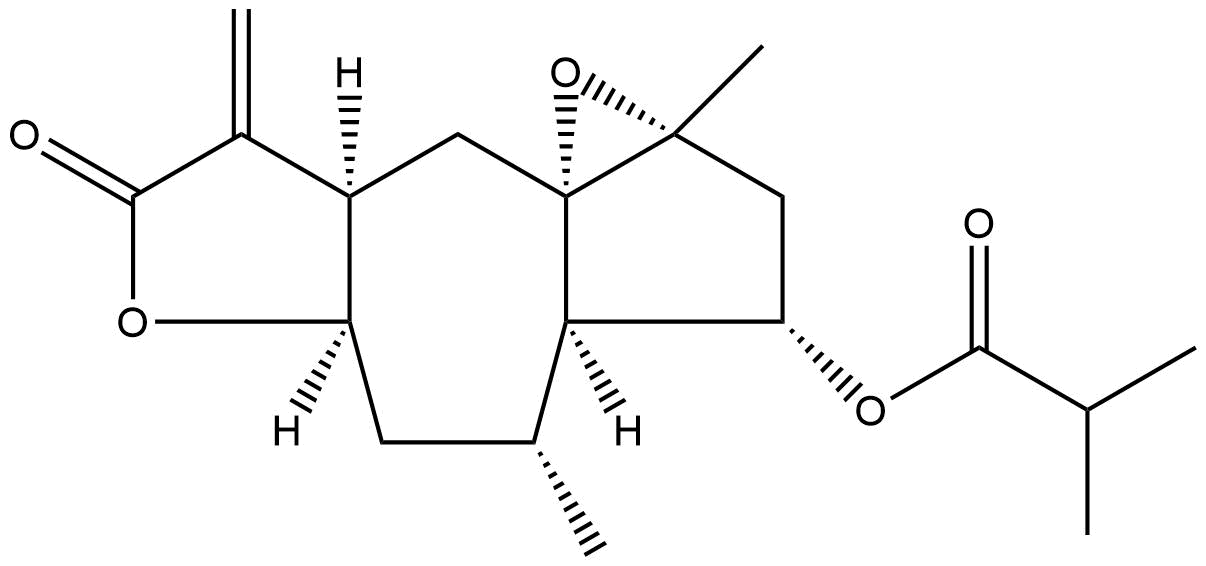
Minimolide F is a sesquiterpene lactone with a molecular formula of C2H_30O4 and a molecular weight of 334.4120. Its structural features include the typical combination of sesquiterpene skeleton and lactone ring, endowing it with unique biological activity. In terms of physical and chemical properties, the LogP value of Minimlide F is 2.7604, indicating its moderate lipid solubility, which is beneficial for membrane penetration and in vivo distribution. Its topological polar surface area (TPSA) is 65.1300, indicating that it has certain polar groups that facilitate binding with biomolecules.
The low water solubility (0.0658 mg/mL) to some extent limits its oral bioavailability, but also provides direction for improvement through pharmaceutical formulation technology. It is worth noting that Minimlide F has a high blood-brain barrier penetration ability, suggesting that it may be useful for research on central nervous system related diseases. In addition, Minimolide F did not exhibit hERG channel inhibition and the Ames mutagenicity test result was negative, indicating its high safety and good potential for drug development.
Minimolide F mainly comes from certain specific plant species, especially plant genera rich in sesquiterpenes. Although the specific plant sources of these sesquiterpenes are not widely reported in current literature, they are usually found in plants such as Asteraceae and Lamiaceae. By extracting organic solvents from these plants and combining them with chromatographic separation techniques, high-purity Minimolide F can be obtained.
Common extraction methods include:
With the advancement of extraction technology, green and environmentally friendly technologies such as supercritical fluid extraction and microwave-assisted extraction have gradually been applied to the extraction of Minimolide F, improving extraction efficiency and purity, reducing solvent use, and in line with the sustainable development concept of modern natural product development.
The pharmacological activity of Minimlide F is mainly reflected in two aspects: anti-tumor and anti-inflammatory, especially showing significant inhibitory effects on human nasopharyngeal carcinoma cells.
Multiple in vitro cell experiments have shown that Minimolide F can effectively inhibit the proliferation of human nasopharyngeal carcinoma cell lines. Its mechanism of action involves inducing cell cycle arrest and promoting cell apoptosis. Specifically manifested as:
In addition, Minimolide F has low toxicity to normal cells and exhibits good selectivity, providing a theoretical basis for its development as an anti-cancer drug.
Research on Minimlide F in anti-inflammatory properties has shown that it can regulate multiple inflammation related targets and exert broad-spectrum anti-inflammatory effects. The main targets include:
The synergistic regulation of these targets enables Minimolide F to exhibit good anti-inflammatory effects in various inflammatory models, and has potential clinical application value.
The mechanism of action of Minimolide F involves a complex signal transduction network, mainly exerting biological effects by regulating molecular targets related to inflammation and tumors.
Minimolide F exerts inhibitory effects by intervening in key biological processes of tumor cells:
Minimolide F regulates inflammatory response through multiple targets and pathways:
The synergistic effect of these mechanisms enables Minimolide F to exert dual regulatory effects in the inflammatory and tumor microenvironment, demonstrating its potential as a multifunctional drug.
The pharmacological evaluation of Minimlide F shows that it has good potential for drug development.
Minimlide F has a high ability to penetrate the blood-brain barrier, indicating its potential application in central nervous system diseases. At the same time, its lipid solubility is moderate, which is beneficial for in vivo distribution and targeted tissue penetration. The specific absorption, distribution, metabolism, and excretion (ADME) parameters still need further in vivo experimental validation.
Pharmacokinetic studies should focus on their oral bioavailability, metabolic pathways, and potential drug interactions to provide a basis for clinical development.
Minimolide F, as a natural sesquiterpene lactone with dual anti-tumor and anti-inflammatory activities, has shown broad clinical application prospects.
The inhibitory effect on nasopharyngeal carcinoma cells lays the foundation for the development of anticancer drugs. Future research should focus on:
The regulatory ability of Minimolide F on multiple inflammation related targets makes it potentially valuable in chronic inflammation, immune diseases, and pain management. Future to explore:
Despite the excellent pharmacological activity and drug properties of Minimolide F, its low water solubility, in vivo stability, and metabolic characteristics are still unclear, requiring further optimization of drug formulations and in-depth pharmacokinetic studies. In addition, toxicological evaluation and preclinical safety studies of the system are key steps in its clinical translation.
In the future, by combining modern molecular biology and medicinal chemistry techniques, we will deeply analyze the mechanism of action of Minimolide F, optimize its structure to improve its activity and pharmacokinetic performance, and promote it as an important candidate for the new generation of anti-tumor and anti-inflammatory drugs.
Minimolide F, as a novel sesquiterpene lactone, has shown significant potential in the inhibition and anti-inflammatory effects of nasopharyngeal carcinoma cells due to its unique chemical structure and multi-target pharmacological activity, making it an important subject of natural product pharmacology research. Its good pharmacological parameters and safety evaluation provide a solid foundation for clinical development.
Future research should focus on the in vivo efficacy verification, in-depth analysis of the mechanism of action, and optimization of drug formulations, in order to promote the clinical application of Minimlide F from the laboratory. With the continuous advancement of natural product drug development technology, Minimolide F is expected to become an innovative drug in the fields of anti-tumor and anti-inflammatory, bringing new hope for the treatment of related diseases.
