Introduction/Overview
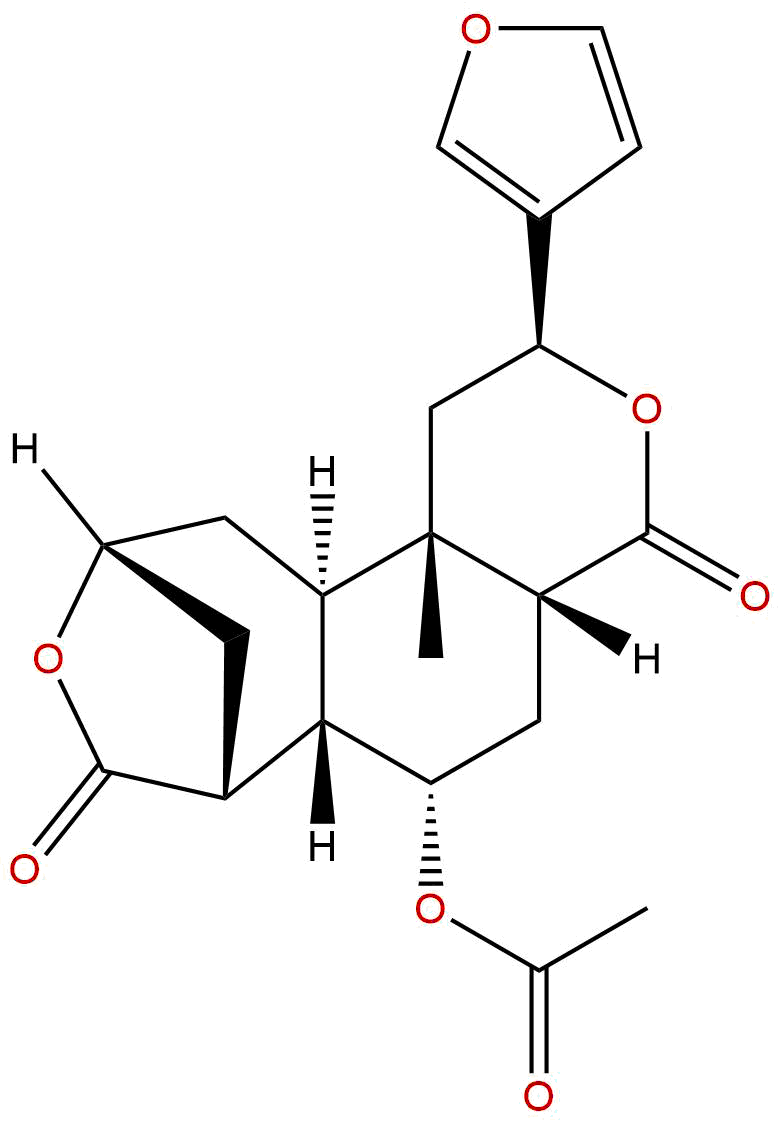
8-Epidiosbulbin E acetate (hereinafter referred to as 8-Epidiosbulbin E acetate) is a furan type natural product derived from the plant Dioscorea bulbifera L. As a natural compound with unique structure and multiple biological activities, 8-epixanthine E acetate has attracted widespread attention in the field of pharmacology in recent years. It not only exhibits broad-spectrum plasmid elimination activity against multidrug-resistant bacteria, but also shows significant anti-inflammatory potential, involving multiple inflammation related molecular targets. However, there is also a certain risk of hepatotoxicity associated with 8-epixanthine E acetate, especially in animal models where it has been reported to induce liver injury in mice, suggesting that its safety evaluation needs further investigation.
The purpose of this article is to systematically review the chemical structure and physicochemical properties, plant sources and extraction methods, pharmacological activity and mechanism of action of 8-isoquercetin E acetate, and to comprehensively evaluate its pharmacological parameters. It also explores its clinical application prospects and development potential, providing theoretical basis and reference for subsequent related research and drug development.
Chemical structure and physicochemical properties
The molecular formula of 8-epixanthine E acetate is C22H28O6, with a molecular weight of 388.4160. Its structure belongs to the furan type diterpenoid compound, with a core skeleton containing a furan ring and an acetate group in the structure, endowing it with certain hydrophobicity and biological activity. The LogP value is 1.9399, indicating that it has moderate lipid solubility, which is beneficial for cell membrane penetration and in vivo distribution. The polar surface area (TPSA) is 92.04 Å ², indicating a good balance between polarity and non polarity, which may affect its absorption and metabolic characteristics.
Low water solubility (0.0522 mg/mL) suggests limited solubility in aqueous phase and may require appropriate formulation techniques to improve bioavailability. The high penetration of the blood-brain barrier indicates its potential central nervous system effects or toxicity risks. The hERG channel inhibition experiment showed a negative result, indicating a low risk of cardiac toxicity. The Ames mutagenicity test result was 0.0, indicating no significant genotoxicity.
In summary, the physicochemical properties of 8-epixanthine E acetate lay the foundation for its biological activity and pharmacokinetic properties, but its low water solubility and potential liver toxicity need to be focused on in subsequent research.
Plant sources and extraction methods
8-Epiberberine E acetate is mainly found in Dioscorea bulbifera L. (Polygonatum sibiricum), a perennial climbing vine of the Dioscoreaceae family, widely distributed in tropical and subtropical regions of Asia, traditionally used for the treatment of various diseases. D. The tubers and stems of bulbifera are rich in various furan type diterpenes, among which the content of 8-epixanthine E acetate is relatively high.
The extraction method usually uses organic solvent extraction combined with chromatographic separation technology. Common processes include:
- Crude extraction Dry and crushed D. bulbifera tubers or vine stems are refluxed and extracted with ethanol or methanol, and the extract is concentrated to obtain a crude extract.
- Separation and purification Separation and purification of 8-epixanthine E acetate using methods such as silica gel column chromatography and reverse phase high performance liquid chromatography (RP-HPLC).
- appraisal Confirm its structure and purity through modern analytical techniques such as mass spectrometry (MS) and nuclear magnetic resonance (NMR).
In recent years, green extraction techniques such as ultrasound assisted extraction and microwave-assisted extraction have also been applied to improve extraction efficiency and yield. The optimization of the extraction process for 8-isoquercetin E acetate is still the key to improving its industrial production.
Pharmacological activity research
Elimination activity of plasmids against multidrug-resistant bacteria
8-Epiberberine E acetate exhibits broad-spectrum plasmid elimination activity against multidrug-resistant bacteria (MDR). Bacterial plasmids often carry resistance genes, and the elimination of plasmids can reduce bacterial resistance and restore antibiotic sensitivity. Research has shown that 8-epixanthine E acetate can effectively promote the loss of bacterial plasmids, inhibit the spread of resistance genes, and has potential value in assisting the development of antibacterial drugs.
anti-inflammatory activity
8-Epiberberine E acetate exhibits significant anti-inflammatory effects in various inflammatory models. Its target involves multiple key inflammatory mediators and signaling pathways, including IL-6, STAT3, TNF, NFKB1, CASP1, TRPV1, TRPA1, NOS2, PTGS1, and PTGS2. By regulating these targets, 8-epixanthine E acetate can inhibit the expression and release of inflammatory factors, reducing tissue inflammatory responses.
Both in vitro cell experiments and animal models have confirmed its inhibitory effect on the expression of inflammatory factors, indicating its potential application value in inflammatory diseases such as arthritis and inflammatory bowel disease.
Hepatotoxicity
Despite its various pharmacological activities, the risk of hepatotoxicity cannot be ignored. Mouse experiments have shown that the compound can induce liver cell damage, manifested as abnormal liver function indicators and histopathological changes. The mechanism of hepatotoxicity may be related to oxidative stress, inflammatory response, and cell apoptosis. The existence of hepatotoxicity limits its clinical safety, and it is necessary to reduce toxicity through structural modification or dose optimization.
Mechanism of action and molecular targets
The pharmacological effects of 8-Epiberberine E acetate are mainly achieved through various molecular targets:
- Regulation of inflammatory signaling pathway
- IL-6/STAT3 pathway IL-6, as a pro-inflammatory cytokine, activates the STAT3 signaling pathway, promotes inflammatory response and cell survival. 8-Epiflavanone E acetate can inhibit the expression of IL-6 and the phosphorylation of STAT3, blocking inflammatory signaling.
-
NF - κ B pathway NF - κ B encoded by NFKB1 is the core transcription factor of inflammatory response, regulating various inflammatory mediators. 8-Epiberberine E acetate inhibits the activation of NF - κ B and reduces the production of inflammatory factors such as TNF and PTGS2 (COX-2).
-
Regulation of inflammatory mediators and enzymes
- CASP1 Participate in the activation of inflammasomes, promote the maturation and secretion of IL-1 β. The inhibition of CASP1 by 8-epixanthine E acetate helps alleviate inflammatory response.
- PTGS1/PTGS2 Encode cyclooxygenase 1 and 2, involved in prostaglandin synthesis, regulating inflammation and pain. This compound exerts anti-inflammatory and analgesic effects by inhibiting the expression of PTGS2.
-
NOS2 Inducible nitric oxide synthase produces a large amount of NO to participate in inflammatory reactions. 8-Epiberberine E acetate can downregulate NOS2 and alleviate oxidative stress.
-
Ion channel regulation
-
TRPV1 and TRPA1 Two ion channels closely related to pain and inflammation. 8-Epiberberine E acetate alleviates inflammation related pain by regulating these channels.
-
Plasmid elimination mechanism
8-Epiberberine E acetate may interfere with bacterial plasmid replication or stability, promote plasmid loss, and reduce bacterial resistance. The specific molecular mechanism still needs further clarification.
In summary, 8-epixanthine E acetate achieves its anti-inflammatory and anti drug resistant bacterial activities through multi-target and multi pathway synergistic effects.
Evaluation of drug properties and pharmacokinetics
The pharmacological parameters of 8-isoquercetin E acetate show that it has certain potential for drug development:
- Molecular weight 388.4160 It meets the Lipinski rule for drug molecular weight requirements and is beneficial for oral absorption.
- LogP is 1.9399 Moderate lipid solubility is beneficial for transmembrane absorption and in vivo distribution.
- TPSA is 92.04 Å ²Suitable for good cell permeability.
- Low water solubility (0.0522 mg/mL)It may limit its bioavailability and needs to be improved through formulation technology.
- High blood-brain barrier penetration It suggests that it may affect the central nervous system, which has potential therapeutic advantages, but also requires vigilance against central toxicity.
- No hERG inhibitory activity The risk of cardiac toxicity is relatively low.
- Ames test negative The risk of genetic toxicity is relatively low.
At present, there is limited research on the pharmacokinetics of 8-epixanthine E acetate. Preliminary data suggests that it has a relatively fast absorption and distribution in animal bodies, but its liver metabolism is more significant, which may lead to liver toxicity. Its metabolic pathway may involve the oxidation of hepatic enzymes and esterase hydrolysis, and the activity and toxicity of metabolites need further investigation.
In the future, it is necessary to conduct systematic in vivo pharmacokinetic (ADME) and toxicological evaluations to clarify its absorption, distribution, metabolism, excretion characteristics, and safe dose range, providing a basis for clinical development.
Clinical application prospects and prospects
8-Epiberberine E acetate, as a natural product, exhibits both anti multidrug resistance plasmid elimination and anti-inflammatory activity, demonstrating great potential for drug development. It has broad application prospects in the fields of anti infective adjuvant therapy and inflammatory diseases:
-
Adjuvant drugs against multidrug-resistant bacteria
By promoting the elimination of drug-resistant plasmids, 8-epixanthine E acetate has the potential to serve as an enhancer of antibiotics, delaying the development and spread of drug resistance, and solving the problem of difficult treatment of drug-resistant bacterial infections in clinical practice.
-
Anti inflammatory treatment
For inflammatory diseases such as rheumatoid arthritis, inflammatory bowel disease, and neuroinflammation, 8-epixanthine E acetate has potential therapeutic value by regulating the inflammatory signaling pathway through multiple targets.
-
Drug design and structural optimization
Due to liver toxicity, its clinical application is limited. In the future, chemical modification can be used to reduce toxicity, improve safety and efficacy. Designing derivatives or analogues based on their furan diterpene skeleton is an important direction.
-
Formulation technology development
The application of new formulation technologies such as nanocarriers, liposomes, and solid dispersions will help improve their clinical applicability in response to their low water solubility and bioavailability issues.
-
Safety evaluation and clinical trials
Systematic toxicology and pharmacology research is needed to clarify safe doses and toxicity mechanisms, gradually advance preclinical and clinical trials, and verify their efficacy and safety.
Overall, 8-epixanthine E acetate, as a natural drug lead compound, has multiple pharmacological activities and good pharmacological basis, but its safety issues urgently need to be addressed. By combining modern medicinal chemistry and formulation technology, it is expected to achieve clinical translation and enrich the natural product drug library.
Conclusion
8-Epiberberine E acetate, as an important furan type natural product in Dioscorea bulbifera L., has shown broad application potential in the fields of anti multidrug-resistant bacteria and anti-inflammatory due to its unique chemical structure and multi-target pharmacological activity. Its pharmacological parameters show promising prospects for drug development, but liver toxicity and low water solubility remain key issues that urgently need to be overcome.
Future research should focus on in-depth analysis of its mechanism of action, structural optimization to reduce toxicity, pharmacokinetic and safety system evaluation, as well as the development of new formulations. Through interdisciplinary collaboration, 8-epixanthine E acetate is expected to become an important candidate drug in the fields of natural product pharmacology and anti infective and anti-inflammatory treatment, providing new strategies and ideas for solving clinical drug resistance and inflammatory diseases.