Introduction/Overview
Natural products, as an important source of drug discovery, play an irreplaceable role in the long history of human fight against diseases. Especially in the field of tumor treatment, active compounds isolated from plants, such as paclitaxel, camptothecin, vinblastine, etc., have become the cornerstone of clinical chemotherapy regimens. In recent years, with the advancement of separation technology and activity screening methods, more and more natural products with unique skeletons and significant biological activities have been discovered. Among them, it originates from the Asteraceae plant Wild Horse Chase(Eupatorium lindleyanum)The sesquiterpene lactones have attracted much attention due to their significant anti-tumor activity. Eupalinolide O, as a member of this family, has become a hot topic in natural product pharmacology research due to its unique chemical structure and the potential to induce apoptosis in specific tumor cells.
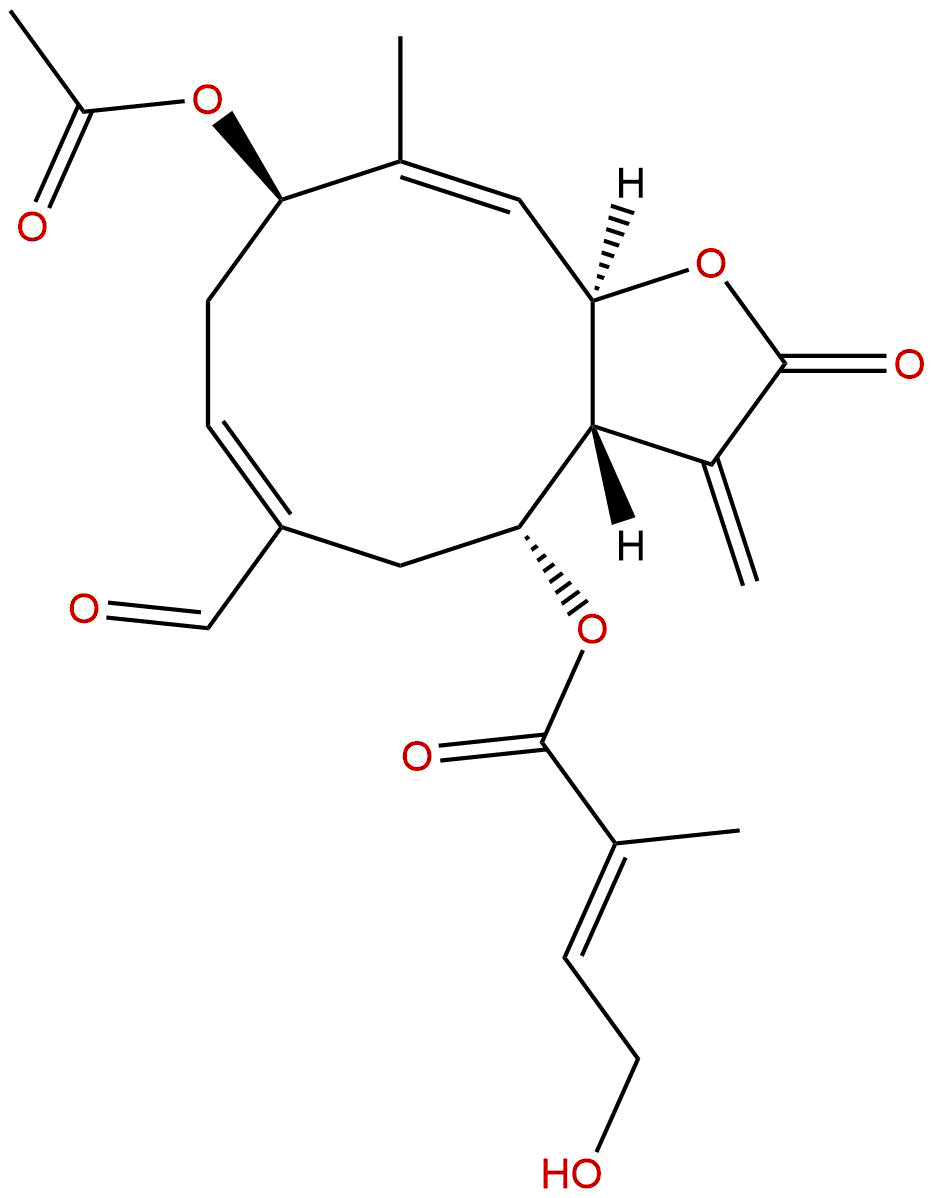
Eupalinolide O, CAS number 2170228-67-6, is a sesquiterpene lactone compound isolated from Eupalinolide. Sesquiterpene lactones are a class of secondary metabolites with α, β - unsaturated - γ - lactone ring structures widely present in nature, known to have various pharmacological activities such as anti-inflammatory, anti-tumor, and antimalarial effects. The discovery of wild horse chase lactone O further enriches the structural diversity of this class of compounds. Preliminary studies show that this compound can effectively inhibit the proliferation of human MDA-MB-468 triple negative breast cancer cells in vitro, and play its cytotoxic role by inducing apoptosis. This discovery provides a potential lead compound for the development of new candidate drugs for triple negative breast cancer with strong invasiveness and limited therapeutic means.
This review aims to systematically review the current research status of wild horse chase lactone O, exploring its chemical structure and physicochemical properties, plant sources and extraction methods, pharmacological activity, mechanism of action and molecular targets, drug evaluation and pharmacokinetic properties from multiple dimensions, and prospects its clinical application prospects, in order to provide comprehensive references for subsequent basic research and drug development.
Chemical structure and physicochemical properties
Wild horse chase lactone O belongs to the eudesmanolide type sesquiterpene lactone. Its core skeleton consists of 15 carbon atoms, including a cis - or trans fused bicyclic [4.4.0] decane system, with a characteristic alpha, beta unsaturated gamma lactone ring. The lactone ring is usually connected between positions C-6 and C-7 or between positions C-7 and C-8, and is a key pharmacophore for the biological activity of sesquiterpene lactones. The precise structure of wild horse chase lactone O has been confirmed through modern spectroscopic techniques such as high-resolution mass spectrometry, nuclear magnetic resonance hydrogen and carbon spectra, two-dimensional nuclear magnetic resonance, etc. Its molecular formula is C ₂₁ H ₂₆ O ₉, and its molecular weight is 418.4420 Da. The structure usually contains multiple oxygen-containing functional groups such as hydroxyl, acetoxy, or ester groups, and the position and stereoconfiguration of these substituents determine its unique chemical properties and biological activity.
From the perspective of physical and chemical properties, wild horse chase lactone O exhibits a certain balance of lipophilicity and hydrophilicity. The calculated lipid water partition coefficient (LogP) is 1.1605, indicating that the compound has a certain degree of lipid solubility, which is beneficial for its penetration of cell membranes, but also suggests that its water solubility may be limited. Its topological polar surface area (TPSA) is 116.2000 Å ², which is relatively high and is usually associated with good oral absorption and membrane permeability, but may also affect its interactions with certain transporters. The specific water solubility parameter is 1.2708 mg/mL, indicating that it has a certain solubility in water, but it may require the use of co solvents or structural modifications during the formulation process to improve its bioavailability.
It is worth noting that the blood-brain barrier (BBB) penetration of this compound is predicted to be "high". This characteristic has potential advantages for the treatment of central nervous system tumors or brain metastases, but it may also bring about central nervous system related toxic side effects, which need to be focused on in subsequent research. In addition, the predicted result of hERG inhibition is' no ', indicating a low risk of inducing QT interval prolongation and arrhythmia in the heart, which is a positive pharmacological indicator. The Ames test result is 0.0, indicating that it did not show significant mutagenicity in the bacterial recovery mutation test, and the preliminary safety is good. These physical and chemical properties and preliminary safety assessment data provide important reference for the further development of wild horse chase lactone O.
Plant sources and extraction methods
The main plant source of wild horse chase lactone O is the wild horse chase of the Zeeland genus in the Asteraceae family(Eupatorium lindleyanum DC.)。 This plant is widely distributed in China, Japan, the Korean Peninsula, and the Russian Far East, and is either wild or cultivated in multiple provinces of China. Wild horse chase is often used in traditional Chinese medicine to treat colds, coughs, malaria, and various inflammatory diseases, with a long history of medicinal use. Modern plant chemistry research has shown that wild horse chase is rich in various secondary metabolites, including flavonoids, phenolic acids, volatile oils, and structurally diverse sesquiterpene lactones. Wild horse chase lactone O was isolated and identified during the systematic chemical composition study of this plant.
Extracting wild horse chase lactone O from wild horse chase usually follows the classic process of natural product chemistry. Firstly, the aboveground parts of the collected plants (whole grass or stems and leaves) need to be dried and crushed to increase the solvent contact area. The selection of extraction solvent is one of the key steps. Considering that the LogP of Wild Horse Chastalone O is 1.1605, which has a certain moderate polarity, organic solvents with moderate polarity, such as methanol, ethanol, or their aqueous solutions, are often used for cold soaking or hot reflux extraction. Sometimes solvents such as ethyl acetate or chloroform are used for targeted extraction to improve the extraction efficiency of target compounds and reduce impurities.
The extraction solution is concentrated under reduced pressure to obtain a crude extract, which then enters the separation and purification stage. This process typically utilizes a combination of multiple chromatographic techniques. Firstly, the crude extract is preliminarily separated by silica gel column chromatography, and gradient elution is performed using solvent systems such as petroleum ether ethyl acetate or chloroform methanol in different ratios to collect the fraction containing the target compound. Subsequently, for the enriched stream, reverse phase silica gel (such as ODS) column chromatography and Sephadex LH-20 gel column chromatography can be used for further purification. Finally, the complex mixture was refined using preparative high-performance liquid chromatography (Pre HPLC) to obtain high-purity wild horse chase lactone O monomer. The entire extraction and separation process requires real-time monitoring using thin-layer chromatography (TLC) and high-performance liquid chromatography (HPLC), and structural confirmation of the final product through spectroscopic methods such as nuclear magnetic resonance and mass spectrometry. Due to the usually low content of wild horse chase lactone O in plants, the yield of the entire extraction process is limited, which to some extent limits its large-scale acquisition and in-depth research.
Pharmacological activity research
At present, the research on the pharmacological activity of Eupatorium martenside O mainly focuses on the anti-tumor field, especially on breast cancer cells. It has been clearly reported in the existing literature that Eupatoride O can effectively inhibit the proliferation of human MDA-MB-468 triple negative breast cancer cells. Triple negative breast cancer (ER -/PR -/HER2-) is a difficult point in the treatment of breast cancer because of its lack of clear therapeutic targets, insensitivity to conventional endocrine therapy and targeted therapy, and poor prognosis. Therefore, the discovery of natural products that can effectively act on this type of tumor cells has important clinical translational significance.
The inhibitory effect of wild horse chase lactone O on MDA-MB-468 cells is mainly achieved by inducing apoptosis. Apoptosis is a programmed cell death process that is crucial for maintaining tissue homeostasis and eliminating abnormal cells. Inducing apoptosis is one of the core mechanisms by which many chemotherapy drugs exert anti-tumor effects in tumor treatment. Preliminary research suggests that wild horse chase lactone O may initiate the apoptotic cascade by affecting mitochondrial function or activating the death receptor pathway. Specifically, the processed MDA-MB-468 cells may exhibit typical morphological changes of apoptosis, such as cell shrinkage, chromatin condensation, and formation of apoptotic bodies. At the molecular level, activation of Caspase family proteins (such as Caspase-3, Caspase-9) and changes in the expression levels of apoptosis regulatory protein Bcl-2 family members may be detected.
In addition to its effect on MDA-MB-468 cells, considering that its sesquiterpene lactone family generally has broad-spectrum anti-tumor activity, it can be reasonably speculated that wild horse chase lactone O may also have certain inhibitory effects on other types of tumor cells. For example, it may exhibit cytotoxicity towards lung cancer, liver cancer, colon cancer, or leukemia cell lines. However, the systematic anti-tumor spectrum research on wild horse chase lactone O is currently insufficient, and there is no detailed report on whether it has other pharmacological activities such as anti-inflammatory, antibacterial, or immune regulation. Therefore, expanding the scope of pharmacological activity research, especially selective toxicity evaluation in various tumor models and normal cells, is an important direction for future research.
Mechanism of action and molecular targets
A deep understanding of the mechanism of action and molecular targets of wild horse chase lactone O is the key to pushing it from an active natural product to a drug candidate molecule. According to existing information, the anti-tumor activity of wild horse chase lactone O is related to multiple signaling pathways and protein targets closely related to tumor occurrence and development, mainly including MCL1, BCL2, STAT3, MMP2, TOP1, HIF1A, TOP2A, MAPK1, ESR1, and CYP19A1.
Firstly, in terms of apoptosis regulation, MCL1 and BCL2 are key anti apoptotic proteins in the Bcl-2 family. They are highly expressed in various tumor cells and help tumor cells escape apoptosis. Wild horse chase lactone O may disrupt the stability of the mitochondrial outer membrane, promote the release of cytochrome c, activate the Caspase cascade reaction, and induce cell apoptosis by downregulating the expression of MCL1 and BCL2, or by directly binding and inhibiting their functions. This is highly consistent with the observation that the compound induces apoptosis in MDA-MB-468 cells.
Secondly, STAT3 (Signal Transduction and Transcription Activation Factor 3) is an important transcription factor involved in regulating cell proliferation, survival, angiogenesis, and immune escape. In various cancers, STAT3 is abnormally activated and becomes a key node driving malignant progression of tumors. Wild horse chase lactone O may inhibit tumor cell proliferation and promote apoptosis by inhibiting the phosphorylation of STAT3, blocking its nuclear translocation and transcription of downstream target genes (such as Cyclin D1, Survivor, VEGF).
In addition, tumor invasion and metastasis are the main causes of treatment failure and patient death. MMP2 (Matrix Metalloproteinase 2) is a key enzyme that degrades the extracellular matrix, and its enhanced activity is closely related to the invasion and metastasis ability of tumors. Wild horse chase lactone O may weaken the migration and invasion ability of tumor cells by inhibiting the expression or activity of MMP2.
In terms of DNA topology regulation, TOP1 and TOP2A are essential enzymes in DNA replication and transcription processes, as well as classic targets for many clinical anticancer drugs such as camptothecin and etoposide. Wild horse chase lactone O may trigger DNA damage response and cell death by inhibiting the activity of TOP1 or TOP2A, leading to DNA breakage and replication fork arrest.
HIF1A (hypoxia inducible factor 1 alpha) is a key regulatory factor for cells to adapt to a low oxygen environment. It is often stably expressed in solid tumors due to hypoxia and drives the expression of genes related to angiogenesis, glycolysis, and metastasis. Wild horse chase lactone O may inhibit tumor growth by suppressing the protein expression or transcriptional activity of HIF1A, disrupting the hypoxic adaptation mechanism of tumors.
MAPK1 (mitogen activated protein kinase 1, also known as ERK2) is a core member of the RAS-RAF-MEK-ERK signaling pathway, which plays a central role in regulating cell proliferation and differentiation and is mutated or abnormally activated in approximately one-third of cancers. Wild horse chase lactone O may inhibit the phosphorylation of MAPK1 and block the transmission of this pro proliferative signaling pathway.
Finally, for breast cancer, ESR1 (estrogen receptor α) and CYP19A1 (aromatase) are important targets of endocrine therapy. Although MDA-MB-468 is ER negative cells, the potential effect of Yemadilide O on these targets suggests that it may also be active in hormone receptor positive breast cancer, or may be developed as an aromatase inhibitor.
In summary, the mechanism of action of wild horse chase lactone O exhibits multi-target and multi pathway characteristics, which is not only the advantage of natural products (less prone to drug resistance), but also brings complexity to its mechanism research. In the future, technologies such as gene knockout/knockdown, proteomics, molecular docking, and surface plasmon resonance will be needed to further validate the directly bound target proteins and elucidate the synergistic or antagonistic relationships between each target.
Evaluation of drug properties and pharmacokinetics
To push wild horse chase lactone O from laboratory research to clinical application, a systematic evaluation of its drug like and pharmacokinetic (ADME) properties is necessary. Based on existing computational predictions and preliminary experimental data, a preliminary analysis of its pharmacological potential can be conducted.
From the perspective of Lipinski's Rule of Five, the molecular weight of wild horse chase lactone O (418.44 Da) is slightly higher than the threshold of 500 Da, but its LogP (1.16) is much lower than 5, and the number of hydrogen bond donors (hydroxyl groups, etc.) and acceptors (carbonyl groups, ester groups, etc.) also meets the requirements. Therefore, its overall pharmacological properties are acceptable, but its high molecular weight may pose a challenge for oral absorption.
In terms of absorption, its water solubility (1.27 mg/mL) is moderate, with moderate LogP, theoretically possessing a certain degree of membrane permeability. However, sesquiterpene lactones are often substrates for efflux transporters such as P-glycoprotein (P-gp), which may result in lower oral bioavailability. In addition, its high blood-brain barrier penetration suggests that it may be rapidly distributed to the central nervous system, which is both an advantage and a risk.
In terms of metabolism, the ester bonds and α, β - unsaturated - γ - lactone rings in the O structure of wild horse chase lactone are potential metabolic sites. Ester bonds are easily hydrolyzed by esterases in plasma and tissues, while α, β - unsaturated - γ - lactone rings may undergo Michael addition reactions with glutathione (GSH), which is a common metabolic and detoxification pathway for sesquiterpene lactones. This reactivity may also be related to its pharmacological activity and potential toxicity. The CYP450 enzyme system may also be involved in its oxidative metabolism.
In terms of excretion, due to its moderate molecular weight and certain polarity, it is expected to be excreted through two pathways: bile and kidney.
The preliminary safety evaluation results are optimistic: the hERG inhibition risk is low, and the Ames test is negative, indicating a low risk of cardiac toxicity and genetic toxicity. However, this is far from sufficient to prove its safety. The common toxicity of sesquiterpene lactones includes hepatotoxicity, nephrotoxicity, and gastrointestinal irritation, all of which need to be systematically evaluated in animal models. Especially with its high BBB penetration, the central nervous system toxicity must be evaluated through behavioral and histopathological examinations.
Overall, wild horse chase lactone O has a certain pharmacological basis, but its low oral bioavailability, potential metabolic instability, and unknown in vivo toxicity are the main challenges it faces. Future pharmacokinetic research should focus on addressing the following issues: establishing sensitive methods for analyzing biological samples; Determine its oral bioavailability, distribution, metabolism, and excretion characteristics in animals; Identify its main metabolites; Evaluate its interaction with transporters and metabolic enzymes. Based on these data, strategies such as prodrug design, nanoformulation, or structural modification can be considered to optimize its drug properties.
Clinical application prospects and prospects
Wild horse chase lactone O, as a natural product with unique chemical structure and clear anti-tumor activity, has broad clinical application prospects, but also faces many challenges.
Advantages and opportunities:
1. Potential for treating refractory tumors Its effective activity on MDA-MB-468 cells of triple negative breast cancer makes it possible to become a candidate drug for this refractory tumor that lacks targeted therapy. If it can further verify its effectiveness on other triple negative breast cancer cell lines and animal models, its clinical value will be significantly improved.
2. Multi target mechanism of action Its ability to act on multiple key oncogenic targets such as MCL1, STAT3, and HIF1A gives it the potential to overcome resistance to single target drugs. In the future, the combination therapy with existing chemotherapy drugs or targeted drugs (such as paclitaxel, cisplatin, PARP inhibitors) can be explored to achieve synergistic and attenuated effects.
3. Good preliminary safety Preliminary data such as hERG inhibition negative and Ames test negative provide positive signals for its safety and reduce the risk of early development.
4. High blood-brain barrier penetrability This characteristic makes it have unique advantages in the treatment of brain glioma or brain metastasis of breast cancer, which is worth further exploration.
Challenges and shortcomings:
1. Insufficient research depth At present, research on wild horse chase lactone O is still in its very early stages. Its anti-tumor spectrum, in vivo efficacy, specific molecular mechanisms, pharmacokinetic characteristics, and systematic toxicology data are all extremely scarce. Without these key data, effective preclinical evaluation cannot be conducted.
2. Source restrictions As a trace component in plants, its natural sources are limited, extraction costs are high, and it is difficult to meet the needs of large-scale research and future clinical development. Therefore, developing efficient chemical synthesis or semi synthesis routes, as well as utilizing biotechnology (such as plant cell culture and synthetic biology) for production, are key to solving its source problem.
3. Drug bottleneck High molecular weight, potential metabolic instability, and unknown in vivo toxicity are the main bottlenecks for its drug development. It is necessary to overcome these obstacles by optimizing the structure through medicinal chemical methods or developing new drug delivery systems.
Future research directions:
1. Deepen mechanism research Using CRISPR-Cas9 gene editing, proteomics, chemical biology and other techniques, accurately identify the direct target of wild horse chase lactone O and elucidate its regulatory signaling network.
2. Expand the spectrum of activity Systematically evaluate its inhibitory effect on various solid tumor and hematological tumor cell lines, and establish multiple mouse xenograft tumor models (including in situ tumor and metastatic tumor models) for in vivo efficacy verification.
3. System ADME/Tox evaluation Conduct comprehensive pharmacokinetic and toxicological studies to clarify its fate and safety characteristics in vivo.
4. Pharmaceutical Chemistry Optimization Based on its structure-activity relationship (SAR) research, a series of derivatives were designed and synthesized with the aim of enhancing activity, improving water solubility, enhancing metabolic stability, and reducing toxicity.
5. Formulation development Explore novel drug delivery systems such as liposomes, nanoparticles, and polymer micelles to improve their bioavailability and achieve targeted delivery.
Conclusion
As a new sesquiterpene lactone derived from the traditional Chinese medicine Eupatorium lindleyanum, Eupatorium lindleyanum L O injects new vitality into the research of natural anti tumor drugs with its clear activity of inducing apoptosis in MDA-MB-468 triple negative breast cancer cells and its potential to act on multiple key tumor targets such as MCL1, STAT3, HIF1A, etc. Its unique chemical structure, initially demonstrated good safety (low hERG inhibition and Ames toxicity), and high blood-brain barrier penetration make it a highly valuable lead compound for development.
However, we must be aware that the current research on wild horse chase lactone O is still in a very early stage. The journey from discovering an active compound to ultimately becoming a clinical drug is a long and challenging one. The scarcity of its plant origin, the complexity of its mechanism of action, and the many uncertainties in its medicinal properties are all key scientific issues that urgently need to be addressed. Future research requires the comprehensive use of multidisciplinary approaches such as medicinal chemistry, pharmacology, pharmacokinetics, and toxicology to systematically and deeply elucidate the pharmacological substance basis and principle of action, and based on this, carry out rational structural optimization and formulation development.
Although there is a long way to go, the emergence of Yemadilide O undoubtedly provides new ideas and hope for tackling triple negative breast cancer and other refractory tumors. With the continuous deepening of research, we have reason to hope that this gift from nature can make its due contribution to human health in the future. The continuous exploration of wild horse chase lactone O is not only a study of a single compound, but also a rediscovery and re understanding of the value of natural products in the era of precision medicine.