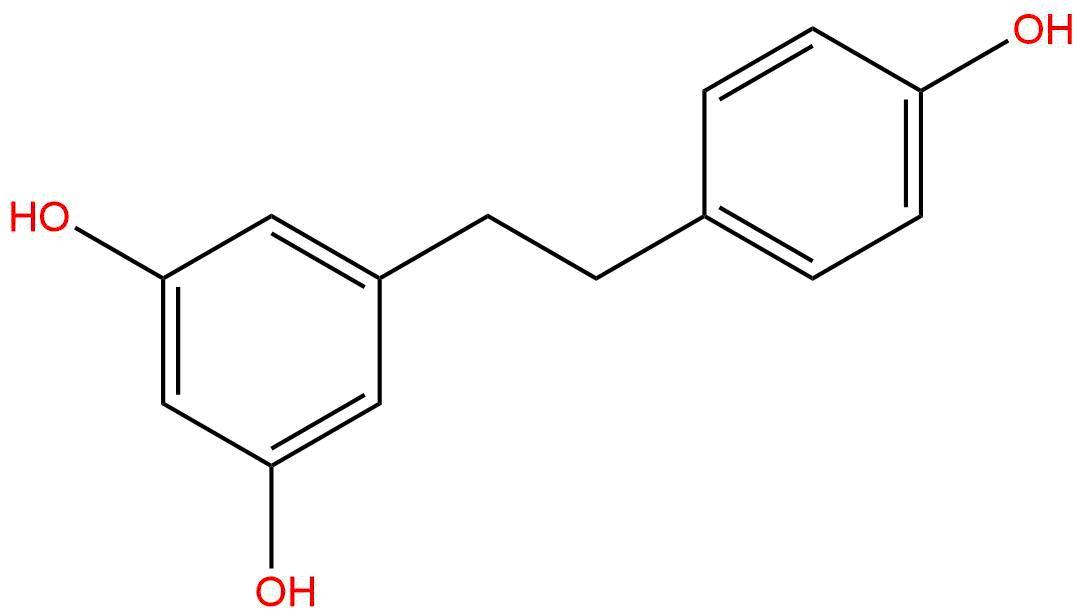


Product name: Dihydroresveratrol?
Synonym name: Dihydroresveratrol
Catalogue No.: SBP01778
Cas No.: 58436-28-5
Formula: C14H14O3
Mol Weight: 230.263
Botanical Source:
Physical Description:
Type of Compound: Phenols
Purity: 95%~99%
Analysis Method: HPLC-DAD or/and HPLC-ELSD
Identification Method: Mass, NMR
Packing: Brown vial or HDPE plastic bottle
The product could be supplied from milligrams to grams
Inquire for bulk scale.
For Reference Standard and R&D, Not for Human Use Directly.
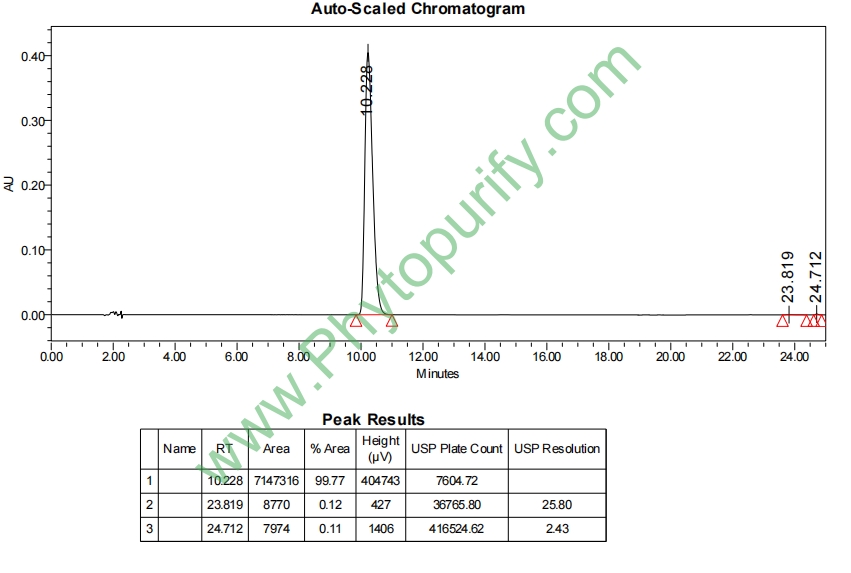
HPLC of Dihydroresveratrol
Storage conditions:Short-term storage at 2~8℃, long-term storage at -20 ~ -80℃
60.6900
2.6149
2.6093
.5247
3.4607
5.5536
Low
87.3190
1.9642
Yes
No
Yes
No
Yes
No
0.0
Yes
Yes
Yes
No
Natural products, as an important source of drug discovery, play an irreplaceable role in human health maintenance and disease treatment. Among numerous natural polyphenolic compounds with biological activity, resveratrol has attracted much attention due to its extensive cardiovascular protection, anti-inflammatory, antioxidant, and anti-tumor activities. However, its metabolic product, dihydroresveratrol (DHR), has gradually shifted from its role as a "metabolic byproduct" to an independent research hotspot in recent years, exhibiting unique and complex pharmacological characteristics.
Dihydroresveratrol, also known as 3,5,4 '- trihydroxybibenzyl, is the main metabolite of resveratrol produced by reducing double bonds in the gut microbiota. Compared with the parent compound, dihydroresveratrol has higher bioavailability and longer half-life, which may enable it to exert more persistent biological effects in vivo. It is worth noting that dihydroresveratrol has been identified as an effective phytoestrogen, which can significantly promote the proliferation of prostate and breast cancer cells at ultra-low concentrations from picomole (pM) to nanomolar (nM). This characteristic not only reveals its potential risk as an endocrine disruptor, but also implies its complex regulatory role in hormone related diseases.
In recent years, with the deepening of research on dihydroresveratrol, scientists have found that its pharmacological activity goes far beyond estrogen receptor regulation. In the field of antioxidant stress, dihydroresveratrol exhibits strong cell protective effects by regulating nuclear factor E2 related factor 2 (NRF2) and a series of downstream antioxidant enzyme systems. This "double-edged sword" characteristic - being both a proliferation promoting plant estrogen and a potent antioxidant - makes it a highly valuable model compound in natural product pharmacology. This article will systematically review the research progress of dihydroresveratrol from multiple dimensions such as chemical structure, plant origin, pharmacological activity, molecular mechanism, and medicinal properties, in order to provide scientific basis for the further development and utilization of this compound.
The chemical name of dihydroresveratrol is 3,5,4 '- trihydroxybenzyl, which belongs to the reduced form of stilbeneids compounds. Its molecular formula is C ₁₄ H ₁₄ O3, and its molecular weight is 230.2630 g/mol. Structurally, dihydroresveratrol is composed of two benzene rings connected by an ethane bridge (- CH ₂ - CH ₂ -), which is in stark contrast to resveratrol's ethylene bridge (- CH=CH -). This structural difference causes dihydroresveratrol to lose its conjugated double bond system, resulting in a blue shift in its UV absorption spectrum and altering its interaction mode with biomolecules.
There are three hydroxyl groups distributed on the benzene ring of dihydroresveratrol: located at positions 3, 5, and 4 ', respectively. This trihydroxy substitution mode endows the molecule with excellent hydrogen bond donor ability, which is the structural basis for its interaction with protein targets such as estrogen receptor (ER) and NRF2. It is worth noting that the flexibility of the benzyl skeleton is significantly higher than that of the styrene skeleton, which allows dihydroresveratrol to adopt more conformational states, possibly closely related to its multi-target properties.
According to computational chemistry predictions and experimental measurements, the key physicochemical parameters of dihydroresveratrol are as follows:
These physicochemical properties collectively determine the in vivo pharmacokinetic behavior of dihydroresveratrol: good oral absorption potential, moderate tissue distribution ability, low brain exposure, and good safety profile. However, its water solubility is still limited, which may be one of the main factors restricting its formulation development.
Dihydroresveratrol mainly exists in two forms in nature: one is synthesized directly as a secondary metabolite of certain plants; Secondly, it is produced in the body as a microbial metabolite of resveratrol.
In the plant kingdom, dihydroresveratrol has been identified to exist in various plants, including but not limited to:
- Polygonaceae plants Like a tiger's staff(Polygonum cuspidatum)The rhizome contains abundant stilbene compounds, among which dihydroresveratrol is a trace component.
- Leguminous plants Like peanuts(Arachis hypogaea)Dihydroresveratrol can be detected in the roots, stems, and seeds.
- Grape family plants In grapes(Vitis vinifera)Dihydroresveratrol was detected as a reduction product of resveratrol in the skin and seeds of the fruit.
- Pinus Lambertiana Some pine trees (such as Pinus The bark and heartwood of spp. contain benzyl compounds.
It is worth noting that the content of dihydroresveratrol in plants is usually much lower than that of resveratrol, which is related to its biosynthetic pathway as a reducing metabolite. In plants, dihydroresveratrol may be synthesized through reductase catalysis from resveratrol, or directly synthesized through different polyketide pathways from hydroxycinnamoyl CoA and malonyl CoA.
Given the low abundance of dihydroresveratrol in natural plants, its acquisition mainly relies on chemical synthesis or biotransformation. However, extracting from plant materials still has certain research value.
Traditional extraction methods:
- Solvent extraction method Dry plant powder is subjected to reflux extraction or cold soaking extraction using ethanol, methanol, or ethanol water mixed solvents (usually 70% -80% ethanol). The extraction temperature should be controlled at 40-60 ℃ to avoid degradation of thermosensitive components.
- Ultrasound assisted extraction Utilizing the cavitation effect of ultrasound to destroy plant cell walls and improve extraction efficiency. Usually carried out at room temperature, the extraction time can be shortened to 30-60 minutes.
Purification strategy:
- Liquid-liquid extraction Suspend the crude extract in water and perform fractional extraction with petroleum ether, ethyl acetate, and n-butanol in sequence. Dihydroresveratrol is mainly enriched in the ethyl acetate phase.
- column chromatography Using silica gel column chromatography with chloroform methanol or n-hexane ethyl acetate gradient elution. Further purification can use Sephadex LH-20 gel column chromatography to remove pigment and polysaccharide by molecular sieve effect.
- Efficient counter current chromatography Suitable for the large-scale preparation of dihydroresveratrol, using solvent systems such as n-hexane ethyl acetate methanol water (1:5:1:5, v/v), high-purity products can be obtained in a short period of time.
Biotransformation method Using specific microorganisms (such as certain strains in the gut microbiota) or recombinant reductases to convert resveratrol into dihydroresveratrol is currently the most economical and efficient way to obtain this compound. The conversion rate can reach over 90%, and the product is easy to separate and purify.
The most notable pharmacological characteristic of dihydroresveratrol is its activity as a plant estrogen. Phytoestrogens are a class of plant derived compounds that have a structure similar to endogenous estrogen (17 β - estradiol) or have estrogen like effects. They can bind to estrogen receptors (ER α and ER β) and exert excitatory or antagonistic effects.
Research has shown that dihydroresveratrol can significantly promote hormone dependent tumor cell proliferation at extremely low concentrations (in the picomolar to nanomolar range). Specifically:
- Prostate cancer cells In LNCaP (androgen sensitive) and PC-3 (androgen insensitive) cell lines, dihydroresveratrol exhibits significant pro proliferative effects in the concentration range of 10 ⁻¹ ² to 10 ⁻⁹ M, which can be completely blocked by estrogen receptor antagonist ICI 182780, confirming its dependence on the ER signaling pathway.
- Breast cancer cells In MCF-7 (ER positive) cells, dihydroresveratrol also exhibits a biphasic dose-response - low concentration (pM nM) promotes proliferation, while high concentration (μ M) may inhibit proliferation. This non monotonic dose-response curve is a typical characteristic of endocrine disruptors.
It is worth noting that the estrogenic activity intensity of dihydroresveratrol is about 10-100 times that of resveratrol, which is related to the increased flexibility of its benzyl backbone, allowing it to more effectively adapt to the ligand binding pocket of ER. This characteristic not only suggests the potential endocrine effects of resveratrol in the diet after intestinal metabolism, but also raises concerns about its safety.
In sharp contrast to the proliferative effect, dihydroresveratrol exhibits strong antioxidant capacity at higher concentrations (micromolar level). Its antioxidant mechanism involves two aspects: direct free radical scavenging and indirect regulation of antioxidant enzyme system.
Direct free radical scavenging The three phenolic hydroxyl groups of dihydroresveratrol can provide hydrogen atoms to free radicals, forming stable phenoxide free radicals and interrupting the lipid peroxidation chain reaction. Its IC50 value for scavenging DPPH free radicals is about 20-30 μ M, which is comparable to resveratrol.
Indirect antioxidant regulation More importantly, dihydroresveratrol can activate the NRF2/ARE signaling pathway and upregulate the expression of a series of antioxidant enzymes. These enzymes include:
- Superoxide dismutase (SOD1, SOD2)Catalytic dismutation of superoxide anion radicals into hydrogen peroxide and oxygen.
- Catalase (CAT)Decompose hydrogen peroxide into water and oxygen.
- Glutathione peroxidase 1 (GPX1)Reduce hydrogen peroxide and organic peroxides using glutathione.
- Heme oxygenase-1 (HMOX1)Catalyze the degradation of heme, producing biliverdin and carbon monoxide with antioxidant activity.
- NAD (P) H quinone oxidoreductase 1 Catalytic reduction and detoxification of quinone compounds.
In addition, dihydroresveratrol can also inhibit the expression of matrix metalloproteinases MMP1 and MMP3, which play a key role in oxidative stress-induced tissue damage and extracellular matrix remodeling. By regulating TYR (tyrosinase) activity, dihydroresveratrol may also affect melanin synthesis, with potential applications in skin whitening and anti-aging.
The interaction between dihydroresveratrol and estrogen receptors is its most classic molecular mechanism. Molecular docking and fluorescence polarization experiments showed that dihydroresveratrol can simultaneously bind to ER α and ER β, but has slightly higher selectivity for ER β (binding affinity Kd value of about 10-50 nM). Unlike estradiol, the conformational changes induced by the binding of dihydroresveratrol to ER tend to recruit co activators, thereby activating downstream gene transcription.
In terms of genomic effects, the dihydroresveratrol ER complex can bind to estrogen response elements (ERE) and initiate transcription of target genes such as progesterone receptor (PR), pS2/TFF1, c-Myc, etc. In addition, dihydroresveratrol can rapidly activate the MAPK/ERK and PI3K/AKT signaling pathways through non genomic pathways, and these kinase cascades further promote the expression of Cyclin D1 and cell cycle progression.
NRF2 is a core transcription factor for cells to cope with oxidative stress and electrophilic substances. In the basal state, NRF2 binds to the cytoplasmic chaperone protein KEAP1 and is rapidly degraded through the ubiquitin proteasome pathway. Dihydroresveratrol can modify key cysteine residues on KEAP1 (such as Cys151, Cys273, Cys288), leading to conformational changes in KEAP1 and the release and translocation of NRF2 into the nucleus.
In the nucleus, NRF2 forms heterodimers with small Maf proteins and binds to antioxidant response elements (ARE), initiating transcription of downstream protective genes. The NRF2 target genes induced by dihydroresveratrol include:
- antioxidant enzyme:SOD1、SOD2、CAT、GPX1
- Phase II detoxifying enzyme:HMOX1、NQO1、GST
- Glutathione synthase:GCLM、GCLC
- Autophagy related proteins:p62/SQSTM1
It is worth noting that the activation of NRF2 by dihydroresveratrol is concentration dependent: it mainly exerts estrogenic effects at low concentrations (<1 μ M), while it significantly activates the NRF2 pathway at higher concentrations (10-50 μ M). This concentration dependent signaling pathway switching may be the molecular basis for its biphasic pharmacological effects.
In addition to the main pathways mentioned above, dihydroresveratrol also exerts biological effects through the following mechanisms:
- Inhibition of NF - κ B pathway By inhibiting the activity of I κ B kinase (IKK), preventing NF - κ B nuclear translocation, and reducing the expression of pro-inflammatory factors (TNF - α, IL-6, IL-1 β).
- Regulating SIRT1 activity As an indirect activator of SIRT1, it enhances its deacetylase activity by increasing NAD ⁺ levels or changing the conformation of SIRT1 protein, affecting the function of substrates such as p53 and FOXO.
- Regulating epigenetic modifications Inhibiting histone deacetylase (HDAC) activity, altering chromatin structure, and affecting gene expression profiles.
- Mitochondrial protection By maintaining mitochondrial membrane potential and inhibiting the opening of mitochondrial permeability transition pores (mPTP), the release of cytochrome c and the execution of apoptosis are reduced.
Based on Lipinski's "Five Rules" and Veber's Rules, the pharmacological parameters of dihydroresveratrol are as follows:
- molecular weight 230.26 Da (<500, compliant)
- LogP 2.61 (<5, compliant)
- hydrogen bond donor 3 phenolic hydroxyl groups (<5, compliant)
- Hydrogen bond acceptor 3 oxygen atoms (<10, compliant)
- Number of rotatable keys: 4 (<10, compliant)
- TPSA 60.69 Å ² (<140 Å ², compliant)
The above parameters all meet the basic requirements of oral medication, indicating that dihydroresveratrol has good drug like properties. The negative Ames test results and low hERG inhibition risk further support its safety.
absorb The oral bioavailability of dihydroresveratrol is significantly higher than that of resveratrol (about 20-30% vs 1-2%). This is mainly attributed to the lack of conjugated double bonds in its molecule, which reduces its sensitivity to phase II metabolic enzymes in the intestine and liver, especially sulfotransferase SULT and uridine diphosphate glucuronate transferase UGT. In the Caco-2 cell monolayer model, the apparent permeability coefficient (Papp) of dihydroresveratrol is approximately 2-3 times that of resveratrol.
distribution The plasma protein binding rate of dihydroresveratrol is about 85-90%, mainly binding to albumin. Its apparent distribution volume (Vd) is approximately 0.5-1.0 L/kg, indicating moderate tissue distribution. Due to the low penetration of the blood-brain barrier, the drug concentration in brain tissue is only 5-10% of that in plasma.
Metabolism The main metabolic pathways of dihydroresveratrol include:
- Glucuronic acid binding Under the catalysis of enzymes such as UGT1A1 and UGT1A9, 3-O -, 5-O -, and 4 ′ - O-glucuronides are generated.
- Sulfuric acid binding Catalyzed by SULT1A1, SULT1E1, etc., corresponding sulfates are generated.
- methylation The catechol-O-methyltransferase (COMT) catalyzes the formation of monomethylation products.
excretion Dihydroresveratrol and its metabolites are mainly excreted through urine and bile. The plasma half-life (t ₁/₂) is about 4-8 hours, much longer than resveratrol (about 1-3 hours), which allows it to maintain an effective concentration in the body for a longer period of time.
Although dihydroresveratrol showed negative results in the Ames test, its activity as a plant estrogen has raised concerns about its long-term safety. In vitro experiments have shown that dihydroresveratrol promotes the proliferation of ER positive cancer cells at pM nM concentration, suggesting its potential carcinogenic risk. However, in vivo research results are still controversial: some animal experiments show that dihydroresveratrol has a protective effect on chemically induced breast cancer models, while other studies have not observed significant cancer promoting effects. This difference may be related to factors such as dosage, exposure time, animal models, and gut microbiota composition.
Based on the multi-target pharmacological activity of dihydroresveratrol, it has potential application value in the following disease fields:
Metabolic diseases: Dihydroresveratrol can improve insulin sensitivity, promote fatty acid oxidation, and inhibit liver gluconeogenesis by activating AMPK and SIRT1 pathways, showing potential in the treatment of type 2 diabetes and non-alcoholic fatty liver disease (NAFLD). Animal experiments have shown that dihydroresveratrol (50 mg/kg/d) can significantly reduce fasting blood glucose and liver triglyceride levels in ob/ob mice.
Neurodegenerative diseases Although the blood-brain barrier penetration is limited, the antioxidant and anti-inflammatory activities of dihydroresveratrol may still indirectly exert neuroprotective effects by regulating peripheral central immune dialogue. In the Alzheimer's disease model, dihydroresveratrol can reduce oxidative stress and synaptic damage induced by β - amyloid protein.
Skin aging and pigmentation Dihydroresveratrol has promising applications in skin whitening and anti-aging by inhibiting TYR activity and activating the NRF2 pathway. Localized formulations may bypass the limitations of oral bioavailability and directly act on target tissues.
cardiovascular disease By improving endothelial function, inhibiting vascular smooth muscle cell proliferation, antioxidant stress and other mechanisms, dihydroresveratrol may have a protective effect on cardiovascular diseases such as atherosclerosis and hypertension.
Challenge 1: The double-edged sword effect of estrogen activity
The phytoestrogenic activity of dihydroresveratrol is both a potential advantage for treating hormone related diseases and a safety hazard. The solution strategy includes:
-Develop selective ER modulator (SERM) analogs that retain antioxidant activity through structural modification while reducing estrogenic activity.
-Using targeted delivery systems (such as nanoparticles) to deliver drugs specifically to diseased tissues, reducing exposure to hormone sensitive tissues.
Challenge 2: Insufficient water solubility
The water solubility of dihydroresveratrol (0.52 mg/mL) limits its formulation development. The following strategies can be adopted:
-Preparation of cyclodextrin inclusion complexes to improve apparent solubility and dissolution rate.
-Develop phospholipid complexes or lipid nanoparticles to improve oral absorption.
-Design prodrugs, such as phosphate esters or amino acid ester derivatives, to be enzymatically interpreted as active ingredients in the body.
Challenge 3: Individual differences in gut microbiota
The in vivo level of dihydroresveratrol is highly dependent on the efficiency of gut microbiota in converting resveratrol into dihydroresveratrol. The differences in microbial composition among individuals may lead to significant variations in drug efficacy. Precision medicine methods - adjusting medication regimens based on individual microbiota characteristics - may be the future direction of development.
Dihydroresveratrol, as the main intestinal metabolite of resveratrol, is transitioning from its role as a "metabolic byproduct" to a natural product with independent pharmacological significance. Its unique biphasic dose-response - promoting cell proliferation as a plant estrogen at ultra-low concentrations and exerting antioxidant protection through the NRF2 pathway at higher concentrations - makes it an ideal model for studying the "double-edged sword" effect of natural products. From a chemical structure perspective, the flexibility of the benzyl backbone endows it with the ability to interact with various biological targets; From a pharmacological perspective, its dual regulation of ER and NRF2 reveals the complexity of multi-target effects of natural products; From the perspective of translational medicine, its good drug like properties and safety profile indicate broad application prospects.
However, the research on dihydroresveratrol still faces many challenges: the long-term safety of its phytoestrogenic activity needs to be evaluated more systematically; The limitation of its water solubility requires innovative formulation strategies to overcome; The differences in drug efficacy between individuals require precision medicine methods to address. Future research should integrate multidisciplinary forces such as chemistry, pharmacology, toxicology, and clinical medicine to deeply elucidate the mechanism of action of dihydroresveratrol, optimize its pharmacokinetic properties, and ultimately push it from the laboratory to clinical applications. In this process, the research on dihydroresveratrol will not only provide lead compounds for the development of new antioxidant drugs, but also deepen our understanding of the complex transformation and multiple effects of natural products in vivo, contributing unique scientific value to the fields of natural medicine chemistry and pharmacology.
