Introduction/Overview
Natural products, as an important source of drug discovery, play an irreplaceable role in the long history of human struggle against diseases. In the treasure trove of Traditional Chinese Medicine (TCM), there are countless natural compounds with significant biological activity, providing rich lead structures for modern drug development. Danshen (Salvia miltiorrhiza)(Salvia miltiorrhiza Bunge), As a traditional Chinese medicine with a long history of promoting blood circulation and removing blood stasis, the study of its chemical composition and pharmacological activity has always been a hot topic in the fields of natural product chemistry and pharmacology. Danshen is rich in various lipid soluble quinone compounds and water-soluble phenolic acid components. Among them, tanshinones have attracted much attention for their significant anti-inflammatory, antioxidant, anti-tumor, and cardiovascular protective activities.
Danshenxinkun B, as a relatively less studied but structurally unique tanshinone derivative, has gradually entered the field of researchers in recent years. Its chemical name is 1,6-dimethyl-phenanthro [1,2-b] furan-10,11-dione, and its CAS number is 65907-76-8. Unlike classic components such as Danshenketone IIA, Danshenxin quinone B has a unique substitution pattern in its structure, which endows it with a differentiated spectrum of biological activity. Preliminary studies have shown that salvianolic acid B not only inherits the antioxidant properties shared by salvianolic acid compounds, but also exhibits potential application value in the field of anti-tumor, especially in the treatment of gastric cancer. Gastric cancer is a malignant tumor with the highest incidence rate and mortality worldwide. Its occurrence and development involve a complex network of multiple genes and pathways. The existing chemotherapy drugs are facing bottlenecks such as drug resistance and high toxicity, and there is an urgent need to develop efficient and low toxicity new therapeutic drugs. The potential regulatory effects of salvianolic acid B on multiple key targets related to gastric cancer, such as BCL2, STAT3, ABCB1, NFE2L2, HIF1A, etc., make it a highly promising candidate molecule for research.
This article aims to provide a comprehensive and systematic review of the research status of salvianolic acid B, covering its chemical structure and physicochemical properties, plant sources and extraction methods, pharmacological activity, mechanism of action and molecular targets, drug evaluation and pharmacokinetic characteristics. It also looks forward to its clinical application prospects, in order to provide theoretical basis and reference for the in-depth development and utilization of this natural product.
Chemical structure and physicochemical properties
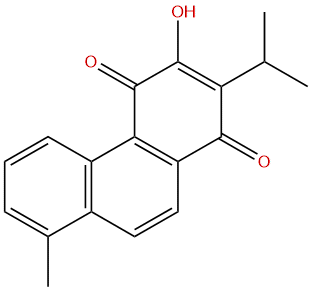
Danshenxin quinone B belongs to the phenanthrenequinone class of compounds, with its core skeleton being phenanthro [1,2-b] furan-10,11-dione. Structurally, it is composed of a fused phenanthrenequinone nucleus and a furan ring. Compared with tanshinone IIA, tanshinone B has a methyl substituent at positions 1 and 6 of the phenanthrene ring, while tanshinone IIA has a methyl substituent at position 1, a hydrogen substituent at position 6, and an isopropyl side chain on its furan ring. This subtle structural difference leads to significant differences in physicochemical properties and biological activity between the two. The molecular formula of salvianolic acid B is C ₁₈ H ₁₆ O3, with a molecular weight of 280.3230 g/mol. The adjacent quinone structural unit (10,11-dione) in its structure is a key pharmacophore for its antioxidant and bioreduction activities. This group can reversibly accept electrons and participate in the redox cycle, thereby clearing free radicals or regulating the redox state inside the cell.
In terms of physicochemical properties, salvianolic acid B exhibits typical lipid solubility characteristics. Its lipid water partition coefficient (LogP) is 3.9223, indicating that it has strong lipophilicity and is easy to penetrate biofilms, but it also results in extremely low solubility in water. The calculated solubility is only 0.0033 mg/mL, which poses a major challenge for its formulation development. Its topological polar surface area (TPSA) is 54.3700 Å ², which is at a moderate level and theoretically favorable for cell membrane permeation, but may limit its ability to pass through the blood-brain barrier (BBB). In fact, according to the calculation prediction, its blood-brain barrier permeability is evaluated as "low", which suggests that its application in the treatment of central nervous system diseases may be limited, but it may also mean that the central nervous system side effects are relatively small after peripheral administration. In addition, key pharmacological predictive indicators show that salvianolic acid B has a low risk of inhibiting hERG potassium ion channels (hERG inhibition: no), which reduces its potential risk of causing serious adverse reactions such as prolonged QT interval in the heart. The Ames test result (0.9) suggests that it may have weak mutagenicity, but further in vitro and in vivo experiments are needed to verify and confirm this. Overall, salvianolic acid B has the potential to serve as a lead compound for structural modification and development, but its poor water solubility is a core issue that urgently needs to be addressed.
Plant sources and extraction methods
Danshen Xinquinone B mainly comes from Salvia miltiorrhiza, a plant in the Salvia genus of the Lamiaceae family(Salvia miltiorrhiza Bunge's dried roots and rhizomes. Danshen is widely distributed in China, mainly produced in Sichuan, Shandong, Henan, Hebei and other places. Among them, the "authentic medicinal materials" produced in Zhongjiang, Sichuan and Rizhao, Shandong are of particularly good quality. The content of salvianolic acid B in Danshen roots is usually low, far lower than the main lipophilic components such as Danshentong IIA and cryptotanshinone, and belongs to trace components. Its content is influenced by various factors, including the origin, variety, harvest season, growth period, and processing methods of Danshen. Research has shown that there are significant differences in the content of salvianolic acid B in Danshen from different regions, which may be related to ecological environmental factors such as soil and climate. In addition, using appropriate drying and processing methods (such as shade drying, sun drying) can help preserve its content.
Given the low content and lipid soluble nature of salvianolic acid B in plant materials, its extraction and purification process presents certain challenges. The traditional extraction method mainly relies on organic solvent extraction. Common solvents include ethanol, methanol, ethyl acetate, or their mixed solvents. For example, using 95% ethanol reflux extraction to extract Danshen powder, the extract is concentrated and then subjected to fractional extraction using solvents of different polarities (such as petroleum ether, chloroform, ethyl acetate, n-butanol). Danshen quinone B is mainly enriched in the chloroform or ethyl acetate extraction sites. Then, through repeated silica gel column chromatography, Sephadex LH-20 gel column chromatography, preparative HPLC and other modern chromatographic technologies, combined with thin layer chromatography (TLC) or HPLC detection, the high-purity salvia neoquinone B monomer can be separated from the crude extract. In recent years, some new extraction techniques have also been attempted to be applied to the extraction of quinones from Panax ginseng to improve efficiency and yield. For example, ultrasound assisted extraction (UAE), microwave-assisted extraction (MAE), and supercritical fluid extraction (SFE-CO ₂). These technologies utilize ultrasonic cavitation effect, microwave internal heating, or the high diffusivity and solubility of supercritical fluids, which can significantly shorten extraction time, improve the extraction rate of target components, and reduce the use of organic solvents. It is crucial to use highly sensitive and selective extraction and detection methods for the trace component salvianolic acid B in Danshen. Usually, HPLC or ultra-high performance liquid chromatography-mass spectrometry (UPLC-MS/MS) techniques can be used to accurately quantify its content in complex matrices.
Pharmacological activity research
Although the research history of salvianolic acid B is not as long as that of tanshinone IIA, existing studies have revealed that it has various pharmacological activities worthy of attention, especially outstanding in antioxidant and anti-tumor aspects.
antioxidant activity This is one of the earliest reported and confirmed pharmacological activities of Danshenxin quinone B. As a phenanthrenequinone compound, the orthoquinone group in its molecular structure can effectively scavenge various free radicals, such as 1,1-diphenyl-2-trinitrophenylhydrazine (DPPH) free radical, 2,2 '- diazene-bis-3-ethylbenzothiazoline-6-sulfonic acid (ABTS) cationic free radical, and hydroxyl free radical (· OH). Research has shown that the antioxidant capacity of salvianolic acid B is positively correlated with its concentration. Its mechanism of action may include direct clearance of free radicals, chelation of transition metal ions (such as Fe ² ⁺, Cu ² ⁺) to inhibit the production of free radicals by Fenton reaction, and upregulation of endogenous antioxidant enzyme activity (such as superoxide dismutase SOD, glutathione peroxidase GPx, catalase CAT) in cells. This antioxidant activity is one of the foundations for its cardiovascular protection and anti-inflammatory effects.
Antitumor activity In recent years, the anti-tumor activity of salvianolic acid B, especially for gastric cancer, has become a focus of attention. Multiple in vitro cell experiments have shown that salvianolic acid B can effectively inhibit the proliferation of various gastric cancer cell lines (such as AGS, MKN-45, SGC-7901, etc.) and induce their apoptosis. Its mechanism of action involves multiple levels:
1. Inducing cell apoptosis After treatment of gastric cancer cells with salvianolic acid B, typical morphological changes of apoptosis can be observed, such as cell shrinkage, chromatin condensation, and formation of apoptotic bodies. Its molecular mechanism is closely related to regulating the expression of apoptosis related proteins. Research has found that salvianolic acid B can downregulate the expression of anti apoptotic protein BCL2 and upregulate the expression of pro apoptotic protein BAX, leading to a decrease in mitochondrial membrane potential, release of cytochrome c, and activation of Caspase-9 and Caspase-3, ultimately initiating the apoptotic cascade reaction of the mitochondrial pathway.
2. Inhibition of cell proliferation and cycle arrest Danshen quinone B can block the cell cycle of gastric cancer cells in G0/G1 or G2/M phase, thereby inhibiting cell proliferation. This effect may be related to the downregulation of the expression of Cyclin D1, Cyclin B1 and Cyclin dependent kinases (CDK4, CDK2).
3. Inhibit invasion and metastasis Partial studies suggest that salvianolic acid B may inhibit the migration and invasion ability of gastric cancer cells by suppressing the activity or expression of matrix metalloproteinases (MMPs) and regulating the expression of epithelial mesenchymal transition (EMT) related markers such as E-cadherin, N-cadherin, Vimentin.
4. Reverse multidrug resistance One of the main reasons for chemotherapy failure in gastric cancer is the development of multidrug resistance (MDR) in tumor cells, and overexpression of ABCB1 (P-glycoprotein, P-gp) is one of the core mechanisms of MDR. Danshen quinone B has been shown to inhibit the activity or downregulate the expression of ABCB1, thereby increasing the sensitivity of drug-resistant gastric cancer cells to chemotherapy drugs (such as doxorubicin and paclitaxel) and exerting chemotherapy sensitization effects.
In addition, preliminary studies have shown that salvianolic acid B also has a certain inhibitory effect on other tumor cells such as liver cancer and lung cancer, but its specific mechanism and effect still need to be further studied.
Mechanism of action and molecular targets
The pharmacological activity of salvianolic acid B, especially its anti gastric cancer effect, is achieved by regulating a complex, multi-target signaling network. According to existing research, its key molecular targets and signaling pathways mainly include the following aspects:
-
STAT3 signaling pathway Signal transducer and activator of transcription factor 3 (STAT3) is continuously activated in various tumors and is a key transcription factor that promotes tumor cell proliferation, survival, angiogenesis, and immune escape. Danshen quinone B can significantly inhibit the phosphorylation level of STAT3 (Tyr705 site) in gastric cancer cells, thereby blocking its nuclear translocation and transcriptional activity. The inactivation of STAT3 further leads to the downregulation of downstream target genes, such as anti apoptotic protein BCL2, cell cycle regulator Cyclin D1, and pro angiogenic factor VEGF, thereby synergistically exerting anti-tumor effects.
-
NFE2L2/KEAT1/ARE pathway Nuclear factor E2 related factor 2 (NFE2L2, also known as NRF2) is a core regulatory factor for cells to cope with oxidative stress and electrophilic substances. Under normal physiological conditions, NFE2L2 binds to KEAP1 and is degraded by ubiquitination. When subjected to oxidative stress or electrophilic compounds such as salvianolic acid B, the conformation of KEAP1 changes, and NFE2L2 is released and translocated into the nucleus, binding to antioxidant response elements (ARE) and initiating the transcription of a series of antioxidant and detoxifying enzymes (such as NQO1, HO-1, GST). Therefore, salvianolic acid B can enhance the antioxidant defense ability of cells by activating the NFE2L2 pathway, which is highly consistent with its antioxidant activity. However, it is worth noting that excessive activation of NFE2L2 in tumor cells sometimes actually promotes tumor growth and drug resistance. Therefore, the regulatory effect of salvianolic acid B on NFE2L2 may be cell type and concentration dependent, and its specific role in gastric cancer still requires more detailed analysis.
-
HIF1A signaling pathway Hypoxia inducible factor 1 alpha (HIF1A) is a key transcription factor for tumor cells to adapt to the hypoxic microenvironment. It promotes angiogenesis, glycolysis, and tumor invasion by upregulating target genes such as VEGF, GLUT1, and CA9. Research has shown that salvianolic acid B can inhibit the accumulation and transcriptional activity of HIF1A protein, which may be achieved by promoting its ubiquitination degradation or inhibiting its synthesis. By inhibiting HIF1A, salvianolic acid B can weaken the angiogenesis and metabolic adaptability of tumors, thereby inhibiting tumor growth.
-
MAPK/ERK pathway The mitogen activated protein kinase (MAPK) family, including ERK, JNK, and p38, is an important signaling pathway that regulates cell proliferation, differentiation, and apoptosis. The effect of salvianolic acid B on the MAPK pathway may be bidirectional. Some studies have shown that it may inhibit cell proliferation by suppressing the phosphorylation of ERK (MAPK1); Other studies have found that it may activate the p38 or JNK pathways to induce cell apoptosis. This difference may stem from different cell models and processing conditions.
-
TOP1 and TOP2A Topoisomerase I (TOP1) and II α (TOP2A) are essential enzymes for DNA replication and transcription, as well as classic targets for various chemotherapy drugs such as camptothecin and etoposide. Preliminary molecular docking and enzyme activity experiments suggest that salvianolic acid B may interfere with its catalytic activity by binding to TOP1 or TOP2A, leading to DNA damage and exerting cytotoxic effects. This provides a new perspective on the anticancer mechanism of salvianolic acid quinone B.
In summary, salvianolic acid B forms a multi-target and multi pathway network regulatory pattern by simultaneously acting on multiple targets such as STAT3, NFE2L2, HIF1A, MAPK, BCL2, ABCB1, TOP1/2A. This "multi-target" characteristic is an important foundation for its anti-tumor activity and is also in line with the concept of "multi-target therapy" in modern drug development. It may help overcome the problem of resistance to single target drugs.
Evaluation of drug properties and pharmacokinetics
The evaluation of drug properties and pharmacokinetic studies are crucial steps in advancing natural products from laboratory research to clinical applications. Based on existing computational predictions and limited experimental data, a preliminary evaluation of the pharmacological properties of salvianolic acid B was conducted.
Drugability assessment:
- drug-likeness The molecular weight of salvianolic acid B is 280.32, which meets the requirement of molecular weight<500 in Lipinski's Rule of Five. Its LogP is 3.92, which also conforms to the rule of LogP<5. The number of hydrogen bond donors (OH or NH) is 0, and the number of hydrogen bond acceptors (O atoms) is 3, both of which comply with the rules. Therefore, from the perspective of basic physicochemical properties, salvianolic acid B has good drug like properties.
- Water solubility This is its most prominent weakness. The extremely low water solubility (0.0033 mg/mL) severely limits its oral bioavailability and administration route. How to improve its water solubility is the primary task of formulation development. Common strategies include: preparing salts (if the molecule contains ionizable groups, but salvianolic acid B is a neutral molecule), using cyclodextrin inclusion technology, preparing nanocarrier systems such as liposomes or nanoparticles, and designing prodrugs (such as introducing phosphate or amino acid groups).
- safety As mentioned earlier, the low risk of hERG inhibition is a positive signal. But the Ames test result (0.9) suggests that there may be a risk of genetic toxicity, which requires high vigilance. Strict validation must be conducted through standard in vitro and in vivo genetic toxicity tests, such as micronucleus tests and chromosome aberration tests. In addition, its toxicity to normal cells, acute toxicity, long-term toxicity, etc. also need to be systematically evaluated.
pharmacokinetics:
At present, there are very limited research reports on the pharmacokinetics of salvianolic acid B in vivo, and most of the information comes from population pharmacokinetic studies of salvianolic acid extracts or salvianolic ketone components.
- absorb Due to its high lipophilicity and low water solubility, the oral absorption of salvianolic acid B may be poor, and its bioavailability is expected to be very low. Its absorption may be affected by the efflux of P-glycoprotein (ABCB1), as salvianolic acid B itself is an inhibitor/substrate of ABCB1. The food effect may also significantly affect its absorption.
- distribution Due to its lipophilicity, salvianolic acid B may be widely distributed in the body, especially in organs with abundant blood flow such as the liver, lungs, and kidneys. Its binding rate with plasma proteins (such as albumin) may be high. Low BBB permeability suggests limited central distribution.
- Metabolism Danshenketone compounds are mainly metabolized by the cytochrome P450 enzyme system (CYP450) in the liver, especially CYP3A4, CYP2C9, etc. The metabolism of salvianolic acid B may involve reactions such as reduction of quinone groups, oxidation of methyl groups, and opening of furan rings. Its metabolites may have different biological activities or toxicity.
- excretion Danshenketone compounds and their metabolites are mainly excreted through bile and feces, with a small amount excreted through urine. There may be hepatic intestinal circulation, which prolongs its duration of action in the body.
Overall, the main challenges facing the pharmacological properties of salvianolic acid B are poor water solubility and potential genetic toxicity. The future research focus should be on developing efficient solubilization formulation technologies and clarifying their safety boundaries through systematic toxicological studies. At the same time, conducting comprehensive in vivo pharmacokinetic studies to elucidate its absorption, distribution, metabolism, and excretion (ADME) processes in animals is the key to promoting its further development.
Clinical application prospects and prospects
Although the research on salvianolic acid B is still in its early stages, its unique chemical structure and multi-target pharmacological activity, especially its potential in anti gastric cancer, depict promising prospects for its clinical application.
-
Development of candidate drugs for anti gastric cancer Gastric cancer is the most promising indication for Danshenxin B. It can simultaneously inhibit proliferation, induce apoptosis, reverse drug resistance, inhibit angiogenesis and other key processes. This "multi pronged" mode of action is expected to overcome the limitations of traditional single target chemotherapy drugs. Especially in reversing the multidrug resistance activity mediated by ABCB1, it has the potential to be used as a chemotherapy sensitizer in combination with existing chemotherapy drugs such as paclitaxel, cisplatin, and 5-fluorouracil to improve efficacy and reduce toxic side effects. Future research should focus on:
- In vivo efficacy verification Establish a gastric cancer cell line xenograft tumor model (CDX) and a patient derived xenograft tumor model (PDX), and systematically evaluate the in vivo anti-tumor effects of salvianolic acid B monotherapy and combination therapy.
- Deepening the mechanism of action Using omics techniques such as transcriptomics and proteomics to comprehensively analyze the molecular network regulated by it, identify its primary targets and key signaling nodes.
- structural optimization Taking salvianolic acid B as the lead, through reasonable structural modifications (such as prodrug design and introduction of polar groups), its water solubility and metabolic stability are improved, while optimizing its efficacy and safety.
-
Potential applications as antioxidants Based on its clear antioxidant activity, Danshen neoquinone B or its derivatives can be developed as new antioxidants to prevent and treat diseases closely related to oxidative stress, such as cardiovascular diseases, neurodegenerative diseases (although the low permeability of BBB may limit its application in the central nervous system), complications of diabetes and aging related diseases. The development of topical preparations (such as ointment and gel) for skin anti-oxidation and anti-aging is also a direction worth exploring.
-
As a biomarker for quality control of traditional Chinese medicine Given that salvianolic acid B is one of the active ingredients in Salvia miltiorrhiza, although its content is relatively low, its determination can serve as a supplementary indicator for evaluating the quality of Salvia miltiorrhiza medicinal materials and related preparations, especially for assessing batch consistency of products with specific anti-tumor or antioxidant activities.
-
Challenges and Future Directions Faced:
- Resource issues The content of salvianolic acid B in plants is extremely low, and large-scale extraction and separation costs are high. In the future, it is necessary to develop efficient chemical synthesis or semi synthesis routes, or utilize synthetic biology techniques such as engineering yeast or Escherichia coli to achieve heterologous biosynthesis, in order to solve the problem of drug sources.
- Difficulties in formulation Poor water solubility is the biggest bottleneck restricting its development. Developing targeted delivery systems based on nanotechnology, such as lipid nanoparticles, polymer micelles, and albumin nanoparticles, can not only improve their bioavailability, but also achieve tumor targeted delivery, enhance therapeutic efficacy, and reduce systemic toxicity.
- safety assessment It is necessary to conduct a thorough evaluation of the potential genetic toxicity suggested by the Ames test, clarify its mutagenic mechanism and risk level. At the same time, comprehensive preclinical toxicology studies are required, including acute toxicity, long-term toxicity, reproductive toxicity, etc.
Conclusion
Danshen quinone B, as a structurally unique phenanthrenequinone active ingredient in Danshen, is gradually becoming a new star in the field of natural product pharmacology research due to its significant antioxidant activity and multi-target anti gastric cancer potential. This article systematically reviews the research progress on its chemical structure, plant origin, pharmacological activity, molecular mechanism, medicinal properties, and clinical application prospects. Although current research is not sufficient, especially in terms of in vivo efficacy, pharmacokinetics, and toxicology, there is ample evidence to suggest that salvianolic acid B is a highly valuable lead compound for development. It exerts a comprehensive effect of inhibiting gastric cancer cell proliferation, inducing apoptosis, and reversing drug resistance by regulating multiple key targets such as STAT3, NFE2L2, HIF1A, ABCB1, etc., reflecting the advantages of natural products' multi-target and multi pathway effects.
However, the road from laboratory research to clinical application is still long and challenging. Addressing key issues such as poor water solubility, insufficient drug sources, and potential genetic toxicity is the core task in promoting its commercialization process. In the future, interdisciplinary approaches such as medicinal chemistry, pharmacy, pharmacology, toxicology, and synthetic biology should be comprehensively utilized to conduct in-depth and systematic research on salvianolic quinone B. We have reason to believe that with the continuous deepening of research, salvianolic acid quinone B and its derivatives have the potential to provide new strategies and candidate drugs for the treatment of malignant tumors such as gastric cancer, and contribute to human health. The continuous exploration of these "niche" but highly potential natural products is also the driving force behind the continuous progress of modern drug discovery.