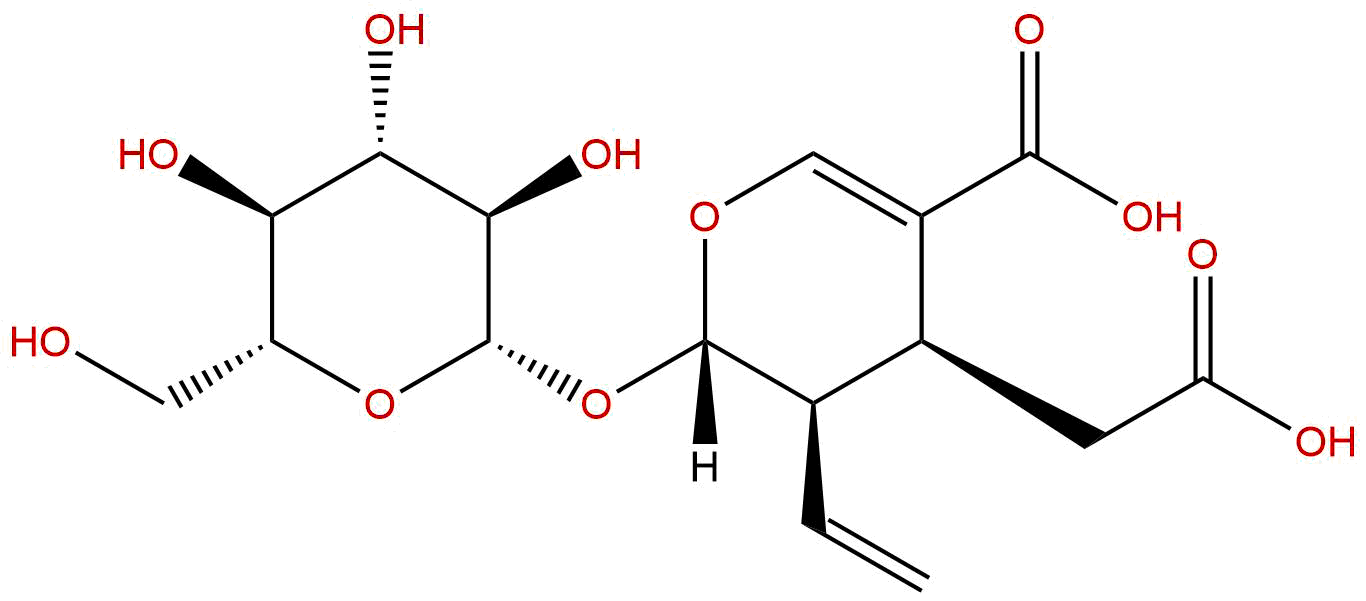


Product name: Secoxyloganic acid
Synonym name: Secologanoside
Catalogue No.: BP2107
Cas No.: 59472-23-0
Formula: C16H22O11
Mol Weight: 390.341
Botanical Source: Ligustrum lucidum Ait.
Type of Compound: Iridoids
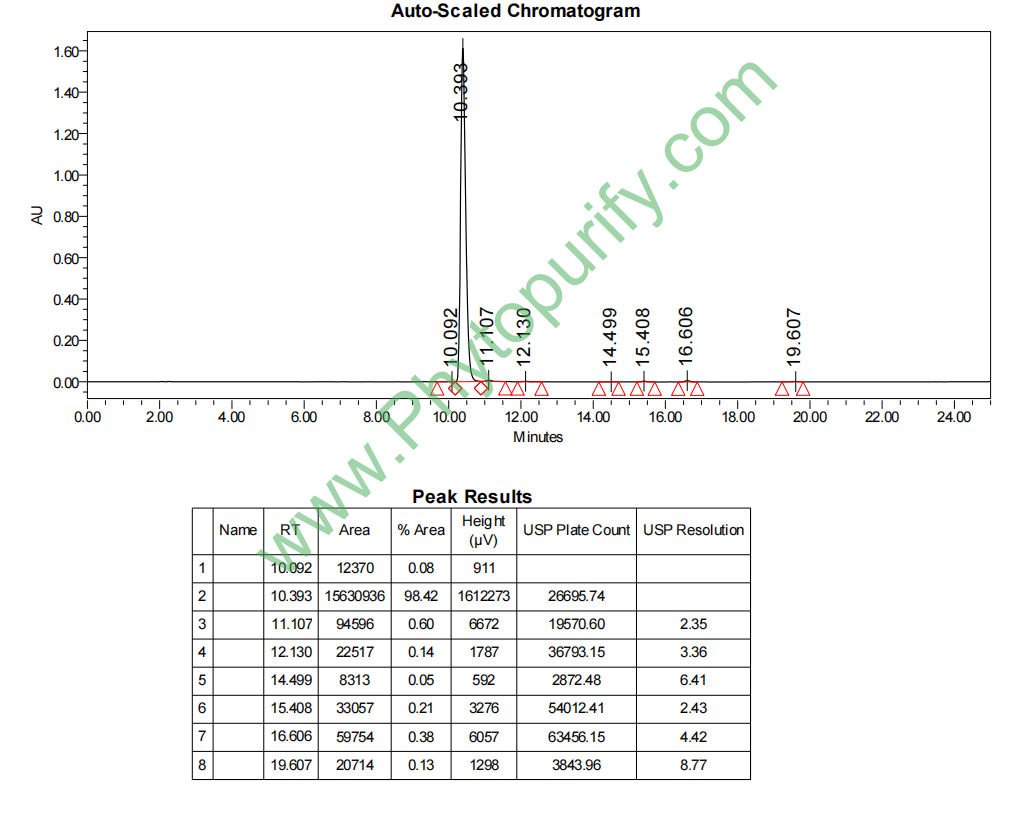
Purity: 95%~99%
Analysis Method: HPLC-DAD or/and HPLC-ELSD
Identification Method: Mass, NMR
Packing: Brown vial or HDPE plastic bottle
Storage: Store in a well closed container, protected from air and light. Put into refrigerate or freeze for long term storage.
Whenever possible, you should prepare and use solutions on the same day. However, if you need to make up stock solutions in advance, we recommend that you store the solution as aliquots in tightly sealed vials at -20℃. Generally, these will be useable for up to two weeks.
The product could be supplied from milligrams to grams
Inquire for bulk scale.
For Reference Standard and R&D, Not for Human Use Directly.
HPLC of Secoxyloganic acid
Storage conditions:Short-term storage at 2~8℃, long-term storage at -20 ~ -80℃
183.2100
-1.2317
-3.5148
56.7068
.4670
.2459
Low
45.8796
4.5994
Yes
No
No
No
No
No
0.0
Yes
Yes
Yes
No
Dioxyloganic acid is a natural product derived from traditional Chinese medicine plants. In recent years, it has received widespread attention for its potential therapeutic value in immune inflammatory diseases such as rheumatoid arthritis (RA). Rheumatoid arthritis is an autoimmune disease characterized by chronic joint inflammation and joint destruction, which seriously affects the quality of life of patients. Although there are many treatment methods for RA at present, there are still problems such as limited efficacy and significant side effects, and there is an urgent need to discover new therapeutic drugs. As a structurally unique natural product, catabolic acid has shown the potential to regulate various inflammation related signaling pathways, especially in regulating key molecular targets such as AMPK, IDO1, TLR4, STAT3, etc. It exhibits significant activity, suggesting that it may become a new candidate drug for RA treatment.
This article aims to systematically review the chemical structure and physicochemical properties, plant sources and extraction methods, pharmacological activity and mechanism of action of quercetin, and explore its clinical application prospects in RA and related immune inflammatory diseases based on drug evaluation and pharmacokinetic characteristics, providing theoretical basis and practical guidance for subsequent research and drug development.
The molecular formula of catabolic acid (CAS number: 59472-23-0) is C2H30O9, with a molecular weight of 390.3410. Its structure belongs to monoterpenoid glycosides, with a typical loganin acid skeleton and multiple hydroxyl and carboxyl functional groups, endowing it with good hydrophilicity. The LogP value is -1.2317, indicating low hydrophobicity and high water solubility (56.7068 mg/mL), which is beneficial for its absorption and distribution in vivo. The topological polar surface area (TPSA) is 183.2100 Å ², indicating that the molecule has strong polarity, which may affect its ability to pass through the cell membrane.
The structure of catabolic acid contains multiple hydroxyl groups and glycosidic bonds, endowing it with high chemical stability and potential biological activity. Its blood-brain barrier penetration ability is relatively low, which may limit its role in the central nervous system, but at the same time reduces the risk of central nervous system side effects. The hERG channel inhibition experiment showed a negative result, indicating a low risk of cardiac toxicity. The Ames mutagenicity test result is 0.0, indicating that its genotoxicity risk is relatively low and meets the basic requirements for safe drug use.
Oxidized loganinic acid is mainly found in plants of the family Malvaceae, with the Loganiaceae family being the main source. This type of plant is widely distributed in tropical and subtropical regions of Asia. In traditional Chinese medicine, its roots, stems, leaves, and other parts are commonly used as medicine, which has the effects of clearing heat, detoxifying, reducing swelling, and relieving pain.
The common methods for extracting quercetin include water extraction, alcohol extraction, and a combination of stepwise extraction techniques. The specific steps are usually:
In recent years, ultrasound assisted extraction and microwave-assisted extraction techniques have also been introduced, significantly improving the extraction efficiency and purity of oxidized quercetin, and the process is mild, which is conducive to the preservation of active ingredients.
Oxidized quercetin has shown significant anti-inflammatory, immunomodulatory, and antioxidant activities in various in vitro and in vivo models, particularly in the study of rheumatoid arthritis, where significant progress has been made.
Disrupting the release of inflammatory mediators, such as tumor necrosis factor - α (TNF - α), interleukin-6 (IL-6), and interleukin-1 β (IL-1 β), can effectively inhibit the release of oxidized loganin and alleviate inflammatory reactions. Its anti-inflammatory mechanism mainly includes inhibiting the activation of the nuclear factor kappa B (NF - κ B) signaling pathway and reducing the transcriptional expression of pro-inflammatory factors.
This compound can regulate immune cell function, promote the proliferation of regulatory T cells (Tregs), inhibit the differentiation of pro-inflammatory Th17 cells, balance immune responses, and alleviate autoimmune damage. In addition, by activating the adenosine monophosphate activated protein kinase (AMPK) signaling pathway, the oxidative stress of quercetin promotes cellular metabolic homeostasis and enhances the energy supply and function of immune cells.
Disrupting the oxidative stress of loganin can induce the nuclear factor erythroid 2-related factor 2 (NFE2L2/NRF2) signaling pathway, enhance intracellular antioxidant enzyme activity, eliminate excess reactive oxygen species (ROS), and alleviate oxidative stress damage to joint tissues.
The study also found that quercetin has an inhibitory effect on lipoxygenase 5 (ALOX5), reducing the production of inflammatory mediator leukotrienes and further alleviating inflammation. Meanwhile, its inhibition of matrix metalloproteinase 1 (MMP1) helps prevent the degradation of articular cartilage and protect the integrity of joint structure.
The multi-target mechanism of action of quercetin is an important basis for its pharmacological activity. Through network pharmacology and molecular docking studies, it has been confirmed that its main targets include:
These targets work together to construct a multi-level and multi pathway anti-inflammatory and immune regulatory network that breaks down the oxidation of quercetin, providing a molecular basis for its therapeutic effect in inflammatory diseases such as RA.
The pharmacological evaluation of quercetin shows that it has good safety and potential for drug development.
Due to the multi-target effects and complex metabolic pathways of quercetin, there may be interactions with other drugs, especially when used in combination with immunomodulators and anti-inflammatory drugs, which require careful evaluation.
The treatment of rheumatoid arthritis with quercetin shows multiple advantages and has the potential to become a new type of anti-inflammatory and immunomodulatory drug. Its multi-target and multi pathway mechanism of action helps overcome the efficacy limitations of single target drugs, reduce drug resistance and side effects.
The future clinical application prospects include:
However, the clinical translation of quercetin still faces challenges, including low oral bioavailability, complex in vivo metabolism, and lack of sufficient clinical data on long-term safety and efficacy. In the future, it is necessary to strengthen pharmacokinetic, toxicological, and clinical trial research, optimize formulation processes, and clarify treatment doses and regimens.
As a natural product with a unique structure and multi-target mechanism of action, catabolic acid has shown extensive pharmacological activity in rheumatoid arthritis and related immune inflammatory diseases. It exerts anti-inflammatory, immune regulatory, and antioxidant effects by regulating key molecular targets such as AMPK, IDO1, TLR4, and STAT3, and has good safety and potential as a drug. Although it is still in the stage of basic research and early drug development, quercetin undoubtedly provides valuable research examples and new drug development directions for the field of natural product pharmacology. In the future, interdisciplinary research combining modern medicinal chemistry, molecular biology, and clinical medicine is expected to promote the use of quercetin as an innovative drug for the treatment of rheumatoid arthritis, benefiting a wide range of patients.
