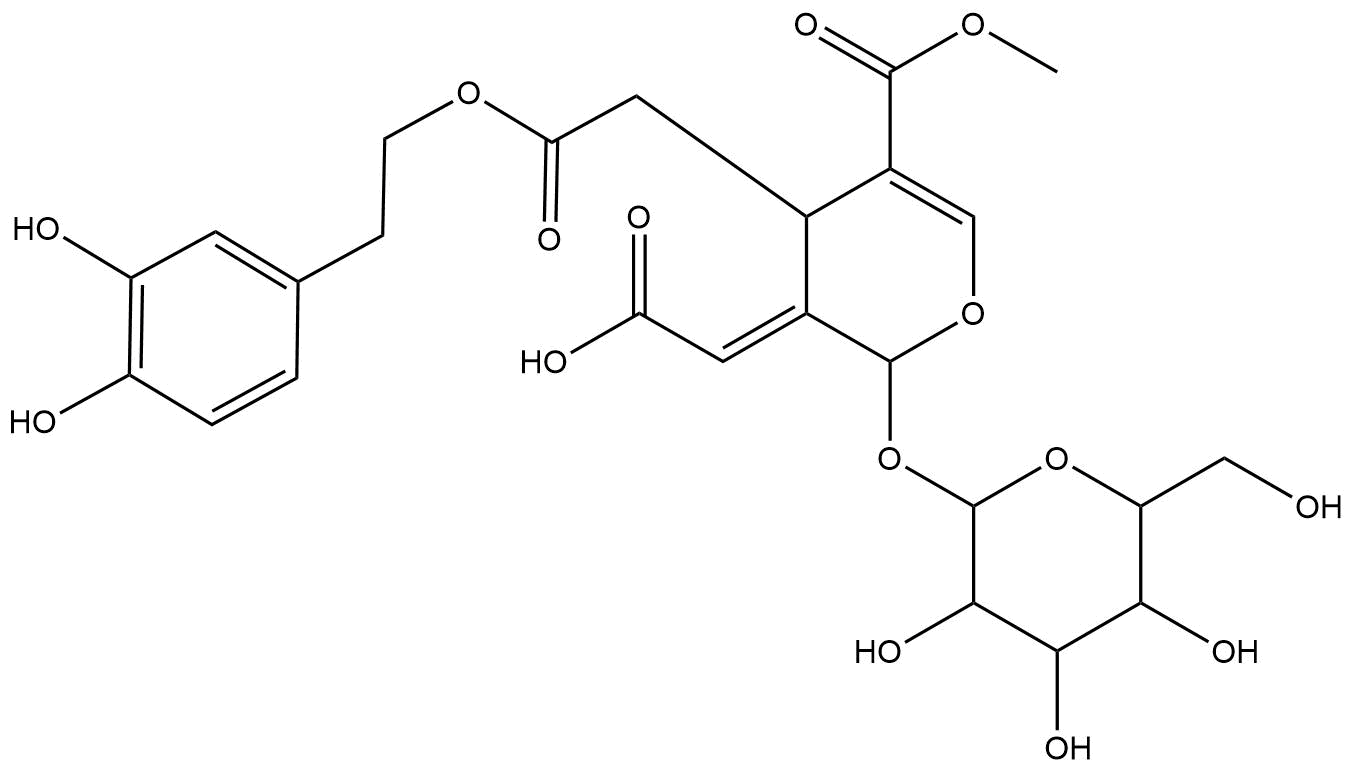


Product name: Oleuropeinic acid
Synonym name:
Catalogue No.: BP2108
Cas No.: 96382-90-0
Formula: C25H30O15
Mol Weight: 570.5
Botanical Source: Ligustrum lucidum Ait.
Type of Compound: Iridoids
Purity: 95%~99%
Analysis Method: HPLC-DAD or/and HPLC-ELSD
Identification Method: Mass, NMR
Packing: Brown vial or HDPE plastic bottle
Storage: Store in a well closed container, protected from air and light. Put into refrigerate or freeze for long term storage.
Whenever possible, you should prepare and use solutions on the same day. However, if you need to make up stock solutions in advance, we recommend that you store the solution as aliquots in tightly sealed vials at -20℃. Generally, these will be useable for up to two weeks.
The product could be supplied from milligrams to grams
Inquire for bulk scale.
For Reference Standard and R&D, Not for Human Use Directly.
Storage conditions:Short-term storage at 2~8℃, long-term storage at -20 ~ -80℃
238.9700
-.6077
-2.4381
12.6883
.4573
.1452
Low
73.7836
4.7329
Yes
No
No
No
No
No
0.0
Yes
Yes
Yes
Yes
Oleuropeinic acid, CAS number 96382-90-0, is a natural product found in olive tissue and can also be formed through heat treatment and oxidation reactions of Oleuropein. As an important derivative of polyphenolic compounds in olives, oleuropeic acid has attracted widespread attention in the field of natural product pharmacology in recent years due to its significant antioxidant activity and multi-target regulatory effects. Its unique biological function makes it a new candidate molecule for the study of cardiovascular disease, especially the prevention and treatment of atherosclerosis.
Atherosclerosis is a complex disease characterized by lipid deposition and chronic inflammatory reaction in arterial wall, which seriously threatens global public health. Olive bitter acid participates in pathological processes such as lipid metabolism, oxidative stress, and cell apoptosis by regulating various key molecular targets (such as LOX-1, AMPK, ABCA1, etc.), demonstrating potential therapeutic value. This article aims to systematically review the chemical structure and physicochemical properties, plant sources and extraction methods, pharmacological activity and mechanism of action, pharmacological evaluation and pharmacokinetic characteristics of oleuropeic acid, and explore its clinical application prospects and development directions, providing theoretical basis and reference for subsequent research and drug development.
The molecular formula of oleuropeic acid is C25H-34O15, with a molecular weight of 570.50 Da. Its structural basis is derived from the phenolic acid part of oleuropeic acid, which contains multiple hydroxyl and ester bonds, endowing it with strong polarity and water solubility. The physicochemical property data shows that the LogP value of oleuropeic acid is about -0.61, indicating its strong hydrophilicity and water solubility of 12.69 mg/mL, which is suitable for the biological activity in aqueous media. The extremely high polarity is also reflected in its topological polar surface area (TPSA) of 238.97 Å ², indicating that its molecules have abundant hydrogen bond donors and acceptors, which facilitate stable binding with biomolecules such as protein targets.
In addition, the blood-brain barrier permeability of oleuropeic acid is relatively low, suggesting that its direct effects in the central nervous system are limited, but this may also reduce the risk of central nervous system toxicity. The negative result of hERG channel inhibition experiment indicates a low risk of cardiac toxicity. The Ames mutagenicity test result is 0, indicating that its genotoxicity risk is relatively low and has a good safety basis.
Olive bitter glycoside acid is mainly present in olive fruits and leaves, especially in tissues rich in olive bitter glycoside content. In its natural state, the content of oleuropein is relatively low, and it is mainly used as an oxidation product of oleuropein or a secondary metabolite formed during heat treatment. Oleuropein is one of the most abundant phenolic compounds in olives, which can be converted into oleuropein acid through heating, acid-base or enzymatic reactions.
The methods for extracting oleuropeic acid mainly include solvent extraction, enzymatic conversion, and heat treatment. Traditional organic solvent extraction often uses methanol, ethanol, or water ethanol mixed solvents to improve the solubility of polar compounds. After purification processes such as concentration, liquid-liquid distribution, and column chromatography, the extracted solution can obtain high-purity oleuropeic acid. In recent years, emerging technologies such as ultrasound assisted extraction, microwave-assisted extraction, and supercritical fluid extraction have also been applied to improve extraction efficiency and purity.
In addition, utilizing biotransformation technology to catalyze the hydrolysis and oxidation of oleuropein to produce oleuropeic acid through specific enzymes such as β - glucosidase has become a green and efficient production pathway. This method not only improves the purity of the product, but also lays the foundation for large-scale production.
The pharmacological activities of oleuropicric acid mainly focus on its antioxidant, anti-inflammatory, anti atherosclerosis and cardiovascular protective effects. Numerous in vitro and in vivo experiments have shown that oleuropein can effectively scavenge free radicals, alleviate oxidative stress, protect endothelial cell function, and inhibit lipid peroxidation and inflammatory reactions.
Olive bitter acid contains abundant phenolic hydroxyl structures and has strong free radical scavenging ability. DPPH, ABTS and other free radical scavenging experiments have shown significant antioxidant activity. Its antioxidant mechanism includes direct electron transfer, hydrogen atom donor action, and induction of endogenous antioxidant enzyme expression (such as superoxide dismutase (SOD) and glutathione peroxidase (GPx)).
Olivopyrylic acid plays an anti atherosclerotic role by regulating lipid metabolism and inflammatory reaction through multiple targets. Its main targets include LOX-1 (oxidized low-density lipoprotein receptor 1), AMPK (5 'AMP activated protein kinase), ABCA1 (ATP binding cassette transporter A1), etc. Reduce endothelial cell damage by inhibiting LOX-1 mediated oxidative low-density lipoprotein (ox LDL) endocytosis; Activate the AMPK signaling pathway to promote lipid metabolism and energy homeostasis; Enhance ABCA1 expression, increase cholesterol efflux, and reduce arterial wall lipid deposition.
Olive bitter acid can inhibit the expression of pro-inflammatory factors such as TNF - α and IL-6, and alleviate vascular inflammatory response. Simultaneously regulating the expression of apoptosis related proteins MCL1 and BCL2, protecting vascular endothelial cells from oxidative stress-induced apoptosis damage, and maintaining vascular stability.
Some studies suggest that oleuropeic acid has a regulatory effect on the DNA repair enzyme RECQ1 and may be involved in maintaining cellular genomic stability. In addition, its impact on the epigenetic regulatory enzyme EHMT2 (histone methyltransferase) suggests its potential role in gene expression regulation and inflammatory response.
The multi-target mechanism of action of oleuropeic acid is the key to its pharmacological activity. The following is an analysis of the main targets and their mechanisms of action:
LOX-1 is the main receptor for vascular endothelial cell surface recognition and uptake of oxidized low density lipoprotein, which mediates the early pathological changes of atherosclerosis. Olivopyrylic acid can inhibit the expression and activity of LOX-1, reduce the endocytosis and accumulation of ox LDL, alleviate endothelial cell injury and inflammatory reaction, and block the process of atherosclerosis.
AMPK, as a key regulatory enzyme in cellular energy metabolism, is involved in lipid metabolism, glucose metabolism, and inflammation regulation. Olivopyrylic acid activates AMPK signaling pathway, promotes fatty acid oxidation and cholesterol metabolism, inhibits lipid accumulation and inflammatory reaction, and plays an anti atherosclerosis role.
ABCA1 is a key protein that regulates the transport of intracellular cholesterol to high-density lipoprotein (HDL), facilitating cholesterol efflux and reverse cholesterol transport. Olivopyrylic acid upregulates the expression of ABCA1, enhances cholesterol clearance, reduces lipid deposition in vascular wall, and alleviates atherosclerosis.
MCL1 and BCL2 are both apoptosis regulatory proteins that maintain cell survival and function. Olive bitter acid regulates its expression, inhibits oxidative stress-induced endothelial cell apoptosis, and protects vascular functional integrity.
EHMT2 participates in the methylation modification of histone H3K9, regulating gene expression and inflammatory response. The inhibitory effect of oleuropein on EHMT2 may affect the expression of inflammation related genes and alleviate vascular inflammation.
RECQ1 is involved in DNA repair and genome stability maintenance. The regulation of RECQ1 by oleuropeic acid may promote cell resistance to oxidative stress-induced DNA damage and protect vascular cell function.
The pharmacological evaluation of oleuropeic acid shows that it has certain potential for drug development. The molecular weight is 570.5 Da, slightly higher than the recommended upper limit of 500 Da by Lipinski's rule, but its good water solubility (12.69 mg/mL) and negative LogP value (-0.61) contribute to in vivo absorption and distribution. A larger TPSA (238.97 Å ²) suggests a higher polarity, which may limit cell membrane permeability and oral bioavailability.
The low permeability of the blood-brain barrier reduces the risk of central nervous system side effects, but also limits its application in neurological diseases. The negative results of hERG channel inhibition and Ames test indicate a low risk of cardiac toxicity and genotoxicity, and good safety.
There are few existing literature reports on pharmacokinetics. It is speculated that its high polarity and water solubility may lead to limited intestinal absorption, and its distribution in the body is mainly concentrated in tissues rich in phenolic metabolic enzymes such as blood and liver. Olive bitter acid may undergo metabolic transformation through liver metabolic enzymes, and further research is needed on the metabolites and excretion pathways.
Olivopyrylic acid has broad clinical application prospects because of its multi-target antioxidant and anti atherosclerosis activities. Its potential in the prevention and treatment of cardiovascular diseases, especially atherosclerosis and related complications, deserves further exploration.
Future research should focus on the following directions:
Pharmacodynamics and Formulation Optimization Given its high polarity, it is necessary to develop suitable routes of administration and dosage forms, such as nanocarriers, liposomes, or sustained-release formulations, to improve bioavailability and targeting.
In depth analysis of the mechanism Through multi omics techniques and molecular simulations, further reveal the interaction mechanism between oleuropein and target proteins, and clarify its regulatory network on signaling pathways.
Safety and Toxicological Assessment Conduct long-term toxicology research on the system, evaluate its safe dose range and potential side effects, and provide a basis for clinical trials.
Clinical trial design Based on existing pharmacological evidence, design a reasonable clinical research plan to verify its efficacy and safety in patients with cardiovascular disease.
Combination therapy research Exploring the synergistic effect of oleuropein acid with existing lipid-lowering and anti-inflammatory drugs, optimizing treatment plans, and improving clinical efficacy.
As an important derivative of olive polyphenols, oleuropicric acid has become a research hotspot in the field of cardiovascular disease prevention and treatment due to its significant antioxidant, anti-inflammatory and anti atherosclerosis activities. The multi-target regulatory mechanism provides a theoretical basis for the development of new natural medicines. Although there are still some challenges in pharmacokinetics and clinical applications, with the advancement of extraction technology and drug delivery systems, oleuropein is expected to become a safe and effective cardiovascular protective agent. In the future, it is necessary to strengthen basic research and clinical translation, promote its clinical application, and bring new treatment options for cardiovascular disease patients.
