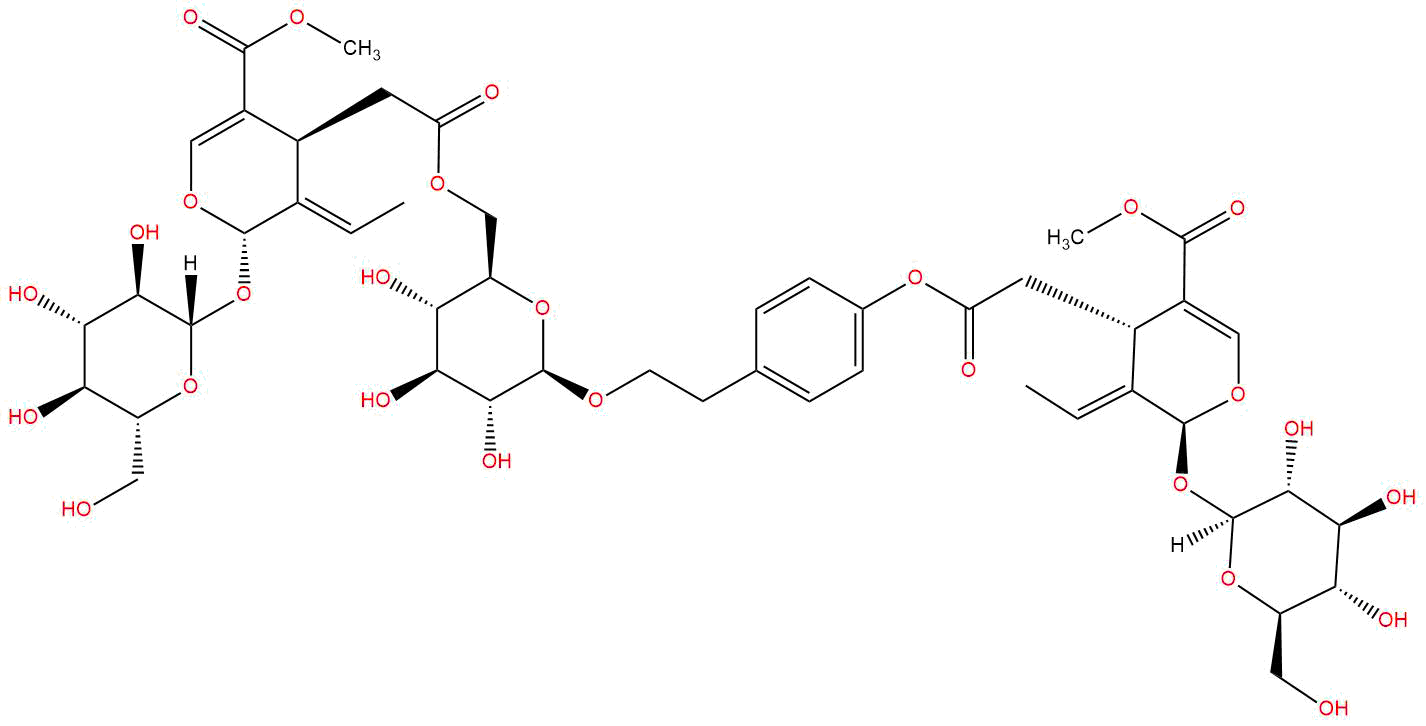


Product name: Nuezhenoside G13
Synonym name:
Catalogue No.: BP2110
Cas No.: 60037-39-0
Formula: C48H64O27
Mol Weight: 1073.01
Botanical Source: Ligustrum lucidum Ait.
Type of Compound: Iridoids
Purity: 95%~99%
Analysis Method: HPLC-DAD or/and HPLC-ELSD
Identification Method: Mass, NMR
Packing: Brown vial or HDPE plastic bottle
Storage: Store in a well closed container, protected from air and light. Put into refrigerate or freeze for long term storage.
Whenever possible, you should prepare and use solutions on the same day. However, if you need to make up stock solutions in advance, we recommend that you store the solution as aliquots in tightly sealed vials at -20℃. Generally, these will be useable for up to two weeks.
The product could be supplied from milligrams to grams
Inquire for bulk scale.
For Reference Standard and R&D, Not for Human Use Directly.
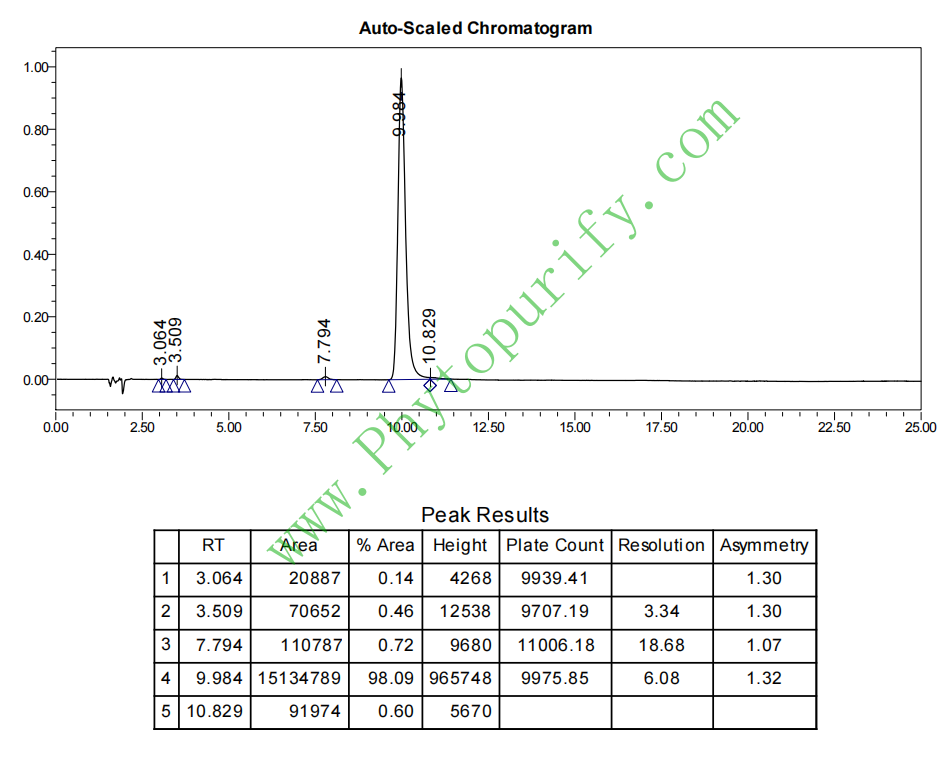
HPLC of Nuezhenoside G13
Storage conditions:Short-term storage at 2~8℃, long-term storage at -20 ~ -80℃
401.5700
-.2065
-.2065
3.7726
.4298
.1686
Low
67.4424
6.5837
Yes
No
No
No
No
No
0.0
Yes
Yes
Yes
Yes
Nuezhenoside G13 (CAS number: 60037-39-0) is a major active ingredient isolated from the traditional Chinese medicine Ligustrum Lucidum Ait, and belongs to a complex glycoside natural product. As an important object in the pharmacological research of natural products, Ligustrum lucidum glycoside G13 has shown great potential for application in the treatment of immune related diseases such as autoimmune diseases due to its unique chemical structure and multi-target regulatory ability. Autoimmune diseases are a type of disease in which the body's own tissues are damaged due to abnormal activation of the immune system, involving complex cytokine networks and signaling pathways. In recent years, Ligustrum lucidum glycoside G13 has shown significant immunomodulatory effects by regulating key immune regulatory factors such as STAT3, TGFB1, IL10, FOXP3, IL17A, and other molecular targets, making it a research hotspot in the field of natural medicine development.
This article aims to systematically review the chemical structure and physicochemical properties, plant sources and extraction methods, pharmacological activity and mechanism of action, pharmacological evaluation and pharmacokinetic characteristics of Ligustrum lucidum glycoside G13. Combined with the current clinical application prospects and future research directions, it comprehensively presents the research progress and development potential of this natural product in the field of autoimmune disease treatment.
Ligustrum lucidum glycoside G13 is a relatively large molecular weight glycoside compound with a molecular weight of 1073.0130 and a complex polysaccharide structure. Its molecular structure contains multiple sugar residues connected to phenolic or terpenoid parent nuclei through glycosidic bonds, endowing it with high polarity and water solubility. According to calculations, its LogP value is -0.2065, indicating that Ligustrum lucidum glycoside G13 has low lipid solubility and strong hydrophilicity. The polar surface area (TPSA) is as high as 401.5700, further confirming its rich polar groups, which may affect its cell membrane permeability and bioavailability.
The water solubility of Ligustrum lucidum glycoside G13 is 3.7726, indicating its good solubility in aqueous phase, which is beneficial for absorption and distribution in vivo. Its blood-brain barrier permeability is relatively low, indicating that its main target may be concentrated in the peripheral immune system rather than the central nervous system. In addition, Ligustrum lucidum glycoside G13 does not exhibit hERG channel inhibition, indicating a low risk of cardiac toxicity; The Ames test result is 0.0, indicating no significant genotoxicity and high safety.
Overall, the physicochemical properties of Ligustrum lucidum glycoside G13 conform to the typical high polarity glycoside characteristics of natural products, suggesting that its pharmacokinetic performance in vivo may be limited by membrane permeability. However, its good water solubility and safety provide a solid foundation for its drug development.
Ligustrum Lucidum Ait., a traditional Chinese medicinal herb, is mainly derived from the mature fruit of Ligustrum Lucidum Ait. Ligustrum lucidum is widely used in traditional Chinese medicine for nourishing the liver and kidneys, improving vision and calming the mind. Modern pharmacological research has confirmed that it contains abundant active glycosides, among which Ligustrum lucidum glycoside G13 is one of its representative components.
The common methods for extracting G13 from Ligustrum lucidum include water extraction and alcohol precipitation, as well as column chromatography separation technology. The general steps are:
Raw material pretreatment Crush the dried fruit of Ligustrum lucidum to a suitable particle size for easy extraction.
Extract Using water or 70% -80% ethanol solution for reflux extraction, the extraction temperature is controlled at 80-90 ℃ for about 1-2 hours, and multiple extractions are performed to improve the recovery rate.
concentrate Concentrate the extract to an appropriate volume and remove some solvent.
Separation and purification Separation and purification of Ligustrum lucidum glycoside G13 using methods such as silica gel column chromatography and reverse phase high performance liquid chromatography (RP-HPLC). In recent years, supercritical fluid extraction and membrane separation technologies have also been applied to improve extraction efficiency and purity.
appraisal Confirm the structure and purity through modern analytical techniques such as mass spectrometry (MS) and nuclear magnetic resonance (NMR).
Optimizing the extraction process not only improves the yield and purity of Ligustrum lucidum glycoside G13, but also lays the foundation for its large-scale production and drug formulation development.
The pharmacological activity research of Ligustrum lucidum glycoside G13 mainly focuses on its immunomodulatory effects, especially its performance in autoimmune disease models. Numerous in vitro cell experiments and in vivo animal model studies have shown that Ligustrum lucidum glycoside G13 has significant anti-inflammatory, immune regulatory, and tissue protective effects.
anti-inflammatory effect
Ligustrum lucidum glycoside G13 can inhibit the expression of pro-inflammatory cytokines such as IL-17A, TNF - α, IL-6, and alleviate inflammatory response. It exerts anti-inflammatory effects by regulating the activation status of immune cells and reducing the release of inflammatory mediators.
Regulating immune balance
Ligustrum lucidum glycoside G13 promotes the expression of regulatory T cell (Treg) - related transcription factor FOXP3, enhances immune tolerance, and inhibits autoimmune response. At the same time, it enhances the secretion of anti-inflammatory cytokine IL-10 and maintains immune homeostasis.
Inhibiting pathological immune signaling pathways
In the signaling pathway related to autoimmune diseases, Ligustrum lucidum G13 downregulates the activity of STAT3, inhibits the differentiation of Th17 cells, reduces the production of IL-17A, and blocks the progression of pathological immune responses. In addition, Ligustrum lucidum glycoside G13 regulates the expression of transforming growth factor β 1 (TGF β 1), promoting tissue repair and immune regulation.
Animal model validation
In animal models of autoimmune diseases such as multiple sclerosis (EAE) and rheumatoid arthritis (RA), ligustilide G13 significantly reduces clinical symptoms and improves histopathological manifestations, verifying its potential therapeutic value.
In summary, Ligustrum lucidum glycoside G13 exhibits excellent pharmacological activity and therapeutic potential by synergistically regulating the immune system through multiple targets and pathways.
The mechanism of action of Ligustrum lucidum glycoside G13 involves a complex signaling network, with the main targets concentrated on key molecules related to immune regulation, including STAT3, TGFB1, IL10, FOXP3, IL17A, etc.
Regulation of STAT3 signaling pathway
STAT3 is a core transcription factor for Th17 cell differentiation and inflammatory response. Ligustrum lucidum glycoside G13 inhibits the phosphorylation of STAT3, blocks its nuclear transcriptional activity, reduces the expression of IL-17A, suppresses the activation of inflammatory cells, and regulates immune imbalance.
Dual regulation of TGF β 1
TGF β 1 plays a dual role in immune regulation, promoting the differentiation of Treg cells and participating in the fibrosis process. Ligustrum lucidum glycoside G13 promotes immune tolerance by finely regulating the expression of TGF β 1, while avoiding tissue fibrosis and maintaining immune homeostasis.
Upregulation of IL-10 and FOXP3
IL-10 is an important anti-inflammatory cytokine, and FOXP3 is a hallmark transcription factor that regulates T cells. Ligustrum lucidum glycoside G13 promotes the expression of both, enhances Treg cell function, inhibits excessive immune response, and prevents the deterioration of autoimmune diseases.
Inhibition of IL-17A mediated inflammatory response
IL-17A is a key pro-inflammatory cytokine secreted by Th17 cells and is involved in the pathological processes of various autoimmune diseases. Ligustrum lucidum glycoside G13 inhibits the production of IL-17A through multiple signaling pathways, reducing tissue inflammation and damage.
Other potential targets
Some studies suggest that Ligustrum lucidum glycoside G13 may affect other immune related factors and signaling pathways, such as NF - κ B, MAPK, etc., but the specific mechanism still needs to be further explored.
In summary, Ligustrum lucidum glycoside G13 regulates the differentiation and function of immune cells, inhibits inflammatory responses, promotes immune tolerance, and exhibits a complex and effective mechanism of action through multi-target synergistic effects.
The pharmacological evaluation of Ligustrum lucidum glycoside G13 shows that it has certain development potential, but there are also challenges.
Molecular properties and drug compatibility
The molecular weight of Ligustrum lucidum glycoside G13 is relatively large (1073.0130), with a LogP value of -0.2065, indicating good water solubility but low lipid solubility, which may limit its oral absorption and cell membrane penetration ability. The high TPSA (401.5700) further indicates its strong polarity, which may affect bioavailability.
safety assessment
No hERG channel inhibitory effect, reducing the risk of cardiac toxicity; Ames test negative, low risk of genotoxicity, and good safety.
Blood-brain barrier permeability
The low permeability of the blood-brain barrier suggests that ligustilide G13 mainly acts on the peripheral immune system and is suitable for treating peripheral autoimmune diseases, but its therapeutic effect on central nervous system diseases may be limited.
Pharmacokinetic characteristics
At present, there is limited data on the in vivo absorption, distribution, metabolism, and excretion (ADME) of Ligustrum lucidum glycoside G13. Preliminary studies indicate that its oral absorption rate is low, and there may be a first pass effect. The metabolic pathway may involve glycoside hydrolases and corresponding metabolic enzymes in the liver, but specific metabolites and kinetic parameters still need to be systematically studied.
Formulation development challenges
Due to its large molecular weight and strong polarity, Ligustrum lucidum glycoside G13 needs to overcome the problem of low bioavailability in formulation development. Modern drug delivery systems such as nanocarriers, liposome encapsulation, and eutectic technology provide possibilities for the development of oral or injectable formulations.
In summary, Ligustrum lucidum glycoside G13 has good safety and clear pharmacological targets, but its clinical application potential needs to be improved through pharmacokinetic optimization and formulation innovation.
Ligustrum lucidum glycoside G13, as a natural product with multi-target immune regulation function, has shown broad prospects in the treatment of autoimmune diseases.
Potential for treating autoimmune diseases
Based on its ability to regulate key immune factors such as STAT3, TGFB1, IL10, FOXP3, IL17A, etc., Ligustrum lucidum G13 is expected to become a candidate drug for various autoimmune diseases such as rheumatoid arthritis, multiple sclerosis, and systemic lupus erythematosus. Its natural source and good safety provide assurance for long-term treatment.
Combination therapy strategy
Ligustrum lucidum glycoside G13 can be used in combination with existing immunosuppressants or biologics to exert synergistic effects, reduce side effects, and improve therapeutic efficacy. Future clinical trials can explore its compatibility with standard treatment regimens.
Exploration of Extended Indications
In addition to autoimmune diseases, the potential role of Ligustrum lucidum glycoside G13 in chronic inflammation, tumor immune regulation, metabolic diseases, and other fields deserves further research.
Current Status and Challenges of Clinical Research
At present, the clinical research on Ligustrum lucidum glycoside G13 is still in its early stages and lacks systematic clinical trial data. In the future, multi center and large sample clinical studies need to be conducted to clarify their safety, efficacy, and dosage range.
R&D direction
By combining modern medicinal chemistry, pharmacology, and molecular biology techniques, we aim to optimize the drug properties of Ligustrum lucidum glycoside G13, develop efficient formulations, and promote its transition from laboratory to clinical applications.
As an important active ingredient in Ligustrum lucidum, G13 has shown significant potential in the treatment of autoimmune diseases due to its unique chemical structure and multi-target immune regulatory effects. It exhibits good pharmacological activity and safety by regulating key molecules such as STAT3, TGFB1, IL10, FOXP3, and IL17A, regulating immune balance, inhibiting inflammatory responses. Although its high molecular weight and strong polarity pose certain pharmacokinetic challenges, modern drug development techniques provide the possibility for its clinical translation. In the future, systematic pharmacokinetic studies, formulation optimization, and clinical trials will be key to promoting the development of Ligustrum lucidum G13 as an innovative drug for autoimmune diseases. In summary, Ligustrum lucidum glycoside G13 not only enriches the research field of natural product pharmacology, but also provides new ideas and hope for the treatment of autoimmune diseases.
