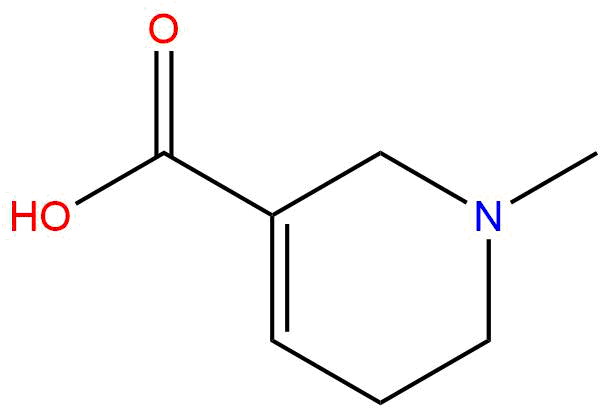


Product name: Arecaidine
Synonym name: 1,2,5,6-Tetrahydro-1-methyl-3-pyridinecarboxylic acid; N-Methylguvacine; Arecaine
Catalogue No.: BP4085
Cas No.: 499-04-7
Formula: C7H11NO2
Mol Weight: 141.17
Botanical Source:
Physical Description:
Type of Compound: Alkaloids
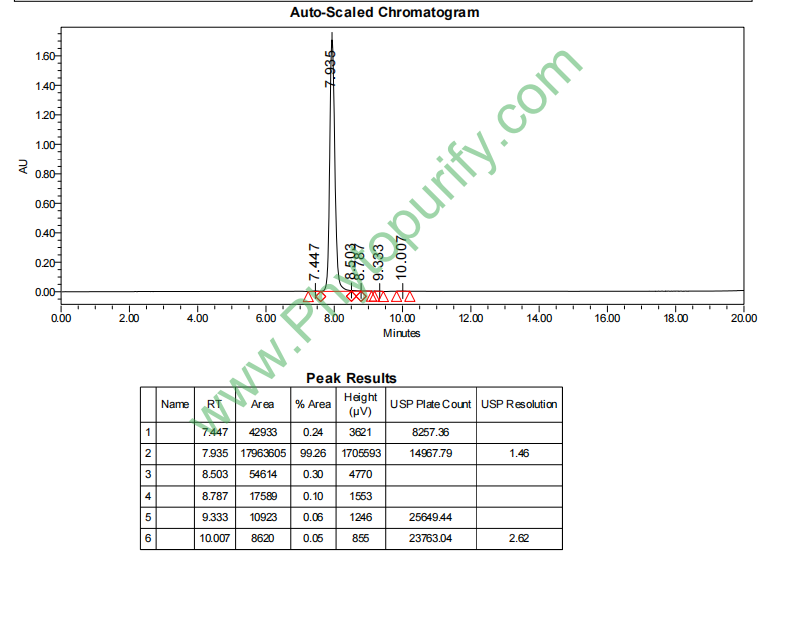
Purity: 95%~99%
Analysis Method: HPLC-DAD or/and HPLC-ELSD
Identification Method: Mass, NMR
Packing: Brown vial or HDPE plastic bottle
Storage: Store in a well closed container, protected from air and light. Put into refrigerate or freeze for long term storage.
Whenever possible, you should prepare and use solutions on the same day. However, if you need to make up stock solutions in advance, we recommend that you store the solution as aliquots in tightly sealed vials at -20℃. Generally, these will be useable for up to two weeks.
The product could be supplied from milligrams to grams
Inquire for bulk scale.
For Reference Standard and R&D, Not for Human Use Directly.
HPLC of Arecaidine
Storage conditions:Short-term storage at 2~8℃, long-term storage at -20 ~ -80℃
40.5400
-1.0803
-1.0939
36.3067
.9640
3.8898
High
21.1412
2.6818
Yes
Yes
No
No
No
No
0.0
No
Yes
Yes
No
Arecaidine, CAS number 499-04-7, is an important pyridine alkaloid mainly found in Areca catechu. As one of the active ingredients in betel nut, betel nut alkaloids have received widespread attention due to their unique neuropharmacological properties. In recent years, with the deepening of research on neural excitation and neural regulation mechanisms, betel nut alkaloids have become a hot research topic in the field of natural product pharmacology due to their effective role as inhibitors of gamma aminobutyric acid (GABA) absorption. Betelnut alkaloids not only regulate the uptake of L-proline through H+- coupled amino acid transporter 1 (PAT1, SLC36A1), but also involve the regulation of various neurotransmitter receptors, especially the interaction of nicotinic acetylcholine receptor (nAChRs) subunits related to neural excitation, such as CHRNA7, CHRNB2, CHRND, CHRNE, and CHRNG targets.
This article aims to systematically review the chemical structure and physicochemical properties, plant sources and extraction methods, pharmacological activity and mechanism of action, pharmacological evaluation and pharmacokinetic characteristics of betel nut alkaloids, and explore their potential clinical application prospects in neurological diseases. By integrating recent research progress, it is expected to provide theoretical basis and scientific research guidance for the in-depth development and application of betel nut alkaloids.
Betelnut alkaloid is a typical pyridine alkaloid with a molecular formula of C6H11NO2 and a molecular weight of 141.1700. Structurally, betel nut alkaloids contain a pyridine ring with carboxyl and amino groups on their side chains, exhibiting structural features similar to amino acids. Its physicochemical properties show that the LogP value of betel nut alkaloid is -1.0803, indicating strong hydrophilicity and a water solubility of 36.3067 mg/mL. It is highly soluble in water, providing favorable conditions for its absorption and distribution in vivo. The topological polar surface area (TPSA) of polarity is 40.54 Å ², which is in line with the ideal range for small molecule drugs and helps to pass through the blood-brain barrier (BBB). In fact, betel nut alkaloids have a high ability to penetrate the blood-brain barrier, supporting their potential as active molecules in the central nervous system.
In addition, betel nut alkaloids do not exhibit hERG channel inhibition, reducing the risk of cardiac toxicity. The Ames test result is 0, indicating that it does not have significant genetic toxicity, further supporting its safety. Taking into account these physical and chemical characteristics, betel nut alkaloids have demonstrated a good pharmacological basis in drug development.
Betel nut alkaloids mainly exist in the fruit of Areca catechu L. Betel nut, as a widely used plant in traditional Southeast Asia and South Asia, is not only used as a chewing stimulant, but also highly valued by the pharmacological community due to its rich alkaloid composition. Betel nut alkaloid is one of the metabolites of Arecoline, and its content and proportion in betel nut are significantly affected by variety, maturity, and geographical environment.
The traditional extraction method of betel nut alkaloids mainly relies on the extraction of acidic aqueous solution, combined with liquid-liquid distribution and column chromatography purification. The specific steps include:
Modern extraction techniques such as ultrasound assisted extraction, microwave-assisted extraction, and membrane separation have also been gradually introduced, improving extraction efficiency and purity while reducing environmental pollution and energy consumption.
The pharmacological activity of betel nut alkaloid is mainly reflected in its regulatory effect on the central nervous system, especially its function as a GABA absorption inhibitor. GABA is the main inhibitory neurotransmitter in the central nervous system of mammals, and its uptake inhibition can enhance neural inhibitory signals and regulate the balance between neural excitation and inhibition.
Betelnut alkaloids can effectively inhibit the reuptake of GABA, prolong the action time of GABA in synaptic cleft, and enhance inhibitory nerve conduction. In vitro experiments have shown that betel nut alkaloids indirectly affect the metabolism and function of GABA by competitively inhibiting PAT1 (SLC36A1) - mediated amino acid transport, especially the uptake of L-proline. This mechanism lays the foundation for its potential therapeutic effects on neurological diseases such as neuroprotection, anti anxiety, and anti epilepsy.
Although betel nut alkaloids exhibit inhibitory effects on GABA absorption, their regulation of nicotinic acetylcholine receptor (nAChRs) subunits reveals their complex neural excitatory effects. Research has found that betel nut alkaloids can interact with receptor subunits such as CHRNA7, CHRNB2, CHRND, CHRNE, and CHRNG to regulate neural excitatory conduction. Especially the CHRNA7 subunit plays an important role in cognitive function, inflammation regulation, and neuroprotection, and its regulation by betel nut alkaloids may be closely related to its neural regulatory function.
Some studies have also found that betel nut alkaloids have antioxidant, anti-inflammatory, and neurotransmitter release regulating effects, and these multi-target effects collectively promote their potential application value in neurological diseases. In addition, the effects of betel nut alkaloids on gastrointestinal smooth muscle have also been reported, suggesting that they may have certain pharmacological significance in regulating gastrointestinal motility.
The mechanism of action of betel nut alkaloids mainly revolves around their regulation of the neurotransmitter system, involving two key targets: the GABAergic system and the nicotinic acetylcholine receptor system.
PAT1 is a proton driven amino acid transporter widely distributed in the central nervous system and intestinal epithelial cells. Betelnut alkaloid, as a substrate of PAT1, can competitively inhibit the uptake of L-proline. L-proline is a precursor of neurotransmitters and neuroregulatory factors, and its uptake inhibition will affect the metabolic balance within neurons, thereby regulating the synthesis and release of GABA.
Betelnut alkaloids indirectly enhance the neuroprotective effect of GABA by regulating PAT1 mediated amino acid transport, exhibiting neuroprotective and anti overexcitement pharmacological effects.
The regulation of nAChRs subunits by betel nut alkaloids is an important mechanism underlying their neural excitatory effects. NAChRs are a type of ligand gated ion channel that mediates the rapid transmission of cholinergic neural signals. Betelnut alkaloids bind to CHRNA7, CHRNB2, CHRND, CHRNE, and CHRNG subunits, affecting the conformational state and ion permeability of receptors, regulating neuronal excitability and synaptic plasticity.
Especially the CHRNA7 subunit, which is involved in cognitive function, inflammatory response, and neuroprotection, the regulation of betel nut alkaloids on it may provide a basis for the development of new treatment strategies for cognitive disorders, neuroinflammation, and other diseases.
In addition to the main targets mentioned above, betel nut alkaloids may exert a comprehensive neuroregulatory effect by regulating other neurotransmitter systems such as the glutamatergic system and monoamine neurotransmitter system. Its multi-target characteristics provide possibilities for the treatment of complex neurological diseases, but also increase the complexity of mechanism of action research.
The pharmacological evaluation of betel nut alkaloids is based on their physicochemical properties, safety, and in vivo pharmacokinetic characteristics.
Betelnut alkaloids have a low molecular weight (141.17 Da), moderate polarity (TPSA 40.54 Å ²), and a negative LogP value (-1.08), demonstrating good water solubility and moderate fat solubility, which is in line with the ideal characteristics of oral small molecule drugs. Its high water solubility is beneficial for formulation development and in vivo absorption.
The hERG channel inhibition experiment result was negative, indicating that betel nut alkaloids are not prone to causing cardiac toxicity problems such as arrhythmia. The Ames test result is 0, indicating that it does not have significant genotoxicity and has high safety. The existing toxicological data supports the safety basis of betel nut alkaloid as a drug candidate molecule.
Betelnut alkaloids have high blood-brain barrier permeability and can effectively enter the central nervous system, exerting a neuroregulatory effect. The metabolic pathways in the body are not fully understood, but it is speculated that biotransformation is mainly carried out through the liver metabolic enzyme system. Further systematic research is needed on parameters such as half-life, oral bioavailability, and activity of metabolites.
The pharmacokinetic characteristics of betel nut alkaloids support their potential as central nervous system drugs, but it is necessary to optimize the dosage form and administration regimen based on preclinical pharmacokinetic and toxicological studies.
Betelnut alkaloids have broad application prospects in the treatment of neurological diseases due to their unique neuroregulatory effects.
Betelnut alkaloids may improve the state of neural excitation imbalance by regulating the GABAergic system and nAChRs receptors, and have the potential to alleviate anxiety, epilepsy, and improve cognitive function. Especially for cognitive impairment symptoms of neurodegenerative diseases such as Alzheimer's disease and Parkinson's disease, betel nut alkaloids may play a role as adjuvant therapy drugs.
The antioxidant and anti-inflammatory activities of betel nut alkaloids provide theoretical support for their neuroprotective potential. By regulating the neuroinflammatory response, betel nut alkaloids are expected to slow down the process of nerve damage and promote the recovery of nerve function.
The multi-target regulatory effect of betel nut alkaloids on the neurotransmitter system also suggests their potential application value in mental disorders such as depression and schizophrenia. In the future, through structural optimization and formulation improvement, betel nut alkaloids or their derivatives can become candidate molecules for novel psychotropic drugs.
Although betel nut alkaloids have shown good pharmacological activity and drug properties, their clinical development still faces many challenges, including systematic pharmacokinetic studies, long-term safety evaluations, determination of effective doses and administration methods, etc. In addition, the multi-target mechanism of betel nut alkaloids is complex and requires in-depth analysis using modern molecular pharmacology and systems biology methods.
Future research should focus on:
Betel nut alkaloid, as a pyridine alkaloid derived from the traditional plant Betel nut, exhibits rich neuropharmacological activity and good medicinal properties due to its unique GABA absorption inhibition and regulation of nicotinic acetylcholine receptors. Its high water solubility, good blood-brain barrier permeability, and low toxicity risk have laid a solid foundation for its development as a central nervous system drug.
In the future, through interdisciplinary and in-depth research, betel nut alkaloid is expected to become a new candidate drug for the treatment of neural excitation imbalance, cognitive impairment, and neurodegenerative diseases. The pharmacokinetics, toxicology, and clinical research of the system will be the key to promoting its clinical translation. In short, the study of betel nut alkaloids not only enriches the theoretical system of natural product pharmacology, but also provides new ideas and directions for innovative treatment of neurological diseases.
