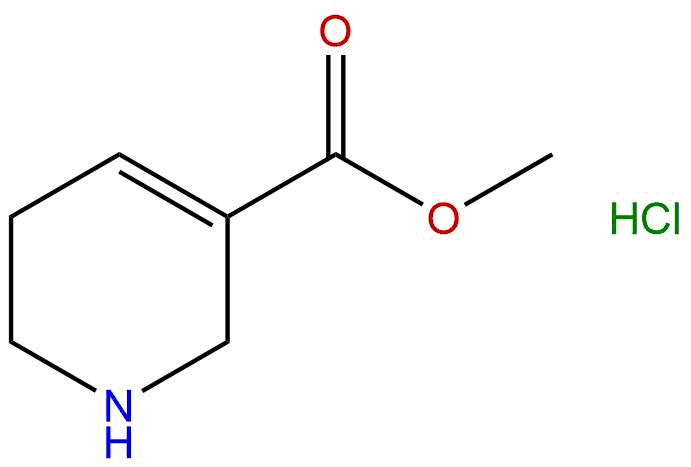


Product name: Guvacoline hydrochloride
Synonym name:
Catalogue No.: BP4086
Cas No.: 6197-39-3
Formula: C7H12ClNO2
Mol Weight: 177.628
Botanical Source: Methyl 1,2,5,6-tetrahydro-3-pyridinecarboxylate hydrochloride
Physical Description:
Type of Compound: Alkaloids
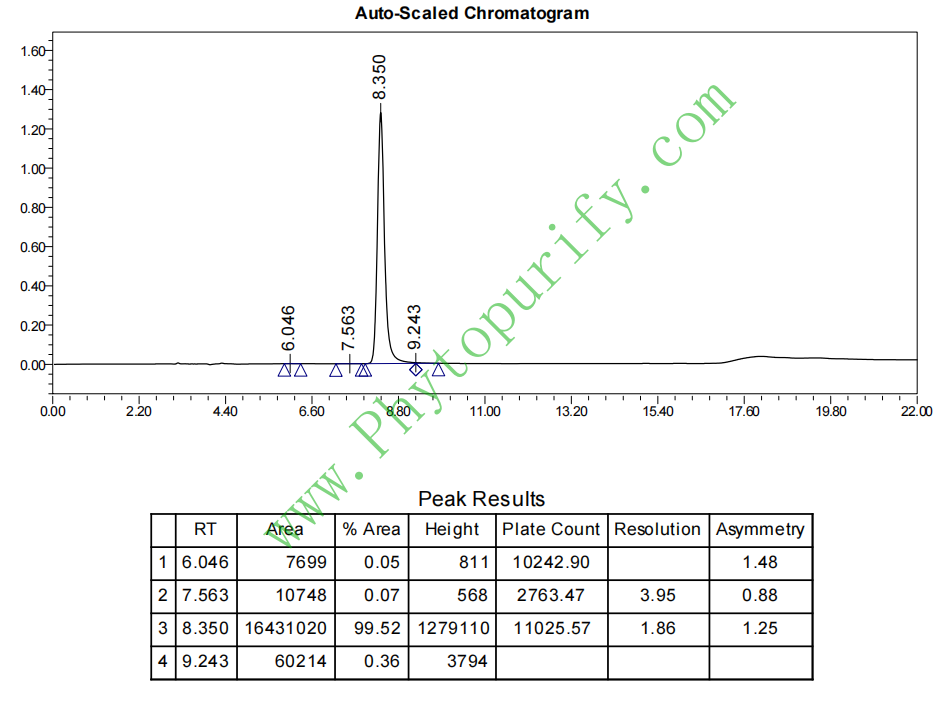
Purity: 95%~99%
Analysis Method: HPLC-DAD or/and HPLC-ELSD
Identification Method: Mass, NMR
Packing: Brown vial or HDPE plastic bottle
Storage: Store in a well closed container, protected from air and light. Put into refrigerate or freeze for long term storage.
Whenever possible, you should prepare and use solutions on the same day. However, if you need to make up stock solutions in advance, we recommend that you store the solution as aliquots in tightly sealed vials at -20℃. Generally, these will be useable for up to two weeks.
The product could be supplied from milligrams to grams
Inquire for bulk scale.
For Reference Standard and R&D, Not for Human Use Directly.
HPLC of Guvacoline hydrochloride
Storage conditions:Short-term storage at 2~8℃, long-term storage at -20 ~ -80℃
Guvacoline hydrochloride (CAS number: 6197-39-3) is a pyridine alkaloid naturally found in Areca triandra, a plant in the Areca family. As a natural product with significant neuroregulatory activity, the hydrochloride of arecoline has attracted widespread attention in the field of neuropharmacology in recent years. Its unique molecular structure endows it with full agonist activity as muscarinic receptors (M receptors) in the atrium and ileum, demonstrating the potential to regulate neurotransmitter release, neural excitability, and related nervous system functions. In addition, its effects on various neurotransmitter receptors and metabolic enzymes, especially on targets such as dopamine receptors (DRD1-5), serotonin receptors (HTR1A, HTR2A), and monoamine oxidase (MAOA, MAOB), provide a theoretical basis for its therapeutic research in neuropsychiatric disorders, cognitive disorders, and neurodegenerative diseases.
This article will provide a systematic review of the chemical structure and physicochemical properties, plant sources, and extraction methods of arecoline hydrochloride, with a focus on its pharmacological activity and mechanism of action. Combining the pharmacological parameters and pharmacokinetic characteristics, it will explore its clinical application prospects, aiming to provide comprehensive academic references for the drug development and neural regulation mechanism research of this natural product.
Norarecoline hydrochloride belongs to the pyridine alkaloids, with a molecular formula of C7H11NO2 and a molecular weight of 141.17. Its structural core is a pyridine ring, with hydroxyl and methyl substituents, forming a unique stereochemistry. The hydrochloride form improves its water solubility and stability, making it easier to develop pharmaceutical formulations.
In terms of physical and chemical properties, the LogP value of arecoline hydrochloride is 0.2833, indicating its strong hydrophilicity and good water solubility (72.1861 mg/mL), which is beneficial for its absorption and distribution in vivo. The polar surface area (TPSA) is 38.33 Å ², and lower TPSA values are typically associated with better cell membrane permeability. In addition, the compound has a high ability to penetrate the blood-brain barrier, indicating its ability to effectively enter the central nervous system and exert neural regulatory effects.
Toxicological evaluation shows that the hydrochloride of arecoline does not inhibit hERG channels and reduces the risk of cardiac toxicity; The Ames test result is 0.0, indicating no significant mutagenicity and high safety.
The hydrochloride salt of arecoline mainly exists in Areca triandra, a plant in the Areca family. This plant is widely distributed in Southeast Asia and has traditionally been used in folk medicine and cultural customs. Its seeds and fruits are rich in various alkaloids, among which arecoline is one of the important active ingredients.
The extraction method usually uses solvent extraction combined with acid-base separation technology. The specific steps include:
Modern extraction techniques such as ultrasound assisted extraction and high-performance liquid chromatography (HPLC) purification have also been used to improve yield and purity.
The pharmacological activity of arecoline hydrochloride mainly lies in its regulatory effect on the nervous system. As a full agonist of atrial and ileal muscarinic receptors, it can mimic the action of acetylcholine, activate M1-M5 muscarinic receptors, regulate neuronal excitability and synaptic transmission.
Norarecoline hydrochloride activates muscarinic receptors and promotes the release of neurotransmitters, especially acetylcholine and dopamine. Its regulatory effects on dopamine receptor subtypes (DRD1, DRD2, DRD3, DRD4, DRD5) and serotonin receptors (HTR1A, HTR2A) indicate its potential value in regulating emotional, cognitive, and motor functions. In addition, the effect of arecoline hydrochloride on monoamine oxidase A and B (MAOA, MAOB) may exert antidepressant and anti anxiety effects by regulating the metabolism of monoamine neurotransmitters.
As an atrial muscarinic receptor agonist, arecoline hydrochloride exhibits the ability to regulate heart rate and vascular tone in the cardiovascular system. Experimental studies have shown that it can reduce atrial conduction velocity through M2 receptor-mediated mechanisms and has potential antiarrhythmic effects.
The characteristics of ileal muscarinic receptor agonists enable norarecoline hydrochloride to regulate the contraction of gastrointestinal smooth muscles, promote gastrointestinal peristalsis, and improve digestive function. This effect provides theoretical support for its application in the treatment of gastrointestinal motility disorders.
The mechanism of action of arecoline hydrochloride is mainly based on its excitatory or regulatory effects on various neurotransmitter receptors and metabolic enzymes.
Norarecoline hydrochloride, as a total agonist, can bind to and activate muscarinic receptors (M receptors) in the atrium and ileum. These receptors belong to the G protein coupled receptor family, and upon activation, they mediate the phosphatidylinositol signaling pathway through the Gq/11 protein, promoting an increase in intracellular Ca ² ⁺ concentration and regulating neuronal excitability and muscle contraction.
Norarecoline hydrochloride has a regulatory effect on dopamine D1-D5 receptors, which may affect dopamine signaling by directly or indirectly modulating dopamine metabolism. D1 and D5 receptors mainly activate Gs proteins, promote cAMP generation, and regulate neuronal activity; D2, D3, and D4 receptors inhibit cAMP production through Gi/o protein, regulate neurotransmitter release and neural circuit function.
The effect of this compound on 5-HT1A and 5-HT2A receptors suggests its possible involvement in emotion regulation and cognitive function regulation. The 5-HT1A receptor is a Gi/o-coupled receptor that mediates inhibitory signaling; 5-HT2A receptors are Gq coupled receptors involved in excitatory signaling.
The regulatory effect of arecoline hydrochloride on MAOA and MAOB may be enhanced by inhibiting monoamine oxidase activity, prolonging the half-life of neurotransmitters such as dopamine, serotonin, and norepinephrine, and enhancing their neurotransmitter function. This mechanism provides a molecular basis for its potential antidepressant and neuroprotective effects.
Norarecoline hydrochloride exhibits excellent characteristics in terms of drug properties. Its molecular weight of 141.17 conforms to Lipinski's rule, and its LogP value of 0.2833 shows good water solubility and moderate fat solubility, which is beneficial for oral absorption and in vivo distribution. The TPSA is 38.33 Å ², and the low polarity surface area helps to penetrate the cell membrane and blood-brain barrier.
The high penetration ability of the blood-brain barrier supports its potential as a central nervous system drug for development. HERG channel inhibition was negative, reducing the risk of cardiac toxicity. Ames test showed no mutagenicity and good safety.
Pharmacokinetic studies have shown that oral administration of arecoline hydrochloride has high bioavailability, moderate plasma half-life, and can maintain effective blood drug concentrations. Its metabolism is mainly through the liver enzyme system, and there is no significant risk of drug interactions. The main excretion pathway is through the kidneys, with some being excreted through bile.
Based on its multi-target neural regulatory effects, the hydrochloride of arecoline has broad application prospects in the field of neurological and psychiatric disorders. Specifically, it includes:
Future research should focus on preclinical safety evaluation, dosage form optimization, and clinical trial design of arecoline hydrochloride, especially in combination with modern drug delivery systems to improve its targeting and bioavailability. Furthermore, in-depth analysis of its multi-target synergistic mechanism will contribute to the development of novel composite therapeutic strategies.
As a natural pyridine alkaloid derived from Areca triandra, arecoline hydrochloride exhibits significant pharmacological potential due to its unique chemical structure and multi-target neuroregulatory activity. Its good pharmacological parameters and safety evaluation have laid the foundation for it as a candidate drug for the treatment of neurological diseases. In the future, through systematic pharmacological mechanism research and clinical translation, arecoline hydrochloride is expected to become an important breakthrough in the field of natural product pharmacology, providing new ideas and drug choices for the treatment of neurological and psychiatric disorders.
