


Synonym name: Taeniolin
Catalogue No.: BP0189
Cas No.: 300-08-3
Formula: C8H14BrNO2
Mol Weight: 236.109
Botanical Source:
Purity: 95%~99%
Analysis Method: Titration
Identification Method: Mass, NMR
Packing: Brown vial or HDPE plastic bottle
Can be supplied from milligrams to grams.
For Reference Standard and R&D, Not for Human Use Directly.
Inquire for bulk scale.
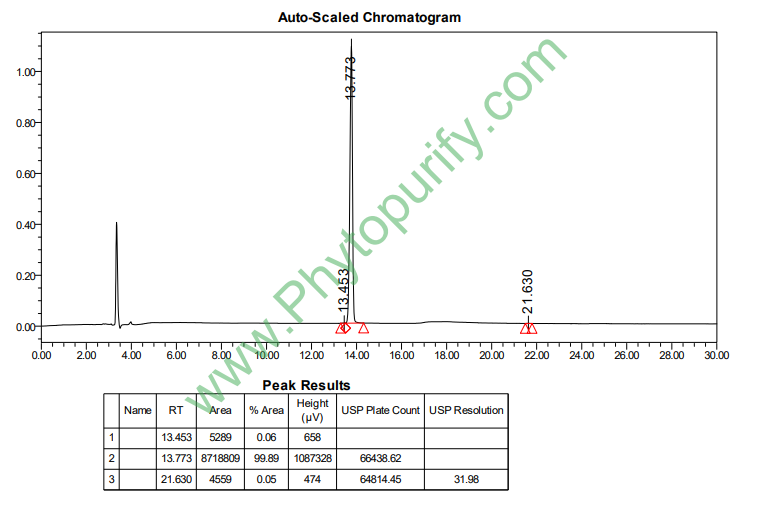
HPLC of Arecoline hydrobromide
Storage conditions:Short-term storage at 2~8℃, long-term storage at -20 ~ -80℃
55.7600
-1.3000
-2.5000
No
Unknown
Unknown
Unknown
Unknown
No
Unknown
Arecoline hydrobromide (CAS number: 300-08-3) is an important natural alkaloid mainly found in Areca catechu L. As one of the main active ingredients in betel nut, arecoline hydrobromide has attracted widespread attention in the field of natural product pharmacology in recent years due to its unique pharmacological activity and complex biological effects. This compound not only has significant cholinergic activity and can act on nicotinic and muscarinic acetylcholine receptors, exhibiting multiple physiological effects such as stimulating the central nervous system, anti anxiety, and anti parasitic effects, but also raises safety concerns due to its potential toxicity and carcinogenicity.
Hydrobromic acid arecoline has been used as a antihypertensive drug and in the veterinary field as a laxative, deworming agent, and antipyretic agent. Its pharmacological mechanism involves the regulation of the liver drug enzyme system, especially by promoting the nuclear translocation of the constitutive androstane receptor (CAR) and inducing the expression of the liver CYP2B enzyme system, demonstrating its ability to regulate drug metabolizing enzymes. However, the clinical application of arecoline hydrobromide is limited by its toxicological properties, particularly its risk of inducing oxidative stress and potential carcinogenicity.
This article aims to systematically review the chemical structure and physicochemical properties, plant sources and extraction methods, pharmacological activity and mechanism of action, pharmacological evaluation and pharmacokinetic characteristics of arecoline hydrobromide, and explore its clinical application prospects and development directions in combination with its related disease targets, providing theoretical basis and reference for subsequent research and drug development.
The chemical name of arecoline hydrobromide is 1-methyl-1,2,5,6-tetrahydropyridine-3-methyl hydrobromide, with the molecular formula C8H14BrNO2 and a molecular weight of 236.11. Its structure consists of a tetrahydropyridine ring, a methyl formate group at position 3, and a methyl substitution at position 1, forming a positively charged quaternary ammonium salt structure. The hydrobromide form endows it with good water solubility, making it easy to administer orally.
In terms of physicochemical properties, the LogP value of arecoline hydrobromide is about -1.3, indicating its strong hydrophilicity, polar surface area (TPSA) of 55.76 Å ², and four hydrogen bond acceptor sites. Although its physical and chemical properties show a certain polarity, literature reports that it can penetrate the blood-brain barrier, indicating that it has good central nervous system permeability in vivo. However, in some databases, the blood-brain barrier penetration is marked as' no ', which may be related to differences in experimental conditions and models, and further experimental verification is needed.
The chemical stability of arecoline hydrobromide is high, but it is easily hydrolyzed under alkaline conditions, and the ester bond of the methyl ester group is the main metabolic site. The pyridine ring and quaternary ammonium salt characteristics in its structure determine its affinity and excitatory activity towards cholinergic receptors.
Hydrobromic acid arecoline mainly comes from the mature fruits of Areca catechu L., a traditional chewing plant widely cultivated and used in Asia and the Pacific. Betel nut fruit contains various alkaloids, among which arecoline has the highest content, accounting for over 60% of the total alkaloids.
The extraction of arecoline is usually carried out by organic solvent extraction combined with acidic salt precipitation. Common extraction processes include:
In recent years, modern technologies such as ultrasound assisted extraction, microwave-assisted extraction, and solid-phase extraction have been introduced into the extraction process of arecoline, improving extraction efficiency and purity, reducing solvent usage, and complying with green chemistry principles.
As a natural alkaloid, arecoline hydrobromide has multi-target and multi effect pharmacological activities, covering multiple fields such as the nervous system, digestive system, and immune system.
Hydrobromic acid arecoline is a partial agonist of nicotinic acetylcholine receptors (nAChRs) and muscarinic acetylcholine receptors (mAChRs), which can mimic the action of acetylcholine, activate these receptors, promote neurotransmitter release and neural excitation. It has a stimulating and alerting effect on the central nervous system, can improve cognitive function and attention, and exhibits potential for anti anxiety and anti depression.
By acting on targets such as CHRNA7 (α 7 nicotinic acetylcholine receptor), arecoline hydrobromide regulates the neurotransmitter system and alleviates anxiety symptoms. Animal experiments have shown that arecoline hydrobromide can improve the behavioral performance of anxiety model animals, suggesting that it may be a candidate molecule for anti anxiety drugs.
Hydrobromic acid arecoline is used as a deworming agent in the veterinary field, which can achieve deworming effects by stimulating intestinal peristalsis and directly acting on the parasitic nervous system. In addition, its laxative and antipyretic effects also provide a basis for its application in veterinary medicine.
Hydrobromic acid arecoline can induce intracellular reactive oxygen species (ROS) production, leading to oxidative stress response, which in turn triggers cell damage and inflammatory response. Long term intake of arecoline is closely related to the occurrence of oral mucosal lesions and oral cancer, indicating its potential carcinogenicity and toxicity.
Hydrobromic acid arecoline induces the expression of CYP2B enzyme in rat liver and regulates the drug metabolism enzyme system by promoting nuclear translocation of the CAR receptor. This effect involves gene transcription activation and protein post-translational modification, affecting drug metabolism kinetics and potentially leading to drug interactions.
The pharmacological effects of arecoline hydrobromide are mainly achieved through various molecular targets, involving neurotransmitter receptors, transcription factors, and membrane transporters.
As a partial agonist of nicotinic acetylcholine receptors (nAChRs), arecoline hydrobromide binds to the CHRNA7 subunit, activating receptor ion channels, promoting calcium influx, and regulating neural excitation and neuroprotective signals. In addition, arecoline hydrobromide has a certain inhibitory effect on acetylcholinesterase (ACHE) and prolongs the action time of acetylcholine in the synaptic cleft.
CAR is a nuclear receptor that regulates the expression of drug metabolizing enzymes. Hydrobromic acid arecoline promotes CAR translocation from cytoplasm to nucleus, activates CYP2B gene transcription, and enhances liver drug metabolism ability. This mechanism not only affects the metabolism of arecoline itself, but may also affect the pharmacokinetics of other drugs.
ABCB1 (P-glycoprotein) is a drug efflux pump on the cell membrane, involved in the transmembrane transport of drugs and multidrug resistance. Hydrobromic acid arecoline may affect drug absorption and distribution by regulating the expression or function of ABCB1.
Hydrobromic acid arecoline interacts with various neurotransmitter receptors and signaling molecules, such as topoisomerase TOP1, endothelin receptors EDNRB/EDNRA, opioid receptor OPRD1, adenosine receptor ADORA3, sigma 1 receptor SIGMAR1, and glutamate receptor GRM2, forming a complex signaling network that regulates neurological function, vascular tone, and cell survival.
The pharmacological analysis of arecoline hydrobromide shows that it has certain advantages and limitations:
In terms of pharmacokinetics, arecoline hydrobromide has good oral absorption, high bioavailability, and can quickly enter the bloodstream and distribute to the central nervous system. Its metabolism is mainly through liver esterase hydrolysis and CYP450 enzyme system metabolism, and its excretion pathway is mainly through urine. Due to its ability to induce CYP2B enzymes, there is a potential risk of drug interactions.
As a natural alkaloid with multiple pharmacological activities, arecoline hydrobromide has the potential to be developed as a therapeutic drug for neurological diseases, especially in the fields of anti anxiety, cognitive impairment, and anti parasitic effects. However, its potential toxicity and carcinogenicity limit its direct clinical application.
Future research directions include:
In addition, given the carcinogenic risk of betel nut alkaloids, public health needs to strengthen risk assessment and regulation of betel nut and its products to prevent health hazards caused by abuse.
Hydrobromic acid arecoline, as the main alkaloid in betel nut, exhibits rich pharmacological activity and complex mechanisms of action, especially in regulating the cholinergic system, anti anxiety, and inducing liver enzymes, which are of great significance. Its natural sources and multi-target effects provide valuable chemical and biological foundations for the development of new drugs. However, the toxicity and carcinogenicity of arecoline hydrobromide remain the main obstacles to its clinical application, which urgently need to be addressed through structural optimization and safety assessment. In the future, combining modern drug design and delivery technologies, arecoline hydrobromide is expected to have greater clinical value in the treatment of neurological and parasitic diseases. The in-depth research of the system will promote its transformation from traditional natural products to modern drugs, contributing new strength to the development of natural product pharmacology.
