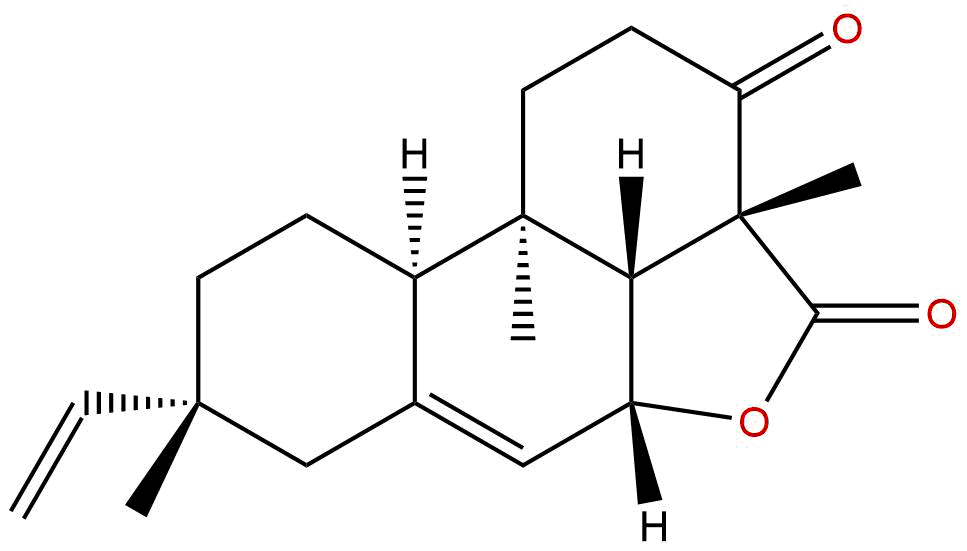


Product name: Momilacton A
Synonym name: Momilactone A
Catalogue No.: BP5234
Cas No.: 51415-07-7
Formula: C20H26O3
Mol Weight: 314.425
Botanical Source:
Type of Compound: Terpenoids
Purity: 95%~99%
Analysis Method: HPLC-DAD or/and HPLC-ELSD
Identification Method: Mass, NMR
Packing: Brown vial or HDPE plastic bottle
The product could be supplied from milligrams to grams
Inquire for bulk scale.
For Reference Standard and R&D, Not for Human Use Directly.
Momilacton A and B are the main chemosensitizers for weed suppression in rice, and among them, Momilacton B is one of the most efficient natural herbicides found so far, and has good potential for application. Momilacton B can be released from the rice root system into the soil to inhibit the seed germination and growth of the surrounding barnyard grass and other plants. The concentration of Momilacton B greater than 3 nmol-mL-1 can inhibit the growth of roots and embryonic axes of watercress and lettuce, andMomilacton A and B are important phytochemicals for rice, which can effectively inhibit rice pathogens such as Magnaporthe grisea. In addition, M. grisea infection induced rice to synthesize more Momilactons.
Labdane-related diterpenoids, momilactones A and B were isolated and identified in rice husks in 1973 and later found in rice leaves, straws, roots, root exudate, other several Poaceae species and the moss species Calohypnum plumiforme. The functions of momilactones in rice are well documented. Momilactones in rice plants suppressed the growth of fungal pathogens, indicating the defense function against pathogen attacks. Rice plants also inhibited the growth of adjacent competitive plants through the root secretion of momilactones into their rhizosphere due to the potent growth-inhibitory activity of momilactones, indicating a function in allelopathy. Momilactone-deficient mutants of rice lost their tolerance to pathogens and allelopathic activity, which verifies the involvement of momilactones in both functions. Momilactones also showed pharmacological functions such as anti-leukemia and anti-diabetic activities. Momilactones are synthesized from geranylgeranyl diphosphate through cyclization steps, and the biosynthetic gene cluster is located on chromosome 4 of the rice genome.
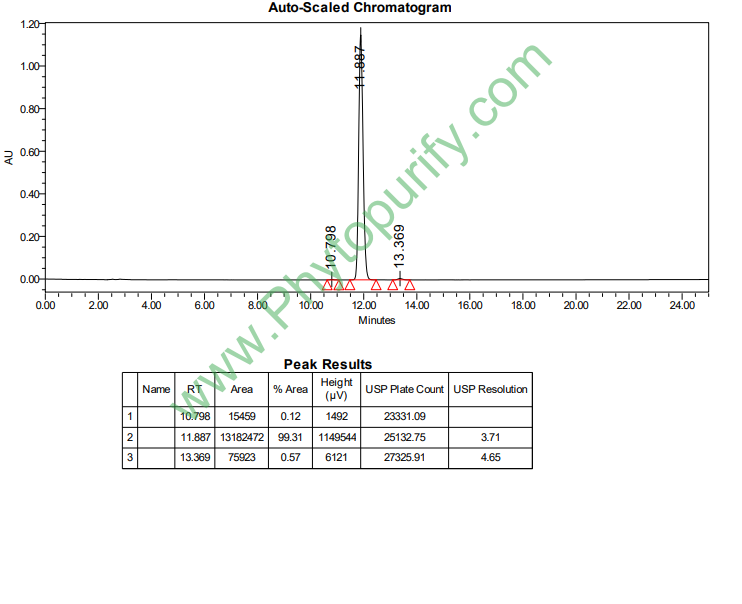
HPLC of Momilacton A
Storage conditions:Short-term storage at 2~8℃, long-term storage at -20 ~ -80℃
43.3700
3.5710
3.5707
.0129
6.3509
18.2167
High
76.8859
5.0164
No
Yes
No
No
Yes
No
0.0
Yes
No
No
Yes
Natural products, as an important source of drug discovery and agricultural chemistry, have long attracted the attention of researchers due to their unique chemical structure and biological activity. Among the numerous bioactive plant secondary metabolites, those from rice(Oryza sativa)The rice husk ketone compounds (Momillactones) and their close relatives have attracted much attention due to their core roles in plant defense and allelopathy. Momillacton A (CAS number: 51415-07-7) is one of the most representative members of this family, belonging to the pimarane type diterpenoid class and possessing a unique lactone structure.
Rice husk ketone A was first isolated and identified by Japanese scientists from rice husks in 1973, and was found to be effective against rice blast fungus(Magnaporthe oryzae)Named after its strong inhibitory effect. Subsequent research revealed that rice husk ketone A is not only a key phytotoxin for rice to resist the invasion of pathogenic microorganisms, but also plays an important role in the allelopathic interactions between rice and other plants, especially weeds. This dual function - as both a defensive weapon and an ecological competitive tool - makes rice husk ketone A an ideal model molecule for studying plant chemical defense and ecological adaptability.
In recent years, with the deepening of pharmacological activity research on natural products, the biological functions of rice husk ketone A have far exceeded the field of plant protection. Research has found that rice husk ketone A and its analogues exhibit various biological activities on mammalian cells, including anti-inflammatory, anti-tumor, antioxidant, and neuroprotective effects. These findings provide new possibilities for transforming this ancient plant defense molecule into a lead compound for treating human diseases. However, although its plant biology functions have been widely studied, the drug properties, pharmacokinetic characteristics, and specific molecular mechanisms of its potential drug candidate molecules still need to be systematically elucidated.
This article aims to comprehensively review the research progress of rice husk ketone A, covering its chemical structure and physicochemical properties, plant sources and extraction methods, pharmacological activity, mechanism of action and molecular targets, drug evaluation and pharmacokinetic characteristics, and explore its application prospects in the fields of agriculture and medicine. By integrating research results from multiple disciplines, this article will provide a systematic and in-depth reference material for researchers in the fields of natural product chemistry, plant physiology, and drug development.
The chemical structure of rice husk ketone A belongs to the pimarane type diterpene, and its core skeleton is composed of four isoprene units (C20), forming a tricyclic diterpene system. Specifically, its structure contains a perhydrophenanthrene skeleton and forms a unique gamma lactone ring between positions C-8 and C-9, which is a key structural feature that distinguishes rice husk ketone compounds from other diterpenes. The lactone ring is formed by dehydration of the carboxyl group at position C-8 and the hydroxyl group at position C-9, giving the molecule a certain rigid conformation and chemical reactivity.
The molecular formula of rice husk ketone A is C20H26O3, with a molecular weight of 314.4250 g/mol. The functional groups in its structure include: an alpha, beta unsaturated ketone (located in the A ring), a gamma lactone ring (connecting the B and C rings), and multiple chiral centers. The presence of these functional groups determines their interaction mode with biological targets. It is worth noting that the structures of rice husk ketone A and rice husk ketone B are similar, with the only difference being the substituents on the B ring. This subtle structural change leads to significant differences in biological activity.
Based on computational chemistry and experimental measurements, the physicochemical properties of rice husk ketone A can be summarized as follows:
Overall, the chemical structure of rice husk ketone A determines its characteristics of both lipophilicity and moderate polarity, which may result in complex distribution and metabolic behavior in organisms. Low water solubility and high BBB penetration are two key aspects that need to be focused on in the evaluation of drug properties.
Rice husk ketone A was originally derived from rice(Oryza sativa)It was separated from rice husks, hence its name. Subsequently, research found that rice husk ketone A is not unique to rice, but is widely present in Poaceae plants, especially in the rice genus(Oryza)The genus Echinochloa(Echinochloa)The content is relatively high in plants. Specific sources include:
It is worth noting that the content of rice husk ketone A in plants is regulated by various factors, including developmental stage, tissue location, environmental stress (such as drought, salinity, pathogen infection), and exogenous hormone treatment. For example, the jasmonic acid and ethylene signaling pathways are key upstream signals regulating the biosynthesis of rice husk ketone A.
Given that the content of rice husk ketone A in plant tissues is usually low (especially under non stress conditions), its extraction and purification require efficient and specific methods. The commonly used extraction process currently includes the following steps:
Raw material pretreatment Crush fresh or dry plant materials (such as rice husks and rice leaves) and sieve them through a 40-60 mesh sieve. To improve extraction efficiency, the raw materials can be degreased (such as using n-hexane or petroleum ether) to remove fat soluble impurities.
Solvent extraction Rice husk ketone A is a moderately polar compound, usually extracted using polar organic solvents. Common solvent systems include:
The extraction methods can be cold soaking, ultrasound assisted extraction (UAE), or accelerated solvent extraction (ASE). Ultrasound assisted extraction is widely used due to its high efficiency and gentle characteristics.
Liquid-liquid distribution Dissolve the crude extract in water organic solvents (such as n-hexane, ethyl acetate, n-butanol) for fractional extraction. Rice husk ketone A is mainly enriched in the ethyl acetate phase, which can effectively remove water-soluble impurities and strongly lipophilic impurities.
Column chromatography purification This is a key step in obtaining high-purity rice husk ketone A. Common chromatographic methods include:
Preparation type high performance liquid chromatography (Prep HPLC)Using a reverse phase C18 column and acetonitrile water or methanol water as the mobile phase, rice husk ketone A with a purity of>98% can be obtained.
Structural Identification The purified compound was structurally confirmed by nuclear magnetic resonance spectroscopy (NMR, including 1H-NMR, 13C-NMR, HMBC, HSQC, etc.) and high-resolution mass spectrometry (HR-MS).
In recent years, with the promotion of green chemistry concepts, new methods such as supercritical fluid extraction (SFE) and deep eutectic solvent (DES) extraction have also been applied to the extraction of rice husk ketone A, aiming to improve efficiency, reduce costs, and minimize the use of organic solvents.
The most classic pharmacological activity of rice husk ketone A is reflected in the plant kingdom. As the main herbicide for rice, it is effective in resisting rice blast fungus(Magnaporthe oryzae)Fusarium graminearum(Rhizoctonia solani)It exhibits significant activity in pathogenic fungi. Research has shown that rice husk ketone A exerts antibacterial effects by disrupting the integrity of fungal cell membranes, inhibiting spore germination and hyphal growth. Its minimum inhibitory concentration (MIC) is usually in the range of 10-50 μ g/mL, and its activity against certain specific parasitic bacteria is particularly prominent.
In terms of allelopathic effects, rice husk ketone A is a key chemical substance that inhibits the growth of weeds such as barnyard grass in rice. Rice husk ketone A secreted by rice roots can be absorbed by neighboring weeds, inhibiting growth by interfering with their cell division, photosynthesis, and hormone signaling pathways. This discovery provides important ideas for the development of natural product based biological herbicides.
In recent years, the anti-inflammatory activity of rice husk ketone A in mammalian cells has attracted widespread attention. In vitro experiments have shown that rice husk ketone A can significantly inhibit the production of nitric oxide (NO) and prostaglandin E2 (PGE2) in macrophages (such as RAW264.7 cells) induced by lipopolysaccharide (LPS). The mechanism involves inhibiting the expression of inducible nitric oxide synthase (iNOS) and cyclooxygenase-2 (COX-2), as well as downregulating the release of pro-inflammatory cytokines such as tumor necrosis factor - α (TNF - α), interleukin-6 (IL-6), and interleukin-1 β (IL-1 β).
In addition, rice husk ketone A can also exert anti-inflammatory effects by inhibiting the activation of nuclear factor kappa B (NF - κ B) and mitogen activated protein kinase (MAPK) signaling pathways. These findings suggest that rice husk ketone A may have therapeutic potential for inflammatory diseases such as arthritis and colitis.
Rice husk ketone A exhibits cytotoxic effects on various cancer cell lines. Research shows that it can inhibit the proliferation of hepatoma cells (HepG2), breast cancer cells (MCF-7), lung cancer cells (A549) and colon cancer cells (HT-29), and the IC50 value is usually in the range of 10-50 μ M. Mechanism studies have shown that rice husk ketone A can induce cancer cell apoptosis through the following pathways:
- Mitochondrial pathway Upregulation of Bax/Bcl-2 ratio, promotion of cytochrome c release, activation of caspase-9 and caspase-3.
- Endoplasmic reticulum stress Inducing the expression of proteins such as GRP78 and CHOP, triggering the unfolded protein response (UPR).
- cell cycle arrest Block the cell cycle in the G2/M phase and inhibit the process of mitosis.
It is worth noting that rice husk ketone A has relatively low toxicity to normal cells (such as human liver cell L02) and exhibits certain selectivity, which provides a safety basis for its use as an anti-tumor lead compound.
Rice husk ketone A also exhibits certain antioxidant activity. In DPPH and ABTS radical scavenging experiments, although its scavenging ability is weaker than vitamin C, it is superior to many other diterpenoid compounds. In addition, rice husk ketone A can activate the nuclear factor E2 related factor 2 (Nrf2) signaling pathway, upregulate the expression of antioxidant enzymes such as heme oxygenase-1 (HO-1) and quinone oxidoreductase-1 (NQO1), thereby protecting cells from oxidative stress damage.
In terms of neuroprotection, rice husk ketone A has a protective effect on glutamate induced damage to HT-22 hippocampal neurons, reducing the accumulation of reactive oxygen species (ROS) and cell apoptosis. Combined with its high blood-brain barrier penetration, rice husk ketone A may have potential value in the treatment of neurodegenerative diseases such as Alzheimer's disease and Parkinson's disease.
In addition, rice husk ketone A has been reported to have antiviral (such as inhibiting influenza virus neuraminidase activity), hypoglycemic (by activating the AMPK signaling pathway), and immunomodulatory activities. These diverse pharmacological effects indicate that rice husk ketone A is a natural product with multi-target action characteristics.
In the plant system, the mechanism of action of rice husk ketone A is closely related to its functions as a allelopathic substance and phytoprotective agent. Research has shown that rice husk ketone A can interfere with the hormone signaling network of target plants, especially the auxin and brassinosteroid (BR) signaling pathways.
Brassinosteroid signaling pathway Rice husk ketone A has been shown to inhibit BR signaling transduction. The BR signal begins with the binding of the receptor kinase BRI1 (BRANSINOSTEROID INSENSITIVE 1) on the cell membrane to its co receptor BAK1 (BRI1-ASSOCIATED RECEPTOR KINASE 1). Rice husk ketone A may block signal transduction by interfering with the formation of BRI1-BAK1 complex or inhibiting the phosphorylation of downstream kinase BSK1 (BR-SINGALING KINASE 1). This leads to a decrease in phosphatase activity of BSU1 (BRI1 SUPPRESSOR 1), which in turn prevents transcription factors BZR1 (BRASINAZOLE RESISTANT 1) and BES1 (BRI1-EMS-SUPPRESSOR 1) from dephosphorylating and integrating into the nucleus, ultimately inhibiting the expression of BR responsive genes. This mechanism explains why rice husk ketone A can inhibit plant cell elongation and division.
Auxin signaling pathway Rice husk ketone A also affects the polar transport and signal perception of auxin. It may alter the distribution gradient of auxin in root tips and stem tips by regulating the localization or activity of the auxin efflux carrier PIN-FORMED 1. In addition, rice husk ketone A can interfere with the interaction between auxin receptor TIR1 and AUX/IAA proteins, thereby affecting the transcriptional activity of auxin responsive factor ARF1. These effects collectively lead to phenotypes such as root growth inhibition and leaf yellowing in target plants.
In mammalian cells, the mechanism of action of rice husk ketone A is more complex, involving multiple signaling pathways and molecular targets:
Preliminary structure-activity relationship studies indicate that the gamma lactone ring and alpha, beta unsaturated ketone structure of rice husk ketone A are essential for its biological activity. The opening or reduction of the lactone ring significantly reduces its antibacterial and anti-inflammatory activity. In addition, the carboxyl group at position C-8 and the hydroxyl group at position C-9 are crucial for maintaining the stability of the lactone ring and facilitating hydrogen bonding interactions with the target protein. These pieces of information provide important guidance for subsequent structural optimization.
Based on the aforementioned physicochemical properties, the pharmacological properties of rice husk ketone A can be evaluated as follows:
The pharmacokinetic studies of rice husk ketone A in mammals are currently very limited, mainly based on computational predictions and a small number of animal experiments:
To overcome the low water solubility and potential low bioavailability of rice husk ketone A, the following formulation strategies can be considered:
- nano-formulation Liposomes, polymer nanoparticles, or solid lipid nanoparticles can enhance their solubility and bioavailability.
- Cyclodextrin inclusion complexβ - cyclodextrin or its derivatives can increase the apparent solubility of rice husk ketone A.
- Phospholipid complex The formation of phospholipid complexes can improve their lipid solubility and transmembrane ability.
- Prodrug design Open the lactone ring to form a carboxylic acid ester prodrug, which is then regenerated into the original drug through enzymatic hydrolysis in vivo.
The most direct application prospect of rice husk ketone A is in the agricultural field. As a natural allelopathic substance and herbicide, it is expected to be developed into:
- biopesticide Used for preventing and controlling rice fungal diseases such as rice blast and sheath blight, and reducing the use of chemical pesticides.
- Biological herbicide Develop environmentally friendly herbicides based on their activity in inhibiting weed growth. Especially for resistant weeds such as barnyard grass, rice husk ketone A may provide a new mechanism of action.
- plant growth regulator By regulating the BR and auxin signaling pathways, rice husk ketone A or its analogues can be used to regulate crop plant type, root development, and stress resistance.
In the field of medicine, the various pharmacological activities of rice husk ketone A provide multiple directions for its development:
- antiinflammatory drug Rice husk ketone A or its derivatives can serve as lead compounds for chronic inflammatory diseases such as rheumatoid arthritis and inflammatory bowel disease.
- antineoplastic drugs Its inhibitory effect on various cancer cells, especially its low toxicity to normal cells, makes it a potential candidate for chemotherapy drugs.
- Neuroprotective agent Combining its antioxidant activity and high BBB penetration, rice husk ketone A has potential in the treatment of neurodegenerative diseases.
- Metabolic diseases Its hypoglycemic and anti obesity activities are worth further exploration.
Despite the broad prospects, the development of rice husk ketone A still faces many challenges:
1. Source issue Natural sources have low content, complex chemical synthesis steps, and high costs. In the future, efficient biosynthetic or semi synthetic methods need to be developed.
2. Pharmacokinetic optimization Low water solubility and potential rapid metabolism are the main bottlenecks. Improvements are expected through structural modifications (such as introducing polar groups, stabilizing lactone rings) or formulation techniques.
3. Selective improvement Although it has low toxicity to normal cells, further evaluation of its selectivity index in vivo is needed.
4. Mechanism clarification Although multiple targets have been identified, the direct protein target of rice husk ketone A remains unclear. Identifying its direct targets through techniques such as chemical proteomics and surface plasmon resonance (SPR) will aid in rational drug design.
Rice husk ketone A, as a diterpenoid lactone derived from rice, plays a key role in plant chemical defense and allelopathy, while exhibiting diverse mammalian pharmacological activities. Its unique chemical structure, Lipinski compliant drug like properties, and preliminary safety evaluation results make it a natural product lead compound worthy of further research. However, low water solubility and limited pharmacokinetic data are the main obstacles that constrain its clinical translation. Future research should focus on elucidating its direct molecular targets, optimizing its pharmacokinetic properties, developing efficient and sustainable preparation methods, and systematically evaluating its in vivo efficacy and safety. Through interdisciplinary collaboration, rice husk ketone A is expected to transform from an ancient plant defense molecule into a new tool molecule in modern agriculture and medicine.
