Introduction/Overview
Natural products, as an important source of drug discovery, play an irreplaceable role in the long history of human fight against diseases. Especially secondary metabolites derived from traditional medicinal plants, due to their structural diversity and unique biological activity, have always been a hot topic in the development of new drugs. Dendrobium genus(Dendrobium)Plants, as one of the largest genera in the Orchidaceae family, have approximately 1500 species worldwide. Many of these species are used in traditional Asian medicine, especially in traditional Chinese medicine, as good medicines for nourishing and strengthening the stomach, generating fluids, nourishing yin, and clearing heat. Modern pharmacological research has confirmed that Dendrobium plants are rich in various chemical components, including alkaloids, polysaccharides, stilbeneids, bibenzyls, coumarins, flavonoids, etc., exhibiting multiple pharmacological activities such as anti-tumor, anti-inflammatory, antioxidant, immune regulation, and neuroprotection.
Among the numerous active ingredients isolated from Dendrobium plants, benzyl compounds have attracted much attention due to their significant anti-tumor activity. Chrysotobibenzyl, as a typical natural product of the benzyl group, is chemically named 4,4 '- dihydroxy-3,3', 5-trimethoxybibenzyl, with a CAS number of 108853-09-4. This compound was originally derived from Dendrobium officinale(Dendrobium chrysotoxum)Isolation and identification from the stems of Dendrobium plants. In recent years, significant progress has been made in the pharmacological activity research of the combination of drumstick and benzyl alcohol, especially its potential in the field of anti-tumor has been gradually revealed. Research has shown that drumstick benzyl can effectively inhibit the migration, invasion, and formation of pseudopodia in lung cancer cells (such as H460 and H292) by regulating key molecules involved in cell adhesion, migration, and invasion, such as Caveolin-1 (Cav-1), integrin family members (β 1, β 3, α v), and inhibiting epithelial mesenchymal transition (EMT) processes. More importantly, the combination of drumstick and benzyl can enhance the sensitivity of lung cancer cells to the classic chemotherapy drug Cisplatin, indicating its potential application value as a chemotherapy sensitizer. This article aims to provide a systematic review of the chemical structure, plant sources, extraction methods, pharmacological activities, mechanisms of action, medicinal properties, and clinical application prospects of the combination of drumstick and benzyl alcohol, in order to provide reference for the in-depth research and development of this natural product.
Chemical structure and physicochemical properties
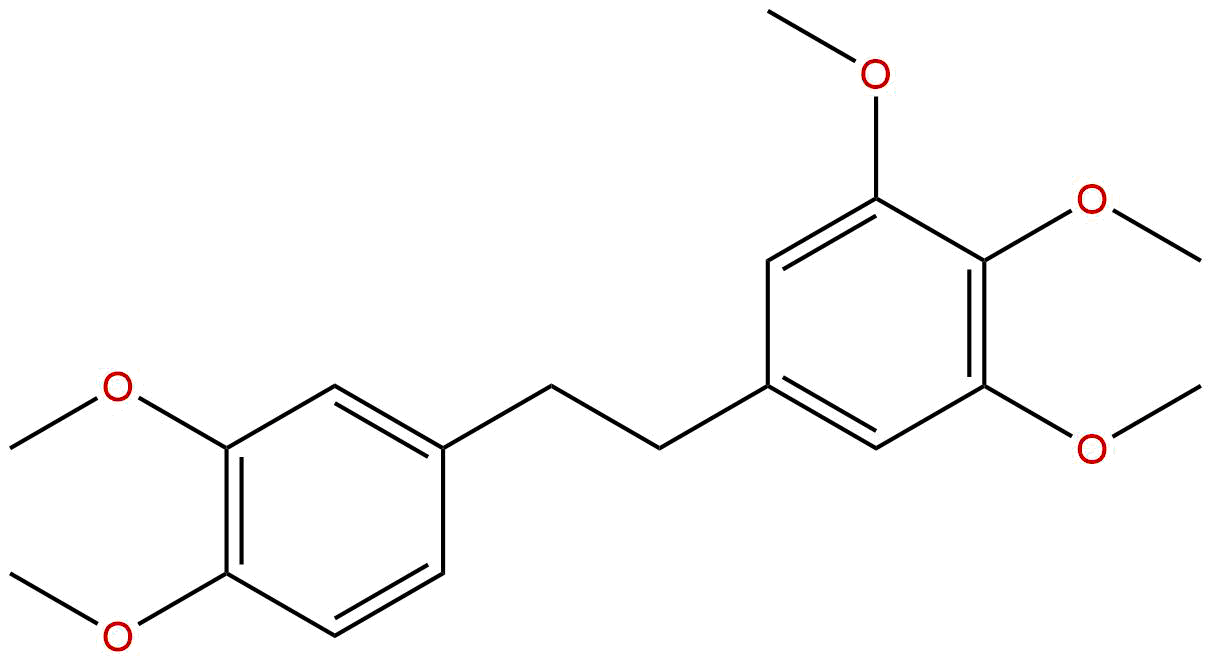
Drum hammer benzyl belongs to the benzyl compounds, and its core skeleton is composed of two benzene rings connected by an ethyl (- CH ₂ - CH ₂ -) bridge. Specifically, its chemical structure is 4,4 '- dihydroxy-3,3', 5-trimethoxybenzyl. Two benzene rings are respectively replaced by hydroxyl and methoxy groups: one benzene ring (ring A) is connected to two methoxy groups at positions 3 and 5, and to one hydroxyl group at position 4; The other benzene ring (B ring) is connected to a methoxy group at position 3 and a hydroxyl group at position 4. This specific substitution pattern endows drumstick benzyl with unique chemical properties and biological activity.
From the perspective of physical and chemical properties, the molecular formula of drumstick benzyl is C ₁₇ H ₂₀ O ₅, with a molecular weight of 332.39 g/mol. Its lipid water partition coefficient (LogP) is 2.50, indicating that the compound has moderate lipid solubility, which is beneficial for crossing cell membranes, but may also affect its solubility in aqueous phase. The topological polar surface area (TPSA) is 92.86 Å ², indicating that the molecule has a certain polarity and may be taken up by cells through passive diffusion or transporter mediated pathways. The number of hydrogen bond acceptors is 5, derived from the oxygen atoms of hydroxyl and methoxy groups in its molecule. These groups can form hydrogen bonds with biological targets, which is an important structural basis for its biological activity. There are no obvious restrictions on rotatable bonds in the molecule, and the structure has a certain degree of flexibility.
In terms of spectroscopic characteristics, the UV absorption spectrum of drumstick benzyl typically exhibits characteristic absorption peaks in the range of 260-280 nm, which is related to the conjugated system of the benzyl backbone. In infrared spectroscopy, the stretching vibration peak of hydroxyl group (- OH) is usually in the range of 3200-3600 cm ⁻¹, while the vibration peaks of methoxy group (- OCH ∝) and benzene ring skeleton are in the range of 1000-1600 cm ⁻¹. Nuclear magnetic resonance hydrogen spectroscopy (¹ H NMR) and carbon spectroscopy (¹ ³ C NMR) are key methods for identifying its structure. For example, in the ¹ H NMR spectrum, the aromatic proton signal on two benzene rings usually appears in the range of δ 6.0-7.0 ppm, while the methylene proton signal on the ethyl bridge appears in the range of δ 2.5-3.0 ppm. The proton signal of methoxy group is unimodal, appearing at δ 3.7-3.9 ppm. In mass spectrometry (MS) analysis, the mass to charge ratio (m/z) of the molecular ion peak [M+H] ⁺ or [M-H] ⁻ is 333.39 or 331.39, and its structural characteristics can be further confirmed by fragment ions.
Plant sources and extraction methods
Gulong Lianben is mainly isolated from the stems of plants in the Orchidaceae family, with the most famous source being Gulong Dendrobium(Dendrobium chrysotoxum Lindl.)。 In addition, other species of the Dendrobium genus, such as Dendrobium nobile(D. nobile)Dendrobium officinale(D. officinale)Shuhua Dendrobium(D. chrysanthum)Wait, it may also contain the compound, but the content is usually low. The drumstick dendrobium is mainly distributed in southwestern regions of China such as Yunnan, Guizhou, and Guangxi, as well as Southeast Asian countries such as India, Nepal, Myanmar, and Thailand. Its stem is cylindrical in shape, with a golden yellow surface and swollen internodes resembling a drumstick, hence its name. In traditional medicine, the stem of Dendrobium officinale is used to treat stomach diseases, fever, inflammation, and other conditions.
The extraction of benzyl alcohol from drumsticks is usually carried out using organic solvent extraction combined with modern chromatographic separation techniques. The typical extraction process is as follows:
- Ingredient Preparation Collect fresh Dendrobium officinale stems, wash, slice, dry (usually dried at 40-60 ℃), and grind to a certain fineness (such as 40-60 mesh).
- Solvent extraction Extract the dried powder using organic solvents. Common solvents include methanol, ethanol, ethyl acetate, or their mixed solvents. Usually, cold soaking or heating reflux extraction methods are used. For example, soak in 80% ethanol at room temperature for 24-48 hours, repeat extraction 2-3 times, and combine the extraction solutions. Heating reflux extraction can improve efficiency, but it should be noted that the temperature should not be too high (usually not exceeding 60 ℃) to avoid degradation of thermosensitive components.
- Concentration and Extraction Concentrate the extract under reduced pressure until it becomes a paste. Disperse the extract in water and perform liquid-liquid extraction using solvents of different polarities such as petroleum ether, ethyl acetate, and n-butanol in sequence. Due to its equipolarity, drumstick benzyl is usually enriched in the ethyl acetate extraction site.
- Separation and purification: The ethyl acetate extract is purified by modern separation technologies such as silica gel column chromatography (chloroform methanol or petroleum ether ethyl acetate gradient elution), Sephadex LH-20 gel column chromatography (methanol or chloroform methanol elution), and preparative high-performance liquid chromatography (Preparatory HPLC). By monitoring with thin layer chromatography (TLC), the fraction containing coumarin was collected to obtain high-purity monomer compounds. Its purity can be confirmed by HPLC analysis.
In recent years, with the promotion of green chemistry concepts, some new extraction techniques have also been attempted to be applied to the extraction of active ingredients from Dendrobium officinale, such as ultrasound assisted extraction, microwave-assisted extraction, and supercritical fluid extraction. These methods have the advantages of short extraction time, low solvent dosage, and high extraction efficiency, and are expected to become alternative solutions for the extraction of drumstick benzyl in the future.
Pharmacological activity research
The pharmacological activity research of the combination of drumstick and benzyl alcohol mainly focuses on the field of anti-tumor, especially for lung cancer. In addition, its anti-inflammatory and antioxidant activities have also been preliminarily reported.
Antitumor activity
1. Inhibit the migration and invasion of lung cancer cells
The migration and invasion of tumor cells are key steps in the metastasis of malignant tumors. Multiple studies have shown that drumstick benzyl can significantly inhibit the migration and invasion ability of non-small cell lung cancer (NSCLC) cell lines H460 and H292. Through the wound healing assay and Transwell chamber experiment, researchers found that the combination of drumstick and benzyl alcohol reduced lateral migration and longitudinal invasion of cells in a dose-dependent manner. This inhibitory effect is closely related to changes in cell morphology. After treatment with drumstick and benzyl, the typical mesenchymal like morphology (spindle shaped) of H460 and H292 cells gradually transformed into epithelioid morphology (pebble shaped), with tighter intercellular connections and significantly reduced formation of filopodia. Filamentous pseudopodia is an important structure for cells to perceive the external environment and guide migration direction, and its reduction directly weakens the cell's mobility.
2. Inducing cell apoptosis and enhancing chemotherapy sensitivity
In addition to inhibiting migration and invasion, drumstick benzyl can directly induce apoptosis in lung cancer cells. Through flow cytometry analysis, treatment with drumstick and benzyl alcohol can lead to cell cycle arrest (such as G0/G1 phase arrest) and increased apoptosis rate, accompanied by activation of Caspase-3/9 and cleavage of PARP protein. More importantly, the combination of drumstick and benzyl can significantly enhance the sensitivity of lung cancer cells to cisplatin. In the combination therapy experiment, the combination of low concentration drumstick benzyl chloride (which itself has no obvious cytotoxicity) and cisplatin can significantly reduce the IC50 value of cisplatin, and the synergistic index (CI value) is less than 1, indicating that the two have a synergistic anti-tumor effect. This sensitization effect may be achieved by inhibiting DNA damage repair, downregulating anti apoptotic proteins (such as Bcl-2), or upregulating pro apoptotic proteins (such as Bax).
Other pharmacological activities
Preliminary studies also suggest that the combination of drumstick and benzyl alcohol may have anti-inflammatory activity, such as inhibiting the production of nitric oxide (NO) and prostaglandin E2 (PGE2) in macrophages induced by lipopolysaccharide (LPS), as well as downregulating the expression of pro-inflammatory cytokines such as TNF - α and IL-6. In addition, its antioxidant activity has also been confirmed through DPPH radical scavenging experiments and ABTS cation radical scavenging experiments, which may be related to the phenolic hydroxyl structure in its molecule.
Mechanism of action and molecular targets
The molecular mechanism of the anti-tumor activity of drumstick benzyl involves the regulation of multiple signaling pathways and key proteins, among which the regulation of cell adhesion, EMT, and chemotherapy sensitivity is its core mechanism of action.
1. Inhibit the EMT process
EMT is the process by which epithelial cells acquire mesenchymal characteristics and is a key driving factor for tumor cells to acquire migration and invasion abilities. The combination of drumstick and benzyl alcohol can effectively reverse the EMT phenotype of lung cancer cells. Specifically manifested as:
- Upregulation of epithelial markers Increase the expression of E-cadherin. E-cadherin is a key protein that maintains tight intercellular connections, and its decreased expression is a hallmark of EMT.
- Downregulation of mesenchymal markers Reduce the expression of N-cadherin, vimentin, Snail, Slug, Twist and other transcription factors. The high expression of these proteins and transcription factors promotes cell migration and invasion.
2. Regulating the integrin signaling pathway
Integrins are a type of transmembrane receptor on the cell surface that mediates cell adhesion to the extracellular matrix (ECM) and transmits signals both inside and outside the cell, regulating cell migration, proliferation, and survival. The combination of drumstick and benzyl can significantly inhibit the expression of integrin family members such as integrin β 1, β 3, and α v. These integrin subunits are usually closely related to tumor invasion and metastasis. For example, integrins α v β 3 and α v β 5 play a crucial role in tumor angiogenesis and cell migration. By downregulating the expression of these integrins, drumstick benzyl disrupted the adhesion between cells and ECM, blocking downstream signaling mediated by integrins such as FAK (focal adhesion kinase) and Src kinase phosphorylation, thereby inhibiting cell migration and invasion.
3. Targeting Cav-1 protein
Caveolin-1 (Cav-1) is the main structural protein of caveolae, which is involved in various cellular processes including signal transduction, endocytosis, and cholesterol transport. In tumors, the role of Cav-1 is dual, but in lung cancer, its high expression is often associated with poor prognosis and enhanced metastatic ability. Research has shown that the combination of drumstick and benzyl alcohol can directly or indirectly inhibit the expression of Cav-1. The reduction of Cav-1 may further affect the integrin signaling pathway and EMT process, as Cav-1 can interact with integrins and regulate their function. In addition, Cav-1 is also involved in regulating cytoskeletal rearrangement and the formation of filamentous pseudopodia, therefore inhibiting Cav-1 is one of the important mechanisms by which drumstick benzyl inhibits cell movement.
4. Molecular mechanism of enhancing chemotherapy sensitivity
The mechanism by which drumstick benzyl enhances cisplatin sensitivity may involve multiple levels:
- Inhibit DNA damage repair Cisplatin causes DNA damage by forming DNA adducts, while tumor cells can resist its toxicity by activating DNA damage repair pathways such as nucleotide excision repair (NER). The combination of drumstick and benzyl may enhance the killing effect of cisplatin by downregulating the expression of repair proteins such as ERCC1 and XPF, inhibiting DNA damage repair.
- Regulating apoptotic signaling The combination of drumstick and benzyl alcohol may downregulate anti apoptotic proteins Bcl-2 and Bcl xL, upregulate pro apoptotic proteins Bax and Bad, and activate the Caspase cascade reaction, making it easier for tumor cells to enter the apoptotic program.
- Inhibition of drug efflux Although there is no direct evidence yet, drumstick benzyl may increase the accumulation of cisplatin in cells by inhibiting the activity of ABC transporters such as P-gp and MRP1, thereby enhancing its cytotoxicity.
In summary, the combination of drumstick and benzyl inhibits the migration, invasion, and EMT of lung cancer cells through multi-target and multi pathway synergistic effects, and enhances the sensitivity of chemotherapy drugs. Its core functional network includes:Inhibition of Cav-1 → downregulation of integrin β 1/β 3/α v → blockade of FAK/Src signaling → inhibition of EMT (upregulation of E-cadherin and downregulation of N-cadherin/Vimentin/Snail) → reduction of filamentous pseudopodia formation → inhibition of migration and invasion At the same time, chemotherapy sensitization is achieved by inhibiting DNA repair and regulating apoptotic proteins.
Evaluation of drug properties and pharmacokinetics
Developing natural products into clinical drugs requires a systematic evaluation of their drug-induced and pharmacokinetic (ADME) properties. At present, the pharmacological data on the combination of drumstick and benzyl alcohol mainly come from computational predictions and limited experimental studies.
Physical and chemical properties and drug like properties
According to Lipinski's "Rule of Five", the molecular weight (332.39<500), LogP (2.50<5), and number of hydrogen bond acceptors (5 ≤ 10) of drumstick benzyl all meet the requirements, indicating its good oral bioavailability potential. The number of hydrogen bond donors is 2 (two phenolic hydroxyl groups), which also conforms to the rule (<5). Therefore, from the perspective of physical and chemical properties, the combination of drumstick and benzyl has good medicinal properties.
Pharmacokinetic properties
- Absorption and distribution LogP is 2.50, indicating that it has moderate lipid solubility, which is conducive to passive diffusion through the cell membrane. However, the TPSA is 92.86 Å ², slightly higher than the typical threshold for compounds with good oral absorption (about 60-70 Å ²), which may indicate limited oral absorption efficiency or the need for transporter mediation. There is currently no publicly available experimental data on its oral bioavailability (F%).
- Metabolism The phenolic hydroxyl and methoxy groups in the drumstick benzyl molecule are potential metabolic sites. Phenolic hydroxyl groups may undergo glucuronidation and sulfation binding reactions, while methoxy groups may undergo O-demethylation through cytochrome P450 enzymes (CYP450). Its metabolic stability, main metabolites, and metabolic enzymes are still to be studied.
- Blood-brain barrier penetrability The calculation prediction results show that the blood-brain barrier (BBB) penetration ability of drumstick benzyl is low (Low). This may be due to its high polarity (TPSA) and the number of hydrogen bond donors/acceptors, which limit its passive diffusion into the central nervous system. For the treatment of peripheral solid tumors such as lung cancer, low BBB penetration may not be a disadvantage, but can actually reduce central nervous system side effects.
- excretion Metabolites and prototype drugs may be primarily excreted through bile and urine.
Toxicity prediction
At present, there is very limited toxicity data on the combination of drumsticks and benzyl alcohol.
- Hepatotoxicity The status is "Unknown". There is currently no experimental data indicating whether it has hepatotoxicity. Considering that many natural polyphenolic compounds are metabolized in the liver, liver cell toxicity experiments are needed for evaluation.
- cardiotoxicity The status is "Unknown". It is unclear whether it has an inhibitory effect on hERG potassium channels (leading to a risk of QT interval prolongation). The hERG inhibition assay is a crucial step in evaluating cardiac safety.
- Genotoxicity The Ames test result is also 'Unknown'. Bacterial recovery mutation test is needed to evaluate its mutagenicity.
Challenges and Strategies in Drug Development
Although drumstick benzyl has shown good anti-tumor activity, its drug development still faces challenges:
1. Water solubility LogP is 2.5, which may have limited water solubility and affect formulation development and in vivo administration.
2. Metabolic stability Phenolic hydroxyl and methoxy groups are easily metabolized, which may lead to a short half-life and low bioavailability in the body.
3. Toxicity data missing The lack of systematic in vitro and in vivo toxicity evaluation is the main obstacle to its preclinical development.
Development Strategy:
- Prodrug design Modify phenolic hydroxyl groups (such as phosphorylation, amino acid esterification) to improve water solubility and oral absorption, and release active parent drugs after enzymatic hydrolysis in vivo.
- nano-formulation Using delivery systems such as liposomes, polymer nanoparticles, or micelles to improve their water solubility, stability, and tumor targeting.
- structural optimization Based on structure-activity relationship (SAR) studies, modifications are made to methoxy or ethyl bridges to improve metabolic stability and activity while reducing potential toxicity.
- combination therapy Given its chemotherapy sensitization effect, developing combination formulations with chemotherapy drugs such as cisplatin may be a more direct clinical application strategy.
Clinical application prospects and prospects
As a natural benzyl compound with a unique mechanism of action, drumstick benzyl has shown promising clinical application prospects in the field of tumor therapy, especially in the following areas:
1. Anti tumor metastasis treatment
Tumor metastasis is the main cause of death in cancer patients. The combination of drumstick and benzyl can effectively block the migration and invasion of lung cancer cells by inhibiting EMT, integrin signaling, and Cav-1, making it a candidate molecule for developing novel anti metastatic drugs. Unlike cytotoxic drugs that directly kill tumor cells, anti metastatic drugs aim to "immobilize" tumor cells, prevent their spread, and typically have lower toxicity and better tolerance. Therefore, drumstick benzyl or its derivatives are expected to be used as anti metastatic drugs for early postoperative adjuvant therapy of lung cancer, or in combination with chemotherapy, targeted therapy, and immunotherapy to prevent or delay tumor recurrence and metastasis.
2. Chemotherapy sensitizers
Cisplatin is a first-line chemotherapy drug for the treatment of various solid tumors, including lung cancer, but its drug resistance severely limits its efficacy. The combination of drumstick and benzyl can significantly enhance the sensitivity of lung cancer cells to cisplatin, and this sensitization effect can be achieved at low concentrations without producing significant cytotoxicity. This suggests that drumstick benzyl has great potential as a chemotherapy sensitizer. By using combination therapy, the effective dose of cisplatin can be reduced, thereby alleviating its serious toxic side effects (such as nephrotoxicity, neurotoxicity, ototoxicity) and improving treatment efficacy. This strategy of "reducing toxicity and increasing efficiency" has high application value in clinical practice.
3. Precision medicine and biomarkers
With a deeper understanding of the mechanism of action of the combination of drumstick and benzyl alcohol, it may be possible to identify a patient population that is sensitive to its treatment in the future. For example, if its efficacy is closely related to the high expression of Cav-1 or specific integrin subunits, these molecules can serve as predictive biomarkers to guide clinical medication. By detecting the expression levels of Cav-1 or integrin β 1/β 3 in the tumor tissue of patients, it is possible to screen out the patients who are most likely to benefit from the treatment of drumstick combined with benzyl alcohol, achieving precision medicine.
4. Future research directions
Despite its broad prospects, there are still many challenges for the transition of drumstick benzyl from laboratory to clinical application. Future research should focus on the following directions:
- In depth pharmacokinetic research Establish a sensitive LC-MS/MS method to systematically study its absorption, distribution, metabolism, and excretion (ADME) characteristics in animal bodies, clarify its oral bioavailability, half-life, metabolites, and clearance pathways.
- Comprehensive toxicological evaluation Conduct preclinical safety evaluations on acute toxicity, long-term toxicity, reproductive toxicity, and genetic toxicity to determine their safe dosage range.
- Pharmacodynamic study in vivo To validate the in vivo anti-tumor and anti metastatic effects of drumstick combined with benzyl chloride alone or in combination with cisplatin using lung cancer in situ transplantation tumor models or metastatic tumor models.
- Structure Activity Relationship (SAR) Study Synthesize a series of analogues of drumstick benzyl, systematically study the effects of different substituents (such as the number and position of hydroxyl and methoxy groups) on activity, selectivity, and pharmacokinetic properties, in order to obtain lead compounds with higher activity, lower toxicity, and better drug properties.
- Development of new dosage forms Explore modern formulation technologies such as liposomes, nanoparticles, phospholipid complexes, etc., to solve their problems of poor water solubility and fast metabolism, and improve their bioavailability and tumor targeting.
- In depth analysis of the mechanism of action Using proteomics, transcriptomics and other techniques, comprehensively reveal the molecular targets and signaling network of drumstick benzyl, especially the molecular details of its interaction with Cav-1 and integrins, as well as the upstream signaling pathway regulating EMT.
Conclusion
Chrysotobibenzyl, a natural compound isolated from the traditional medicinal plant Dendrobium officinale, has attracted widespread attention from researchers due to its unique anti-tumor mechanism - by inhibiting Cav-1, integrin β 1/β 3/α v, and EMT processes, effectively inhibiting the migration, invasion, and formation of filamentous pseudopodia of lung cancer cells, and enhancing chemotherapy sensitivity to cisplatin. Its chemical structure is clear, and its physical and chemical properties comply with the rules of drug like properties, indicating good potential for development. However, there is currently insufficient data on its pharmacokinetics, toxicology, and in vivo pharmacodynamics, which limits its further clinical translation. In the future, by combining modern medicinal chemistry, pharmacology, and formulation methods, systematic preclinical research will be conducted in depth, and strategies for its combined application with existing therapies will be explored. This natural product is expected to be pushed into clinical practice, providing new candidate drugs or adjuvant treatment strategies for the treatment of lung cancer, especially metastatic lung cancer. The research on the combination of drumstick and benzyl not only enriches the natural product anti-tumor drug library, but also provides a successful example for discovering innovative drugs from traditional Chinese medicine.