Introduction/Overview
Natural products, as an important source of drug discovery, play an irreplaceable role in the long history of human fight against diseases. Dendrobium genus(Dendrobium)Plants, as one of the largest genera in the Orchidaceae family, have approximately 1500 species worldwide, many of which are used in traditional Asian medicine systems, especially in traditional Chinese medicine, as good medicines for nourishing and strengthening the stomach, generating fluids, nourishing yin and clearing heat. Modern pharmacological research has confirmed that Dendrobium plants are rich in various structurally novel and active chemical components, including bibenzyls, phenanthrenes, sesquiterpenoids, and polysaccharides, exhibiting various biological activities such as anti-tumor, anti-inflammatory, antioxidant, and immune regulation.
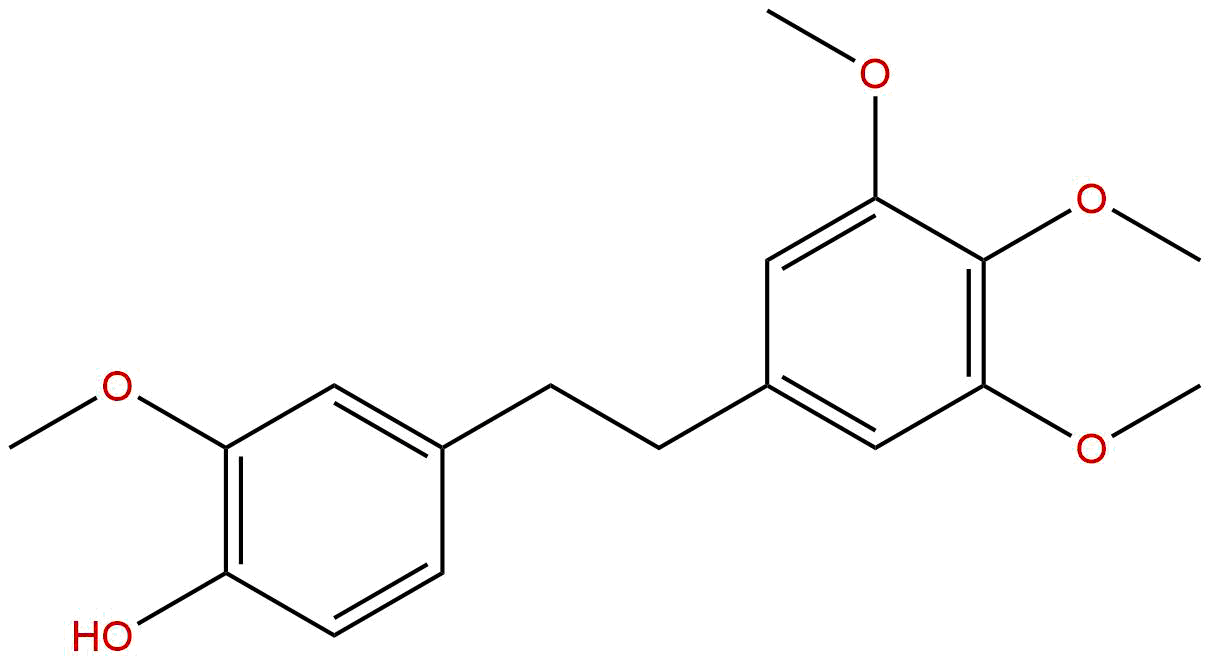
Among the numerous chemical components of Dendrobium officinale, benzyl compounds have attracted much attention due to their unique diphenylethane skeleton and extensive pharmacological activities. Crepidatin, as a typical natural product of the benzyl group, originated from Dendrobium nobile(Dendrobium nobile)Isolation and identification of Dendrobium species. Its chemical name is 4,4 '- dimethoxy-3,5,3' - trihydroxybibenzyl, and its CAS number is 101508-50-3. Since its discovery, this compound has gradually become a hot topic in natural product pharmacology research due to its significant potential in the field of anti-tumor. Preliminary studies have shown that dendrobine can exert multi-target and multi pathway anticancer effects by regulating multiple signaling pathways and target proteins closely related to tumor occurrence and development, such as MCL1, BCL2, STAT3, MMP2, TOP1, HIF1A, TOP2A, MAPK1, ESR1, and CYP19A1. This multi-target mode of action demonstrates unique advantages in overcoming tumor heterogeneity and drug resistance.
This article aims to systematically review the research progress of dendrobine, covering its chemical structure, physicochemical properties, plant origin, extraction process, pharmacological activity, mechanism of action, pharmacological evaluation, and clinical application prospects, in order to provide comprehensive scientific basis for the in-depth development and utilization of this natural product.
Chemical structure and physicochemical properties
Rosedendrobine belongs to the class of benzyl compounds, and its core skeleton is composed of two benzene rings connected by an ethyl bridge (- CH ₂ - CH ₂ -). Specifically, its chemical structure is as follows: one benzene ring (A ring) is connected to two methoxy groups (- OCH ∝) and one hydroxyl group (- OH), and the other benzene ring (B ring) is connected to one methoxy group and two hydroxyl groups. The precise substitution mode is: the 3,5 positions of the A ring are hydroxyl and the 4 positions are methoxy; The 3 'position of the B ring is a hydroxyl group, and the 4' position is a methoxy group. Therefore, its system is named 4,4 '- dimethoxy-3,5,3' - trihydroxybenzyl. This substitution pattern of polyphenol hydroxyl and methoxy groups endows rose dendrobine with unique chemical properties and biological activity.
From the perspective of physical and chemical properties, the molecular weight of dendrobine is 318.3690 Da, which belongs to small molecule compounds and is beneficial for its absorption and distribution in the body. Its lipid water partition coefficient LogP is 3.3750, indicating that the compound has moderate lipophilicity and can penetrate biological membranes well, which is consistent with its predicted high blood-brain barrier (BBB) penetration ability. The high BBB penetration suggests that dendrobine may have the potential to treat central nervous system tumors or related diseases. Its topological polar surface area (TPSA) is 57.15 Å ², which is lower than the commonly believed passive diffusion upper limit (about 140 Å ²), further supporting its excellent oral absorption and transmembrane transport capabilities. However, its poor water solubility (0.0387 mg/mL) may be one of the key factors limiting its bioavailability and formulation development. In addition, the calculated toxicology prediction showed that dendrobine had no inhibitory effect on hERG potassium channels (hERG inhibition: no), and the Ames test result was negative (0.0), indicating low risk of cardiac and genetic toxicity and good preliminary safety characteristics.
Plant sources and extraction methods
Rosedendrobine was initially isolated from plants of the Dendrobium genus, and its main sources include Dendrobium chrysotoxum(Dendrobium nobile)Dendrobium officinale(Dendrobium officinale)And rose dendrobium(Dendrobium crepidatum)Wait. Among them, Dendrobium officinale, as a traditional precious Chinese medicine, is one of the most extensively studied species and the main plant source of rose dendrobine. The content of rose dendrobine varies in dendrobium from different origins and harvesting periods, usually related to the plant's growth environment, age, and tissue location (such as stems and leaves).
Researchers have explored various methods to improve the extraction efficiency and purity of dendrobine from roses. Traditional methods often use organic solvent extraction, such as using polar solvents such as methanol, ethanol, or ethyl acetate to extract dried and crushed dendrobium raw materials by cold soaking or hot reflux extraction. Due to the lipophilicity of dendrobine, medium polarity solvents such as ethyl acetate and chloroform often achieve better extraction results. After concentration of the extract, liquid-liquid extraction (such as extraction with petroleum ether, chloroform, ethyl acetate, n-butanol in sequence) is usually used for preliminary separation to enrich the site where the target compound is located (usually the ethyl acetate or chloroform site).
Modern chromatographic techniques are widely used for further purification. Silica gel column chromatography is the most commonly used separation method, which can achieve the separation of dendrobine from other benzyl and phenanthrene compounds through gradient elution (such as petroleum ether ethyl acetate or chloroform methanol system). In addition, Sephadex LH-20 gel column chromatography, reversed-phase silica gel column chromatography (ODS) and high performance liquid chromatography (HPLC) are also used for fine purification. In recent years, some green and efficient extraction techniques have also been applied to the extraction of active ingredients from Dendrobium officinale, such as ultrasound assisted extraction, microwave-assisted extraction, and supercritical fluid extraction. These technologies can achieve higher extraction rates in a shorter period of time by disrupting cell walls and accelerating solvent penetration, while reducing the use of organic solvents, in line with the concept of green chemistry. For example, ultrasound assisted extraction combined with response surface methodology optimization has been proven to effectively improve the extraction efficiency of benzyl compounds, including rhodopsin, from Dendrobium officinale.
Pharmacological activity research
The pharmacological activity research of rose dendrobine mainly focuses on anti-tumor aspects, while some studies also involve its anti-inflammatory, antioxidant and other effects.
Antitumor activity Numerous in vitro experiments have shown that dendrobine has significant inhibitory effects on the proliferation of various human tumor cell lines. Its action spectrum is broad, covering breast cancer (such as MCF-7, MDA-MB-231), lung cancer (such as A549), liver cancer (such as HepG2), prostate cancer (such as PC-3), colon cancer (such as HCT-116) and leukemia (such as HL-60). The half maximal inhibitory concentration (IC ₅₀) is usually in the micromolar range (1-20 μ M), exhibiting strong cytotoxicity. It is worth noting that dendrobine also exhibits activity against certain drug-resistant tumor cell lines, suggesting its potential to overcome multidrug resistance in tumors. For example, in breast cancer cells, Dendrobium roseum can not only inhibit the proliferation of estrogen receptor positive (ER+) MCF-7 cells, but also be effective in three negative breast cancer (TNBC) cells MDA-MB-231, indicating that its mechanism of action may not be completely dependent on the estrogen receptor signaling pathway. In addition, in vivo animal experiments (such as nude mouse transplant tumor models) have preliminarily confirmed the anti-tumor effect of dendrobine, which can inhibit tumor growth and no significant systemic toxicity reactions such as weight loss have been observed.
Other pharmacological activities In addition to its anti-tumor effect, dendrobine also exhibits certain anti-inflammatory activity, which can inhibit the production of nitric oxide (NO) and prostaglandin E2 (PGE2) in macrophages induced by lipopolysaccharide (LPS), and downregulate the expression of inducible nitric oxide synthase (iNOS) and cyclooxygenase-2 (COX-2). Its antioxidant activity is mainly attributed to multiple phenolic hydroxyl groups in its molecular structure, which can effectively scavenge DPPH free radicals and ABTS cationic free radicals, and inhibit lipid peroxidation. These activities may be related to the regulation of tumor microenvironment and the alleviation of oxidative stress injury in the process of anti-tumor.
Mechanism of action and molecular targets
The anti-tumor mechanism of rose dendrobine is complex, involving multiple signaling pathways and molecular targets, reflecting the multi-target and multi pathway characteristics of natural products. According to existing research, its core mechanism can be summarized as follows:
-
Inducing cell apoptosis This is one of the main mechanisms by which rose dendrobine exerts anti-tumor effects. It can induce tumor cell apoptosis through two pathways: endogenous (mitochondria) and exogenous (death receptors).
- Regulating BCL-2 family proteins Rose dendrobine can downregulate the expression of anti apoptotic proteins MCL1 and BCL2, while upregulating the expression of pro apoptotic protein BAX. MCL1 and BCL2 are key anti apoptotic proteins on the outer membrane of mitochondria, and their downregulation leads to a decrease in mitochondrial membrane potential (Δ PSI m), promoting the release of cytochrome c into the cytoplasm, thereby activating Caspase-9 and Caspase-3, initiating a cascade apoptotic response.
- Inhibition of STAT3 signaling pathway STAT3 is an important transcription factor that is continuously activated in various tumors, promoting cell proliferation, survival, and angiogenesis. Rosedendrobine can inhibit the phosphorylation (Tyr705 site) and nuclear translocation of STAT3, thereby downregulating its downstream target genes, including MCL1, BCL2, Cyclin D1, and VEGF, synergistically promoting apoptosis and inhibiting proliferation.
-
Inhibit cell proliferation and cycle arrest Rose dendrobine can inhibit tumor cell proliferation by interfering with the cell cycle progression. Research has shown that it can block tumor cells in the G0/G1 phase or G2/M phase. The mechanism may be related to the downregulation of the expression of cyclin D1, cyclin B1, and cyclin dependent kinases (CDK4, CDK2). In addition, MAPK1 (i.e. ERK2) plays a crucial role in cell proliferation as a key member of the RAS-RAF-MEK-ERK signaling pathway. Rosedendrobine can inhibit the phosphorylation of MAPK1 and block the transmission of this pro proliferative signaling pathway.
-
Inhibit tumor invasion and metastasis Tumor metastasis is the main cause of patient death. Matrix metalloproteinases (MMPs), especially MMP2 and MMP9, play a crucial role in degrading extracellular matrix and promoting tumor cell invasion and metastasis. Rose dendrobine can significantly inhibit the activity and expression of MMP2, thereby weakening the migration and invasion ability of tumor cells. In addition, hypoxia inducible factor 1 alpha (HIF1A) is a key transcription factor for tumor adaptation to the hypoxic microenvironment, and its high expression is closely related to tumor angiogenesis, metabolic reprogramming, and metastasis. Rose dendrobine can inhibit the protein accumulation and transcriptional activity of HIF1A, downregulate its downstream target genes such as VEGF, and thus inhibit tumor angiogenesis and metastasis.
-
Affects DNA topoisomerase and hormone signaling:
- Inhibition of Topoisomerase DNA topoisomerases (TOP1 and TOP2A) are important targets for anti-tumor drugs. Rose dendrobine is predicted to interact with TOP1 and TOP2A, possibly by stabilizing enzyme DNA cleavable complexes, leading to DNA damage and exerting cytotoxic effects, similar to classical topoisomerase inhibitors such as camptothecin and etoposide.
- Regulating estrogen signaling For hormone dependent breast cancer, dendrobium roseum shows potential regulation on estrogen receptor α (ESR1) and aromatase (CYP19A1). It may act as a selective estrogen receptor modulator (SERM) or aromatase inhibitor to inhibit the growth of ER+breast cancer cells by blocking estrogen signaling pathway. This is consistent with its effective inhibitory effect on MCF-7 cells.
In summary, dendrobine forms a complex anti-tumor network by synergistically regulating multiple key nodes such as apoptosis (MCL1, BCL2, STAT3), proliferation (MAPK1), metastasis (MMP2, HIF1A), DNA damage repair (TOP1, TOP2A), and hormone signaling (ESR1, CYP19A1), laying a solid molecular foundation for it to become a multi-target anti-tumor candidate drug.
Evaluation of drug properties and pharmacokinetics
To promote the clinical application of dendrobine from the laboratory, a systematic evaluation of its pharmacological properties, including pharmacokinetic (ADME) characteristics and preliminary safety, is necessary.
Analysis of drug properties parameters Based on computational predictions and preliminary experimental data, rose dendrobine exhibits certain medicinal advantages, but also faces challenges.
- Advantage Low molecular weight (<500 Da), moderate LogP (~3.4), reasonable TPSA (<140 Å ²), meeting most of the requirements of Lipinski's Rule of Five, indicating good oral bioavailability potential. The high BBB penetration provides the possibility for its treatment of brain tumors. The negative results of hERG inhibition and Ames test have preliminarily ruled out the risk of serious cardiac toxicity and genetic toxicity, indicating a good safety window.
- challenge The most prominent issue is the extremely poor water solubility (0.0387 mg/mL). Low water solubility is the main reason for incomplete oral absorption and low bioavailability, as well as a huge obstacle to formulation development. In addition, the multiple phenolic hydroxyl groups in the molecule may make it prone to phase II metabolism (such as glucuronidation and sulfation) in vivo, leading to significant first pass effects and further reducing systemic exposure.
Pharmacokinetic characteristics Currently, there are relatively few systematic studies on the pharmacokinetics of dendrobine in vivo. Based on its structural characteristics and research on similar compounds, its pharmacokinetic features can be inferred as follows:
- absorb Oral absorption may be incomplete and highly variable, influenced by food and formulation factors. Its high LogP value is beneficial for passive diffusion through intestinal epithelial cells, but its low water solubility limits the dissolution rate and becomes the rate limiting step of absorption.
- distribution Due to its high lipid solubility and small molecular weight, dendrobine is widely distributed in the body and has good tissue penetration, especially being able to pass through the blood-brain barrier. The plasma protein binding rate may be high.
- Metabolism The liver is the main metabolic organ. Metabolic pathways may include: ① glucuronidation and sulfation binding reactions of phenolic hydroxyl groups; ② O-demethylation reaction of methoxy group; ③ Oxidative metabolism of benzyl backbone. These metabolic reactions may lead to a decrease in their biological activity or the production of new active metabolites.
- excretion Metabolites and small amounts of prototype drugs are mainly excreted through bile and urine.
Strategies for improving drug efficacy In response to its poor water solubility and potential first pass effects, the following strategies can be adopted in future pharmaceutical chemistry and pharmacy research:
1. Prodrug design Modify the phenolic hydroxyl groups in the molecule, such as making phosphate esters, amino acid esters, or glycosides, to improve water solubility and release the prototype drug through enzymatic interpretation in vivo.
2. Salt formation or eutectic formation By utilizing the weak acidity of its phenolic hydroxyl group, it can form salts with alkaline compounds or eutectic with suitable ligands to improve solubility and dissolution rate.
3. nano-formulation Develop nano delivery systems such as liposomes, polymer micelles, nanoparticles, or solid lipid nanoparticles to encapsulate dendrobine, improve its water dispersibility and bioavailability, and achieve targeted delivery.
4. structural optimization On the basis of maintaining the core pharmacophore (benzyl backbone and key hydroxyl groups), introducing hydrophilic groups (such as amino and carboxyl groups) or adjusting the position of methoxy groups to balance lipophilicity and hydrophilicity and improve ADME properties.
Clinical application prospects and prospects
Rose dendrobine, as a natural benzyl compound derived from traditional Chinese medicine, has shown broad clinical application prospects due to its multi-target anti-tumor activity, good preliminary safety characteristics, and potential penetration ability into the central nervous system.
Potential indications:
1. Multiple types of tumors In view of its broad-spectrum activity on a variety of tumor cell lines, especially its inhibitory effect on triple negative breast cancer and drug-resistant tumors, rosedendrobin is expected to be developed as a new therapeutic drug for refractory tumors. Its regulatory effect on ESR1 and CYP19A1 gives it dual advantages in the treatment of hormone dependent breast cancer.
2. Brain tumor Its high BBB penetration is one of the biggest highlights. This makes Dendrobium roseum have unique development value in the treatment of primary brain tumors (such as glioblastoma) or brain metastases such as breast cancer and lung cancer. At present, many effective anti-tumor drugs in clinical are limited because they cannot pass BBB.
3. Combined with other therapies The multi-target mechanism of rose dendrobine makes it an ideal candidate for combination therapy. For example, when used in combination with conventional chemotherapy drugs such as paclitaxel and cisplatin, it may enhance chemotherapy sensitivity and overcome resistance by inhibiting anti apoptotic proteins such as MCL1/BCL2. Combined with immune checkpoint inhibitors (such as PD-1/PD-L1 antibodies), their inhibitory effects on STAT3 and HIF1A may help improve the tumor immune microenvironment and enhance the efficacy of immunotherapy.
Future research directions:
1. In depth mechanism research Although multiple targets have been identified, the primary secondary relationships, synergistic effects, and specific binding modes between each target (such as the binding mode with TOP1/TOP2A) still need to be further elucidated through techniques such as molecular docking, surface plasmon resonance (SPR), and cellular thermal transition analysis (CETSA).
2. Pharmacokinetic study of the system There is an urgent need to conduct pharmacokinetic experiments in vivo to clarify the entire process of absorption, distribution, metabolism, and excretion in animals, identify the main metabolites and their activities, and provide a basis for clinical drug administration design.
3. Pharmaceutical Chemistry and Formulation Optimization This is the key to promoting the clinical application of dendrobine. A series of structurally similar compounds need to be synthesized for structure-activity relationship (SAR) studies, in order to search for lead compounds with stronger activity, better water solubility, and more stable metabolism. Meanwhile, developing efficient nano delivery systems to address the issues of poor water solubility and low bioavailability.
4. In vivo efficacy and safety evaluation Systematically evaluate its anti-tumor efficacy in various animal tumor models, including in situ tumor and metastatic tumor models. Conduct comprehensive preclinical safety evaluations for long-term toxicity, reproductive toxicity, and immune toxicity.
5. Resource sustainability Rose dendrobine mainly comes from plants of the Dendrobium genus, and many Dendrobium species are endangered or protected plants. Therefore, developing artificial cultivation techniques, utilizing plant cell or hairy root culture techniques for biosynthesis, or exploring fully chemical synthesis routes are crucial for ensuring the supply of raw materials for their future industrial applications.
Conclusion
Crepidatin, as a typical benzyl active ingredient in Dendrobium plants, has shown significant potential in the field of anti-tumor drug development due to its unique chemical structure and multi-target mechanism of action. It synergistically induces apoptosis, inhibits proliferation, blocks metastasis, and affects hormone signaling and DNA topology by regulating a series of key targets such as MCL1, BCL2, STAT3, MMP2, TOP1, HIF1A, MAPK1, ESR1, and CYP19A1. Its good preliminary safety (low risk of hERG and Ames toxicity) and high blood-brain barrier penetration ability further highlight its development value, especially in the treatment of brain tumors and refractory tumors.
However, the development of rose dendrobine also faces severe challenges such as poor water solubility and low bioavailability. The future research focus should be on overcoming these obstacles through drug chemical modification and advanced formulation technology, and conducting in-depth systematic pharmacokinetic, pharmacodynamic, and toxicological studies. With the continuous deepening of research on the chemistry and pharmacology of Dendrobium plants, as well as the advancement of modern drug development technology, rose dendrobine and its derivatives are expected to move from the laboratory to clinical practice, providing new, natural solutions for humans to overcome cancer, especially for tumor types that lack effective treatment methods. This process is not only a modern interpretation of the treasure trove of traditional Chinese medicine, but also a vivid practice of innovative drug development of natural products.