


Synonym name: Baicalein-7-O-diglucoside; Baicalein-7-O-gentiobioside
Catalogue No.: BP1044
Cas No.: 114482-86-9
Formula: C27H30O15
Mol Weight: 594.522
Botanical Source:
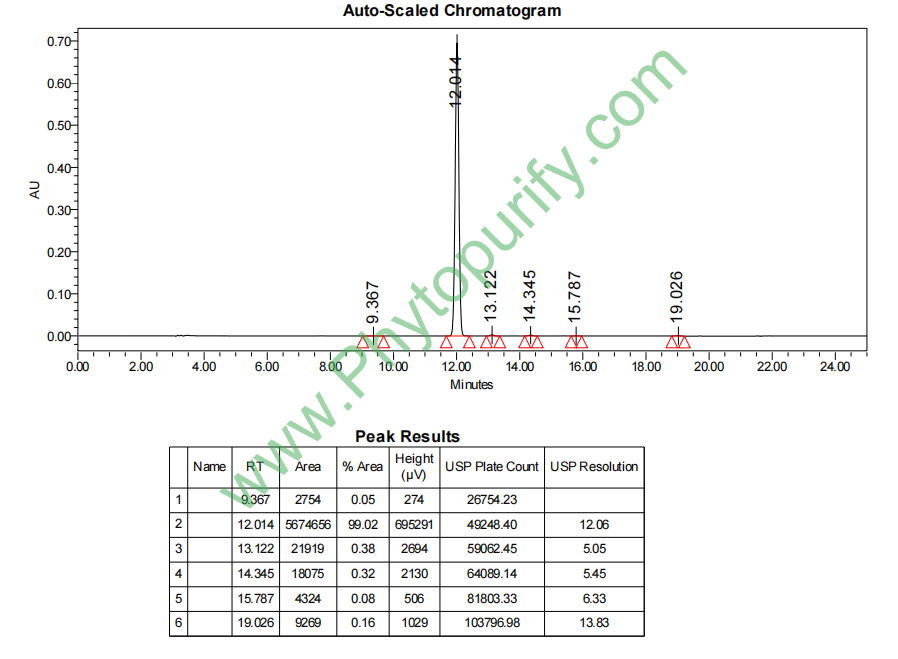
Purity: 95%~99%
Analysis Method: HPLC-DAD or/and HPLC-ELSD
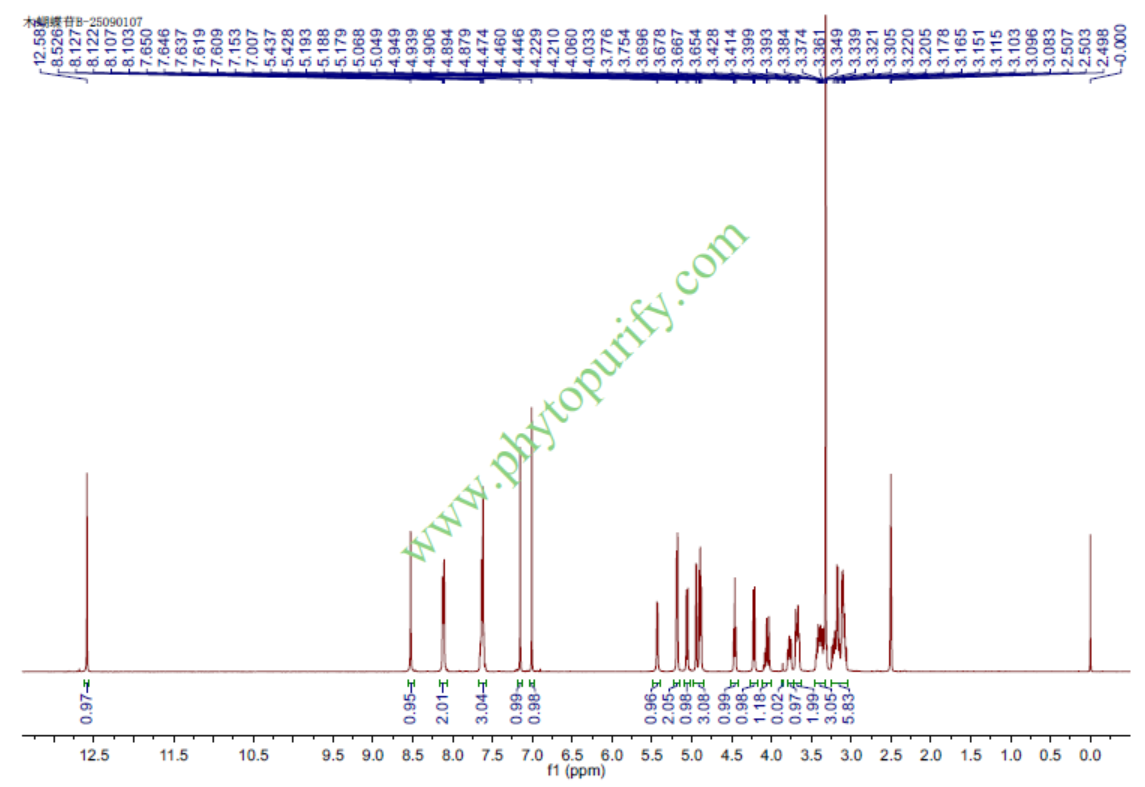
Identification Method: Mass, NMR
Packing: Brown vial or HDPE plastic bottle
Can be supplied from milligrams to grams.
For Reference Standard and R&D, Not for Human Use Directly.
Inquire for bulk scale.
Description:
Oroxin B can selectively induce tumor-suppressive ER stress and concurrently inhibit tumor-adaptive ER stress in B-lymphoma cells for effective anti-lymphoma therapy.
References:
PLoS One. 2013 Nov 27;8(11):e80197.
Molecular modeling reveals the novel inhibition mechanism and binding mode of three natural compounds to staphylococcal α-hemolysin.
METHODS AND RESULTS:
In this study, we found that three natural compounds, Oroxylin A 7-O-glucuronide (OLG), Oroxin A (ORA), and Oroxin B (ORB), when inhibiting the hemolytic activity of α-HL, could bind to the "stem" region of α-HL. This was completed using conventional Molecular Dynamics (MD) simulations. By interacting with the novel binding sites of α-HL, the ligands could form strong interactions with both sides of the binding cavity.
CONCLUSIONS:
The results of the principal component analysis (PCA) indicated that because of the inhibitors that bind to the "stem" region of α-HL, the conformational transition of α-HL from the monomer to the oligomer was restricted. This caused the inhibition of the hemolytic activity of α-HL.
Toxicol Appl Pharmacol. 2015 Oct 15;288(2):269-79.
Oroxin B selectively induces tumor-suppressive ER stress and concurrently inhibits tumor-adaptive ER stress in B-lymphoma cells for effective anti-lymphoma therapy.
Cancer cells have both tumor-adaptive and -suppressive endoplasmic reticulum (ER) stress machineries that determine cell fate. In malignant tumors including lymphoma, constant activation of tumor-adaptive ER stress and concurrent reduction of tumor-suppressive ER stress favors cancer cell proliferation and tumor growth. Current ER stress-based anti-tumor drugs typically activate both tumor-adaptive and -suppressive ER stresses, resulting in low anti-cancer efficacy; hence, selective induction of tumor-suppressive ER stress and inhibition of tumor-adaptive ER stress are new strategies for novel anti-cancer drug discovery. Thus far, specific tumor-suppressive ER stress therapeutics have remained absent in clinical settings.
METHODS AND RESULTS:
In this study, we explored unique tumor-suppressive ER stress agents from the traditional Chinese medicinal herb Oroxylum indicum, and found that a small molecule Oroxin B selectively induced tumor-suppressive ER stress in malignant lymphoma cells, but not in normal cells, effectively inhibited lymphoma growth in vivo, and significantly prolonged overall survival of lymphoma-xenografted mice without obvious toxicity. Mechanistic studies have revealed that the expression of key tumor-adaptive ER-stress gene GRP78 was notably suppressed by Oroxin B via down-regulation of up-stream key signaling protein ATF6, while tumor-suppressive ER stress master gene DDIT3 was strikingly activated through activating the MKK3-p38 signaling pathway, correcting the imbalance between tumor-suppressive DDIT3 and tumor-adaptive GRP78 in lymphoma.
CONCLUSIONS:
Together, selective induction of unique tumor-suppressive ER stress and concurrent inhibition of tumor-adaptive ER stress in malignant lymphoma are new and feasible approaches for novel anti-lymphoma drug discovery and anti-lymphoma therapy.
HPLC of Oroxin B
HNMR of Oroxin B
Storage conditions:Short-term storage at 2~8℃, long-term storage at -20 ~ -80℃
249.2000
-.5177
-.5537
2.0176
.5090
.0663
Low
79.2417
4.6359
Yes
No
No
No
Yes
No
0.6
Yes
No
Yes
Yes
Malignant tumors are one of the leading causes of death worldwide, and their occurrence and development involve complex molecular network regulation abnormalities. Although modern medicine has made significant progress in fields such as surgery, radiation therapy, and chemotherapy, traditional chemotherapy drugs suffer from poor selectivity, significant toxic side effects, and susceptibility to drug resistance, prompting researchers to continuously search for highly effective and low toxicity anti-cancer candidate drugs from natural products. After thousands of years of practice, the treasure trove of traditional Chinese medicine has accumulated rich medicinal plant resources, many of which have been proven to have significant anti-tumor potential. Oroxin B (OB), as a traditional Chinese herbal medicine derived from the wood butterfly(Oroxylum indicum The flavonoid carbon glycosides isolated from (Linn.) Bentham ex Kurz have attracted much attention in recent years due to their significant inhibitory activity and unique mechanism of action in various tumor models. Research has shown that OB can not only penetrate the blood-brain barrier, but also induce tumor cell apoptosis, inhibit proliferation, invasion, and metastasis by regulating multiple signaling pathways including PTEN/PI3K/AKT, apoptosis related proteins, and endoplasmic reticulum stress (ER stress). This article aims to systematically review the chemical structure, plant origin, pharmacological activity, molecular mechanism of action, pharmacological evaluation, and clinical application prospects of OB, in order to provide comprehensive scientific references for the in-depth research and development of this natural product.
The chemical name of Oroxin B is 5,7-dihydroxy-4 '- methoxyflavone-7-O - β - D-glucopyranoside - (1 → 4) - O - β - D-glucopyranoside, and its CAS number is 114482-86-9. Structurally, OB belongs to the flavonol glycoside class of compounds, with its parent nucleus being flavonoids (2-phenylchromenone), which have hydroxyl substituents at positions 5 and 7 of the A ring, and methoxy substituents at position 4 'of the B ring. Its significant feature is that the 7-hydroxyl group is connected to a disaccharide chain through a glycosidic bond, where one β - D-glucose group is linked to another β - D-glucose group through a (1 → 4) glycosidic bond, forming a rutin glycoside type structure. This glycosylation modification has a significant impact on its water solubility, bioavailability, and biological activity.
According to the provided pharmacological parameters, the molecular weight of OB is 594.5220 g/mol. The calculated lipid water partition coefficient (LogP) is -0.5177, indicating that the molecule has good hydrophilicity, which is consistent with the structural characteristics of containing multiple hydroxyl groups and two glucose units in the molecule. The topologically polar surface area (TPSA) is as high as 249.2000 Å ², further confirming its strong polarity characteristics. The water solubility value is 2.0176 (usually referring to LogS or similar indicators, specific units need to be combined with the model, but the value itself indicates moderate or good solubility), indicating that OB has a certain solubility ability in aqueous media, which is beneficial for its formulation development. However, its blood-brain barrier permeability was predicted to be "low", which seems to contradict the pharmacological description of "being able to penetrate the blood-brain barrier", possibly due to differences between experimental models (such as in vivo experiments confirming its ability to enter brain tissue) and computational prediction models, or suggesting that there may be active transport mechanisms involved in its permeability process. In terms of preliminary safety prediction, OB has no inhibitory risk on hERG potassium channels (hERG inhibition: No), indicating a low potential risk of cardiac toxicity. The Ames test result is 0.6 (usually a mutagenicity score, a value less than 1 may indicate a low risk of mutagenicity), but it should be interpreted with caution, and the final conclusion still needs to rely on standard experimental verification.
Wood butterfly glycoside B is mainly derived from the plant wood butterfly in the family Verbenaceae(Oroxylum indicum (L.) Kurz's seeds, bark, and leaves. Wooden butterflies, also known as thousand sheets of paper, rags, etc., are widely distributed in Southeast Asia, South Asia, and tropical and subtropical regions such as Yunnan, Guangxi, and Guizhou in China. In traditional Chinese medicine theory, its seed (wood butterfly) is cool in nature, bitter and sweet in taste, and belongs to the lung, liver, and stomach meridians. It has the effects of clearing the lungs, clearing the throat, soothing the liver, and regulating the stomach. It is commonly used to treat lung heat cough, throat obstruction, hoarseness, and liver stomach qi pain. Its bark is also used as medicine and has similar medicinal value.
The extraction and separation of OB usually follow the conventional process of natural product chemistry. Firstly, the dried seeds or bark of the wood butterfly are crushed and subjected to reflux extraction or ultrasound assisted extraction using a suitable solvent (such as methanol, ethanol, or ethanol water mixture) to fully extract the flavonoid components. After vacuum concentration, the crude extract was subjected to liquid-liquid distribution extraction using solvents such as petroleum ether, ethyl acetate, and n-butanol. Due to its strong polarity, OB was mainly enriched in n-butanol or the aqueous layer. Further purification mostly depends on column chromatography technology. Silica gel, macroporous adsorption resin (such as D101), polyamide or dextran gel (such as Sephadex LH-20) are often used as stationary phases, and chloroform methanol, methanol water and other solvent systems with different proportions are used for gradient elution. High performance liquid chromatography (HPLC), especially preparative HPLC, is a key technology for obtaining high-purity OB monomers. In recent years, some green extraction techniques such as microwave-assisted extraction and supercritical fluid extraction have also been applied research, aiming to improve extraction efficiency and reduce the amount of organic solvents used.
Numerous in vitro and in vivo pharmacological studies have confirmed that arbutin B has broad and significant anti-tumor activity, covering a variety of malignant tumors.
Anti liver cancer activity OB exhibits significant proliferation inhibition and pro apoptotic effects on various liver cancer cell lines, such as HepG2, SMMC-7721, Huh7, etc. Research has shown that OB treatment can dose dependently reduce the viability of liver cancer cells, induce cell cycle arrest (such as G2/M phase arrest), and significantly increase the proportion of early and late apoptotic cells. In the nude mouse transplant tumor model, OB administration can effectively inhibit tumor growth with low toxicity.
Anti lymphoma activity OB can induce strong endoplasmic reticulum stress response in malignant lymphoma cells (such as U937 and Raji cells), which is classified as "tumor suppressive ER stress" and ultimately leads to cell apoptosis. This provides experimental evidence for the treatment of hematological malignancies with OB.
Anti other tumor activity Besides liver cancer and lymphoma, research on OB has expanded to other types of cancer. For example, in breast cancer research, OB showed the ability to inhibit cell proliferation and migration. Its anti-tumor effect has broad-spectrum potential and may be achieved by acting on multiple common molecular targets.
Potential neuroprotective effects Due to its ability to penetrate the blood-brain barrier, research on OB in neurological diseases has also begun to receive attention. Preliminary studies suggest that OB may exert neuroprotective effects in models such as Alzheimer's disease and cerebral ischemia-reperfusion injury through antioxidant, anti-inflammatory, and anti apoptotic pathways, but research in this area is still in its infancy.
The anti-tumor effect of arbutin B involves multi-target and multi pathway synergistic regulation, and its core mechanism can be summarized as follows:
Inducing cell apoptosis The most prominent role of OB is to trigger tumor cell apoptosis. It passes through Upregulation of PTEN The expression of an important tumor suppressor gene and phosphatase negatively regulates the key cell survival signaling pathway PI3K/AKT. manifested as Downregulation of PI3K and phosphorylated AKT (p-AKT) The level. AKT inactivation leads to the inhibition of downstream survival promoting targets, while OB can Downregulation of anti apoptotic proteins Bcl-2 and Mcl-1 The expression of caspase disrupts mitochondrial membrane potential, promotes cytochrome C release, activates caspase cascade reaction, and ultimately leads to programmed cell death.
Inhibiting tumor associated inflammation and angiogenesis Chronic inflammation is closely related to tumor progression. OB can significantly Downregulation of cyclooxygenase-2 (COX-2) Reduce the expression of prostaglandin pro-inflammatory mediators and decrease their production. At the same time, it can also Downregulation of vascular endothelial growth factor (VEGF) And its upstream regulatory factors Hypoxia inducible factor-1 alpha (HIF-1 alpha) To inhibit the formation of tumor neovascularization and cut off the nutritional supply to the tumor.
Regulating transcription factors and signal transduction OB can inhibit Signal Transduction and Transcription Activation Factor 3 (STAT3) Activation. STAT3 is an important oncogenic transcription factor, and sustained activation can promote cell proliferation, inhibit apoptosis, and mediate immune escape. The inhibition of STAT3 pathway by OB is an important link in its anti-tumor effect. In addition, OB Mitogen activated protein kinase 1 (MAPK1/ERK2) Pathways also have regulatory effects and are involved in cell proliferation and differentiation.
Inducing endoplasmic reticulum stress In cells such as lymphoma, OB can disrupt the homeostasis of the endoplasmic reticulum, leading to excessive activation of the unfolded protein response (UPR) and triggering irreversible, pro apoptotic endoplasmic reticulum stress, which is another unique mechanism of its cytotoxic effect.
Affects other key targets OB has also been reported to inhibit Matrix metalloproteinase-2 (MMP-2) Thereby reducing the invasion and metastasis ability of tumor cells. It pairs Topoisomerase I (TOP1) and Topoisomerase II α (TOP2A) The potential inhibitory effect suggests that it may interfere with DNA replication and repair. In addition, OB Estrogen receptor alpha (ESR1) and Aromatase (CYP19A1) It may be useful in hormone dependent tumors (such as some breast cancer).
In summary, OB exerts anti-tumor effects through a complex network that simultaneously acts on multiple targets such as MCL1, BCL2, STAT3, MMP2, TOP1, HIF1A, TOP2A, MAPK1, ESR1, CYP19A1, etc.
Although OB has shown good anti-tumor activity in preclinical studies, its pharmacological properties still require systematic evaluation.
Absorption, distribution, metabolism, excretion (ADME):
Pharmacokinetics (PK)Currently, there are relatively limited reports on pharmacokinetic studies of the OB system. Limited animal experiments (such as rats) suggest that intravenous administration of OB may exhibit characteristics of rapid distribution and moderate elimination rate. The bioavailability of oral administration is a key parameter that requires further research. The characteristics of its drug time curve, tissue distribution specificity, and plasma protein binding rate all need to be further explored.
Preliminary evaluation of safety Based on computational predictions, OB has no significant risk of hERG channel inhibition and low mutagenic potential (Ames test predicted value of 0.6), which is a positive signal. However, a comprehensive safety assessment still requires standardized preclinical toxicology studies, including acute toxicity, long-term toxicity, genetic toxicity, reproductive toxicity, etc., to determine its safety window.
Pharmaceutical considerations The physicochemical properties of OB (strong hydrophilicity, potential sensitivity to light, heat, and pH) determine that stability issues need to be considered in formulation development. It may be necessary to improve its oral bioavailability or achieve targeted delivery by preparing formulations such as solid dispersions, cyclodextrin inclusion complexes, liposomes, or nanoparticles.
As a multi-target anti-tumor natural product, arbutin B has broad clinical application prospects, but also faces challenges.
Development prospects:
Challenges faced and future research directions:
Wood butterfly glycoside B is a flavonoid carbon glycoside with significant anti-tumor activity isolated from the traditional Chinese medicine wood butterfly. It exhibits strong proliferation inhibition and pro apoptotic effects in various tumor models such as liver cancer and lymphoma by upregulating PTEN, downregulating COX-2, VEGF, PI3K/AKT pathways, inhibiting STAT3, and inducing endoplasmic reticulum stress through multiple mechanisms. Although its good water solubility and preliminary predicted safety have laid the foundation for its development, its pharmacokinetic properties, oral bioavailability, and systemic toxicity still need to be further evaluated. Future research should focus on elucidating its precise molecular target network, optimizing its pharmacological parameters, and advancing standardized preclinical and clinical studies. OB's research not only provides new candidate molecules for the development of anti-tumor drugs, but also provides strong support for a deeper understanding of the scientific connotation of traditional Chinese medicine and promoting the modernization of traditional Chinese medicine. With the continuous deepening of interdisciplinary research, arbutin B is expected to move from the laboratory to clinical practice, bringing new therapeutic hope to cancer patients.
