


Product name: Homoorientin
Synonym name: Isoorientin
Catalogue No.: BP0733
Cas No.: 4261-42-1
Formula: C21H20O11
Mol Weight: 448.38
Botanical Source: Lophatherum gracile Brongn.
Physical Description:
Type of Compound: Flavonoids
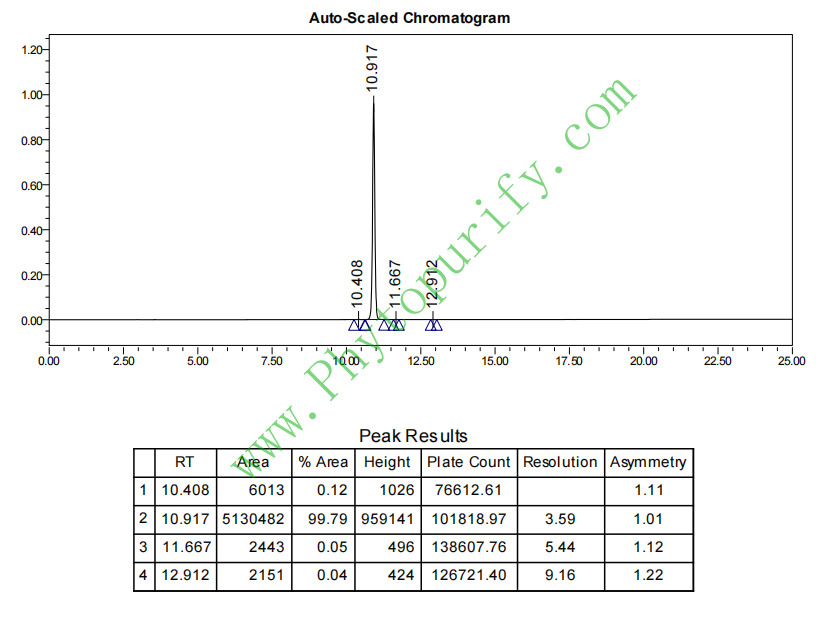
Purity: 95%~99%
Analysis Method: HPLC-DAD or/and HPLC-ELSD
Identification Method: Mass, NMR
Packing: Brown vial or HDPE plastic bottle
Storage: Store in a well closed container, protected from air and light. Put into refrigerate or freeze for long term storage.
Whenever possible, you should prepare and use solutions on the same day. However, if you need to make up stock solutions in advance, we recommend that you store the solution as aliquots in tightly sealed vials at -20℃. Generally, these will be useable for up to two weeks.
The product could be supplied from milligrams to grams
Inquire for bulk scale.
Description:
Luteolin-6-C-glucoside has antioxidant activity.
References:
Food Chem Toxicol. 2013 May;55:121-8. doi: 10.1016/j.fct.2012.12.051.
Flavonoids profiles, antioxidant, acetylcholinesterase inhibition activities of extract from Dryoathyrium boryanum (Willd.) Ching.
The profiles and bioactivities of flavonoids extracted from Dryoathyrium boryanum (Willd.) Ching were investigated.
METHODS AND RESULTS:
The total flavonoids content in extract from D. boryanum is about 145.8mg/g. By means of HPLC-DAD-ESI-MS, the main flavonoids in D. boryanum were tentatively identified as 3-hydroxyphloretin 6'-O-hexoside, quercetin-7-hexoside, apigenin7-O-glucoside, luteolin 7-O-glucoside, apigenin 7-O-galactoside, acacetin 7-O-(α-D-apio-furanosyl) (1→6)-β-d-glucoside, 3-hydroxy phloretin 6-O-hexoside, Luteolin-6-C-glucoside. 0.21mg/ml flavonoids extract from D. boryanum showed very strong superoxide anion radical scavenging potential, which is higher than that of rutin (0.25mg/ml). The extract (0.21mg/ml of flavonoids) from D. boryanum exhibited similar DPPH scavenging potential with that of rutin (0.25mg/ml). However, rutin (0.25mg/ml) showed a significantly higher reducing power and ABTS scavenging potential than that of 0.21mg/ml flavonoids extract from D. boryanum.
CONCLUSIONS:
It had no effect on acetylcholinesterase. D. boryanum can be considered as a medicinal plant and the flavonoids from D. boryanum are excellent antioxidants.
Biosci Biotechnol Biochem. 2006 Mar;70(3):718-21.
Antihypertensive effect of an extract of Passiflora edulis rind in spontaneously hypertensive rats.
Orally administered methanol extract of Passiflora edulis rind (10 mg/kg or 50 mg/kg) or luteolin (50 mg/kg), which is one of consistent polyphenols of the extract, significantly lowered systolic blood pressure in spontaneously hypertensive rats (SHRs).
METHODS AND RESULTS:
Quantitative analysis by liquid chromatography tandem mass spectrometry (LC-MS/MS) showed that the extract contained 20 microg/g dry weight of luteolin and 41 microg/g dry weight of Luteolin-6-C-glucoside. It also contained gamma-aminobutyric acid (GABA, 2.4 mg/g dry weight by LC-MS/MS or 4.4 mg/g dry weight by amino acid analysis) which has been reported to be an antihypertensive material.
CONCLUSIONS:
Since the extract contained a relatively high concentration of GABA, the antihypertensive effect of the extract in SHRs might be due mostly to the GABA-induced antihypertensive effect and partially to the vasodilatory effect of polyphenols including luteolin.
HPLC of Homoorientin
Storage conditions:Short-term storage at 2~8℃, long-term storage at -20 ~ -80℃
201.2800
-.1761
-.3396
.8279
.5785
.2889
Low
78.2288
4.0604
Yes
No
No
No
Yes
No
1.2
Yes
No
Yes
No
Flavonoids, as one of the most widely distributed plant secondary metabolites in nature, have always been a hot topic in natural product pharmacology research due to their diverse chemical structures and extensive biological activities. Homorientin, also known as isoquercetin, is a flavonoid compound with a unique C-glycosidic bond. Its chemical name is luteolin-6-C - β - D-glucoside. Its CAS number is 4261-42-1. Compared with common O-glycosidic flavonoids, the C-glycosidic bond endows isoquercetin with stronger chemical and metabolic stability, making it less susceptible to hydrolysis in the gastrointestinal environment and potentially having better oral bioavailability and in vivo activity. Modern pharmacological research has shown that isoquercetin exhibits multiple biological activities including antioxidant, anti-inflammatory, anti-tumor, neuroprotective, and cardiovascular protection, among which its strong antioxidant damage effect is particularly prominent. Oxidative stress is the common pathological basis for the occurrence and development of a variety of chronic diseases (such as neurodegenerative diseases, cardiovascular diseases, diabetes and cancer). Therefore, in-depth exploration of the molecular mechanism by which isoquercetin exerts antioxidant effects by regulating key pathways such as nuclear factor E2 related factor 2 (NRF2/NFE2L2) is of great scientific significance and application value for the development of new antioxidant damage treatment drugs. This article aims to provide a systematic review of the chemical properties, plant sources, pharmacological activities, mechanisms of action, and medicinal properties of isoquercetin, in order to provide comprehensive references for the in-depth research and development of this compound.
The molecular formula of isoquercetin is C21H20O11, with a molecular weight of 448.38 g/mol. Its core structure is luteolin (5,7,3 ', 4' - tetrahydroxyflavone), which is unique in that the glucose group is directly connected to the 6th carbon atom of the luteolin A ring through a stable C-C bond, forming a flavonoid C-glycoside. This C-glycosidic structure distinguishes it from O-glycosides connected by peroxide atoms (such as rutin), exhibiting higher stability under acidic, alkaline, and enzymatic conditions.
According to its pharmacological parameters, the lipid water partition coefficient (LogP) of isocoumarin is -0.1761, indicating that the compound has hydrophilicity. Its topological polar surface area (TPSA) is as high as 201.28 Å ², mainly attributed to the abundant oxygen atoms on hydroxyl and sugar groups in the molecule, which are strong donors and acceptors of hydrogen bonds. The high TPSA and hydrophilicity together determine its good water solubility (approximately 0.83 mg/mL). However, these characteristics also pose challenges to its transmembrane permeability. The predictive model shows that isoquercetin has a lower ability to cross the blood-brain barrier, which to some extent limits its direct therapeutic potential for central nervous system diseases, but may also reduce the risk of central nervous system side effects. In terms of preliminary safety evaluation, isoquercetin has no significant inhibitory effect on hERG potassium channels (hERG inhibition: No), indicating a low risk of inducing QT interval prolongation in the heart. The Ames test result is 1.2, indicating that no significant mutagenicity was observed under the testing conditions, providing preliminary safety evidence for its further development.
Isorhamnoside is widely distributed in nature and exists in various medicinal and edible plants. It is one of its important active ingredients.
Main plant sources including:
1. Polygonum orientale As its name comes from a plant, Laocao is the traditional source of isohesperidin.
2. Hawthorn (Crataegus Pinnatifida)Hawthorn leaves and fruits are rich in isoflavones, which are closely related to their cardiovascular protective effects.
3. Passiflora incarnata Passion fruit is a famous herb for calming and calming the nerves, and isoquercetin is considered one of its active ingredients.
4. Bamboo leaves (Phyllostachys edulis)Bamboo leaf extract is rich in C-glycosylated flavonoids, including isoquercetin, and has significant antioxidant activity.
5. Other sources It also exists in honeysuckle, tea, wheat seedlings, and some ferns.
Extraction and Separation Methods:
The extraction of isorhamnoside is often carried out using solvent extraction method, and commonly used solvents include methanol, ethanol, ethanol water mixed solution, etc. In order to improve extraction efficiency and selectivity, modern technologies such as ultrasound assisted extraction, microwave-assisted extraction, and pressurized liquid extraction have been widely applied. These methods accelerate plant cell wall rupture and component dissolution through physical effects, shorten extraction time, and reduce solvent consumption.
The crude extract after extraction needs to undergo further separation and purification. Large pore adsorption resin column chromatography is commonly used for enrichment, utilizing the adsorption characteristics of the resin for flavonoids and gradient elution with ethanol water solutions of different concentrations. Subsequently, fine separation was performed using silica gel column chromatography, polyamide column chromatography, high-performance liquid chromatography (HPLC), and preparative high-performance liquid chromatography (pre HPLC). In recent years, high-speed countercurrent chromatography (HSCCC) has shown unique advantages in separating flavonoid C-glycosides as a solid-liquid distribution chromatography technique without solid carriers, effectively avoiding sample loss caused by adsorption.
A large number of in vitro and in vivo studies have confirmed that isoquercetin has multiple pharmacological activities.
1. Antioxidant damage activity This is the most essential biological activity of isoquercetin. In various cell models (such as H2O2 induced PC12 cells, CCl4 damaged liver cells) and animal models (such as D-galactose-induced aging mice, ischemia-reperfusion injury models), isoquercetin can significantly reduce the levels of reactive oxygen species (ROS) and malondialdehyde (MDA), while increasing the activity of endogenous antioxidant enzymes such as superoxide dismutase (SOD), catalase (CAT), glutathione peroxidase (GPX), effectively alleviating cellular and tissue damage caused by oxidative stress.
2. anti-inflammatory effect Isorhamnoside exerts anti-inflammatory effects by inhibiting the excessive production of pro-inflammatory factors such as nitric oxide (NO), prostaglandin E2 (PGE2), tumor necrosis factor - α (TNF - α), and interleukin-6 (IL-6) induced by lipopolysaccharides (LPS) in macrophages. Its function is related to the inhibition of the activation of nuclear factor kappa B (NF - κ B) and mitogen activated protein kinase (MAPK) signaling pathways.
3. Antitumor activity Studies have shown that isoorientin can inhibit the growth and induce apoptosis of many cancer cell lines (such as liver cancer, breast cancer, colon cancer and lung cancer). Its mechanism involves cell cycle arrest (such as G2/M phase arrest), activation of mitochondrial apoptosis pathway, regulation of Bcl-2/Bax protein ratio, and inhibition of survival signaling pathways such as PI3K/Akt.
4. Neuroprotective effect In cellular and animal models of neurodegenerative diseases such as Alzheimer's disease and Parkinson's disease, isoquercetin has shown potential to protect neurons, improve memory and cognitive function. Its function is not only derived from antioxidant, but also related to inhibiting excessive activation of microglia, reducing beta amyloid toxicity, and regulating the cholinergic system.
5. Cardiovascular protective effect Isoquercetin can improve myocardial ischemia-reperfusion injury, reduce myocardial cell apoptosis and infarct size. In addition, it also has the potential role of vasodilation, anti atherosclerosis and lowering blood lipids.
6. Other activities The study also reported the antiviral, antibacterial, anti diabetes and its complications, anti fibrosis and other activities of isoorientin.
The multiple pharmacological activities of isoquercetin, especially its core antioxidant damage effect, are based on its precise regulation of multiple key molecular targets and signaling pathways.
1. NRF2/KEAP1 antioxidant signaling pathway This is the central mechanism by which isoquercetin exerts antioxidant effects. In the resting state, the transcription factor NRF2 (encoded by the NFE2L2 gene) binds to its cytoplasmic inhibitory protein KEAP1 and is degraded by ubiquitination. When isoquercetin enters the cell, it may modify the cysteine residues on KEAP1, disrupt the KEAP1-NRF2 complex, and prevent the degradation of NRF2. Activated NRF2 translocates to the nucleus and binds to antioxidant response elements (ARE), initiating the transcriptional expression of a series of downstream phase II detoxifying enzymes and antioxidant proteins. The target genes significantly upregulated by isoquercetin include:
* HMOX1 (heme oxygenase-1)Catalyze the degradation of hemoglobin to produce biliverdin and carbon monoxide, which have antioxidant and anti-inflammatory effects.
* SOD1 (superoxide dismutase 1, cytoplasmic type) and SOD2 (superoxide dismutase 2, mitochondrial type)Catalyzing the conversion of superoxide anion radicals into hydrogen peroxide and oxygen is the first line of defense for clearing ROS.
* CAT (catalase)Decompose hydrogen peroxide into water and oxygen to prevent the generation of hydroxyl radicals.
* GPX1 (Glutathione Peroxidase 1)Using reduced glutathione (GSH) to reduce hydrogen peroxide and lipid peroxides, maintaining cellular redox balance.
By synergistically activating a series of NRF2 regulated antioxidant enzymes, isoquercetin enhances the overall antioxidant defense ability of cells from the source.
2. Regulating the endogenous antioxidant system In addition to inducing enzyme expression through the NRF2 pathway, isoquercetin itself can also act as a direct free radical scavenger to neutralize ROS. At the same time, it can increase the level of intracellular GSH and maintain redox homeostasis.
3. Interaction with other pathways The antioxidant effect of isoquercetin is closely related to other pathways. For example, its inhibitory effect on the NF - κ B inflammatory pathway is partly due to its reduction of ROS activation of IKK or I κ B; Its anti apoptotic effect is also related to reducing oxidative stress damage to mitochondria and inhibiting cytochrome C release. In addition, it can activate AMPK, inhibit PI3K/Akt/mTOR and other pathways, and the cross dialogue of these pathways together constitutes the molecular basis of its pleiotropy.
Although isoquercetin has shown excellent biological activity in vitro, its pharmacological properties, that is, whether it can be developed into a safe and effective drug, still need to be comprehensively evaluated.
Pharmacokinetic properties Current research indicates that the oral absorption of isoquercetin is a key link in its in vivo effects. Thanks to the stability of the C-glycosidic structure, it is not easily hydrolyzed in the gastrointestinal tract and can be absorbed in its original form. However, its high polarity and molecular weight result in limited passive diffusion ability across intestinal epithelial cells and moderate absorption. After absorption, isoquercetin undergoes extensive phase II metabolism in the body, mainly glucuronidation and sulfation, to generate corresponding complexes. The prototype drug and its metabolites are mainly excreted through the kidneys with urine, and some are excreted through bile with feces. Its plasma half-life is relatively short, which may be related to its higher hydrophilicity and faster clearance rate. How to improve its oral bioavailability through dosage form modification (such as nano formulations, phospholipid complexes, cyclodextrin inclusion complexes) or structural modification is an important direction of current research.
Advantages and challenges of pharmaceutical properties:
* Advantage Natural source, preliminary safety evaluation is good (no hERG inhibition, Ames negative); Clear mechanism of action and multi-target synergy; The C-glycosidic structure brings good metabolic stability.
* challenge:
* Solubility and permeability The high hydrophilicity and TPSA result in poor membrane permeability, which is consistent with the characteristics of Class III (high solubility, low permeability) or Class IV (low solubility, low permeability) drugs in the Biopharmaceutical Classification System (BCS). This directly limits their oral absorption and bioavailability.
* Poor blood-brain barrier permeability For the treatment of central nervous system diseases, special delivery strategies are required.
* Metabolism and distribution in the body Further clarification is needed on its distribution characteristics and detailed metabolic profiles in major target organs such as the heart, brain, and liver.
* Lack of systematic preclinical and clinical data At present, most research is still at the stage of cell and animal experiments, lacking systematic data on its long-term toxicity, reproductive toxicity, carcinogenicity, as well as human pharmacokinetics and efficacy.
As a natural lead compound with multiple activities and targets, isoquercetin has shown broad clinical application prospects in various disease fields.
Potential application directions:
1. Adjuvant treatment and prevention of chronic diseases: As a dietary supplement or functional food ingredient, it is used for the prevention and auxiliary treatment of chronic diseases closely related to oxidative stress, such as atherosclerosis, type 2 diabetes, non-alcoholic fatty liver, etc.
2. Development of therapeutic drugs for neurodegenerative diseases Develop neuroprotective drugs based on isoflavones for Alzheimer's disease, Parkinson's disease, and other conditions. It is necessary to combine nanotechnology (such as liposomes, polymer nanoparticles) or prodrug strategies to improve its brain delivery efficiency.
3. Cardiovascular protective drugs Develop drugs for myocardial ischemia, heart failure, or complications of hypertension. Its antioxidant and anti-inflammatory properties are crucial for protecting myocardial cells and endothelial function.
4. Antitumor adjuvant therapy Combined with conventional chemotherapy or radiotherapy, utilizing its antioxidant and selective cytotoxic effects may have a synergistic and detoxifying effect.
5. External preparations for dermatology: Use its strong antioxidant and anti-inflammatory capacity to develop cream, gel and other topical preparations for anti skin photoaging, repairing UV damage or treating inflammatory skin diseases.
Future research prospects:
1. In depth mechanism research Using proteomics, metabolomics, gene editing and other technologies to more accurately depict its functional network and discover new direct targets of action.
2. Structural optimization and derivative development On the premise of retaining its core pharmacophore, chemical modification of its sugar or glycoside groups is carried out to improve its lipid solubility, membrane permeability, metabolic stability, and targeting, in order to obtain derivatives with better drug properties.
3. Research on Advanced Delivery Systems Vigorously developing targeted delivery systems based on nanotechnology, such as actively targeting (ligand modified) nanomaterials, to improve their bioavailability, tissue targeting, and therapeutic efficacy.
4. Preclinical research and clinical trials of the system According to international standards, complete systematic pharmacological, pharmacokinetic, and safety evaluations, and gradually promote phase I, II, and III clinical trials to verify its safety and efficacy in humans.
5. Multi component collaborative research Exploring the synergistic effects of isoquercetin and other natural active ingredients (such as other flavonoids and phenolic acids), developing compound formulations, may result in more comprehensive and milder therapeutic effects.
As a structurally unique flavonoid C-glycoside, isoquercetin has become a star molecule in natural product pharmacology research due to its excellent antioxidant damage resistance and multiple pharmacological activities such as anti-inflammatory, anti-tumor, and neuroprotective effects derived from it. It enhances the body's ability to resist oxidative stress from the root by activating the NRF2/KEAP1 core pathway, upregulating the expression of key antioxidant enzymes such as SOD, CAT, GPX1, HMOX1, etc. This lays a solid molecular foundation for its prevention and treatment of various chronic diseases. Despite facing challenges such as insufficient membrane permeability and the need to improve bioavailability in drug development, with the rapid development of modern medicinal chemistry, pharmacy, and nanotechnology, these bottlenecks are expected to be overcome one by one through structural modification, dosage form innovation, and delivery system optimization. In the future, through deeper mechanism exploration, more systematic preclinical evaluation, and ultimately clinical translation, isoxacin is expected to develop from a promising natural lead compound into an innovative drug or highly effective functional ingredient for the prevention and treatment of oxidative stress-related diseases, contributing its unique value to human health.
