Ri Dang Yao Huang: A multi-target natural active molecule derived from bamboo leaves
1. Overview
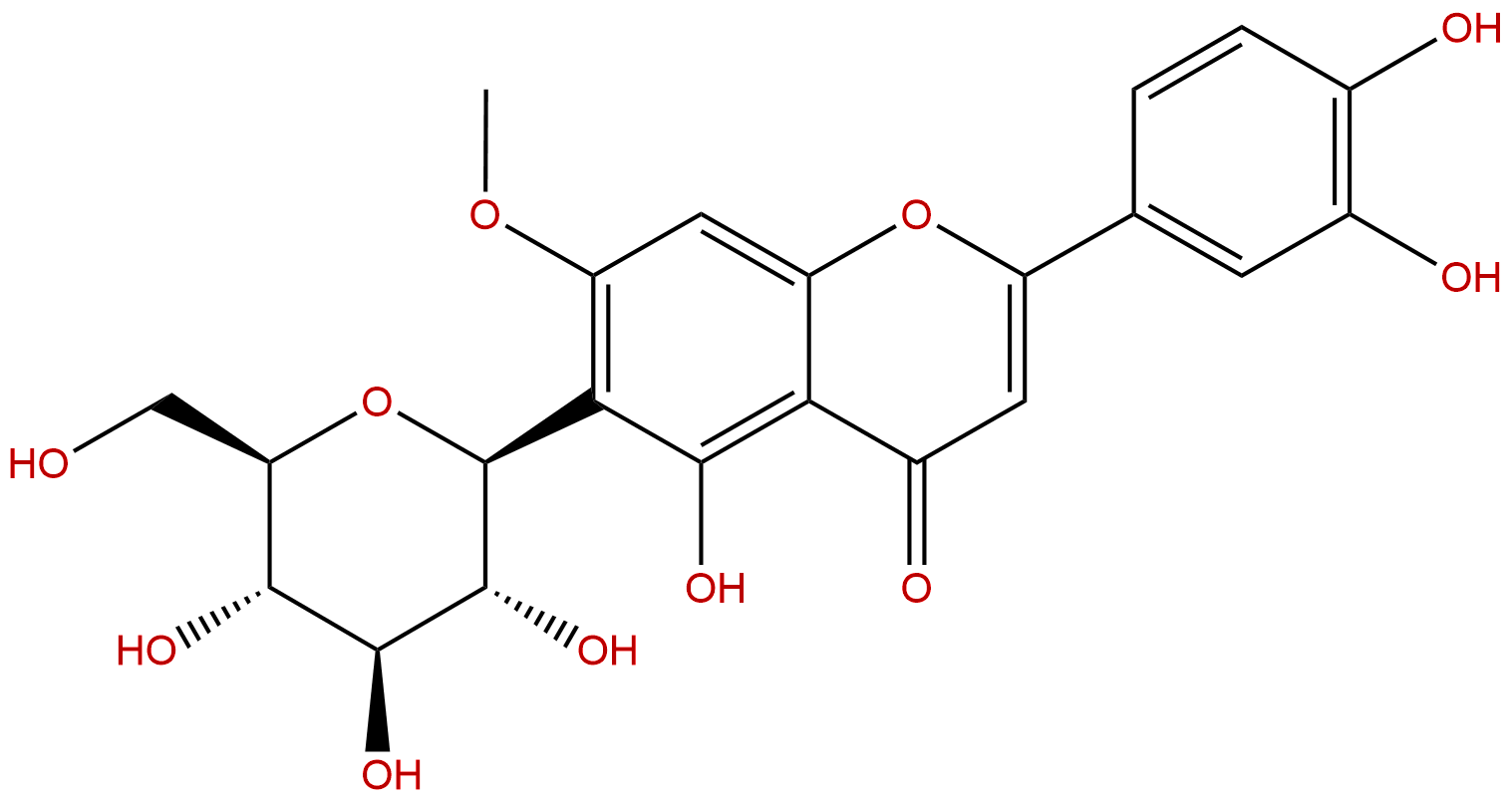
Swertiajaponin, CAS number 6980-25-2, is a natural flavonoid carbon glycoside compound isolated from traditional medicinal plants. Its molecular formula is C22H22O11 and its molecular weight is 462.4070 g/mol. This compound mainly comes from grasses in the family Poaceae Light bamboo leaves The aboveground part of Lophatherium gracile. Danzhu Ye has a long history in traditional East Asian medicine and is commonly used for clearing heat, eliminating irritability, diuresis, and promoting diuresis. As one of its active ingredients, RDX has attracted widespread attention in the field of natural product pharmacy in recent years.
Preliminary studies have shown that daidzein has multiple biological activities. Its most prominent feature is Tyrosinase inhibitory ability By binding to the active center of the enzyme, it can effectively inhibit the synthesis of melanin, with an IC50 value of 43.47 μ M. In addition, the study also suggests that it has Significant antioxidant activity And it can indirectly reduce tyrosinase protein levels by regulating intracellular signaling pathways such as MAPK/MITF. In addition to its potential applications in the field of skin pigmentation, database information further reveals that daidzein may have the potential to interact with multiple viral targets (such as NS3, NS5B, ACE2, etc.), suggesting its potential for antiviral The research direction has laid a scientific foundation for its transition from traditional heat clearing medicinal plants to modern multi-target drug development.
2. Chemical structure and physicochemical properties
Ritalin belongs to the flavonoid class of compounds Carbon glycoside flavonoids Its structural feature is that a flavonoid core is directly connected to a sugar group through a C-C bond. From the provided SMILES structural formula (COc1cc2oc (- c3ccc (O) c (O) c3) cc (=O) c2c (O) c1 [C @ @ H] 1O)C@HC@@HC@@H[C @ H] 1O) can be analyzed to contain a methoxy group (- OCH3), multiple phenolic hydroxyl groups (- OH), and one linked by a glycosidic bond Glucose unit The glucose unit is β - D-glucose with a clear stereoconfiguration, which is crucial for its specific recognition and binding with biomolecules.
Analyzing its physicochemical properties from the parameters of drug properties:
- Molecular weight (MW):462.4 g/mol, Slightly higher than conventional small molecule drugs (usually<500 Da), but still within an acceptable range.
- Lipid water partition coefficient (LogP/LogD)LogP is 0.1053 and LogD is 0.0623, indicating that the compound is under physiological pH conditions Strong hydrophilicity This is consistent with the structural characteristics of molecules containing multiple hydroxyl and sugar groups.
- Topological Polarity Surface Area (TPSA)Up to 190.28 Å ², far exceeding the threshold (~140 Å ²) commonly believed to be easy to penetrate cell membranes, indicating its Membrane permeability may be poor。
- Water solubility The value is 0.8830 (unit may be in mg/mL or log mol/L scale, usually the larger the value, the better the solubility), combined with its high TPSA and low LogP, it can be inferred that Has good water solubility。
- Other There are multiple hydrogen bond donors and acceptors in the molecule, which is not only the structural basis for its ability to form multiple hydrogen bond interactions with targets such as tyrosinase, but also a key factor affecting its transmembrane transport.
3. Plant sources and traditional applications
The main plant source of daidzein is Light bamboo leaves(Lophatherum gracile Brongn.), It is a plant belonging to the Poaceae family and the Sapindaceae genus. Danzhuye has been used in traditional medical systems in China, Japan, South Korea, and other places for over a thousand years. In traditional Chinese medicine theory, the nature of light bamboo leaves is sweet, light, and cold, and they return to the heart, stomach, and small intestine meridians. Their main functions are Clearing heat and purging fire, relieving annoyance and thirst, diuresis and promoting lymphatic circulation It is commonly used to treat diseases such as fever, thirst, mouth and tongue sores, short urine, redness, and pain. The famous heat clearing formula "Daochi San" contains light bamboo leaves, which are used to clear heart fire and promote urination.
The "heat clearing" effect in traditional applications is related to concepts such as "anti-inflammatory", "antioxidant", and "anti pathogenic microorganisms" in modern medicine. This suggests that searching for substances with antioxidant and antiviral activities from bamboo leaves has a reasonable ethnobotanical basis. As one of the active ingredients in bamboo leaves, the discovery of Japanese medicinal herb lutein Tyrosinase inhibition and antioxidant Activity can partially explain the traditional use of light bamboo leaves for "clearing heat" and improving symptoms caused by "fire qi" (such as certain skin problems). And its potential antiviral Target information may echo the experience of traditional Chinese medicine in treating "warm and hot diseases" (some correspond to modern infectious diseases). This association from traditional uses to modern pharmacological mechanisms is an important paradigm in the study of natural products.
4. Pharmacological activity and mechanism of action
Ritalin exhibits various pharmacological activities, and its mechanism of action involves direct enzyme inhibition and regulation of intracellular signaling pathways.
4.1 Tyrosinase inhibition and whitening mechanism
Tyrosinase is the rate limiting enzyme in the biosynthesis of melanin and an important target for skin whitening agents and therapeutic drugs for pigmentation diseases. The IC50 of RDX for this enzyme is 43.47 μ M, indicating a moderate intensity inhibitor. Its mechanism of action is Direct combination Into the active pocket of tyrosinase. Multiple phenolic hydroxyl groups and hydroxyl groups on sugar groups in the molecular structure can form amino acid residues around the active center of the enzyme, such as histidine and copper ion coordination sites Multiple hydrogen bonds At the same time, the hydrophobic plane of its flavonoid mother nucleus can interact with the hydrophobic region in the pocket Hydrophobic interaction This dual mode of action stabilizes the inhibitor enzyme complex, competitively blocking the binding of substrate (tyrosine), thereby inhibiting melanin production.
Further research has shown that daidzein can also pass through Indirect pathway Downregulate the expression of tyrosinase. In melanocytes, the transcription of tyrosinase is regulated by microphthalmia associated transcription factor (MITF), and the activity of MITF is regulated by the mitogen activated protein kinase (MAPK) signaling pathway (such as p38 MAPK, ERK). Rituximab has strong properties antioxidant activity It can eliminate reactive oxygen species (ROS) inside cells. Excessive ROS is an important stimulating factor in activating the MAPK pathway. Therefore, RDX inhibits oxidative stress, which in turn suppresses the activation of the MAPK/MITF signaling pathway, ultimately leading to tyrosinase Downregulation at the protein transcription level This dual mechanism of "direct inhibition of enzyme activity" and "indirect reduction of enzyme quantity" may have a more lasting and comprehensive effect in inhibiting melanin accumulation.
4.2 Potential antiviral activity and target analysis
The database information suggests that there is a correlation between daidzein and multiple virus related targets, which provides clues for its antiviral research:
- NS3 and NS5B These two proteins are essential enzymes for the replication of hepatitis C virus (HCV), namely protease and RNA dependent RNA polymerase. The ability to bind to these targets suggests that daidzein may have anti HCV potential.
- RdRp RNA dependent RNA polymerase is a core enzyme for the replication of many RNA viruses, such as HCV, coronavirus, and influenza virus, and is an important target for broad-spectrum antiviral drugs.
- ACE2 and TMPRSS2 These two are proteins on the surface of human cells. Angiotensin converting enzyme 2 (ACE2) is the main receptor for coronaviruses such as SARS-CoV-2 to enter cells; Transmembrane serine protease 2 (TMPRSS2) can cleave viral spike proteins and promote virus cell membrane fusion. If the compound can act on these two host targets, it may Block the invasion process of viruses This provides a new idea for the development of host oriented therapy for novel coronavirus and other pathogens.
Although these target associations are mostly derived from computational predictions or preliminary screening, requiring more rigorous biochemical and cellular experimental validation, they clearly indicate that daidzein, as a multi-target natural molecule, has potential for further exploration in the field of antiviral drug development, especially in the areas of HCV and coronavirus. Its antioxidant activity may also help alleviate excessive inflammation and oxidative damage caused by viral infection, playing an auxiliary therapeutic role.
5. Evaluation of drug properties
Based on the provided pharmacological parameters, we can conduct a preliminary evaluation of the development potential of daidzein as an oral drug, and refer to the well-known Lipinski's Five Rules(Rule of Five)。
Lipinski Rule Analysis:
1. Molecular weight (MW)<500 Da:462.4 Da, Compliant.
2. Lipid water partition coefficient (LogP)<5 0.1053, far less than 5, compliant.
3. The number of hydrogen bond donors (HBDs) is less than 5 According to the structural formula, there are a total of approximately 8-9 phenolic and sugar hydroxyl groups,More than 5 Not in line.
4. The number of hydrogen bond acceptors (HBAs) is less than 10 If the number of oxygen atoms (including hydroxyl, methoxy, carbonyl, ether bonds) in a molecule exceeds 10,not conform to。
Conclusion: Daily use of lutein Violating two of Lipinski's Five Rules(HBD >5, HBA >10), This usually indicates its Oral bioavailability may be low This is consistent with other parameter analyses:
- High TPSA (190.28) and low Caco-2 permeability (0.485)Strongly remind them Poor intestinal absorption It is difficult to passively diffuse through intestinal epithelial cells.
- BBB penetration is' low 'This means that it is difficult to enter the central nervous system, which is unfavorable for treating central nervous system related diseases, but also reduces the potential risk of central nervous system side effects.
- Plasma protein binding rate (PPB)78.2%, belonging to moderate to high, will affect the concentration of free drugs in the blood.
- Effective penetration rate (Peff)0.5769, a relatively low value, further confirms the prediction of poor absorption.
Preliminary Safety Assessment:
- Genotoxicity The Ames test result is 0.6 (usually<1.0 is considered a negative tendency, but it needs to be judged based on the specific experimental system), but the "chromosomal aberration" prompt is "present", which requires high vigilance Potential genotoxic signals It must be confirmed through more comprehensive experiments (such as micronucleus test) in subsequent development.
- cardiotoxicity HERG inhibition is' no ', indicating a lower risk of causing QT interval prolongation in the heart.
- Hepatotoxicity Serum biomarkers suggest an effect on alkaline phosphatase (Ser_LK) and aspartate aminotransferase (Ser_ST) ("Yes"), but no effect on glutamyl transferase (Ser_SGT) and alanine aminotransferase (Ser_LT) ("No"). This pattern suggests that it may have some impact on the liver, but the specific nature and mechanism need to be further studied.
- Other No skin/respiratory sensitization, no phototoxicity.
Comprehensive evaluation of drug properties As a lead compound, the Japanese medicinal herb lutein Advantage It has clear activity (tyrosinase inhibition, antioxidant), relatively clear mechanism of action, and good water solubility. but its Main defects Due to poor oral absorption potential (violating Lipinski rules, high TPSA, low permeability), and potential genetic toxicity and hepatotoxicity risks. Therefore, it may not be suitable for direct development as an oral systemic drug delivery. Future research directions could consider: 1) Structural modification By using prodrug strategies or modifying hydroxyl groups, HBD/HBA can be reduced, lipid solubility and membrane permeability can be improved; 2) Local administration: Use its whitening and antioxidant activities to develop external preparations (such as cream and essence) for skin to avoid absorption problems; 3) In depth security evaluation Strict evaluation must be conducted on its chromosomal abnormalities and liver enzyme effects to ensure the safety of subsequent development.
6. Research Status and Application Prospects
At present, research on daidzein is still in progress Early preclinical stage Most of the research focuses on its isolation and identification, tyrosinase inhibitory activity, and preliminary exploration of antioxidant mechanisms. The data on its antiviral activity mostly comes from target association predictions in databases, and there is an urgent need for functional validation through virological experiments such as cell lesion inhibition experiments and virus replicon experiments. Detailed pharmacokinetic, in vivo efficacy, and long-term toxicity data are still lacking.
Application Prospects Mainly reflected in the following directions:
1. Skin Health and Cosmetics Field As a natural dual inhibitor of tyrosinase (inhibition of activity+downregulation of expression) and a strong antioxidant, RDX is developed Natural whitening, spot lightening, and anti-aging functional cosmetics A highly promising raw material. Its good water solubility also makes it easy to add in the formula.
2. Lead compounds of antiviral drugs Conduct in-depth antiviral activity screening and mechanism research on the predicted HCV (NS3/NS5B) and coronavirus (ACE2/TMPRSS2/RdRp) related targets. It can be used as a skeleton for structural optimization, improving drug properties, and searching for highly efficient and low toxicity derivatives.
3. Quality markers of Danzhuye medicinal herbs Huangsu, a traditional Chinese medicine, can be used to control the quality of bamboo leaf medicinal materials and related preparations (such as Daochi San)One of the chemical markers Used to evaluate the authenticity and quality of medicinal herbs, as well as the stability of the preparation process.
Future research focus Should include:
- Deepening mechanism Elucidate the specific targets and molecular mechanisms of its antiviral effect; Explore in depth the details of its antioxidant and MAPK/MITF pathway regulation.
- Optimization of drug properties: Carry out systematic development Pharmaceutical chemical modification On the premise of retaining the active pharmacophore, improve its lipid solubility and permeability, and reduce potential toxicity.
- Formulation development Develop a stable transdermal drug delivery system for external use to maximize the therapeutic effect of local application on the skin.
In short, RDX is a natural product with unique structure and diverse biological activities. Although it faces challenges in oral drug development, it has demonstrated clear value in topical skin use and as a lead compound for antiviral drugs. With a deeper understanding of its mechanism of action and continuous efforts in medicinal chemistry, daidzein is expected to transform from a traditional medicinal plant component into a modern drug or functional ingredient with practical application value.