


Product name: Orcinol glucoside
Synonym name: Sakakin
Catalogue No.: BP1040
Cas No.: 21082-33-7
Formula: C13H18O7
Mol Weight: 286.28
Botanical Source: Curculigo orchioides Gaertn.
Physical Description:
Type of Compound: Phenols
Purity: 95%~99%
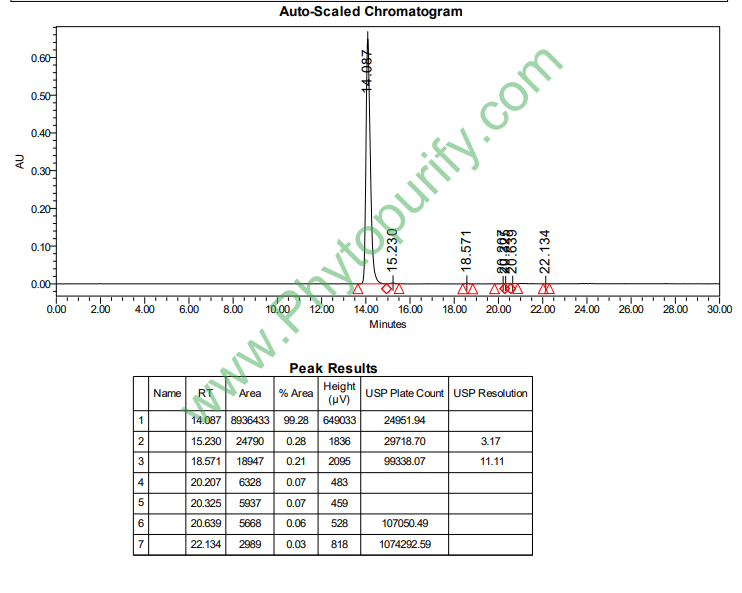
Analysis Method: HPLC-DAD or/and HPLC-ELSD
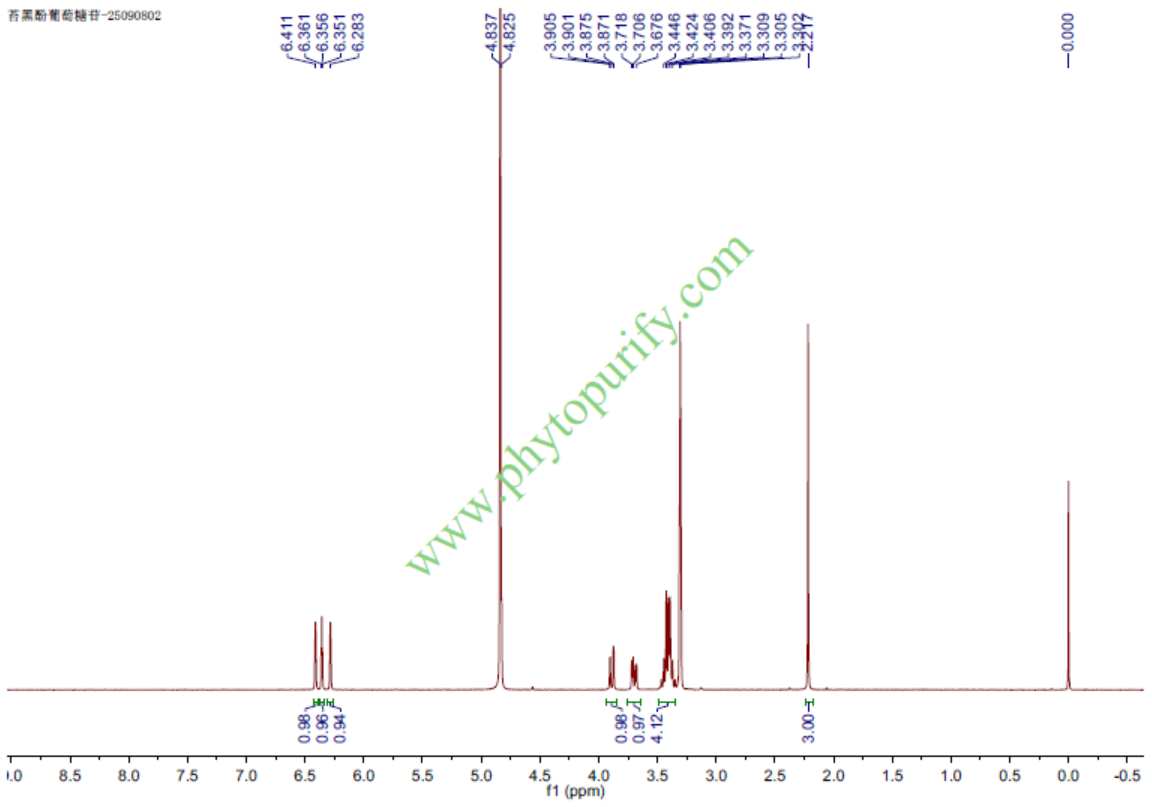
Identification Method: Mass, NMR
Packing: Brown vial or HDPE plastic bottle
Storage: Store in a well closed container, protected from air and light. Put into refrigerate or freeze for long term storage.
Whenever possible, you should prepare and use solutions on the same day. However, if you need to make up stock solutions in advance, we recommend that you store the solution as aliquots in tightly sealed vials at -20℃. Generally, these will be useable for up to two weeks.
The product could be supplied from milligrams to grams
Inquire for bulk scale.
Description:
Orcinol glucoside(Sakakin) shows potent antioxidative and anxiolytic activities without sedative effects, it can improve depressive behaviour in chronic unpredictable mild stress (CUMS) rats by downregulating HPA axis hyperactivity and increasing BDNF expression and ERK1/2 phosphorylation in the hippocampus.
References:
Chem Pharm Bull (Tokyo). 2005 Aug;53(8):1065-7.
Antioxidative phenols and phenolic glycosides from Curculigo orchioides.
A new orcinol glucoside, orcinol-1-O-beta-D-apiofuranosyl-(1-->6)-beta-D-glucopyranoside (3), was isolated from the rhizomes of Curculigo orchioides GAERTN., together with seven known compounds: orcinol glucoside (1), orcinol-1-O-beta-D-glucopyranosyl-(1-->6)-beta-D-glucopyranoside (2), curculigoside (Sakakin,4), curculigoside B (5), curculigoside C (6), 2,6-dimethoxyl benzoic acid (7), and syringic acid (8).
METHODS AND RESULTS:
The structures of these compounds were elucidated using spectroscopic methods. The antioxidant activities of these isolated compounds were evaluated by colorimetric methods based on their scavenging effects on hydroxyl radicals and superoxide anion radicals, respectively.
CONCLUSIONS:
All the compounds showed potent antioxidative activities and the structure-activity relationship is discussed.
Eur. Neuropsychopharmacol. ,2014 ,24(1): 172-80.
Orcinol glucoside produces antidepressant effects by blocking the behavioural and neuronal deficits caused by chronic stress.
This study focused on the antidepressant potential of orcinol glucoside (Sakakin,OG) and its possible mechanisms of action.
METHODS AND RESULTS:
We established a depressed rat model using 3 consecutive weeks of chronic unpredictable mild stress (CUMS). The antidepressant-like effect of OG was revealed using the sucrose preference test, the open field test, the forced swimming test (FST), and the tail suspension test (TST). The activity of the hypothalamic-pituitary-adrenal (HPA) axis was evaluated by detecting the serum corticosterone (CORT) concentrations and mRNA expression of corticotrophin-releasing hormone (CRH) in the hypothalamus. The protein expression levels of brain-derived neurotrophic factor (BDNF) and total phosphorylated-ERK1/2 were detected by western blot. The results showed that OG treatment (1.5, 3, or 6mg/kg) alleviated the depression-like behaviour of rats under CUMS, as indicated by the increased sucrose preference and the decreased immobility in both the FST and TST, although the rearing frequency in the open field test increased only in the group that received the lowest dose (1.5mg/kg OG). Rats that received OG treatment exhibited reduced serum CORT levels and CRH mRNA expression in the hypothalamus, suggesting that the hyperactivity of the HPA axis in CUMS rats was reversed by OG treatment. Moreover, OG treatment upregulated the protein levels of BDNF and phosphorylated-ERK1/2 in the hippocampus, even above control levels.
CONCLUSIONS:
Our findings suggest that OG improved depressive behaviour in CUMS rats by downregulating HPA axis hyperactivity and increasing BDNF expression and ERK1/2 phosphorylation in the hippocampus.
HPLC of Orcinol glucoside
HNMR of Orcinol glucoside
Storage conditions:Short-term storage at 2~8℃, long-term storage at -20 ~ -80℃
119.6100
-.3465
-.3474
23.0561
.7013
.1273
Low
31.3778
3.5817
Yes
No
No
No
No
No
0.0
Yes
Yes
Yes
Yes
Natural products have always been an important source of drug discovery and development. Especially in the treatment of complex diseases such as depression, osteoporosis and infectious diseases, plant derived active small molecules show unique chemical diversity and biological activity. Among numerous natural phenolic compounds, Orcinol glucoside (OG) has received widespread attention in recent years due to its significant antidepressant activity and bidirectional regulation of bone metabolism. Moss black phenol glucoside, chemically known as 3,5-dihydroxytoluene - β - D-glucopyranose glucoside, is a traditional medicinal plant derived from the Chinese herb Xianmao(Curculigo orchioides Phenolic glycosides isolated from the roots and stems of Gaertn. As a commonly used traditional Chinese medicine for tonifying kidney and yang, strengthening muscles and bones, and dispelling cold and dampness, Xianmao's pharmacological activity is closely related to the phenolic glycosides, triterpenoid saponins, and lignans it contains. With the deepening of modern pharmacological research, OG has been found to be not only one of the main material bases for the antidepressant effect of Scutellaria baicalensis, but also promotes the differentiation of mesenchymal stem cells (MSCs) into osteoblasts and inhibits their transformation into adipocytes by regulating the Wnt/β - catenin signaling pathway, indicating its potential value in the treatment of osteoporosis. In addition, OG exhibits certain affinity towards various bacterial and fungal targets, such as DNA gyrase, topoisomerase IV, FtsZ, FabI, dihydrofolate reductase, penicillin binding protein, sterol 14 α - demethylase, and efflux pumps, suggesting its potential broad-spectrum antibacterial activity. This article will provide a systematic review of the research progress on moss black phenol glucoside from the aspects of chemical structure, plant origin, pharmacological activity, mechanism of action, medicinal properties, and clinical application prospects, in order to provide scientific basis for the in-depth development and transformation of this natural product.
The chemical structure of naringenin glucoside is composed of the aglycone naringenin (3,5-dihydroxytoluene) and a molecule of β - D-glucopyranose linked by a β - glycosidic bond. Its molecular formula is C ₁∝ H ₁₈ O ₇, and its molecular weight is 286.28 g/mol. From the perspective of structural characteristics, OG belongs to a typical phenolic glycoside compound, and its glycoside moiety contains one methyl group and two phenolic hydroxyl groups, endowing the molecule with certain polarity and hydrogen bond donor/acceptor ability; The sugar moiety significantly increases the water solubility of the molecule and may affect its interaction mode with biological targets. The CAS registration number for OG is 21082-33-7, and it is often classified as a simple phenolic glycoside or phenylpropanoid derivative in plant chemical classification.
In terms of physicochemical properties, the lipid water partition coefficient (LogP) of OG is -0.3465, indicating its strong hydrophilicity and high solubility in water (23.0561 mg/mL), which is consistent with the presence of multiple hydroxyl groups in its molecule. The polar surface area (TPSA) is 119.61 Å ², which is within the general range of small molecule drugs (usually<140 Å ²), indicating that it may have good oral absorption potential, but higher polarity may also limit its passive transmembrane diffusion. It is worth noting that the blood-brain barrier penetration ability of OG is evaluated as "low", which has a dual significance for central nervous system drugs: on the one hand, for antidepressant effects that need to act on the central nervous system, low penetration may mean that their antidepressant effects are mainly achieved through peripheral mechanisms or indirect pathways; On the other hand, low brain exposure may also reduce the risk of central nervous system toxicity. In addition, the hERG inhibition risk assessment was negative, and the Ames test result was 0.0, indicating that OG did not show significant cardiotoxicity or genotoxicity risks in early drug development evaluation, providing a safety basis for its further development.
The main plant source of moss black phenol glucoside is the Xianmao family plant Xianmao(Curculigo orchioides Gaertn.), In addition, in some orchid plants such as white and(Bletilla striata)There are also a few reports in plants of the Dendrobium genus. Xianmao is mainly distributed in southern China, Southeast Asia, and the Indian subcontinent. Its rhizome is used in traditional medicine to treat erectile dysfunction, lumbar and knee soreness, rheumatism and pain, and menopausal syndrome. Modern plant chemistry research has shown that the roots and stems of Curculigoside contain a variety of phenolic glycosides, including not only OG, but also homologs of moss black phenol glucoside such as Curculigoside, which together form the pharmacological activity basis of Curculigoside.
The extraction of OG is usually carried out using solvent extraction combined with modern chromatographic separation techniques. The traditional method uses ethanol or methanol as solvents to reflux extract or cold soak the dried Xianmao rhizome powder. The extract is concentrated and then subjected to liquid-liquid extraction using solvents such as petroleum ether, ethyl acetate, and n-butanol to enrich phenolic glycosides. The n-butanol extraction site is usually rich in OG, which can be further separated and purified by silica gel column chromatography, ODS reverse phase column chromatography, Sephadex LH-20 gel column chromatography and preparative high-performance liquid chromatography (Prep HPLC). In recent years, with the promotion of green extraction concepts, new technologies such as ultrasound assisted extraction, microwave-assisted extraction, and enzyme assisted extraction have also been applied to the extraction of OG, which can significantly improve extraction efficiency and shorten extraction time. For example, using the response surface methodology optimized ultrasound assisted extraction process, under the conditions of ethanol concentration of 60%, solid-liquid ratio of 1:20, ultrasound power of 300 W, and extraction temperature of 50 ℃, the extraction rate of OG can reach over 0.5% (based on dry rhizomes). In addition, high-speed countercurrent chromatography (HSCCC) technology has been successfully applied to the rapid preparation and separation of OG due to its high separation efficiency and low solvent consumption. OG monomers with a purity greater than 98% can be obtained in one separation.
Depression is a common mental disorder, and its pathogenesis involves multiple aspects such as the monoamine neurotransmitter system, hypothalamic pituitary adrenal axis, neurotrophic factors, and neuroinflammation. The antidepressant activity of OG was initially discovered in the study of the antidepressant effects of Xianmao. Behavioral pharmacology experiments have shown that OG exhibits significant antidepressant like effects in various animal models of depression. In the mouse tail suspension test (TST) and forced swimming test (FST), oral administration of OG (10-40 mg/kg) can dose dependently shorten immobility time, and its effect is comparable to the positive drug fluoxetine. In a chronic unpredictable mild stress (CUMS) induced depression model in rats, long-term administration of OG (20 mg/kg, continuous 21 days) can reverse depression like behaviors caused by stress, such as decreased sugar preference, reduced open field experimental activity, and slowed down weight gain, while improving the decrease in brain-derived neurotrophic factor (BDNF) levels in the hippocampus.
Further research has found that the antidepressant effect of OG may be related to its regulation of the monoamine neurotransmitter system. OG can increase the levels of serotonin (5-HT), norepinephrine (NE), and dopamine (DA) in the prefrontal cortex and hippocampus, and upregulate the expression of 5-HT1A receptors and BDNF. It is worth noting that OG has no significant inhibitory effect on the activity of monoamine oxidase (MAO), indicating that its mechanism of action is different from classical MAO inhibitors. In addition, OG can inhibit stress-induced neuroinflammatory responses, reduce the levels of pro-inflammatory cytokines (such as TNF - α, IL-1 β, IL-6) in the hippocampus, and activate the Nrf2/ARE antioxidant pathway to alleviate oxidative stress damage. These results suggest that the antidepressant effect of OG may involve multiple mechanisms such as neurotransmitter regulation, neurotrophic factor protection, anti-inflammatory and antioxidant effects.
Osteoporosis is a metabolic bone disease characterized by reduced bone mass and destruction of bone microstructure. Its core pathological mechanism is the imbalance between bone formation and bone resorption. Mesenchymal stem cells (MSCs), as common precursor cells for osteoblasts and adipocytes, play a crucial role in regulating their differentiation direction in bone metabolism balance. Research has found that OG can promote the differentiation of MSCs into osteoblasts while inhibiting their differentiation into adipocytes, thereby exerting a bone protective effect. In vitro experiments showed that OG (1-10 μ M) significantly increased alkaline phosphatase (ALP) activity, mineralization nodule formation, and expression of osteogenic related genes (such as Runx2, Osterix, osteocalcin OCN, and type I collagen COL1A1) in MSCs. On the contrary, OG can inhibit the expression of key transcription factors for lipid formation, such as peroxisome proliferator activated receptor gamma (PPAR gamma) and CCAAT/enhancer binding protein alpha (C/EBP alpha), in MSCs, reducing lipid droplet accumulation.
In animal models, OG has a significant therapeutic effect on osteoporotic rats induced by ovariectomy (OVX). Continuous administration of OG (20-40 mg/kg) for 12 weeks can increase bone mineral density (BMD), bone volume fraction (BV/TV), and trabecular thickness in OVX rats, improve bone microstructure parameters, and reduce serum levels of bone resorption markers such as TRACP-5b and CTX-1. Histomorphological analysis showed that OG can increase bone formation rate and reduce the number of osteoclasts, suggesting that it may have a dual effect of promoting bone formation and inhibiting bone resorption.
Based on molecular docking and target prediction research, OG exhibits potential binding ability to various bacterial and fungal targets. These targets include bacterial DNA gyrase A subunit (GYRA) and B subunit (GYPB), cell division protein FtsZ, acyl acyl carrier protein reductase (FabI), dihydrofolate reductase (DHFR), penicillin binding protein (PBP2a, encoded by the MECA gene), penicillin binding protein (PENA), fungal sterol 14 α - demethylase (ERG11/CYP51A1), and efflux pump protein CDR1. These targets cover multiple key biological processes such as DNA replication, cell division, fatty acid synthesis, folate metabolism, cell wall synthesis, and sterol biosynthesis, suggesting that OG may have broad-spectrum antibacterial potential.
However, direct experimental evidence on the antibacterial activity of OG is still relatively limited at present. Preliminary in vitro antibacterial experiments showed that OG has a certain inhibitory effect on Staphylococcus aureus (including methicillin-resistant MRSA) and Candida albicans, with a minimum inhibitory concentration (MIC) in the range of 32-128 μ g/mL. Its antibacterial mechanism may be related to the destruction of bacterial cell membrane integrity, inhibition of DNA gyrase activity, and interference with cell division. However, it should be pointed out that the antibacterial activity of OG is relatively weak and may not achieve the required potency for clinical treatment. Nevertheless, its potential as a lead compound for structural modification or in combination with other antibacterial drugs deserves further exploration.
The core mechanism of OG's antidepressant effect involves the coordinated regulation of multiple signaling pathways. Firstly, OG can activate the cAMP response element binding protein (CREB) - BDNF signaling pathway. Research has shown that OG can increase the levels of phosphorylated CREB (p-CREB) in the hippocampus and prefrontal cortex, thereby upregulating the expression of BDNF and its receptor TrkB. The activation of BDNF TrkB signaling can promote neurogenesis, synaptic plasticity, and neuronal survival, which is considered a key molecular basis for the antidepressant effect of OG. Secondly, OG can inhibit the activity of glycogen synthase kinase-3 β (GSK-3 β), increase the nuclear translocation of β - catenin, and activate the Wnt/β - catenin pathway. Wnt signaling plays an important role in neural development and synaptic function, and its abnormalities are closely related to the onset of depression. In addition, OG can enhance the expression of antioxidant enzymes (such as HO-1 and NQO1) by activating the Nrf2/ARE pathway, thereby reducing the damage to neurons caused by oxidative stress; Simultaneously inhibiting the NF - κ B pathway, reducing the production of pro-inflammatory cytokines, and exerting neuroprotective effects.
The regulatory effect of OG on bone metabolism is mainly mediated through the Wnt/β - catenin signaling pathway. In MSCs, OG can promote nuclear accumulation of β - catenin and activate transcription of downstream target genes such as Runx2, Cyclin D1, and Axin2. Runx2 is the main transcription factor for osteoblast differentiation, and its upregulation directly drives MSCs to differentiate towards osteoblasts. Meanwhile, activation of Wnt/β - catenin signaling can inhibit the expression of PPAR γ, thereby blocking the differentiation of MSCs into adipocytes. In addition, OG can activate the bone morphogenetic protein (BMP) signaling pathway, enhance the phosphorylation of Smad1/5/8, and synergistically promote osteogenic differentiation with Wnt signaling. In terms of osteoclasts, OG may inhibit bone resorption by suppressing the RANKL induced NF - κ B and MAPK signaling pathways, reducing osteoclast formation and activity. This bidirectional regulatory effect on bone formation and resorption gives OG a unique advantage in treating osteoporosis.
Based on target prediction results, OG may exert antibacterial effects through a multi-target mechanism. Inhibition of bacterial DNA gyrase (GYRA/GYPB) can interfere with the formation of DNA supercoiled structures, hindering DNA replication and transcription; Inhibition of FtsZ can block the formation of the Z-ring during bacterial cell division, leading to inhibition of cell division; Inhibition of FabI can block key reduction steps in fatty acid synthesis and affect cell membrane synthesis; Inhibition of DHFR can interfere with the synthesis of tetrahydrofolate and affect nucleic acid metabolism; Inhibition of PBP2a can reduce the resistance of MRSA to β - lactam antibiotics; Inhibition of fungal ERG11/CYP51A1 can block the synthesis of ergosterol and disrupt the integrity of fungal cell membranes; Inhibition of CDR1 efflux pump can increase intracellular drug concentration in fungi and reverse drug resistance. This multi-target mode of action may reduce the risk of pathogenic bacteria developing drug resistance, but it may also lead to potential toxicity to mammalian cells, requiring further evaluation of its selectivity.
From the perspective of drug properties, the molecular weight of OG (286.28 Da) conforms to the Lipinski five rule (<500 Da), and the LogP (-0.3465) is lower than the optimal range (0-3), indicating its strong hydrophilicity and potential impact on passive transmembrane absorption. The number of hydrogen bond donors (5 phenolic hydroxyl and sugar hydroxyl groups) and hydrogen bond acceptors (7 oxygen atoms) meet the regulatory requirements. The TPSA is 119.61 Å ², slightly higher than the recommended upper limit of<140 Å ² for oral medications, but still within an acceptable range. Overall, the physicochemical properties of OG meet the basic requirements for oral medication, but its high hydrophilicity may lead to lower oral bioavailability, which needs to be improved through formulation techniques or structural modifications.
At present, systematic research on the pharmacokinetics of OG is not sufficient. Preliminary studies have shown that oral absorption of OG in rats is poor, and its absolute bioavailability may be less than 10%, consistent with its high polarity and low LogP value. OG is mainly metabolized by gut microbiota in the body, and glycosidic bonds can be hydrolyzed by β - glucosidase to release the aglycone tyrosol, which is further excreted through urine and bile after glucuronidation and sulfation binding reactions. After intravenous administration, OG has a short half-life in plasma (about 1-2 hours) and a large distribution volume, indicating its widespread distribution in tissues. It is worth noting that the blood-brain barrier penetration ability of OG is relatively low, which is related to its high polarity and possible substrate properties of efflux transporters. However, OG can still be detected at a certain concentration in the brain, possibly through a slow balance of active transport or passive diffusion. In addition, OG has no significant inhibitory effect on hERG potassium channels and the Ames test is negative, indicating a low risk of cardiac and genetic toxicity.
In acute toxicity experiments, the oral LDX value of OG is greater than 2000 mg/kg, indicating low toxicity. In the subchronic toxicity experiment, rats were continuously given OG (40-160 mg/kg) for 28 days, and no significant changes in body weight, organ coefficients, or blood biochemical indicators were observed. Histopathological examination showed no significant damage to the main organs (heart, liver, spleen, lungs, kidneys). These results preliminarily indicate that OG has good safety, but further evaluation is needed for long-term toxicity, reproductive toxicity, and carcinogenicity.
OG, as a naturally derived antidepressant lead compound, has multiple advantages: its mechanism of action involves multiple pathways such as neurotransmitter regulation, neurotrophic factor protection, anti-inflammatory and antioxidant effects, which is in line with the modern concept of multi-target therapy for antidepressants; It has high safety and no significant cardiac or genetic toxicity; Its plant sources are abundant, and the extraction process is relatively mature. However, the low oral bioavailability and poor blood-brain barrier penetration of OG limit its direct application as an oral antidepressant. Future research directions include: (1) improving lipid solubility and oral absorption through prodrug design, such as preparing ester or phosphate prodrugs of OG; (2) Develop novel drug delivery systems, such as nanoliposomes, polymer nanoparticles, or phospholipid complexes, to enhance the bioavailability and brain targeting of OG; (3) Optimize the structure by introducing functional groups that enhance metabolic stability and membrane penetration while maintaining activity; (4) Explore the synergistic effects of OG with other antidepressant drugs and develop compound formulations.
The role of OG in regulating bone metabolism makes it a promising candidate compound for treating osteoporosis. Compared with existing anti bone resorption drugs (such as bisphosphonates, denosumab) and bone formation promoting drugs (such as teriparatide), OG has a dual effect of promoting bone formation and inhibiting bone resorption, and is derived from natural products, with higher safety. In addition, the regulatory effect of OG on the differentiation direction of MSCs suggests that it may have unique advantages in the early stages of osteoporosis and bone repair processes. However, further research is needed on the distribution and retention time of OG in bone tissue, the impact of long-term administration on bone quality, and its interactions with other bone metabolism drugs. In terms of clinical translation, it is necessary to establish reliable methods for measuring OG content, develop oral or transdermal formulations suitable for long-term treatment of osteoporosis, and conduct rigorous clinical trials to verify their efficacy and safety.
Although the antibacterial activity of OG is relatively weak, its multi-target mode of action and potential activity against drug-resistant strains such as MRSA still make it valuable in antimicrobial drug development. OG can be used as a lead compound for structural modification, such as introducing halogen atoms, alkyl chains, or heterocyclic groups, to enhance its antibacterial potency; Or as an antibacterial enhancer, it can be used in combination with existing antibiotics to enhance the efficacy of antibiotics by inhibiting efflux pumps or damaging biofilms. In addition, the inhibitory effect of OG on fungal targets ERG11 and CDR1 suggests its potential in antifungal therapy, particularly for azole resistant fungal infections.
In addition to the above main application fields, the antioxidant and anti-inflammatory activities of OG also indicate its potential application in neurodegenerative diseases (such as Alzheimer's disease, Parkinson's disease), metabolic diseases (such as diabetes, obesity) and aging related diseases. For example, OG may have a protective effect against beta amyloid toxicity in Alzheimer's disease by activating the Nrf2 pathway to alleviate oxidative stress; Its regulatory effect on the differentiation direction of MSCs may help improve obesity related bone metabolism abnormalities. These directions are worth further exploration.
Moss black phenol glucoside, as a natural phenolic glycoside compound from traditional Chinese medicine Xianmao, exhibits unique biological activities in multiple pharmacological fields such as antidepressant, bone metabolism regulation, and antibacterial. Its antidepressant effect involves the synergistic regulation of multiple signaling pathways such as CREB-BDNF, Wnt/β - catenin, and Nrf2; Its bone protective effect mainly promotes MSC differentiation into osteoblasts and inhibits fat formation by activating the Wnt/β - catenin pathway; Its antibacterial activity is related to the multi-target mode of action. The physical and chemical properties of OG basically meet the requirements of drug likeness, with high safety. However, the low oral bioavailability and poor blood-brain barrier penetration are the main obstacles to its clinical translation. Future research should focus on structural optimization, development of novel drug delivery systems, and in-depth pharmacological and pharmacokinetic evaluations to fully unleash the therapeutic potential of this natural product. With the deepening understanding of the pharmacological mechanism of OG and the progress of pharmaceutical and chemical means, tequilol glucoside is expected to become a new leading compound for the treatment of depression, osteoporosis and infectious diseases, providing new ideas and directions for the development of natural product drugs.
