


Product name: Curculigoside
Synonym name:
Catalogue No.: BP0419
Cas No.: 85643-19-2
Formula: C22H26O11
Mol Weight: 466.439
Botanical Source: Curculigo orchioides Gaertn.
Physical Description:
Type of Compound: Phenols
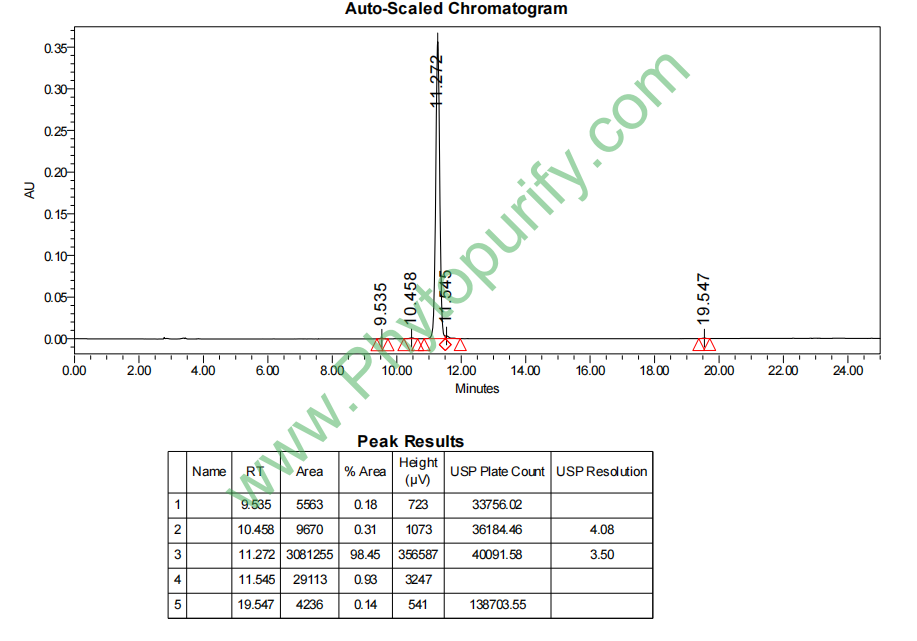
Purity: 95%~99%
Analysis Method: HPLC-DAD or/and HPLC-ELSD
Identification Method: Mass, NMR
Packing: Brown vial or HDPE plastic bottle
Storage: Store in a well closed container, protected from air and light. Put into refrigerate or freeze for long term storage.
Whenever possible, you should prepare and use solutions on the same day. However, if you need to make up stock solutions in advance, we recommend that you store the solution as aliquots in tightly sealed vials at -20℃. Generally, these will be useable for up to two weeks.
The product could be supplied from milligrams to grams
Inquire for bulk scale.
Description:
Curculigoside has potent antioxidant, anti-osteoporotic, immunomodulatory, and neuroprotective effects. Curculigoside can improve cognitive function in aged animals, possibly by decreasing the activity of AchE in the cerebra and inhibiting the expression of BACE1 in the hippocampus. Curculigoside exhibits potent inhibitory activity against matrix metalloproteinase-1 in cultured human skin fibroblasts, and increases the levels of ALP and Runx2 in osteoblasts under oxidative stress via anti-oxidative character.
References:
Stem Cells Dev. 2014 Jan 15;23(2):146-54.
Curculigoside improves osteogenesis of human amniotic fluid-derived stem cells.
Curculigoside, a phenolic glycoside, is the main active compound of Curculigo orchioides (Amaryllidaceae, rhizome). C. orchioides is a traditional Chinese herbal medicine and has been commonly used to treat orthopedic disorders and bone healing in Asia. This study evaluated the effect of Curculigoside on osteogenic differentiation of human amniotic fluid-derived stem cells (hAFSCs).
METHODS AND RESULTS:
The results showed that Curculigoside stimulated alkaline phosphatase activity and calcium deposition of hAFSCs during osteogenic differentiation in a dose-dependent manner (1-100 μg/mL), while the effects were reduced at the higher concentration of 200 μg/mL. From reverse transcriptase-polymerase chain reaction analysis, the osteogenic genes osteopontin (OPN) and Collagen I were upregulated with Curculigoside treatment (1-100 μg/mL). Concurrently, the ratio of osteoprotegerin (OPG) to receptor activator of nuclear factor kappa-B ligand (RANKL) was increased, indicating the inhibition of osteoclastogenesis by Curculigoside. Moreover, the role of Wnt/β-catenin signaling during Curculigoside treatment was revealed by the upregulation of β-catenin and Cyclin D1.
CONCLUSIONS:
In summary, Curculigoside improved osteogenesis and inhibited osteoclastogenesis of hAFSCs, suggesting its potential use to regulate hAFSC osteogenic differentiation for treating bone disorders.
J Ethnopharmacol. 2010 Oct 28;132(1):233-9.
Curculigoside attenuates human umbilical vein endothelial cell injury induced by H2O2.
Vessel endothelium injury caused by reactive oxygen species (ROS) including H(2)O(2) plays a critical role in the pathogenesis of cardiovascular disorders. Therefore, agents or antioxidants that can inhibit production of ROS has highly clinical values in cardiovascular therapy. Curculigoside is the major bioactive compounds present in Curculigo orchioides, and possess potent antioxidant properties against oxidative stress insults through undefined mechanism(s). The present study was designed to test the hypothesis that Curculigoside can inhibit H(2)O(2)-induced injury in human umbilical vein endothelial cells.
METHODS AND RESULTS:
Human umbilical vein endothelial cells (HUVECs) were treated with Curculigoside in the presence/absence of hydrogen peroxide (H(2)O(2)). The protective effects of Curculigoside OP-D against H(2)O(2) were evaluated. HUVECs incubated with 400 μM H(2)O(2) had significantly decreased the viability of endothelial cells, which was accompanied with apparent cells apoptosis, the activation of caspase-3 and the upregulation of p53 mRNA expression. In addition, H(2)O(2) treatment induced a marked increase of MDA, LDH content and in intracellular ROS, decreased the content of nitric oxide (NO) and GSH-Px activities in endothelial cells. However, pretreatment with 0.5.5,10 μM Curculigoside resulted in a significant recovery from H(2)O(2)-induced cell apoptosis. Also, it decreased other H(2)O(2)-induced damages in a concentration-dependent manner. Furthermore, pretreatment with Curculigoside decreased the activity of caspase-3 and p53 mRNA expression, which was known to play a key role in H(2)O(2)-induced cell apoptosis.
CONCLUSIONS:
The present study shows that Curculigoside can protect endothelial cells against oxidative injury induced by H(2)O(2), suggesting that this compound may constitute a promising intervention against cardiovascular disorders.
Arch Pharm Res. 2009 Oct;32(10):1433-9.
The effect of curculigoside on the expression of matrix metalloproteinase-1 in cultured human skin fibroblasts.
The dried rhizomes of Curculigo orchioides G. yielded two phenolic glycosides, Curculigoside (1), orcinol-beta-D-glucoside (4), and two cycloartane saponins, curculigosaponin G (2), curculigosaponin I (3). The structures were determined using spectroscopic methods.
METHODS AND RESULTS:
Among these isolates, compound 1 exhibited potent inhibitory activity against matrix metalloproteinase-1 in cultured human skin fibroblasts. In addition, it increased the level of Bcl-2 protein expression and decreased the level of Bax protein expression. Compound 4 was isolated from this plant for the first time.
J Pharm Pharmacol. 2013 Jul;65(7):1005-13.
Curculigoside promotes osteogenic differentiation of bone marrow stromal cells from ovariectomized rats.
Curculigoside, a natural compound isolated from the medicinal plant Curculigo orchioides has been reported to prevent bone loss in ovariectomized rats. However, the underlying molecular mechanisms are largely unknown. This study investigated the effects of Curculigoside on proliferation and osteogenic differentiation of bone marrow stromal cells (BMSCs).
METHODS AND RESULTS:
The toxicity, proliferation and osteogenic differentiation of BMSCs cultured with various concentrations (0 as control, 10, 100 and 500 μm) of Curculigoside were measured by viability assay, MTT analysis, alkaline phosphatase (ALP) activity assay, alizarin red staining and mineralization assay, real-time PCR analysis on osteogenic genes including ALP, type I collagen (Col I), osteocalcin (OCN) and osteoprotegerin (OPG), runt-related transcription factor 2 (Runx2), as well as OPG enzyme-linked immunosorbent assay. No significant cytotoxicity was observed for BMSCs after supplementation with Curculigoside. The proliferation of BMSCs was enhanced after administration of Curculigoside, especially 100 μm Curculigoside. Moreover, the osteogenic gene expression was significantly enhanced with 100 μm Curculigoside treatment. Importantly, Curculigoside significantly increased OPG secretion.
CONCLUSIONS:
The data indicate that Curculigoside could promote BMSC proliferation and induce osteogenic differentiation of BMSCs. The most profound response was observed with 100 μm Curculigoside. These findings may be valuable for understanding the mechanism of the effect of Curculigoside on bone, especially in relation to osteoporosis.
HPLC of Curculigoside
Storage conditions:Short-term storage at 2~8℃, long-term storage at -20 ~ -80℃
164.3700
.4268
.4262
6.5269
.5300
.1156
Low
73.6869
3.6646
Yes
No
No
No
No
No
0.0
Yes
Yes
Yes
Yes
In the vast field where traditional medicine and modern pharmacology intersect, natural products have always been an important source of new drug discovery and development due to their structural diversity and rich biological activity. Curculigoside, as a phenylpropanoid glycoside isolated from traditional medicinal plants, has attracted much attention in recent years due to its various pharmacological activities. Its CAS number is 85643-19-2, and it belongs to the genus Curcuma, especially Curculigo orchioides Gaertn.The main active saponin components in Xianmao. Xianmao is commonly used in traditional Chinese medicine theory to tonify kidney yang, strengthen muscles and bones, and dispel cold and dampness. Modern research provides scientific explanations for its traditional effects, revealing the significant potential of Xianmao glycoside in antioxidant, anti osteoporosis, anti depression, neuroprotective, and anti arthritis aspects. Of particular note is that its pleiotropic pharmacological effects are often closely related to regulating key cellular signaling pathways such as JAK/STAT/NF - κ B. This article aims to provide a systematic review of the chemical properties, plant sources, pharmacological activities, molecular mechanisms of action, pharmacological evaluation, and clinical application prospects of curcumide, in order to provide comprehensive academic references for the in-depth research and development of this compound.
The chemical name of Xianmao glycoside is (2R, 3S, 4S, 5R, 6S) -2- (hydroxymethyl) -6- [4- [(E) -3-hydroxypropan-1-en-1-yl] -2,6-dimethoxyphenoxy] oxane-3,4,5-triol, with a molecular formula of C22H26O11 and a molecular weight of 466.4390. Structurally speaking, Xianmao glycoside belongs to the phenylpropanoid glycoside class, and its structural features include a phenylpropanoid unit (connected to a methoxy substituted benzene ring through an acrylic side chain) and a glucose unit connected by an oxygen glycosidic bond. This unique structure is the material basis for its biological activity.
According to the pharmacological parameters, the physicochemical properties of the compound show that the calculated lipid water partition coefficient (LogP) is 0.4268, indicating that the compound has moderate lipophilicity and tends to be hydrophilic. The topological polar surface area (TPSA) is 164.3700 Å ², which is a relatively large value and reflects the presence of multiple hydrogen bond donors and acceptors (such as hydroxyl and sugar epoxy atoms) in the molecule, which affects its solubility and membrane permeability. The water solubility value is 6.5269 (usually measured in mg/mL or log mol/L, which should be considered good), indicating that quercetin has a certain solubility in water, which is beneficial for the development of its formulations and in vivo absorption. Overall, Xianmao glycoside belongs to the category of moderately polar compounds, and its glycoside structure endows it with good water solubility. However, the larger TPSA may also affect its transmembrane transport efficiency.
Xianmao glycoside mainly comes from plants of the genus Xianmao in the family Amaryllidaceae, among which Curculigo orchioides Gaertn.The root and stem content of Xianmao is the most abundant. This plant is widely distributed in tropical and subtropical regions of Asia, including China, India, Malaysia, and has long been used as a tonic herb in Ayurvedic medicine and traditional Chinese medicine.
Solvent extraction method is commonly used to extract syringin from plant materials. Methanol and ethanol water systems are commonly used extraction solvents because they can effectively dissolve quercetin and its related phenolic glycosides. In order to improve extraction efficiency, modern technologies such as ultrasound assisted extraction, microwave-assisted extraction, and pressurized liquid extraction have been applied. These methods destroy plant cell walls through physical means, accelerate solvent permeation and solute diffusion, thereby achieving higher extraction rates in a shorter period of time, while reducing solvent consumption and degradation of thermosensitive components.
The crude extract after extraction needs to undergo further separation and purification in order to obtain high-purity quercetin. The conventional purification process includes: preliminary enrichment using macroporous adsorption resins (such as AB-8, D101), followed by subdivision using silica gel column chromatography, reverse phase silica gel column chromatography (such as ODS-C18), and finally obtaining the monomer compounds through preparative high-performance liquid chromatography or recrystallization methods. The optimization of the process is usually evaluated based on the yield and purity of quercetin.
A large number of in vitro and in vivo studies have confirmed that quercetin has broad and significant pharmacological activities, covering multiple therapeutic fields.
Antioxidant damage This is one of the most fundamental and core activities of quercetin. In various oxidative stress cell models (such as H2O2 induced PC12 cells, endothelial cell injury models) and animal models (such as D-galactose-induced aging mice), curcumide can significantly enhance the activity of endogenous antioxidant enzymes such as superoxide dismutase (SOD), catalase (CAT), glutathione peroxidase (GPX), and reduce the level of lipid peroxidation product malondialdehyde (MDA). Its antioxidant efficacy can even be compared to some classic antioxidants.
anti-osteoporosis Xianmao glycoside has shown great potential in the prevention and treatment of osteoporosis. In the postmenopausal osteoporosis rat model induced by ovariectomy, administration of quercetin can effectively increase bone density, improve bone trabecular microstructure, and enhance bone biomechanical strength. Its function is related to promoting osteoblast differentiation and proliferation, inhibiting osteoclastogenesis and bone resorption activity.
Antidepressants and neuroprotection Xianmao glycoside exhibits good central nervous system activity. In a mouse depression model induced by chronic unpredictable mild stress (CUMS), quercetin can improve depressive like behavior in animals. Meanwhile, in experimental models of neurodegenerative diseases such as Alzheimer's disease and Parkinson's disease, quercetin can alleviate neuronal apoptosis, improve cognitive and motor function, and its neuroprotective effects are closely related to antioxidant, anti-inflammatory, and regulation of neurotrophic factors.
Anti arthritis Xianmao glycoside has a clear therapeutic effect on inflammatory joint diseases such as rheumatoid arthritis. In the rat arthritis model induced by Freund's complete adjuvant (CFA), quercetin can significantly reduce joint swelling, inflammatory cell infiltration, and cartilage damage. Its anti arthritis effect goes beyond simple anti-inflammatory measures and also involves regulating immune imbalances.
Other activities The study also suggests that quercetin has potential activities such as anti fatigue, immune enhancement, myocardial protection, and improvement of menopausal syndrome, reflecting its multi-target and multi pathway action characteristics.
The multiple pharmacological effects of Xianmao glycoside stem from its precise regulation of complex cellular signaling networks. The study of its mechanism of action has delved into the molecular and pathway levels.
The core pathway of antioxidant damage: Nrf2/ARE signaling system The key mechanism of Xianmao glycoside in combating oxidative damage is the activation of the nuclear factor E2 related factor 2 (Nrf2) signaling pathway. In the resting state, Nrf2 binds to its inhibitory protein Keap1 in the cytoplasm and is degraded by ubiquitination. Xianmao glycoside may modify the cysteine residue of Keap1, promoting the dissociation of Nrf2 from Keap1 and its transfer to the nucleus. In the nucleus, Nrf2 binds to antioxidant response elements (ARE), initiating the transcriptional expression of a series of downstream phase II detoxifying enzymes and antioxidant proteins, including Heme oxygenase-1 (HMOX1)、NAD (P) H: Quinone oxidoreductase 1 (NQO1)、Superoxide dismutase (SOD1, SOD2)、Catalase (CAT)and Glutathione peroxidase 1 (GPX1)Wait. The comprehensive activation of this system is the molecular basis for the enhancement of cellular antioxidant defense ability by quercetin.
Anti inflammatory and immune regulation: JAK/STAT and NF - κ B pathway In models involving inflammation such as anti arthritis and neuroprotection, the inhibitory effect of quercetin is significant. It can effectively inhibit the activation of the nuclear factor kappa B (NF - κ B) pathway induced by lipopolysaccharide (LPS) or inflammatory factors, prevent the degradation of I κ B α and the nuclear translocation of NF - κ B p65 subunit, thereby downregulating the expression of pro-inflammatory factors such as tumor necrosis factor - α (TNF - α), interleukin-1 β (IL-1 β), IL-6, etc. At the same time, research has confirmed that quercetin can inhibit the Janus kinase/signal transduction and transcriptional activator (JAK/STAT) signaling pathway, especially the levels of phosphorylated STAT1 and STAT3. The JAK/STAT and NF - κ B pathways are the core regulators of inflammation and immune response, and the dual inhibition of these two pathways by quercetin is the key to its powerful anti-inflammatory and immune regulatory effects.
Bone metabolism regulation: OPG/RANKL/RANK system and Wnt/β - catenin pathway In terms of anti osteoporosis, Xianmao glycoside inhibits osteoclast differentiation by regulating the "osteoprotegerin (OPG)/receptor activator of nuclear factor kappa B ligand (RANKL)/receptor activator of nuclear factor kappa B (RANK)" system. It promotes the expression of OPG in osteoblasts, inhibits RANKL, thereby blocking the binding of RANKL and RANK, and inhibits the differentiation of osteoclast precursors into mature osteoclasts. In addition, quercetin can activate the classical Wnt/β - catenin pathway, promote the expression of osteogenic related genes (such as Runx2), and directly stimulate osteoblast activity.
Neural protection related pathways In addition to antioxidant and anti-inflammatory mechanisms, the neuroprotective effects of quercetin also involve regulating brain-derived neurotrophic factor (BDNF) and its downstream pathways, inhibiting mitochondrial dependent apoptosis pathways (such as regulating the Bcl-2/Bax ratio, inhibiting caspase-3 activation), and regulating the cholinergic system.
According to the provided pharmacological parameters, Xianmao glycoside has demonstrated certain advantages and challenges in early drug development.
Advantage aspects Moderate molecular weight (466.44), in accordance with the rules of drug likeness. Good water solubility, conducive to making oral preparations. The lack of hERG inhibitory activity suggests a lower risk of cardiac toxicity. The Ames test result is 0.0, indicating that it has no mutagenicity and low genetic toxicity risk. These features lay the foundation for its security.
Challenge aspect The higher TPSA (164.37) and lower LogP values, combined with the evaluation of "blood-brain barrier: low", suggest that the ability of quercetin to cross biofilms (including intestinal absorption and blood-brain barrier) may be limited, and its oral bioavailability may not be high. This is related to the strong hydrophilicity of its glycoside structure.
The existing pharmacokinetic studies (mainly conducted in rats) partially confirm the above prediction. After oral administration, Xianmao glycoside is rapidly absorbed but its absolute bioavailability is not high, which may be due to first pass effects and/or limited intestinal permeability. It is widely distributed in the body, but its entry into brain tissue may be limited. In terms of metabolism, quercetin may undergo hydrolysis (deglycosylation) and further II binding reactions (such as glucuronidation and sulfation) under the action of gut microbiota and liver enzymes. The prototype drug and its metabolites are mainly excreted through the kidneys. To improve its bioavailability, dosage form improvement strategies such as making phospholipid complexes, nanoparticles, solid dispersions, or prodrug derivatives are worth exploring.
The multi-target and multifunctional properties of Xianmao glycoside provide broad application prospects for its prevention and treatment of various diseases.
However, pushing it from the laboratory to clinical practice still faces many challenges:First The existing pharmacokinetic data is not yet complete, especially the absorption, distribution, metabolism, and excretion processes in the human body need to be systematically studied.secondly Although short-term toxicity studies have shown good safety, comprehensive evaluation is needed for long-term chronic and reproductive toxicity.Again Its low bioavailability is a key bottleneck restricting its efficacy, and it urgently needs to be optimized through new formulation technologies or structural modifications.finally It is necessary to design and conduct rigorous randomized controlled clinical trials to confirm its effectiveness and safety in humans.
Future research should focus on: ① using modern technology to deeply elucidate its direct interaction patterns with key targets such as Keap1, JAK, RANK, etc; ② Develop efficient and stable new delivery systems; ③ Explore the synergistic effects of its combination application with other drugs; ④ Promote preclinical and clinical research that complies with international standards.
Xianmao glycoside, as the core active ingredient of traditional Chinese medicine Xianmao, is a treasure discovered by modern pharmacy from traditional wisdom. It has a unique chemical structure and significant pharmacological activities such as antioxidant, anti osteoporosis, anti depression, neuroprotective, and anti arthritis. Research on its mechanism of action reveals that its pleiotropy stems from precise regulation of key signaling pathways such as Nrf2/ARE, JAK/STAT, NF - κ B, OPG/RANKL/RANK, etc. Despite facing challenges in terms of bioavailability and other aspects in terms of drug efficacy, its good safety and multi-target characteristics make it highly promising for the prevention and treatment of complex chronic diseases such as osteoporosis, neurodegenerative diseases, and arthritis. With the continuous deepening of research on the pharmacological substance basis, mechanism of action, and pharmaceutical improvement of Xianmao glycoside, it is expected to be developed into a new generation of multifunctional therapeutic drugs derived from nature, contributing to the cause of human health.
