


Product name: Cinnamic acid
Synonym name: trans-3-Phenylacrylic acid
Catalogue No.: BP0364
Cas No.: 140-10-3
Formula: C9H8O2
Mol Weight: 148.161
Botanical Source: Cinnamomum cassia Presl
Physical Description:
Type of Compound: Phenylpropanoids
Purity: 95%~99%
Analysis Method: HPLC-DAD or/and HPLC-ELSD
Identification Method: Mass, NMR
Packing: Brown vial or HDPE plastic bottle
Storage: Store in a well closed container, protected from air and light. Put into refrigerate or freeze for long term storage.
Whenever possible, you should prepare and use solutions on the same day. However, if you need to make up stock solutions in advance, we recommend that you store the solution as aliquots in tightly sealed vials at -20℃. Generally, these will be useable for up to two weeks.
The product could be supplied from milligrams to grams
Inquire for bulk scale.
Chengdu Biopurify Phytochemicals Ltd. is a leading company in the research, development, manufacture and marketing of High Quality Phytochemicals and Extracts(especially Active Ingredients from Traditional Chinese Medicine,TCM), Natural Active Pharmaceutical Ingredients worldwide.
The main services:
A. Supply active ingredients and reference standards of TCM, from mgs to kgs scale
B. Custom extraction and purification, target Herb Active Ingredients
C. Custom synthesis and semi-synthesis for Natural Active Ingredients
D. CR(contract research), CM(contract manufacture) and PD(process development) services from lab scale, pilot scale to commercial scale(GMP is also available)
E. TCM compounds library for drug screen,more than 3000 compounds available, many of them are rare and unique.
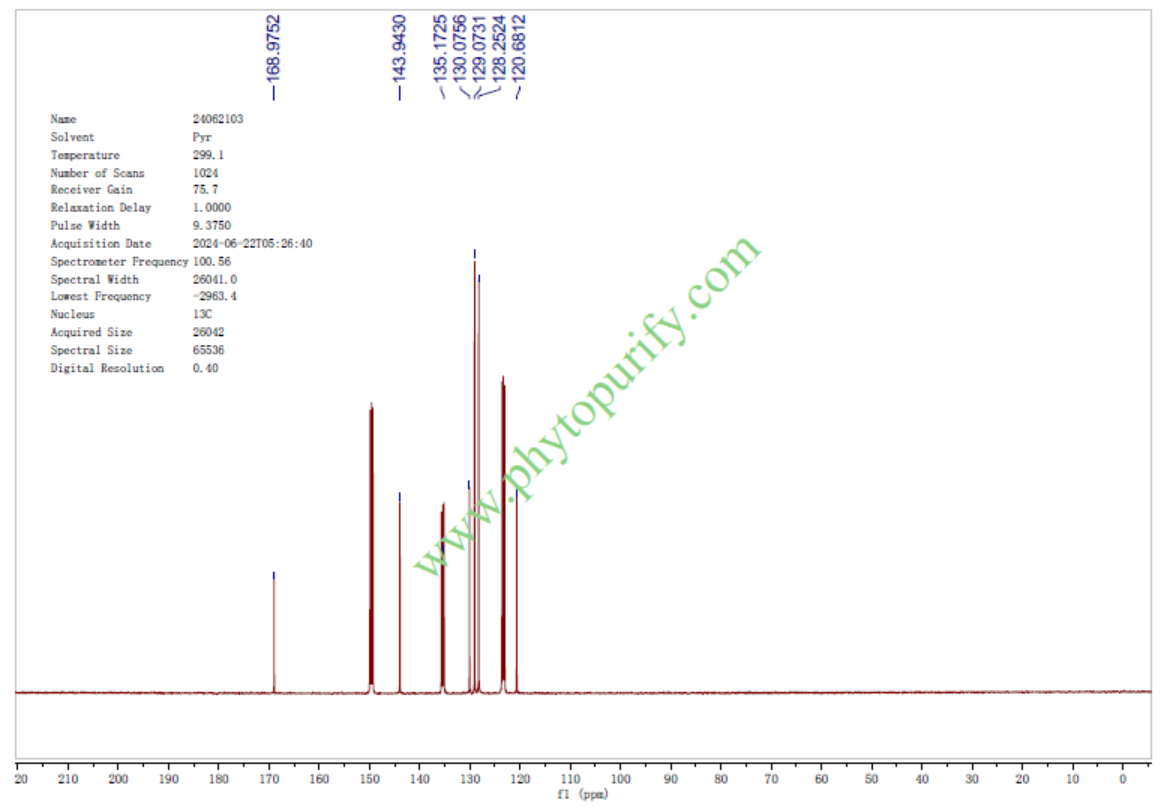
NMR of Cinnamic acid
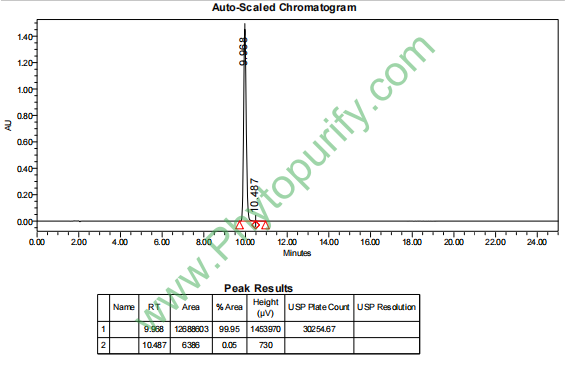
HPLC of Cinnamic acid
Storage conditions:Short-term storage at 2~8℃, long-term storage at -20 ~ -80℃
Cinnamic acid (CAS number: 140-10-3) is a natural organic acid widely present in various plants and belongs to the aromatic carboxylic acid class. As one of the main components of cinnamon plants and various other spice plants, cinnamic acid has attracted widespread attention in the field of natural product pharmacology in recent years due to its unique chemical structure and diverse biological activities. Especially in cancer intervention and antioxidant damage, cinnamic acid shows significant potential, involving inhibitory effects on multiple tumor cell lines and regulation of multiple antioxidant related signaling pathways. This article will systematically review the chemical structure and physicochemical properties of cinnamic acid, plant sources and extraction methods, pharmacological activity and mechanism of action, drug evaluation and pharmacokinetic characteristics, and explore its clinical application prospects and future development directions based on current research progress.
The chemical formula of cinnamic acid is C9H8O2, with a molecular weight of 148.1600. Its structure consists of a benzene ring and a carboxyl group connected by an unsaturated carbon chain, specifically 3-phenylacrylic acid (C6H5-CH=CH-COOH). This structure endows cinnamic acid with unique chemical and biological activity properties. The LogP value of cinnamic acid is 2.13, indicating its moderate lipid solubility, which is beneficial for membrane penetration and bioavailability. The polar surface area (TPSA) is 37.3 Å ², the number of hydrogen bond acceptors is 3, and the water solubility is low (0.4 mg/mL), indicating limited solubility in aqueous phase, but moderate lipid solubility, which is beneficial for in vivo distribution.
In the molecular structure of cinnamic acid, the conjugated structure of the benzene ring and unsaturated carboxyl chain endows it with strong free radical scavenging ability and antioxidant properties. It has good chemical stability and can withstand conventional extraction and storage conditions. Cinnamic acid has a high blood-brain barrier penetration ability (BBB: High), indicating its potential application value in central nervous system diseases.
Cinnamic acid is widely present in various plants, especially in the bark, leaves, and roots of Cinnamomum spp. In addition, cloves, licorice, fennel, and various spice plants also contain a certain amount of cinnamic acid. Its natural form is mostly in the free state or in combination with glycosides and esters.
The traditional extraction methods mainly include solvent extraction, distillation, and supercritical fluid extraction. Commonly used solvents include polar solvents such as ethanol, methanol, and ethyl acetate, which can effectively extract cinnamic acid and its derivatives. In recent years, the application of ultrasound assisted extraction and microwave-assisted extraction technologies has improved extraction efficiency and purity, reduced solvent usage and time costs. In addition, high-performance liquid chromatography (HPLC) and gas chromatography-mass spectrometry (GC-MS) techniques are widely used for qualitative and quantitative analysis of cinnamic acid.
Cinnamic acid exhibits inhibitory effects in various tumor cell lines. Research has shown that its IC50 values range from 1-4.5 mM for glioblastoma, melanoma, prostate cancer, and lung cancer cells, indicating that it has certain cytotoxicity. Cinnamic acid exerts anticancer effects by inducing apoptosis of tumor cells, inhibiting cell proliferation and migration. Partial in vitro and in vivo experiments have shown that cinnamic acid can regulate tumor related signaling pathways, inhibit tumor angiogenesis, and enhance sensitivity to chemotherapy drugs.
Cinnamic acid has significant antioxidant capacity, which can eliminate free radicals and alleviate cell damage caused by oxidative stress. Its antioxidant effect is mainly achieved by activating the intracellular antioxidant enzyme system, including superoxide dismutase (SOD), catalase (CAT), glutathione peroxidase (GPX), etc. In addition, cinnamic acid can upregulate the NFE2L2/NRF2 signaling pathway, enhance cellular antioxidant defense, and alleviate the progression of oxidative damage related diseases. In terms of anti-inflammatory effects, cinnamic acid exerts a protective effect by inhibiting the release of inflammatory mediators and reducing the expression of inflammatory factors.
In addition to anti-cancer and antioxidant properties, cinnamic acid also exhibits multiple biological activities such as antibacterial, antiviral, hypoglycemic, and neuroprotective properties. Its ability to penetrate the central nervous system has attracted attention for its potential applications in neurodegenerative diseases.
The biological activity of cinnamic acid is closely related to its regulation of multiple signaling pathways and molecular targets. In terms of antioxidant damage, cinnamic acid activates NFE2L2/NRF2 transcription factors, promotes the expression of downstream antioxidant enzyme genes such as SOD1, SOD2, CAT, GPX1, and HMOX1, enhances cellular antioxidant capacity, and reduces cellular damage caused by oxidative stress.
In the anti-tumor mechanism, cinnamic acid regulates the cell cycle, induces apoptosis, and inhibits tumor cell migration through multi-target action. Its targets include regulating Bcl-2 family proteins, activating caspase enzyme system, inhibiting NF - κ B signaling pathway, and inhibiting tumor associated angiogenic factors. Some studies have also shown that cinnamic acid can affect the tumor microenvironment, regulate immune responses, and enhance anti-tumor immune effects.
In addition, cinnamic acid has an inhibitory effect on the expression of inflammatory factors such as TNF - α and IL-6, reducing chronic inflammation and indirectly exerting anti-cancer and tissue protective effects.
The molecular weight of cinnamic acid is 148.16, which meets the requirement of Lipinski rule that the molecular weight should be less than 500. Its LogP value is 2.13, indicating moderate lipid solubility, which is beneficial for oral absorption and cell membrane penetration. The TPSA is 37.3, and the low polarity surface area helps to pass through the blood-brain barrier, supporting its potential application in central nervous system diseases.
Toxicological evaluation shows that cinnamic acid has low acute toxicity, with an LD50 of approximately 2500 mg/kg. There is no obvious evidence of hepatotoxicity or cardiotoxicity, and the hERG channel inhibition and Ames mutagenicity tests are negative, indicating its high safety.
In terms of pharmacokinetics, cinnamic acid has good oral absorption, but its bioavailability is limited due to its low water solubility. Its metabolism in the body is mainly carried out through hydroxylation and binding reactions by the liver enzyme system, and the water solubility of the metabolites is enhanced, which is conducive to excretion. The high blood-brain barrier permeability enables it to have a good distribution in the central nervous system. In the future, through drug formulation improvement and structural modification, it is expected to further enhance its pharmacokinetic performance.
Cinnamic acid, as a natural product, has shown great potential for clinical applications due to its multi-target and multi mechanism biological activities. Its application in cancer intervention is particularly prominent, especially its inhibitory effect on malignant tumors such as glioblastoma, melanoma, prostate cancer, and lung cancer, providing important clues for the development of new anti-tumor drugs.
In addition, the potential of cinnamic acid in antioxidant damage and neuroprotection makes it a powerful candidate molecule for treating neurodegenerative diseases, chronic inflammation, and metabolic syndrome. Its excellent safety and blood-brain barrier penetration ability lay the foundation for drug development in central nervous system diseases.
Future research should focus on optimizing the structure, improving dosage forms, and implementing combination therapy strategies of cinnamic acid to enhance its bioavailability and targeting. At the same time, in-depth analysis of its molecular mechanism, systematic preclinical and clinical research, verification of its efficacy and safety, will provide a solid basis for its clinical translation.
Cinnamic acid, as a natural product with rich pharmacological activity, occupies an important position in the field of natural product pharmacology due to its anti-cancer, antioxidant, and multiple biological effects. Its good pharmacological parameters and safety provide favorable conditions for subsequent drug development and clinical application. In the future, through interdisciplinary collaboration, combined with modern medicinal chemistry, molecular biology, and clinical medicine methods, cinnamic acid is expected to become a new drug for treating various diseases, especially cancer and neurological disorders. Systematic and in-depth research will drive cinnamic acid from the laboratory to clinical practice, benefiting a wide range of patients.
