| Catalog No | Package | Original Price | Price | Inventory | Quantity | Operating |
|---|---|---|---|---|---|---|
| BP0934-100mg | 100mg | $30.00 | Sign in |
|


Synonym name: DL-Menthol; 89-78-1
Catalogue No.: BP0934
Cas No.: 1490-04-6
Formula: C10H20O
Mol Weight: 156.269
Botanical Source: Present in large amts. in Mentha piperita (peppermint) oil, also in other Mentha spp., Artemisia spp., Glechoma hederacea and others
Purity: 95%~99%
Analysis Method: HPLC-DAD or/and HPLC-ELSD
Identification Method: Mass, NMR
Packing: Brown vial or HDPE plastic bottle
Can be supplied from milligrams to grams.
For Reference Standard and R&D, Not for Human Use Directly.
Inquire for bulk scale.
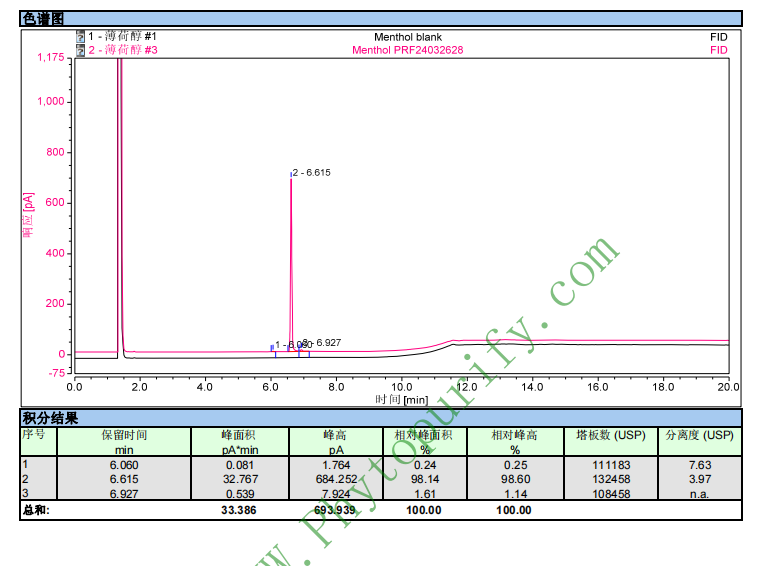
HPLC of Menthol
Storage conditions:Short-term storage at 2~8℃, long-term storage at -20 ~ -80℃
Menthol, also known as p-mentho-3-ol and CAS number 1490-04-6, is a natural monoterpene compound widely found in plants of the peppermint genus. As the main volatile component of peppermint oil, menthol has long held an important position in the pharmaceutical, food, cosmetics, and spice industries due to its unique cooling sensation and diverse biological activities. In recent years, with the deepening development of natural product pharmacology, the multiple pharmacological effects of menthol, such as analgesia, anti-inflammatory, antimicrobial, and neural regulation, have gradually been revealed, especially in the field of pain management, showing significant potential.
The purpose of this review is to systematically summarize the chemical structure and physicochemical properties, plant sources, and extraction methods of menthol, with a focus on its pharmacological activity and mechanism of action. Combined with drug parameters and pharmacokinetic characteristics, it explores its clinical application prospects and development trends, providing theoretical basis and reference for research and application in related fields.
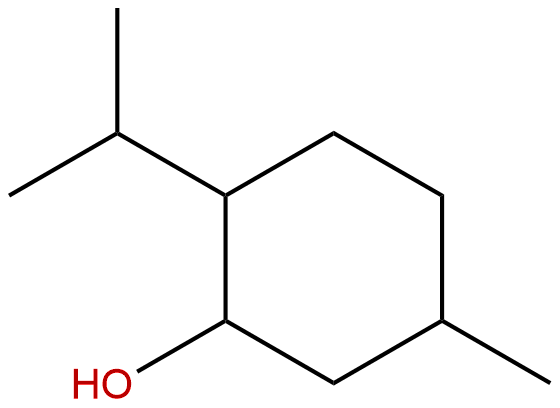
Menthol is a secondary alcohol belonging to the menthone monoterpene class, with a molecular formula of C10H20O and a molecular weight of 156.2690. Structurally, menthol is one of the enantiomers of 5-methyl-2- (prop-2-yl) cyclohexanol, with a cyclohexane skeleton and a hydroxyl functional group. The presence of its enantiomers endows menthol with unique stereochemical properties, directly affecting its biological activity and sensory characteristics.
In terms of physical and chemical properties, menthol exhibits high lipid solubility (LogP=3.3014), which makes it easy to penetrate lipid membranes, especially the blood-brain barrier (BBB has high permeability), which is beneficial for its role in the central nervous system. Its polar surface area (TPSA) is 20.2300, indicating moderate molecular polarity and a certain degree of water solubility (0.5830 mg/mL), but overall it is mainly hydrophobic. Menthol has no significant hERG channel inhibitory effect and the Ames mutagenicity test result is negative, indicating its high safety and suitability for further drug development.
Menthol is mainly found in plants of the mint genus, particularly represented by Mentha piperita and Mentha spicata. Peppermint plants are widely distributed in temperate regions and have become the main natural source of menthol due to their strong adaptability and easy cultivation.
Traditional extraction methods include steam distillation and organic solvent extraction. Steam distillation is the most commonly used extraction method in industry, which can effectively separate volatile oils and obtain peppermint oil containing menthol. In recent years, supercritical CO2 extraction technology has been widely used due to its high efficiency and environmental friendliness. It can extract high-purity menthol at lower temperatures, avoiding the degradation of thermosensitive components. In addition, modern technologies such as microwave-assisted extraction and enzyme assisted extraction are gradually being developed to improve extraction efficiency and product quality.
After extraction, menthol is usually purified through processes such as distillation and crystallization to ensure its chemical purity and biological activity, laying the foundation for subsequent pharmacological research and applications.
Menthol has rich pharmacological activities, covering multiple aspects such as analgesia, anti-inflammatory, antimicrobial, antispasmodic, and neural regulation, especially in the field of analgesia where research is most in-depth.
Menthol exerts analgesic effects through a multi-target mechanism. Its regulatory effect on TRPV1 (transient receptor potential vanillic acid type 1) and TRPA1 channels is particularly significant. TRPV1 is a heat sensitive ion channel that participates in the transmission of pain signals. Menthol activates or regulates this channel to induce cold sensation and inhibit pain transmission. The TRPA1 channel is also involved in the perception of inflammatory and neuropathic pain, and the regulation of it by menthol can help alleviate chronic pain.
In addition, menthol also affects the endogenous opioid receptor system (OPRM1, OPRD1, OPRK1), enhancing the activity of opioid analgesic pathways. Its regulation of CNR1 (cannabinoid receptor 1) and dopamine receptor DRD2 further regulates pain perception and emotional responses in the central nervous system. The inhibitory effect of menthol on cyclooxygenase (PTGS1, PTGS2) reduces the production of inflammatory mediators, assists in pain relief and anti-inflammatory effects.
Menthol exerts anti-inflammatory effects by inhibiting the synthesis and release of inflammatory mediators. Its inhibition of PTGS1 and PTGS2 reduces the production of prostaglandins and lowers the inflammatory response. Experimental studies have shown that menthol can alleviate tissue inflammation, edema, and cell infiltration, and has potential anti-inflammatory therapeutic value.
Menthol exhibits inhibitory effects on various bacteria and fungi, particularly effective against oral pathogenic bacteria and skin infection strains. Its antibacterial mechanism may be related to the disruption of microbial cell membrane integrity and interference with metabolic processes. In addition, menthol also has anti spasmodic and sedative effects, which may be achieved by regulating neurotransmitter release and ion channel function.
The multi-target mechanism of action of menthol is the basis of its pharmacological activity, mainly involving the following key targets:
Through the synergistic effect of multiple targets mentioned above, menthol can achieve multidimensional analgesic and anti-inflammatory effects with minimal side effects, demonstrating good potential for drug development.
The pharmacological parameters of menthol indicate that it has good potential for drug development. The molecular weight of 156.2690 conforms to Lipinski's rule, and the LogP value of 3.3014 indicates moderate lipid solubility, which is beneficial for membrane penetration and in vivo distribution. The TPSA is 20.2300, which supports its good cell membrane permeability and oral bioavailability.
Although its water solubility is limited (0.5830 mg/mL), its solubility and bioavailability can be improved through formulation technology. Menthol has high blood-brain barrier permeability and is suitable for the treatment of central nervous system diseases.
In terms of safety, menthol has no hERG channel inhibitory effect and reduces the risk of cardiac toxicity; The Ames test is negative, indicating no genetic toxicity and suitable for long-term use.
Pharmacokinetic studies have shown that menthol is rapidly absorbed and widely distributed in the body after oral administration. Metabolism is mainly carried out through the liver enzyme system, generating various metabolites that are ultimately excreted through the kidneys. Its half-life is moderate, supporting dosage design for daily medication.
Menthol, with its unique analgesic and anti-inflammatory activities, has been widely used in topical analgesics, oral care products, and respiratory medications. In the future, with a deeper understanding of its molecular mechanism and advances in formulation technology, menthol is expected to achieve breakthroughs in the following areas:
Future research should focus on the pharmacological optimization, toxicological evaluation, and clinical trial validation of menthol, promoting its transition from traditional applications to modern drugs.
Menthol, as a natural monoterpene alcohol, has shown extensive potential for application due to its multi-target and multi mechanism pharmacological activities. Its good pharmacological parameters and safety provide a solid foundation for drug development. With the continuous advancement of modern pharmacology and pharmaceutical technology, menthol is expected to play a greater role in pain management and related disease treatment, becoming an important model for natural product drug research. Future systematic research and clinical validation will further promote the scientific application and industrialization of menthol.
