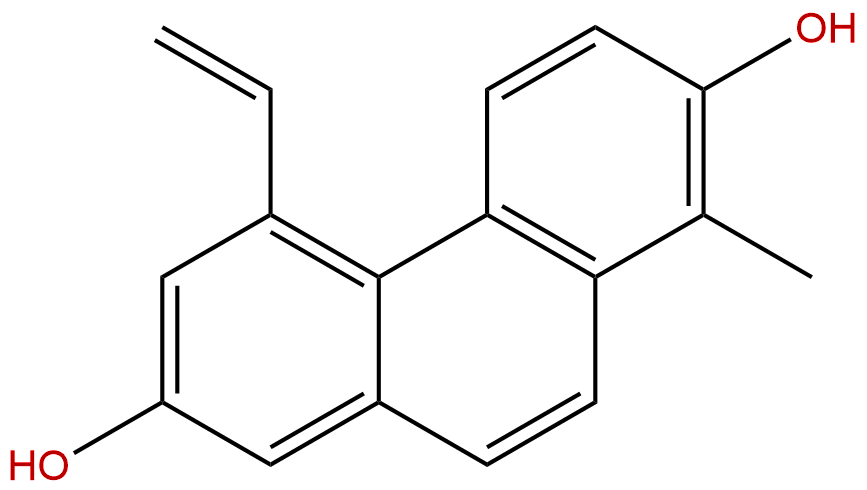


Product name: Dehydroeffusol
Synonym name:
Catalogue No.: BP3615
Cas No.: 137319-34-7
Formula: C17H14O2
Mol Weight: 250.297
Botanical Source:
Physical Description:
Type of Compound: Phenols
Purity: 95%~99%
Analysis Method: HPLC-DAD or/and HPLC-ELSD
Identification Method: Mass, NMR
Packing: Brown vial or HDPE plastic bottle
The product could be supplied from milligrams to grams. Inquire for bulk scale.
We provide solution to improve the water-solubility of compounds, thereby facilitating the variety of activity tests and clinic uses.
For Reference Standard and R&D, Not for Human Use Directly.
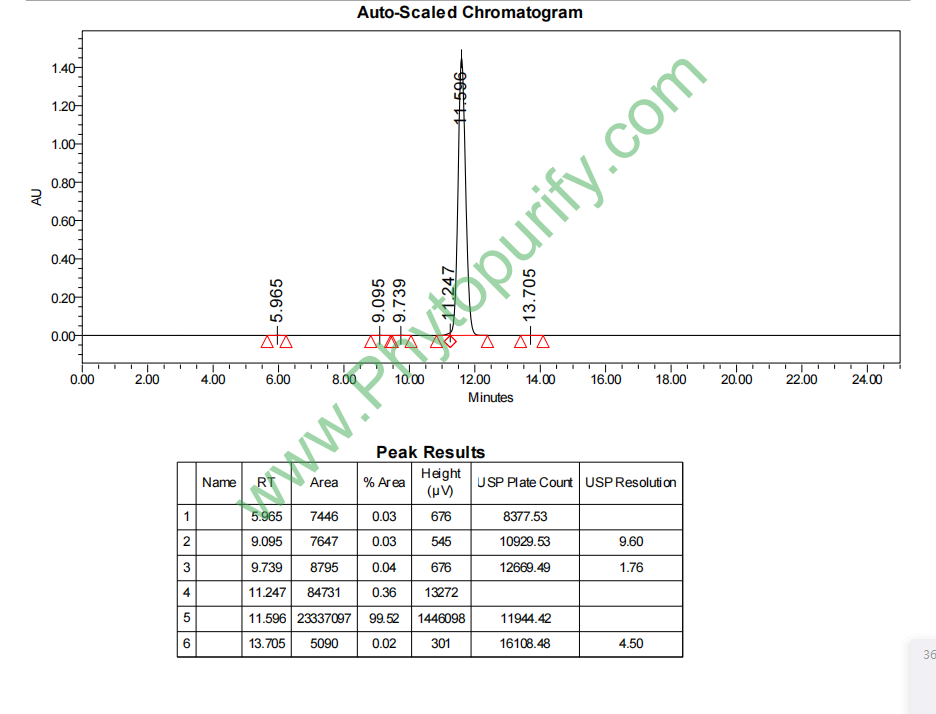
HPLC of Dehydroeffusol
Storage conditions:Short-term storage at 2~8℃, long-term storage at -20 ~ -80℃
40.4600
3.9912
3.9873
.0124
5.5201
14.9575
High
91.7042
2.6213
No
Yes
Yes
No
Yes
Yes
1.2
Yes
No
Yes
Yes
Dehydroeffusol (CAS number: 137319-34-7) is a traditional medicinal plant derived from rush(Juncus effusus)Separated from the middle Phenanthrene compounds Its molecular formula is C ₁₇ H ₁₄ O ₂, and its molecular weight is 250.2970 g/mol. As one of the hot molecules in the study of natural product chemistry and pharmacology, dehydroepidol is due to its Diverse biological activities And it has attracted much attention. Existing research has revealed that this compound not only has significant Anti gastric cancer cell activity——By inducing endoplasmic reticulum stress and selectively inhibiting tumor growth through apoptosis, it also demonstrates Anti anxiety, sedative, antispasmodic Waiting for central nervous system related effects. What is particularly noteworthy is that it antimicrobial(Especially significantly enhanced activity after exposure to UV-A radiation) and antiviral The field of targeting HIV related proteins has also shown potential value. The characteristic of "one medicine with multiple effects" makes it a model for discovering modern medicines from traditional herbs. This article will provide a systematic interpretation of this natural small molecule from its chemical essence, plant origin, multi-target pharmacological mechanism, potential for medicinal properties, and future prospects.
Dihydrophenol belongs to Phenanthrene derivatives Its core structure is composed of three benzene rings (phenanthrene nucleus) fused in an angular manner. From the SMILES expression (C=Cc1cc (O) cc2ccc3c (C) c (O) ccc3c12), it can be inferred that its structure contains two phenolic hydroxyl groups (- OH) and one vinyl side chain (- CH=CH ₂). This structure endows it with typical phenolic compound characteristics, such as certain Hydrophilicity and hydrogen bond donor ability。
The key physicochemical and pharmacological parameters are as follows:
- Molecular weight (MW):250.30 g/mol, Far below 500 Da, it meets the standards for small molecule drugs.
- Lipid water partition coefficient (LogP/LogD): 3.99 and 3.99 respectively, indicating that the compound Strong lipid solubility It tends to be distributed in lipid environments or cell membranes. This is beneficial for its penetration through the cell membrane, but it may also affect its water solubility.
- Water solubility Only 0.0124 mg/mL, belonging to Insoluble compound This is the key challenge that its subsequent formulation development needs to overcome.
- Polarized surface area (TPSA)40.46 Å ², low value, usually indicates good Membrane permeability。
- Penetration data The permeability of Caco-2 cells is 14.96 × 10 ⁻⁶ cm/s, and the Peff value is 5.52, both indicating that it has Good intestinal absorption potential BBB permeability is marked as' high ', implying its potential Penetrating the blood-brain barrier This is consistent with its reported central activities such as anti anxiety and sedation.
- Plasma protein binding rate (PPB)As high as 91.70%, it means that most of it binds to proteins in the blood, which may affect its free drug concentration and efficacy.
These physical and chemical properties together outline that hydrogen ethylphenol is a High lipid solubility, low water solubility, high membrane permeability, and may enter the brain The basic outline of natural small molecules.
The plant source of dehydrophenol is rush(Juncus effusus L.), Also known as rush grass or water rush grass, it is a perennial herbaceous plant in the rush grass family. This plant is widely distributed in wetlands, riverbanks, and swamp environments around the world.
In the traditional medical system, the application of lampshade has a long history:
- Traditional Chinese Medicine Its dried stem marrow is used as medicine and is called "Lamp Heart Grass". It has a sweet, light, and slightly cold nature and is suitable for the heart, lungs, and small intestine meridians. The main traditional effects are Clearing the heart, reducing internal heat, diuresis, and promoting lymphatic circulation It is commonly used to treat symptoms such as restlessness, insomnia, mouth and tongue sores, difficulty urinating, and pain from dribbling. The record of "clearing the mind and eliminating annoyance" coincides with modern research finding that dehydroepidol has anti anxiety and sedative effects.
- Other traditional medicine In some folk therapies, lampshade is also used to treat fever, inflammation, and trauma.
Modern plant chemistry research has isolated and identified various phenanthrene, dihydrophenanthrene, and 9,10-dihydrophenanthrene compounds, including dehydrosophorophenol, from Lampherb, which are considered the material basis of its pharmacological activity. The transition from traditional "clearing heart fire" to modern scientific discoveries of "anti anxiety" and "anti-tumor" reflects the inheritance and sublimation from traditional experience to modern pharmacological interpretation.
Dihydrofenapyr exhibits remarkable multi-target and multi pathway pharmacological activities, mainly covering anti-tumor, antiviral, central nervous system regulation, and light enhanced antibacterial aspects.
The existing description clearly states that dehydrophenol can Inhibition of gastric cancer cell growth and tumorigenicity The core mechanism lies in Selective induction of tumor suppressive endoplasmic reticulum stress and moderate apoptosis。
- Endoplasmic reticulum stress The endoplasmic reticulum is a crucial site for protein synthesis, folding, and modification within cells. When cells are stimulated by certain substances, such as dehydrophenol, it can cause unfolded or misfolded proteins to accumulate in the endoplasmic reticulum cavity, triggering "endoplasmic reticulum stress". Moderate and sustained endoplasmic reticulum stress can activate downstream apoptotic pathways such as CHOP and Caspase-12.
- Selective induction The study emphasizes that its induced stress is "tumor suppressive" and "selective", suggesting that it has lower toxicity to normal cells (consistent with the description of "very low toxicity"), but has specific killing effects on cancer cells. This selectivity may stem from the fact that cancer cells themselves are at a higher baseline stress level (such as rapid proliferation leading to a high protein synthesis load), making them more sensitive to further endoplasmic reticulum stress.
The target information provided by the database (CCR5, CXCR4, HIV1-IN, NEF, TAT) clearly points to it Anti HIV virus Potential mechanisms.
- CCR5 and CXCR4 These are the two main types of HIV-1 virus invasion into host macrophages/T lymphocytes Auxiliary receptor The gp120 protein on the surface of the virus first binds to CD4, and then binds to CCR5 or CXCR4, thereby mediating the fusion of the virus with the cell membrane. If dehydrophenol can antagonize these two receptors, it may The first step in blocking the entry of viruses into cells It belongs to the category of entering inhibitors.
- HIV1-IN (integrase)After reverse transcription of viral RNA into DNA, integrase is needed to insert it into the host genome. Inhibiting integrase can prevent the virus from establishing permanent infection.
- NEF (Negative Regulating Factor) and TAT (Trans Activating Factor)These two are the key to HIV Regulating proteins NEF promotes virus release and infectivity by downregulating molecules such as CD4; TAT is a powerful activator of viral gene transcription. Interfering with their functions can inhibit virus replication and transmission.
Therefore, dehydrophenol may pass through Multi target synergistic effect(blocking entry, inhibiting integration, interfering with regulation) play an anti HIV effect, which provides clues for the development of new multi target anti AIDS drugs.
its Anti anxiety and sedation Characteristics may be related to regulating the GABAergic system or other neurotransmitter systems. Considering its high BBB penetration, the application of this compound in the treatment of central nervous system diseases such as anxiety and insomnia is worth exploring.
This is a very unique property. Dehydrophenol itself has antibacterial activity, but Under ultraviolet A (UVA) irradiation, its minimum inhibitory concentration (MIC) against methicillin-resistant Staphylococcus aureus (MRSA), sensitive Staphylococcus aureus, and Candida albicans can be reduced by 16 times This suggests that it may serve as a photosensitizer Under light exposure, photochemical reactions (such as the production of reactive oxygen species) occur, significantly enhancing the killing effect on pathogenic microorganisms. This provides candidate molecules for the development of novel photodynamic antibacterial therapies.
Based on the provided pharmacological parameters and combined with classical methods Lipinski's Five Rules(Rule of Five, used for preliminary evaluation of the pharmacological properties of orally active small molecules), we evaluated the potential for drug development of dehydrofenapyr:
Lipinski Rule Compliance:
Advantageous drug characteristics:
Main pharmaceutical challenges and risks:
Comprehensive Assessment: Dehydrophenol in Characteristics of excellent lead compounds in terms of molecular size, lipophilicity, and permeability The prospect of oral absorption is promising. However, it Serious solubility issues, especially potential genetic toxicity and other organ toxicity This constitutes a significant obstacle to its conversion into drugs. In subsequent development, comprehensive preclinical toxicology studies must be conducted and structural modifications explored to reduce toxicity while retaining activity.
At present, research on dehydrophenol is still in progress Preclinical stage Mainly focused on activity discovery, preliminary mechanism exploration, and compound separation and purification. Its multi-target and multi activity characteristics are both opportunities and challenges.
Future research focus and direction:
1. Deepening mechanism research In particular, the specific signaling pathway of "selective endoplasmic reticulum stress" in anti-tumor treatment, as well as the interaction strength and molecular docking mode of various anti HIV targets (CCR5/CXCR4/HIV1-IN, etc.), need to be further validated by biochemical and cellular experiments.
2. Research on Structural Optimization and Structure Activity Relationship (SAR)To address the issues of poor water solubility and toxicity (especially genetic toxicity)Reasonable drug chemical modification(such as introducing polar groups, modifying phenolic hydroxyl groups, and modifying side chains), aimed at improving solubility, reducing toxicity, while retaining or enhancing core activity. Exploring the chemical basis of its photosensitive properties can provide ideas for designing novel photodynamic drugs.
3. Formulation development Given its insolubility, developing advanced drug delivery systems (such as liposomes, micelles, solid dispersions, cyclodextrin inclusion complexes) is a key step in promoting its application.
4. Systematic Toxicological Evaluation It is necessary to conduct GLP toxicology studies that comply with regulations, thoroughly clarify the risks and mechanisms of genetic toxicity, phototoxicity, hepatotoxicity, and sensitization, which is the threshold for determining whether it can enter the next stage of development.
5. Exploration of combination therapy Based on its multi-target characteristics, exploring its combined application with existing anti-tumor drugs or antiviral drugs may result in synergistic effects, reducing their respective dosages and toxic side effects.
Application Prospects:
If the above challenges are successfully addressed, dehydroepidol is expected to be developed into a novel drug or adjuvant therapy in the following areas:
- Anti tumor field As a selective inducer of endoplasmic reticulum stress Candidate drugs for anti gastric cancer Or combined with other therapies.
- Antiviral field As a novel multi-target approach Lead compounds for HIV resistance。
- In the field of central nervous system: Developed as Natural source anti anxiety or sedative drugs。
- External antibacterial field Develop a treatment for skin and mucosal antibiotic resistant bacterial infections (such as MRSA) using its light enhancing activity Local photodynamic therapy formulation。
In summary, dehydroepidol, as a natural small molecule derived from traditional herbs, demonstrates the enormous potential of modern drug discovery with its unique multiple biological activities and clear targets of action. However, the road from natural lead compounds to safe and effective drugs is still long, and interdisciplinary researchers need to work together through continuous scientific exploration and technological breakthroughs to ultimately achieve its value transformation from laboratory to clinical practice.
