Effusol: A Comprehensive Study of Multi Target Natural Phenolic Compounds Emerging from Lampweed
1. Overview
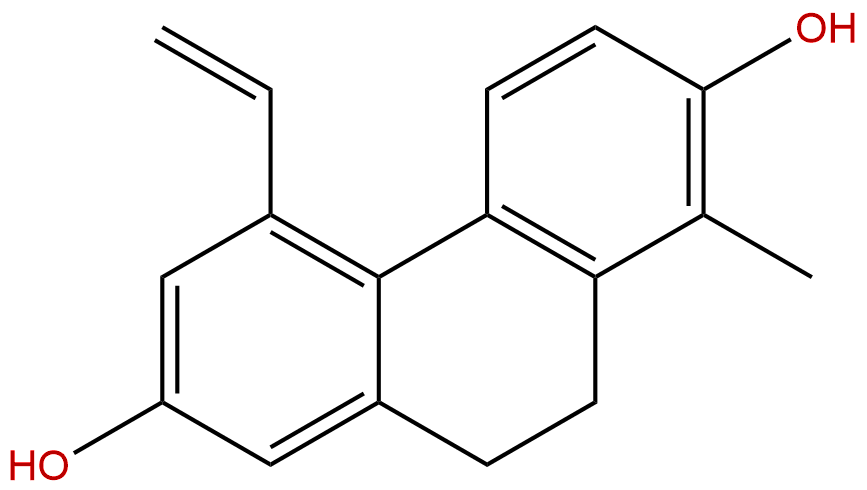
Effusol, chemical name based on its plant derived scientific name Juncus effusus It is a natural phenolic compound isolated from the traditional medicinal plant Common Rush. Its CAS number is 73166-28-6, molecular formula is C17H16O2, and molecular weight is 252.3130 g/mol. As a derivative of dibenzofuran, ephenols have received continuous attention from natural product pharmaceutical researchers due to their unique chemical structure and diverse biological activities since their discovery. Early research mainly focused on its in vitro antioxidant capacity, and experiments showed that it has significant scavenging activity against DPPH and ABTS free radicals, with IC50 values of 79 μ M and 2.73 μ M, respectively, suggesting its potential as a natural antioxidant. However, as research deepens, scientists have discovered that the biological activity of ephenols goes far beyond that. In recent years, its neuroprotective effect has been revealed: Ephedra can rescue long-term potentiation (LTP) in the hippocampal CA1 region weakened by corticosterone (a stress hormone), thereby protecting hippocampal function and combating stress-induced cognitive decline. More interestingly, the study also found that resveratrol can induce caspase-3 mediated cytotoxicity in HT22 cells derived from hippocampal neurons, suggesting that it may have a "double-edged sword" characteristic of regulating cell fate - protecting normal neurons in specific environments while potentially inhibiting abnormal cells. What is even more remarkable is that database analysis shows potential interactions between estradiol and multiple key tumor suppressor genes and viral oncogenes (such as TP53, CDKN2A, RB1, HPV-E6/E7), which expands its research field to the prevention and treatment of virus related tumors such as cervical cancer. This article will start from its chemical essence, systematically sort out its plant origin, pharmacological mechanism, medicinal evaluation, and future prospects, and draw a complete research map for this promising natural molecule.
2. Chemical structure and physicochemical properties
The chemical structure of ephenols is the material basis for their biological activity. The SMILES expression is "C=Cc1cc (O) cc2c1-c1cc (O) c (C) c1CC2", depicting a skeletal structure with dibenzofuran as the parent nucleus, connected with substituents such as hydroxyl (- OH), methyl (- C), and vinyl (C=C). This structure classifies it as a polyphenolic compound, and the phenolic hydroxyl group in the molecule is the key group contributing to its antioxidant activity.
According to the analysis of drug parameters, its molecular weight (MW) is 252.31 g/mol, which meets the requirement of "molecular weight less than 500" in Lipinski's five rules. The calculated logarithm of the lipid water partition coefficient (LogP) is 4.0614, and the LogD is 4.0578, indicating that the compound has high lipophilicity. This is usually beneficial for its penetration through the cell membrane, but excessively high LogP values (>5) may also lead to poor water solubility and rapid metabolism. Its topological polar surface area (TPSA) is 40.46 Å ², which is a relatively small value, further supporting its good membrane permeability. However, its water solubility parameter is only 0.0183 (unit may be mg/mL or molar concentration, usually indicating poor solubility), which is consistent with the high LogP value and is a challenge that needs to be overcome in formulation development.
Other key physicochemical parameters include: Caco-2 cell permeability of 17.2862 (usually a higher value indicates good permeability), indicating that its oral absorption potential is still acceptable; The blood-brain barrier (BBB) permeability is predicted to be "high", which is consistent with its small molecular weight and moderate lipophilicity, theoretically supporting its ability to enter the central nervous system and exert the aforementioned neuroprotective effects. The plasma protein binding rate (PPB) is as high as 91.34%, indicating that most drugs in the bloodstream bind to proteins, which may affect their free drug concentration and efficacy. Overall, the physicochemical properties of ephenols exhibit typical "drug like" molecular characteristics, but poor water solubility and high protein binding rate are optimization directions that need attention.
3. Plant sources and traditional applications
The plant source of ephenols is single and clear, namely the lampshade(Juncus effusus L.), It is a perennial herbaceous plant belonging to the family Lampyridaceae and the genus Lampyrida. This plant is widely distributed in humid environments such as wetlands and riverbanks around the world. Its dry stem and marrow are known as "lantern heart grass" in traditional Chinese medicine and are a commonly used traditional Chinese medicine with a long history.
The medicinal use of Lampherb was first recorded in "Kaibao Bencao". It has a sweet and mild taste, a slight coldness, and is suitable for the heart, lungs, and small intestine meridians. The main traditional effects are Clearing the heart and reducing internal heat, diuresis and promoting lymphatic circulation In clinical practice, it is commonly used to treat symptoms such as restlessness, insomnia, mouth and tongue sores, difficulty urinating, and pain from dribbling. It is particularly good at inducing the downward flow of internal heat from the upper burner, which can be relieved through urination. Therefore, it is known as "reducing internal heat, ventilating and releasing heat". In the famous calming formula "Daochi San", Lampherb is used as an aphrodisiac. In addition, its stem marrow was also used as a wick in ancient times, hence the name "Lamp Heart Grass".
Modern plant chemistry research has isolated and identified various active ingredients from Lampherb, including phenanthrene, dibenzofuran (such as ephenols), flavonoids, and volatile oils. As a characteristic dibenzofuran phenolic component, Euphenol is likely to be one of the material bases for its traditional "clearing heart fire" effect (associated with anti-inflammatory, antioxidant, and neural regulation in modern medicine). From traditional use for "calming the mind" to modern research discovering its protection of hippocampal LTP and resistance to stress-induced cognitive decline, it reflects an interesting resonance between traditional experience and modern science, as well as a wisdom connection spanning thousands of years. The in-depth study of Lampweed not only provides a scientific basis for elucidating its traditional medicinal effects, but also, like "exploration", uncovers the lead compound of Euphorbia, which has multi-target activity.
4. Pharmacological activity and mechanism of action
The pharmacological activity of Sophora flavescens is multifaceted, mainly covering antioxidant, neuroprotective, and potential anti-tumor effects. Its mechanism of action is closely related to the regulation of key cellular signaling pathways and target proteins.
4.1 Antioxidant and neuroprotective mechanisms
The antioxidant activity of ephenols is its most fundamental and directly studied activity. The phenolic hydroxyl group in its molecule can provide hydrogen atoms, neutralize free radicals such as DPPH and ABTS, interrupt the chain reaction of free radicals, and protect cells from oxidative stress damage. In the nervous system, oxidative stress is an important pathological factor that leads to neuronal damage and cognitive decline. The antioxidant capacity of Ephedra lays the foundation for its neuroprotective effect.
Further research on neuroprotective mechanisms shows that ephenols can Rescuing LTP in CA1 region weakened by corticosterone LTP is a cellular model of learning and memory, and the stress hormone corticosterone can impair LTP. Ephedra may protect hippocampal neuronal synaptic plasticity and ultimately combat stress-induced cognitive impairment by antagonizing the effects of corticosteroids, directly activating the endogenous antioxidant system (such as the Nrf2 pathway), inhibiting the release of inflammatory factors, and regulating the function of neurotransmitter receptors (such as NMDA receptors and GABA receptors). It induces caspase-3 mediated cytotoxicity in HT22 cells, which may seem contradictory, but in fact it may be a "clearance" mechanism that promotes apoptosis under specific pathological conditions (such as severe abnormalities in cells), or a cell inhibitory effect exhibited at high concentrations. The specific context needs further research and definition.
4.2 Potential mechanisms and target analysis of anti-tumor effects
Database information prompts for ephenols and cervical cancer There is a correlation between it and related targets, which opens a new window for understanding its broader biological activities. The five targets listed constitute a network highly correlated with the occurrence and development of cervical cancer:
- TP53、RB1、CDKN2A(p16INK4a)These three are all crucial in the human body Tumor suppressor gene Their normal function is to regulate the cell cycle, promote DNA repair, induce abnormal cell apoptosis, and prevent cell carcinogenesis.
- HPV-E6、HPV-E7 These are the two main genes encoded by high-risk human papillomavirus (HPV)Viral cancer protein They are key molecules that cause HPV related cervical cancer. The carcinogenic mechanism is achieved by hijacking and degrading the host cell's tumor suppressor protein, E6 protein, which targets and promotes the ubiquitination degradation of p53 protein; E7 protein binds to and inactivates Rb protein, while also interfering with the function of p16INK4a.
In HPV infected cervical epithelial cells, sustained expression of E6/E7 leads to inactivation of the p53 and Rb pathways, abnormal elevation of p16INK4a expression (as a rebellious marker of cell cycle loss), unlimited cell proliferation, and ultimately carcinogenesis.
Ephedrin is predicted to interact with these five targets, and its potential anti cervical cancer mechanisms may include:
1. Directly inhibit HPV-E6/E7 protein Ephedrin may bind to the active sites of E6 or E7 proteins like some small molecule inhibitors, interfering with their binding to p53 or Rb, thereby stabilizing these tumor suppressor proteins.
2. Stabilize or activate the p53/Rb pathway Even in the presence of E6/E7, estradiol may enhance the activity or expression of p53 or Rb through other upstream signaling pathways, partially offsetting the destructive effect of viral oncogenes.
3. Regulating cell cycle and apoptosis By affecting the target network mentioned above, ephenol may block infected cells at specific stages of the cell cycle or reactivate apoptosis executing proteins such as caspase-3 (similar to its effect in HT22 cells), inducing precancerous lesions or cancer cell apoptosis.
This multi-target action characteristic makes it possible for ephenol to intervene in the HPV carcinogenesis process from multiple links, and has the potential to be developed as a lead compound for anti HPV infection or treatment of HPV related cervical cancer. Of course, these target information mostly come from database predictions or preliminary binding experiments. The specific binding mode, strength of action, and validation in cells and animals are the focus of future mechanism research.
5. Evaluation of drug properties
Based on the provided pharmacological parameters, we can conduct a systematic evaluation of the potential for the development of ibuprofen as a drug lead compound.
5.1 Preliminary judgment based on Lipinski's Rule of Five
The Lipinski rule is an empirical rule for evaluating the pharmacological properties of oral medications. The relevant parameters of ephenol are as follows:
-Molecular weight (MW): 252.31 (<500)—— Comply with
- LogP:4.06 (<5) —— Comply with(Although approaching the upper limit)
-Hydrogen bond donor (HBD): According to the structure, the phenolic hydroxyl group is HBD, with a quantity of approximately 2 (<5)—— Comply with
-Hydrogen bond acceptor (HBA): According to its structure, the oxygen atom is HBA, with a quantity of approximately 2 (<10)—— Comply with
-Number of rotatable bonds: There are many rotatable bonds in the molecule, but it is generally considered to be less than 10. Specific calculations are needed, and preliminary judgments are generally consistent.
Therefore, ephenols Basically meets Lipinski's five rules It indicates that it has good oral absorption potential.
5.2 Detailed Analysis of Specific Parameters
- Absorption and distribution High Caco-2 permeability (17.29) and high BBB permeability prediction support its good intestinal absorption and brain entry ability, which is crucial for exerting central nervous system protection. The high plasma protein binding rate (91.34%) is a double-edged sword, which may prolong the half-life but also reduce the effective free blood drug concentration accessible to the target.
- Metabolism and toxicity This is under evaluation Key risk points。
- Genotoxicity The Ames test (0.6) usually uses whether it is greater than 1.1 or 1.5 as the threshold for judging mutagenicity, and 0.6 indicates a low risk of mutagenicity in this testing system. But the annotation of "chromosome aberration" as "present" is a clear indication Genetic toxicity warning signal It means that it may cause chromosome breakage or numerical abnormalities, with potential carcinogenic risks, and is a toxicity that requires extreme vigilance and in-depth research in drug development.
- Organ toxicity The data suggests sensitization to the skin (Skid_Sens: Yes) and phototoxicity (Photo_tox: Yes). Elevated serum biochemical indicators (Ser_LK, GGT, AST, ALT are all "yes") suggest that it may have Hepatotoxicity It can cause liver cell damage or bile stasis, which is a common side effect of many phenolic compounds.
- cardiotoxicity The inhibition of hERG as' no 'is positive news, as it reduces the potential risk of causing fatal arrhythmias such as apical torsion ventricular tachycardia.
- Other The bioavailability related parameter Peff is 5.53, which is above average; The SyneAccessibility score is 2.83, indicating that its chemical synthesis is somewhat difficult, but not impossible to achieve.
5.3 Comprehensive evaluation conclusion
Ephedra in Significant lead compound advantages have been demonstrated in terms of pharmacological activity (multi-target, antioxidant, neuroprotective, potential anti-tumor) and basic physicochemical properties (compliant with the five rules of class drugs, good membrane permeability)However, it The road to becoming a traditional Chinese medicine faces severe challenges The main bottleneck lies in its Potential toxicity Clear risks of chromosomal aberrations, hepatotoxic signals, skin sensitization, and phototoxicity. These toxicities may be related to the quinone active intermediates produced by the metabolism of their phenolic structures in vivo, which can covalently bind to DNA leading to mutations or trigger oxidative stress and immune responses.
Therefore, the current positioning of Ephedrin is more inclined towards an excellent one The starting point for optimizing biological tool compounds and pharmaceutical chemistry The future research focus should not be on developing it directly as a drug, but on using it as the parent nucleus Structural modification and optimization Intended to:
1. Maintain or enhance its core pharmacological activity (such as antioxidant and p53 pathway activation ability).
2. Significantly reduce or eliminate its genetic toxicity and hepatotoxicity. For example, by modifying phenolic hydroxyl groups and introducing other functional groups to block harmful metabolic pathways.
3. Improve water solubility and excessive protein binding rate.
6. Research Status and Application Prospects
At present, research on ephenols is still in progress Pre clinical basic research stage The existing literature mainly focuses on phytochemistry (isolation and identification), in vitro activity screening (antioxidant, cytotoxicity), and preliminary exploration of neuroprotective mechanisms. The prediction of its interaction with targets such as TP53 and HPV-E6/E7 mostly comes from chemical or bioinformatics analysis, and urgently requires biophysical methods such as surface plasmon resonance (SPR), isothermal titration calorimetry (ITC), co crystallization, as well as cell and animal models Functional verification experiment To confirm.
The application prospects are mainly reflected in the following aspects:
- As a lead compound for neuroprotective agents For diseases such as Alzheimer's disease, vascular dementia, and stress-related cognitive impairment, the neuroprotective mechanism of ibuprofen provides a clear direction for its structural optimization. Developing its derivatives to remove toxicity while maintaining BBB penetration and LTP protective activity is a feasible strategy.
- As an antiviral/anti-tumor lead compound In the field of HPV related diseases, small molecules that can interfere with E6-p53 or E7 Rb interactions are a research hotspot. Ephedra provides a completely new natural molecular framework. The optimized derivatives may be used for the treatment of persistent HPV infection, cervical intraepithelial neoplasia (CIN), and even as adjuvant therapy drugs for cervical cancer.
- As a biological research tool Ephedrin itself can be used to study basic scientific issues such as the relationship between oxidative stress and LTP, and the regulation of the p53/Rb pathway in specific cell models.
- Potential applications in functional foods or cosmetics Under the premise of ensuring safety, its strong antioxidant activity can be used to develop antioxidant health products or skincare ingredients, but its phototoxicity and allergenicity must be strictly evaluated.
Future research directions Should focus on:
- In depth study on the mechanism of action Confirm its specific effects on the HPV-E6/E7-p53/Rb pathway in cell and animal models related to cervical cancer.
- Pharmacochemical optimization of the system Conduct structure-activity relationship research, synthesize a series of ephenolic derivatives or analogues, conduct parallel screening of activity and toxicity, and search for optimized molecules for "effect toxicity" separation.
- Comprehensive preclinical safety evaluation Conduct standardized GLP toxicology studies on the selected derivatives to thoroughly evaluate their genetic toxicity, subchronic toxicity, etc.
In short, Sophora flavescens is a "double-edged sword" hidden in the traditional herb Lampherb, with remarkable multi-target activity, but its inherent toxicity risks are also exceptionally clear. It is more like a pathfinder guiding the way, and its true value lies in inspiring scientists to use it as a blueprint to create safer and more effective next-generation candidate drugs through rational drug design, ultimately achieving the transformation from traditional wisdom to modern medicine.