Introduction/Overview
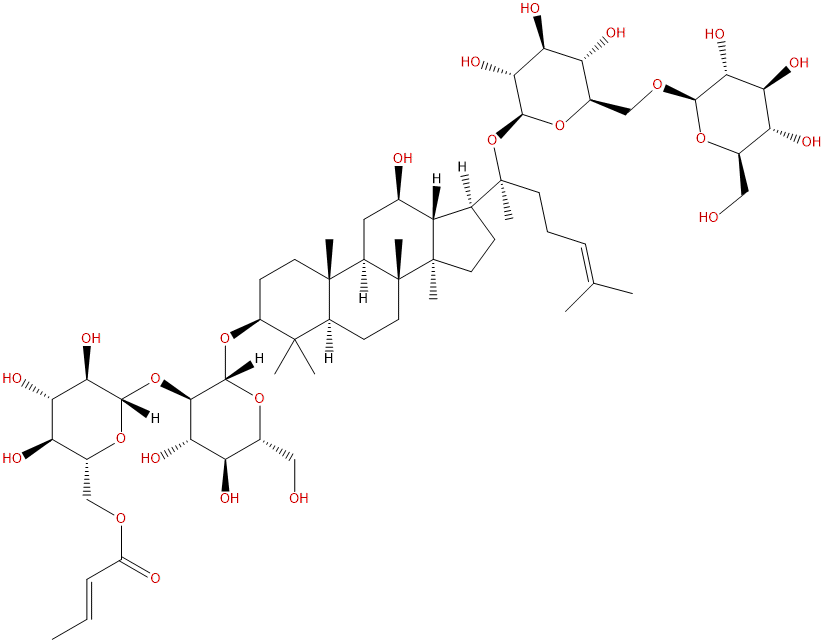
Ginsenoside Ra6, also known as Ginsenoside IV, is a typical panaxadiol type ginsenoside, mainly extracted and isolated from the roots of Panax ginseng C.A. Meyer. As one of the important active ingredients in ginseng, Ra6 has attracted widespread attention in the field of natural product pharmacology in recent years due to its unique chemical structure and diverse biological activities. Especially in terms of immune regulation, Ra6 exhibits significant regulatory effects, involving multiple key signaling pathways and immune related targets such as TLR4, STAT3, IL2, and NFKB1, demonstrating its potential value in the treatment of immune related diseases.
This article aims to systematically review the chemical structure and physicochemical properties, plant sources and extraction processes, pharmacological activity and mechanism of action, pharmacological evaluation and pharmacokinetic characteristics of ginsenoside Ra6, and explore its clinical application prospects and future research directions. By integrating existing literature, we strive to provide theoretical basis and practical guidance for the in-depth research and drug development of this compound.
Chemical structure and physicochemical properties
Ginsenoside Ra6 belongs to the dammarane type triterpenoid saponin in ginsenosides, with a molecular formula of C ₅₈ H ₁₀₂ O ₂ ₆ and a molecular weight of 1177.3820. Its structural core is a tetracyclic triterpenoid skeleton, containing multiple hydroxyl and glycoside residues, endowing it with high polarity and complex stereoisomers. The LogP value of Ra6 is 2.3039, indicating its moderate lipophilicity, which facilitates membrane penetration, but its high polarity (TPSA 383.3600) limits its passive diffusion ability.
In terms of water solubility, the water solubility of Ra6 is 0.2242 mg/mL, indicating its low solubility in water, which poses a certain challenge to its formulation development. The low permeability of the blood-brain barrier suggests that its role in the central nervous system may be limited. The negative result of hERG channel inhibition experiment indicates a low risk of cardiac toxicity. The Ames mutagenicity test result was 0.0, indicating no significant genetic toxicity and high safety.
The complexity of its chemical structure and the presence of multiple glycosidic groups make the metabolic pathway of Ra6 in vivo more complex. The hydrolysis of glycosidic bonds and modification of hydroxyl groups may affect its biological activity and pharmacokinetic properties.
Plant sources and extraction methods
Ginsenoside Ra6 mainly exists in the roots of ginseng and is an important member of the ginsenoside family. Ginseng, as a traditional Chinese medicinal herb, is widely distributed in East Asia, especially in wild and cultivated varieties from Northeast China, the Korean Peninsula, and the Russian Far East. Although the content of Ra6 is not as high as mainstream ginsenosides such as Rb1 and Rg1, its unique pharmacological activity has made it a research hotspot.
Common methods for extracting Ra6 include:
-
Solvent extraction method Using polar organic solvents such as ethanol or methanol for reflux extraction of dried ginseng roots, followed by liquid-liquid distribution and column chromatography separation and purification. The ethanol concentration is generally controlled at 70% -80% to improve the extraction efficiency of saponins.
-
Ultrasound assisted extraction By utilizing ultrasound to enhance solvent penetration and cell lysis, the extraction rate of Ra6 is improved, the extraction time is shortened, and the operation is gentle, reducing the degradation of active ingredients.
-
Separation by High Performance Liquid Chromatography (HPLC)After concentration, the extract was separated and purified using reverse phase HPLC technology to ensure its purity and quality.
-
Optimization of preparation process In recent years, the combination of response surface methodology has been used to optimize extraction process parameters (solvent ratio, temperature, time) in order to achieve efficient and environmentally friendly industrial production.
During the extraction process, attention should be paid to the stability of Ra6, avoiding high temperatures and strong acid-base environments to prevent hydrolysis and isomerization of saponin structures.
Pharmacological activity research
Ginsenoside Ra6 has shown significant potential in various biological activities, especially in the fields of immune regulation, anti-inflammatory, anti-tumor, and neuroprotection, where important progress has been made.
Immune regulatory effect
Ra6 achieves bidirectional regulation of the body's immune system by regulating multiple immune signaling pathways. Research has shown that Ra6 can affect the function of macrophages, T cells, and dendritic cells, regulate the secretion of inflammatory factors, and promote the balance between immune tolerance and immune activation.
- TLR4 signaling pathway Ra6 can inhibit Toll like receptor 4 (TLR4) - mediated inflammatory response, reduce the expression of pro-inflammatory factors such as TNF - α and IL-6, and thus alleviate inflammatory damage.
- STAT3 and STAT4 regulation By affecting the phosphorylation status of STAT3 and STAT4, Ra6 regulates the ratio of Th17 and Treg cells, promoting immune homeostasis.
- Regulating cytokine expression Ra6 can upregulate anti-inflammatory cytokines IL-10 and transforming growth factor beta 1 (TGFB1), while regulating the levels of immune active factors such as IL-2 and IFN - γ, enhancing the specificity and effectiveness of immune responses.
- Immune checkpoint regulation Ra6 has a regulatory effect on the expression of CTLA4, which helps establish immune tolerance and has potential therapeutic value for autoimmune diseases.
Anti inflammatory and antioxidant activity
Ra6 exerts anti-inflammatory effects by inhibiting the NF - κ B signaling pathway, reducing the release of inflammatory mediators. Meanwhile, its multi hydroxyl structure endows it with strong free radical scavenging ability, reduces oxidative stress damage, and protects tissue cells.
Antitumor activity
Although research on Ra6's anti-tumor effects is still in its early stages, there is evidence to suggest that it can induce tumor cell apoptosis, inhibit tumor growth and metastasis by regulating the immune microenvironment. Its inhibitory effect on STAT3 signaling may be an important component of its anti-tumor mechanism.
Neuroprotective effect
Ra6 has low blood-brain barrier permeability, but it indirectly exerts neuroprotective effects by regulating peripheral immune responses and anti-inflammatory mechanisms, especially in neurodegenerative disease models, demonstrating potential application value.
Mechanism of action and molecular targets
The mechanism of action of ginsenoside Ra6 mainly revolves around its regulation of key immune system targets, involving the cross regulation of multiple signaling pathways.
-
TLR4 (Toll like receptor 4)As a key receptor of the innate immune system, TLR4 recognizes pathogen associated molecular patterns (PAMPs) and initiates inflammatory responses. Ra6 inhibits the activation of TLR4, blocks downstream MyD88 dependent signaling, reduces the activation of NF - κ B and MAPK pathways, and decreases the production of pro-inflammatory cytokines.
-
STAT family (STAT3, STAT4)Ra6 regulates the activity of STAT3, inhibiting its pathogenic role in inflammation and tumors, while regulating STAT4 to promote Th1 cell differentiation and enhance cellular immune function. By regulating STAT signaling, Ra6 achieves precise regulation of immune cell fate and function.
-
Cytokines (IL2, IL10, IFNG, TGFB1)Ra6 affects the expression of various cytokines, promotes the secretion of anti-inflammatory factors IL-10 and TGFB1, inhibits the excessive release of pro-inflammatory factors IL-2 and IFN - γ, and maintains the balance of the immune microenvironment.
-
Immune regulatory molecules (CTLA4, FOXP3)Ra6 promotes immune tolerance and prevents autoimmune reactions by regulating the expression of immune checkpoint molecule CTLA4 and regulatory T cell marker FOXP3.
The synergistic effect of these molecular targets enables Ra6 to exhibit multiple biological effects in regulating immune responses, anti-inflammatory, and anti-tumor effects.
Evaluation of drug properties and pharmacokinetics
The pharmacological evaluation of ginsenoside Ra6 shows that it has certain potential for drug development, but there are also certain challenges.
Physical and chemical properties of drugs
- molecular weight:1177.3820 Da, The larger molecular weight limits its oral absorption and cell membrane permeability.
- fat-soluble LogP is 2.3039, moderate lipid solubility is beneficial for biofilm penetration, but high polarity and glycosidic structure limit its passive diffusion.
- Polarized surface area (TPSA)383.3600, higher polar surface area is usually associated with low oral bioavailability.
Pharmacokinetic characteristics
At present, there is relatively little systematic pharmacokinetic research on Ra6, but based on studies similar to ginsenosides, it is speculated that its oral absorption rate is low, mainly converted into active metabolites through glycoside hydrolysis by intestinal metabolic enzymes and intestinal microbiota. Its blood-brain barrier permeability is low, which limits the direct action of the central nervous system.
The metabolism in the body mainly involves the hydrolysis of glycosidic bonds, the corresponding modification of hydroxyl groups, and further metabolism of the liver enzyme system. Ra6 has no significant hERG channel inhibition and good cardiac safety. Ames test negative, low risk of genetic toxicity.
Preparation and administration route
Given the physicochemical properties of Ra6, oral formulations need to optimize solubility and stability. New formulation technologies such as nanocarriers, liposomes, and solid dispersions may improve its bioavailability. Intravenous administration can bypass the first pass effect, but its solubility and stability need to be evaluated.
Clinical application prospects and prospects
Ginsenoside Ra6 has shown great potential in the treatment of immune related diseases due to its significant immunomodulatory and anti-inflammatory activities. Its possible clinical application areas include:
- Autoimmune diseases By regulating immune tolerance and inhibiting excessive inflammatory response, Ra6 is expected to be used as an adjuvant therapy for autoimmune diseases such as rheumatoid arthritis and systemic lupus erythematosus.
- Inflammatory diseases For chronic inflammatory bowel disease, asthma, etc., Ra6 reduces the release of inflammatory mediators and improves pathological conditions by inhibiting the TLR4/NF - κ B pathway.
- Tumor immunotherapy Ra6 regulates the tumor microenvironment, enhances the anti-tumor activity of immune cells, and may serve as an adjuvant for immune checkpoint inhibitors to improve tumor treatment efficacy.
- Neuroimmune diseases Although the blood-brain barrier has low permeability, it may indirectly protect against neuroimmune diseases such as multiple sclerosis by regulating peripheral immune responses.
Future research should focus on:
- Pharmacokinetic and toxicological evaluation of the system, clarifying its safe dose range and metabolic pathways.
- The development of new drug delivery systems to improve their bioavailability and targeting.
- Design preclinical and clinical trials to validate its efficacy and safety in immune diseases.
- In depth analysis of its mechanism of action, particularly its precise regulation of immune cell subsets and signaling pathways.
Conclusion
Ginsenoside Ra6, as a natural product with unique structure and multiple biological activities, has shown great potential in immune regulation and treatment of related diseases. Although there are certain limitations to its medicinal properties, Ra6 is expected to become an important candidate for natural product drug development through the optimization of modern drug research and development technology. Future research should combine molecular pharmacology, pharmacokinetics, and clinical medicine to promote the transition of Ra6 from laboratory to clinical applications, benefiting a wide range of patients.
In summary, ginsenoside Ra6 not only enriches the chemical and pharmacological research system of ginsenosides, but also provides new ideas and directions for the application of natural products in the field of immune regulation. With the deepening of research, Ra6 is expected to become a star molecule in the field of natural immune modulators, opening a new chapter in the development of natural medicines.