Introduction/Overview
Inflammation and tumors are two core pathological processes that threaten human health, and there is a profound and complex connection between the two in their occurrence and development. Chronic inflammation is considered the "seventh major characteristic" of tumors, playing a crucial role in tumor development by creating a favorable microenvironment for tumor cell proliferation, survival, invasion, and metastasis. Therefore, targeted regulation of inflammatory response, especially its core executive element - inflammasome, has become an important strategy for the development of anti-inflammatory and anti-tumor drugs. Among many inflammatory bodies, NLRP3 inflammatory bodies have attracted much attention because of their central role in the development of many chronic inflammatory diseases (such as gout, type 2 diabetes, atherosclerosis) and tumors. The search for efficient and low toxicity NLRP3 inflammasome inhibitors has significant scientific value and clinical significance.
Arglabin, a natural sesquiterpene lactone isolated from traditional medicinal plants, is such a rising star. Since its discovery, Aghlabin has attracted the attention of pharmacologists with its unique chemical structure and diverse biological activities. Early research revealed its classic mechanism of exerting anti-tumor activity by inhibiting farnesyltransferase (FTase) and interfering with RAS protein post-translational modifications. In recent years, with the deepening of research on inflammasomes, Agliptin has established a new identity as an NLRP3 inflammasome inhibitor, adding a key link to its pharmacological spectrum and opening up a new perspective for its application in inflammation related diseases and tumor immunotherapy. This article aims to systematically review the chemical properties, plant sources, pharmacological activities, molecular mechanisms of action, pharmacological evaluation, and clinical application prospects of Aglabin, in order to provide comprehensive academic references for the in-depth research and development of this natural product.
Chemical structure and physicochemical properties
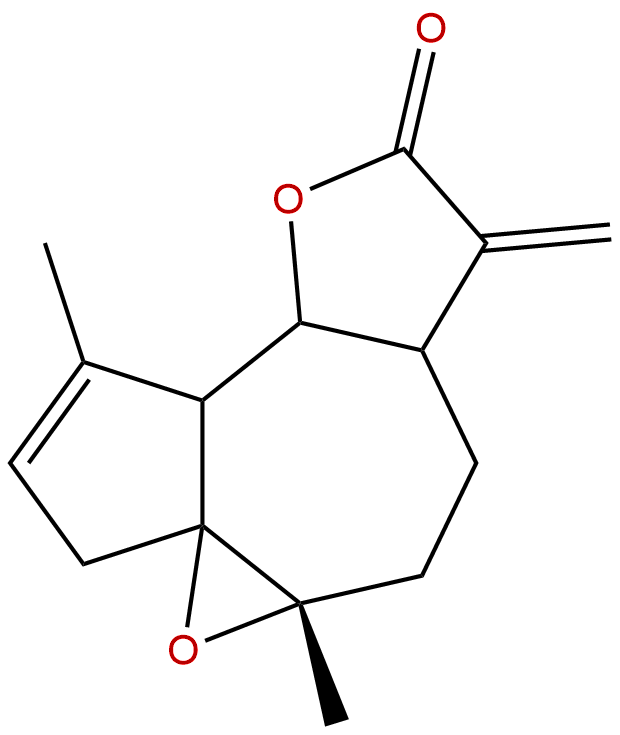
The chemical name of Aglapin is (3aR, 4S, 5S, 6aS) -5- [(E) -3-methylpent-2-en-1-yl] -3a, 4,5,6a-tetrahydro-4-methylcyclopentane [c] pyran-1,6-dione, with a CAS number of 84692-91-1. It is a natural sesquiterpene gamma lactone compound with a chiral center, with a molecular formula of C15H18O3 and a molecular weight of 246.3060 g/mol.
Structurally, the core skeleton of Aglabin is a fused bicyclic system consisting of a cyclopentane ring and an alpha, beta unsaturated gamma lactone ring. This lactone structure is one of the key pharmacophores for its biological activity, often undergoing Michael addition reactions with nucleophilic amino acid residues (such as cysteine) in the target protein, resulting in covalent inhibition. In addition, the molecule contains a (E) -3-methylpent-2-ene side chain and a methyl substituent, and these hydrophobic groups have a significant impact on its binding to the target and overall physicochemical properties.
According to the provided pharmacokinetic parameters, the lipid water partition coefficient (LogP) of Aglapin is 2.2242, indicating its moderate lipophilicity, which facilitates its penetration of cell membranes and interaction with intracellular targets such as farnesyltransferase and NLRP3 inflammasome components. Its topological polar surface area (TPSA) is 38.8300 Å ², which is a relatively small value, further confirming its good membrane permeability. The water solubility parameter is 0.2879 (usually measured in mg/mL or log mol/L, indicating poor water solubility), which is consistent with its lipophilic characteristics and is also a consideration in its formulation development. It is worth noting that its blood-brain barrier (BBB) permeability is predicted to be "high", suggesting that Aglapin may have the potential to treat central nervous system inflammation related diseases such as Alzheimer's disease and multiple sclerosis, although further validation through in vivo experiments is needed. In terms of preliminary safety prediction, hERG inhibition is "no", which reduces the possibility of inducing QT interval prolongation in the heart; The Ames test value is 0.9 (usually<1.0 is considered negative), indicating a low risk of mutagenicity and providing preliminary favorable data for the safety of long-term medication.
Plant sources and extraction methods
Aglabin is mainly derived from the Artemisia genus in the Asteraceae family - the bright green Artemisia. Bright green artemisia is a perennial herbaceous plant widely distributed in Central Asia, especially in the grasslands and semi desert areas of Kazakhstan. In traditional folk medicine in Kazakhstan, extracts of Artemisia scoparia are used to treat fever, infections, and inflammatory diseases, providing important clues for modern research to discover active ingredients from them.
The content of Aghlabin in plants is relatively low and is greatly influenced by the growing region, harvesting season, and plant part. Therefore, it is crucial to establish efficient and environmentally friendly extraction and separation purification processes. Traditional extraction methods often use organic solvent extraction. Usually, the dried and crushed aboveground parts of Artemisia annua are subjected to Soxhlet extraction or room temperature leaching using medium polarity solvents such as dichloromethane, ethyl acetate, or acetone. After vacuum concentration, the crude extract is separated and purified using various chromatographic techniques, including silica gel column chromatography (often using petroleum ether ethyl acetate or chloroform methanol gradient elution), reverse phase column chromatography (such as C18 packing, methanol water system), and high performance liquid chromatography (HPLC) preparation. The chemical structure can be ultimately determined through techniques such as nuclear magnetic resonance (NMR), mass spectrometry (MS), and X-ray single crystal diffraction.
In order to overcome the problems of limited plant extraction sources, long cycles, high costs, and potential damage to the ecological environment, research on chemical synthesis and biosynthesis is also being carried out simultaneously. Previous studies have reported the total synthesis route of Aglabin, which, although involving multiple steps, provides a foundation for structural modification and structure-activity relationship research. In addition, the use of plant cell culture or microbial synthetic biology techniques to produce Aglabin is a highly promising green and sustainable production direction, but it is still in the exploratory stage.
Pharmacological activity research
The pharmacological activity research of Aglapin mainly focuses on its two core areas of anti-tumor and anti-inflammatory, and extends to related disease models.
1. Antitumor activity:
The earliest and most extensively studied activity of Aglabin is its anti-tumor effect. A large number of in vitro studies have shown that Agrabine has significant proliferation inhibition and apoptosis promoting effects on a variety of human tumor cell lines, including lung cancer, breast cancer, colon cancer, pancreatic cancer and leukemia cells. Its effect exhibits concentration and time dependence. In animal models, Aglapin also showed good anti-tumor effects. For example, in a nude mouse transplant tumor model, Agliptin can effectively inhibit the growth of tumors such as human non-small cell lung cancer and prostate cancer, and shows synergistic effects when combined with certain chemotherapy drugs. Its anti-tumor activity is not limited to directly killing tumor cells, but also involves inhibiting tumor angiogenesis, regulating the tumor microenvironment, and other aspects.
2. Anti inflammatory and immune regulatory activity:
The anti-inflammatory activity of Aglapin is another major pillar of its pharmacological action. In various animal models of acute and chronic inflammation, such as carrageenan induced paw swelling in rats, acetic acid induced increased intra-abdominal capillary permeability in mice, and dextran sulfate sodium (DSS) - induced colitis in mice, Agliptin can effectively alleviate inflammatory reactions and reduce the levels of pro-inflammatory cytokines (such as IL-1 β, IL-6, TNF - α). Of particular importance, its anti-inflammatory effect is closely related to the specific inhibition of NLRP3 inflammasome activation, which distinguishes it from traditional nonsteroidal anti-inflammatory drugs (NSAIDs).
3. Other potential activities:
Based on the core role of NLRP3 inflammasome in various diseases, Aghlabin's research has expanded to a wider range of disease domains. Preliminary studies suggest that it may have therapeutic potential in the models of neuroinflammatory diseases (such as Alzheimer's disease model), metabolic diseases (such as type 2 diabetes, non-alcoholic steatohepatitis) and autoimmune diseases. These studies are constantly enriching our understanding of its pharmacological spectrum of action.
Mechanism of action and molecular targets
The molecular mechanism by which Aglipin exerts its multi effect pharmacological activity mainly revolves around two core targets that have been relatively clearly confirmed, and there is a potential cross-talk between these two mechanisms.
1. Inhibit farnesyltransferase (FTase) and interfere with the RAS signaling pathway:
This is the classic mechanism of the anti-tumor effect of Agrabin. RAS protein is a key switch protein that regulates cell growth, proliferation, and survival. It undergoes mutations and continues to be activated in many human cancers. The RAS protein needs to undergo a series of post-translational modifications to locate on the inner side of the cell membrane and function, with the first and crucial step being farnesylation catalyzed by farnesyltransferase. The structure of Aglabin is similar to that of farnesyl pyrophosphate (FPP, one of the substrates of FTase), which can act as a competitive inhibitor to bind to the active site of FTase, thereby blocking farnesylation of RAS protein (as well as other substrates such as Rho protein). The RAS protein without farnesylation cannot anchor correctly on the cell membrane, leading to the inactivation of downstream survival and proliferation signaling pathways such as MAPK/ERK and PI3K/Akt, ultimately inducing tumor cell cycle arrest and apoptosis. This mechanism has been validated in various RAS dependent or RAS mutant tumor models.
2. Inhibit NLRP3 inflammasome activation:
This is the core mechanism of Agliptin's anti-inflammatory and partially anti-tumor effects, especially by regulating the tumor immune microenvironment. NLRP3 inflammasome is an intracellular multiprotein complex composed of pattern recognition receptor NLRP3, adaptor protein ASC, and effector protein pro-caspase-1. When stimulated by pathogen associated molecular patterns (PAMPs) or hazard associated molecular patterns (DAMPs), NLRP3 inflammasomes assemble and activate caspase-1, which then cleaves pro-IL-1 β and pro-IL-18, producing mature and highly pro-inflammatory IL-1 β and IL-18, while triggering cell apoptosis.
Research has shown that Aglapin can specifically inhibit the activation of NLRP3 inflammasomes, but has little effect on the activation of AIM2 or NLRC4 inflammasomes. Its specific action may involve: ① inhibiting key signaling events involved in NLRP3 inflammasome assembly, such as preventing excessive production of mitochondrial reactive oxygen species (mtROS) or inhibiting lysosomal damage; ② Directly interacting with the NACHT domain of NLRP3 protein, interfering with its oligomerization. By inhibiting NLRP3 inflammasome, Aglapin effectively reduced the maturation and release of IL-1 β and IL-18, thereby suppressing excessive inflammatory response. In the tumor microenvironment, inhibiting NLRP3 inflammasome can alleviate immune suppression and enhance anti-tumor immune response.
The connection between mechanisms:
It is worth noting that there is extensive cross-talk between the RAS signaling pathway and the inflammatory signaling pathway (including NLRP3 inflammasome activation) in cells. For example, the activated RAS/MAPK pathway can promote the transcription of pro-inflammatory cytokines such as IL-1 β. Therefore, Aghlabin may indirectly reduce the "start" signal upstream of NLRP3 inflammasome by inhibiting FTase to weaken RAS signaling. On the contrary, inhibiting the anti-inflammatory microenvironment created by NLRP3 inflammasome may also be detrimental to the survival and proliferation of tumor cells. These two mechanisms may work together and contribute to the overall efficacy of Aglapin.
Evaluation of drug properties and pharmacokinetics
Although Aglapin has shown good activity in preclinical studies, its pharmacological development still faces some challenges, which is also a common bottleneck in the conversion of natural products into drugs.
Pharmacokinetic characteristics:
Existing animal pharmacokinetic studies (mainly conducted in rodents) have shown that Agliptin is rapidly absorbed after oral administration, but its absolute bioavailability may be limited by its low water solubility and first pass effect. It is widely distributed in the body, and its high lipid solubility and predicted high blood-brain barrier permeability allow it to enter multiple tissues, including the central nervous system. The main metabolic pathways of Aglabin may involve oxidative metabolism of liver cytochrome P450 enzyme system and hydrolysis and ring opening of lactone ring. The prototype drug and its metabolites are mainly excreted through the kidneys and bile. The half-life is relatively short and may require multiple daily doses or prolonged action time through formulation techniques.
Challenges and optimization strategies for drug development:
1. Water solubility and bioavailability: The lower water solubility and possible first pass effect are the main factors limiting its oral bioavailability. To this end, researchers are exploring various formulation strategies, including: ① creating nanocarrier systems such as nanocrystals, liposomes, and micelles to improve their solubility and stability; ② Preparation of cyclodextrin inclusion complexes; ③ Develop prodrugs, such as modifying the lactone ring into a more water-soluble open ring form, or enzymatically interpreting the precursor of the original drug in vivo.
2. Chemical modification and structure-activity relationship: One of the fundamental ways to improve the drug properties of Agliptin is through chemical modification of its parent nucleus structure. The structure-activity relationship studies have shown that its α, β - unsaturated γ - lactone ring is a key functional group that maintains the inhibition of FTase and NLRP3 activity. The hydrophobicity and stereoconfiguration of the side chains also have a significant impact on the activity. By introducing polar groups and changing the length or saturation of the side chain, it is expected to improve its water solubility and pharmacokinetic properties while maintaining its activity. Some semi synthetic derivatives have shown better activity or pharmacokinetic properties than the prototype.
3. Security: Preclinical toxicity studies have shown that the toxicity of Agliptin to major organs (heart, liver, kidney) is controllable at effective doses. The negative hERG inhibition and Ames test results are positive signals for its cardiovascular safety and genetic toxicity. However, the safety and reproductive toxicity of long-term administration still need to be systematically evaluated.
Clinical application prospects and prospects
Aglabin's unique dual mechanism of action (anti-tumor and anti-inflammatory) has brought broad prospects for its application in multiple disease fields.
1. In the field of tumor treatment:
* RAS mutant tumor: As an FTase inhibitor, Agrabine and its derivatives have a clear potential for targeted treatment of tumors carrying RAS mutations (especially KRAS mutations), such as pancreatic cancer, colorectal cancer and non-small cell lung cancer. Although breakthroughs have been made in small molecule inhibitors that directly target RAS proteins, FTase inhibitors can still be used as an alternative strategy for combination therapy or specific situations.
* Combination therapy for tumor immunotherapy: This is one of the most attractive directions of Agrabin. Chronic inflammation in the tumor microenvironment and abnormal activation of NLRP3 inflammasomes can promote immune suppression and weaken the efficacy of immune checkpoint inhibitors (such as PD-1/PD-L1 antibodies). Agrabin may reverse the immunosuppressive microenvironment, enhance T cell infiltration and function by inhibiting NLRP3 inflammasome, thereby producing a synergistic anti-tumor effect with immune checkpoint inhibitors. The combination of immune modulators and immune checkpoint inhibitors is currently a research hotspot in tumor treatment.
* Chemotherapy or radiotherapy sensitizer: Chemotherapy and radiotherapy not only kill tumor cells, but also release a large number of DAMPs, activate NLRP3 inflammasomes, leading to treatment-related inflammatory side effects (such as radiation enteritis and chemotherapy-induced neuropathy) and potentially weakening the efficacy. The combination of Aglapin may alleviate these side effects and enhance the efficacy of radiotherapy and chemotherapy by inhibiting treatment-induced tumor inflammation.
2. In the field of inflammatory diseases:
* NLRP3 related autoimmune inflammatory diseases: For periodic fever syndrome (such as CAPS) directly caused by mutations in the NLRP3 gene, Aglapin can be a potential targeted therapy drug.
* Chronic inflammatory diseases: Agrabine has important development value in gouty arthritis, type 2 diabetes, nonalcoholic steatohepatitis, atherosclerosis, inflammatory bowel disease (IBD) and other common chronic diseases closely related to the over activation of NLRP3 inflammasome.
* Neurodegenerative diseases: Given its predicted high BBB permeability, Aglabin has promising application prospects in neuroinflammatory diseases such as Alzheimer's disease, Parkinson's disease, and multiple sclerosis.
Future research directions and challenges:
Future research needs to focus on: ① conducting in-depth preclinical pharmacological and safety systematic evaluations of Aglipin and its optimized derivatives, clarifying their therapeutic window; ② Promote the development of new formulations based on nanotechnology or prodrug strategies to address the bottleneck of drug development; ③ Conduct more detailed research on the mechanism of NLRP3 inflammasome inhibition and clarify its direct target of action; ④ Explore its therapeutic potential in complex diseases such as comorbidities of tumors and metabolic disorders; ⑤ Ultimately, promote high-quality clinical trials to verify its safety and effectiveness in the human body.
Conclusion
Aglabin is a natural active molecule with dual pharmacological mechanisms discovered from the traditional medicinal plant Artemisia annua. It is like a double-edged sword, on the one hand, it exerts direct anti-tumor effects by inhibiting the RAS signaling pathway of farnesyltransferase targeting tumor cells; On the other hand, by specifically inhibiting the activation of NLRP3 inflammasome, excessive inflammatory response is regulated from the root, playing a key role in anti-inflammatory and regulating the tumor immune microenvironment. This unique dual attribute demonstrates enormous potential for its application in tumor treatment (especially in combination with immunotherapy) and intervention in various chronic inflammatory diseases.
Despite facing challenges in drug formulation such as water solubility and bioavailability on the path to clinical practice, Aglapin is gradually overcoming these challenges through interdisciplinary approaches in modern medicinal chemistry, pharmacy, and synthetic biology. The continuous in-depth research on Aglipin not only has the potential to generate a new class of NLRP3 inflammasome inhibitor drugs, but also provides a successful example for exploring multi-target and multi-functional natural lead compounds from the treasure trove of traditional medicine. With further elucidation of its mechanism of action and continuous advancements in drug development technology, Aglapin and its derivatives are expected to contribute significantly to the fight against tumors and inflammation related diseases in humans in the future.