


Product name: Corilagin
Synonym name:
Catalogue No.: BP0393
Cas No.: 23094-69-1
Formula: C27H22O18
Mol Weight: 634.455
Botanical Source: Phyllanthus urinaria L.
Physical Description:
Type of Compound: Phenols
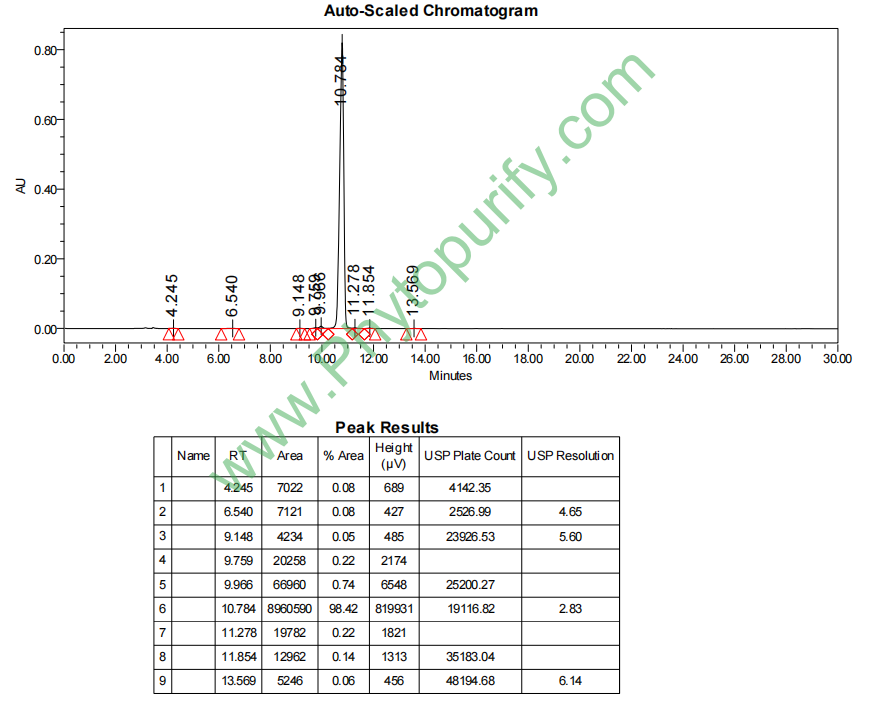
Purity: 95%~99%
Analysis Method: HPLC-DAD or/and HPLC-ELSD
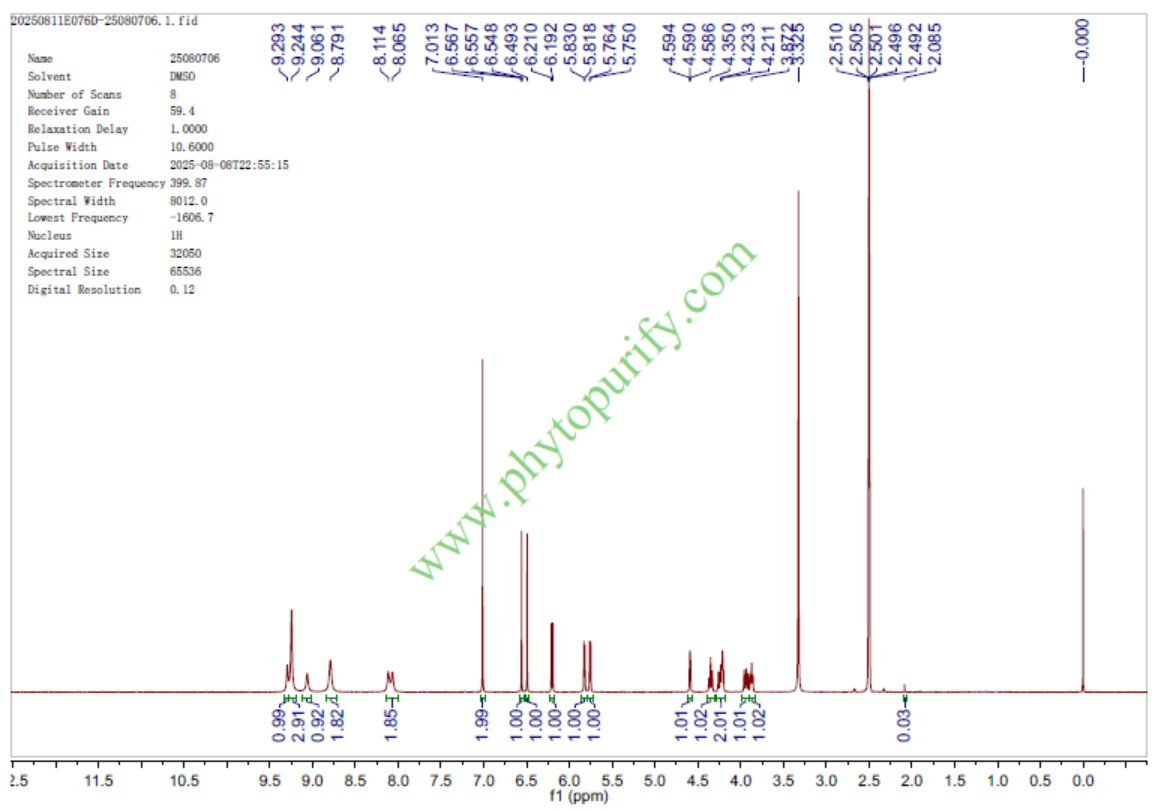
Identification Method: Mass, NMR
Packing: Brown vial or HDPE plastic bottle
Storage: Store in a well closed container, protected from air and light. Put into refrigerate or freeze for long term storage.
The product could be supplied from milligrams to grams
Inquire for bulk scale.
Description:
Corilagin has antitumour, anti-inflammatory, antioxidant, antifibrotics, antiviral, antibacterial, hepatoprotective, antiatherogenic, and antihypertensive activities. Corilagin reduces the cytotoxicity induced by EV71 or CA16 on Vero cells with and IC50 value of 5.6 and 32.33 μg/mL, respectively; it shows the potential to protect against HSV-1-induced encephalitis, and the beneficial effects may be mediated by inhibiting TLR2 signaling pathways. Corilagin attenuates bleomycin-induced epithelial injury and fibrosis via inactivation of oxidative stress, proinflammatory cytokine release and NF-κB and TGF-β1 signaling; it suppresses the activity of beta-lactamase to some extent.
References:
Phytother Res. 2014 May;28(5):781-3.
Sensitization of Hep3B hepatoma cells to cisplatin and doxorubicin by corilagin.
The anticancer action of gallotannins is a well-developed topic. We have demonstrated the in vivo antitumour activity of Corilagin on Hep3B hepatoma using the xenograft athymic nude mice model.
METHODS AND RESULTS:
Here, we further report the potential sensitization of Hep3B hepatoma cells to cisplatin and doxorubicin by Corilagin. Our results showed that Corilagin is able to enhance the cytotoxicity of both cisplatin and doxorubicin on the Hep3B hepatoma cells.
CONCLUSIONS:
We speculate the possible use of Corilagin in combination with low dosages of the anticancer chemotherapeutic standard drugs like cisplatin and doxorubicin, with the aim of obtaining an increment in the anticancer effect.
Arch Pharm Res. 2015 Feb;38(2):193-202.
Antiviral effects of Phyllanthus urinaria containing corilagin against human enterovirus 71 and Coxsackievirus A16 in vitro.
Human enterovirus 71 (EV71) and Coxsackievirus A16 (CA16) are major causative agents of hand, foot, and mouth disease (HFMD) especially in infants and children under 5 years of age. Despite recent outbreaks of HFMD, there are no approved therapeutics against EV71 and CA16 infection. Moreover, in a small percentage of cases, the disease progression can lead to serious complications of the central nervous system.
METHODS AND RESULTS:
In this study, we investigated the antiviral effect of Corilagin and Phyllanthus urinaria extract, which contains Corilagin as a major component, on EV71 and CA16 infection in vitro. Our results indicate that Corilagin reduces the cytotoxicity induced by EV71 or CA16 on Vero cells with and IC50 value of 5.6 and 32.33 μg/mL, respectively. We confirmed the presence of Corilagin in EtOAc and BuOH fractions from P. urinaria extract and this correlated with antiviral activity of the fractions against EV71 or CA16. Future studies will be required to confirm the antiviral activity of Corilaginand P. urinaria extract in vivo. Challenging a model with a lethal dose of viral infection will be required to test this.
CONCLUSIONS:
Collectively, our work provides potential candidates for the development of novel drugs to treat HFMD.
Microbiol Immunol. 2004;48(1):67-73.
Mechanisms of action of corilagin and tellimagrandin I that remarkably potentiate the activity of beta-lactams against methicillin-resistant Staphylococcus aureus.
Corilagin and tellimagrandin I are polyphenols isolated from the extract of Arctostaphylos uvaursi and Rosa canina L. (rose red), respectively. We have reported that Corilagin and tellimagrandin I remarkably reduced the minimum inhibitory concentration (MIC) of beta-lactams in methicillin-resistant Staphylococcus aureus(MRSA).
METHODS AND RESULTS:
In this study, we investigated the effect of Corilagin and tellimagrandin I on the penicillin binding protein 2 '(2a) (PBP2 '(PBP2a)) which mainly confers the resistance to beta-lactam antibiotics in MRSA. These compounds when added to the culture medium were found to decrease production of the PBP2 '(PBP2a) slightly. Using BOCILLIN FL, a fluorescent-labeled benzyl penicillin, we found that PBP2 '(PBP2a) in MRSA cells that were grown in medium containing Corilagin or tellimagrandin I almost completely lost the ability to bind BOCILLIN FL. The binding activity of PBP2 and PBP3 were also reduced to some extent by these compounds.
CONCLUSIONS:
These results indicate that inactivation of PBPs, especially of PBP2 '(PBP2a), by Corilagin or tellimagrandin I is the major reason for the remarkable reduction in the resistance level of beta-lactams in MRSA. Corilagin or tellimagrandin I suppressed the activity of beta-lactamase to some extent.
HPLC of Corilagin
HNMR of Corilagin
Storage conditions:Short-term storage at 2~8℃, long-term storage at -20 ~ -80℃
310.6600
.6852
-1.0640
.4215
.8452
.2433
Low
78.5220
5.8360
Yes
No
No
No
Yes
No
0.6
Yes
No
Yes
No
In the vast treasure trove of natural products, tannic acid compounds have long attracted the attention of medicinal chemists and pharmacologists due to their unique chemical structures and extensive biological activities. Corilagin, as a representative hydrolyzable tannic acid monomer, has attracted much attention since its discovery due to its multi-target and multi pathway pharmacological effects. Its CAS number is 23094-69-1, and it is widely present in various medicinal plants, such as traditional Chinese medicines such as Phyllanthus emblica and Terminalia chebula. Early research revealed its basic antibacterial and anti-inflammatory properties, while with the development of modern molecular biology technology, the deeper anti-tumor, liver protective, antioxidant damage and other activities and mechanisms of action of Corilagin have been gradually elucidated. Of particular note is its significant inhibitory activity in various tumor models, while exhibiting low toxicity to normal cells. This selective killing property provides important value for the development of its anti-tumor drugs. In addition, its regulation of oxidative stress-induced signaling pathways provides new ideas for the treatment of metabolic diseases, neurodegenerative diseases, and inflammation related diseases. This article aims to provide a systematic review of the chemical properties, plant sources, pharmacological activities, molecular mechanisms of action, pharmacological evaluation, and clinical application prospects of Corilagin, in order to provide comprehensive references for the in-depth research and development of this natural product.
The chemical name of Corilagin is β -1-O-galloyl-3,6- (R) - hexahydroxybiphenyl-D-glucose, with a molecular formula of C27H22O18 and a molecular weight of 634.4550. Structurally, it is a typical hydrolyzable tannic acid, with a glucose molecule at its core. It is connected to a galloyl group at C-1 via an ester bond, and to a hexahydroxybiphenylbenzoyl group (HHDP) at C-3 and C-6 via an ester bond. This unique structure makes it an important template for studying the structure-activity relationship of tannic acid compounds.
Its physicochemical properties directly affect its bioavailability and pharmacological activity. The logarithm of the lipid water partition coefficient (LogP) of Corilagin is 0.6852, indicating that it has a certain degree of lipophilicity, but overall it still leans towards hydrophilicity. Its topological polar surface area (TPSA) is as high as 310.6600 Å ², mainly attributed to the presence of a large number of polar groups such as hydroxyl and ester groups in the molecule, which also indicates its strong ability to form hydrogen bonds. The water solubility data is 0.4215, indicating that it has moderate solubility in water. However, in practical applications, its solubility may be affected by pH, temperature, and co solvents. These physicochemical parameters collectively determine the absorption, distribution, metabolism, and excretion (ADME) characteristics of Corilagin in vivo. For example, high TPSA and moderate LogP are often associated with poor cell membrane permeability, which to some extent explains the challenges that its oral bioavailability may face.
Corilagin is not an exclusive component of a single plant, but is widely distributed in various plant families and genera, especially widely used in traditional medical systems.
1. Main plant sources:
* Phyllanthus genus Various plants of the Phyllanthus genus are a rich source of Korelica, among which the most famous is Phyllanthus emblica, which has a high content in its fruit and leaves. In addition, P. niruri, P. urinaria, and other plants also contain a considerable amount of colchicine.
* Terminalia The fruit of Terminalia chabula is another important source, and it holds a high position in Tibetan medicine and Indian Ayurvedic medicine.
* Other sources It has also been detected in the skin of longan (Dimocarpus longan), the whole plant of Agrimonia Pilosa, and the bark of some Quercus plants.
A large number of in vitro and in vivo studies have confirmed that Corilagin has diverse and significant pharmacological activities, and its potential for application far exceeds early knowledge.
Antitumor activity This is one of the most in-depth areas of research for Korlikin. Studies have shown that Kirilagin can inhibit proliferation and induce apoptosis in a variety of human cancer cell lines, including liver cancer (such as HepG2, SMMC-7721), ovarian cancer (such as SKOV3, A2780), breast cancer, lung cancer, colon cancer, etc. In the nude mouse transplant tumor model, administration of Corilagin significantly inhibited tumor growth and no significant weight loss or organ toxicity was observed, indicating a good therapeutic window. Its anti-tumor effect is related to multiple mechanisms such as inducing cell cycle arrest (such as G0/G1 phase or G2/M phase), activating apoptosis signaling pathways, and inhibiting invasion and metastasis.
Liver protective activity Colilagin exhibits clear protective effects against chemical liver injury (such as acetaminophen, carbon tetrachloride, alcohol induction) and immune liver injury. It can significantly reduce the levels of transaminase (ALT, AST) in serum, alleviate pathological damage to liver tissue such as necrosis, inflammatory cell infiltration, and steatosis. Its hepatoprotective effect is closely related to mechanisms such as anti-inflammatory, antioxidant, and inhibition of hepatic stellate cell activation and anti fibrosis.
Anti inflammatory and immune regulatory activity Colilagin has shown strong anti-inflammatory effects in various acute and chronic inflammation models, such as lipopolysaccharide induced macrophage inflammation model, carrageenan induced rat foot swelling model, and arthritis model. It can effectively inhibit the production of pro-inflammatory factors such as TNF - α, IL-1 β, IL-6, NO, PGE2, and its strength of action can sometimes be comparable to that of positive drugs dexamethasone or indomethacin. In addition, it can regulate the balance of T lymphocyte subsets and affect immune response.
Antibacterial and antiviral activity Early studies have found that colchicine has inhibitory effects on Staphylococcus aureus (including methicillin-resistant MRSA), with a minimum inhibitory concentration (MIC) of 25 μ g/mL. In addition, it also has inhibitory effects on certain fungi and viruses. For example, studies have reported that it can inhibit the reverse transcriptase activity of RNA tumor viruses, providing clues for antiviral drug research.
Antioxidant damage activity Corilagin itself has a strong ability to directly scavenge free radicals such as DPPH and ABTS. More importantly, it is an effective indirect antioxidant that can activate the cell's own antioxidant defense system to combat various types of damage caused by oxidative stress. This is one of the core foundations for its liver protection, anti-inflammatory, anti-aging, and even partial anti-tumor effects.
Other activities The study also suggests that Corilagin has potential activities such as lowering blood sugar, regulating blood lipids, protecting the cardiovascular system, anti pulmonary fibrosis, and neuroprotection, demonstrating its broad prospects as a multi-target therapeutic molecule.
The multiple pharmacological activities of Corilagin stem from its precise regulation of multiple key signaling pathways within cells. Its mechanism of action is complex and networked, centered around anti-inflammatory, antioxidant, and pro apoptotic effects.
Regulating the antioxidant stress pathway - KEAP1-NRF2 axis This is the central mechanism by which Corilagin exerts antioxidant damage effects. Under oxidative stress, Corilagin may dissociate NRF2 (encoded by the NFE2L2 gene) from the KEAP1-NRF2 complex and transfer it to the nucleus by modifying cysteine residues on the KEAP1 protein. In the nucleus, NRF2 binds to antioxidant response elements, initiating the transcriptional expression of a series of phase II detoxifying enzymes and antioxidant proteins. Corilagin has been proven to significantly increase:
Inhibition of NF - κ B inflammatory pathway NF - κ B is the core transcription factor of inflammatory response. Colilagin can inhibit the activation of I κ B kinase, prevent the phosphorylation and degradation of I κ B α, thereby retaining NF - κ B (mainly p65 subunit) in the cytoplasm and blocking its nuclear translocation. This leads to the inhibition of the expression of a series of pro-inflammatory cytokines (TNF - α, IL-1 β, IL-6), chemokines, and inducible nitric oxide synthase downstream, which is the main molecular basis of its anti-inflammatory effect.
Inducing apoptosis of tumor cells:
Other targets and pathways Colilagin can also regulate signaling pathways such as STAT3, Wnt/β - catenin, TGF - β/Smad, which together contribute to its anti fibrotic and anti tumor metastasis activities.
Despite its excellent pharmacological activity, the drug like and pharmacokinetic (PK) properties of Kolagliflozin are obstacles that it must overcome in order to move towards clinical application.
Analysis of drug properties parameters:
Pharmacokinetic study:
Existing animal pharmacokinetic studies have revealed some characteristics of Corilagin:
The path from laboratory research to clinical application is clear, but challenges and opportunities coexist.
Potential clinical application directions:
challenges faced:
Future Prospects:
As a natural tannic acid monomer derived from traditional medicinal plants, Kolagin has become a star in the field of natural product drug research due to its extensive pharmacological activities, especially significant anti-tumor, liver protective, and antioxidant damage effects. The study of its mechanism of action has delved into core signaling pathways such as KEAP1-NRF2 and NF - κ B, revealing its multi-target regulatory characteristics. Although its high polarity and poor pharmacokinetic properties are currently the main obstacles to its clinical translation, modern medicinal chemistry and pharmaceutical technologies (such as structural modification and novel delivery systems) provide promising solutions for this. In the future, through in-depth interdisciplinary cooperation, based on elucidating its precise molecular mechanism and overcoming the bottleneck of drug development, Kolagliflozin is expected to be successfully developed from a promising lead compound into an innovative drug or highly effective health product for the treatment of tumors, liver diseases, and chronic inflammatory diseases, thereby better benefiting human health.
