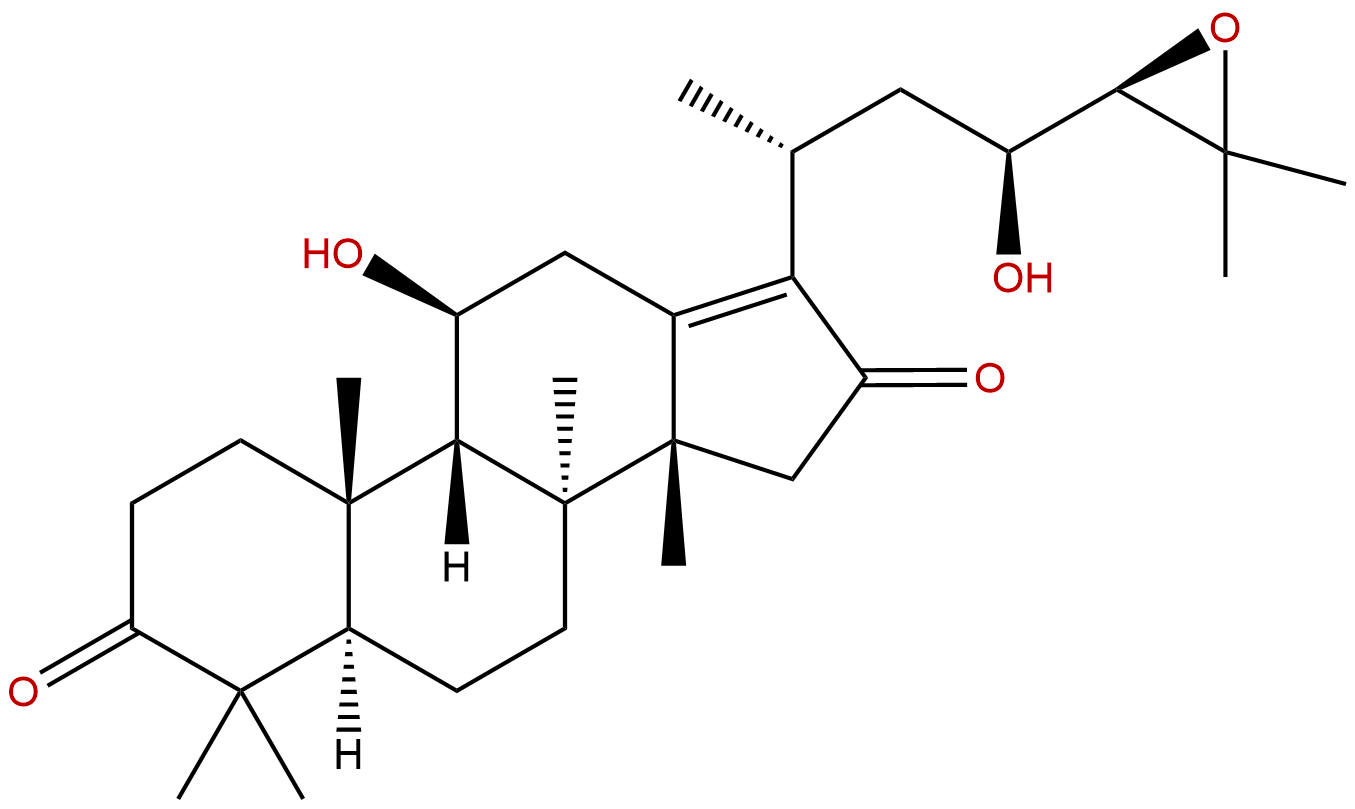


Product name: Alisol C
Synonym name:
Catalogue No.: BPF2545
Cas No.: 30489-27-1
Formula: C30H46O5
Mol Weight: 486.693
Botanical Source:
Physical Description: Powder
Type of Compound: Triterpenoids
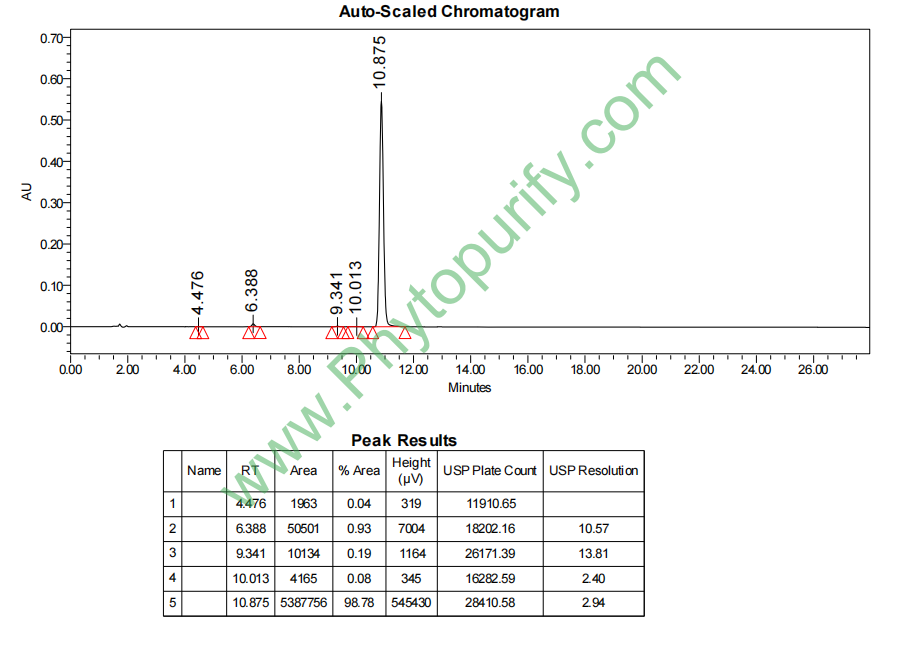
Purity: 95%~99%
Analysis Method: HPLC-DAD or/and HPLC-ELSD
Identification Method: Mass, NMR
Packing: Brown vial or HDPE plastic bottle
The product could be supplied from milligrams to grams. Inquire for bulk scale.
We provide solution to improve the water-solubility of compounds, thereby facilitating the variety of activity tests and clinic uses.
For Reference Standard and R&D, Not for Human Use Directly.
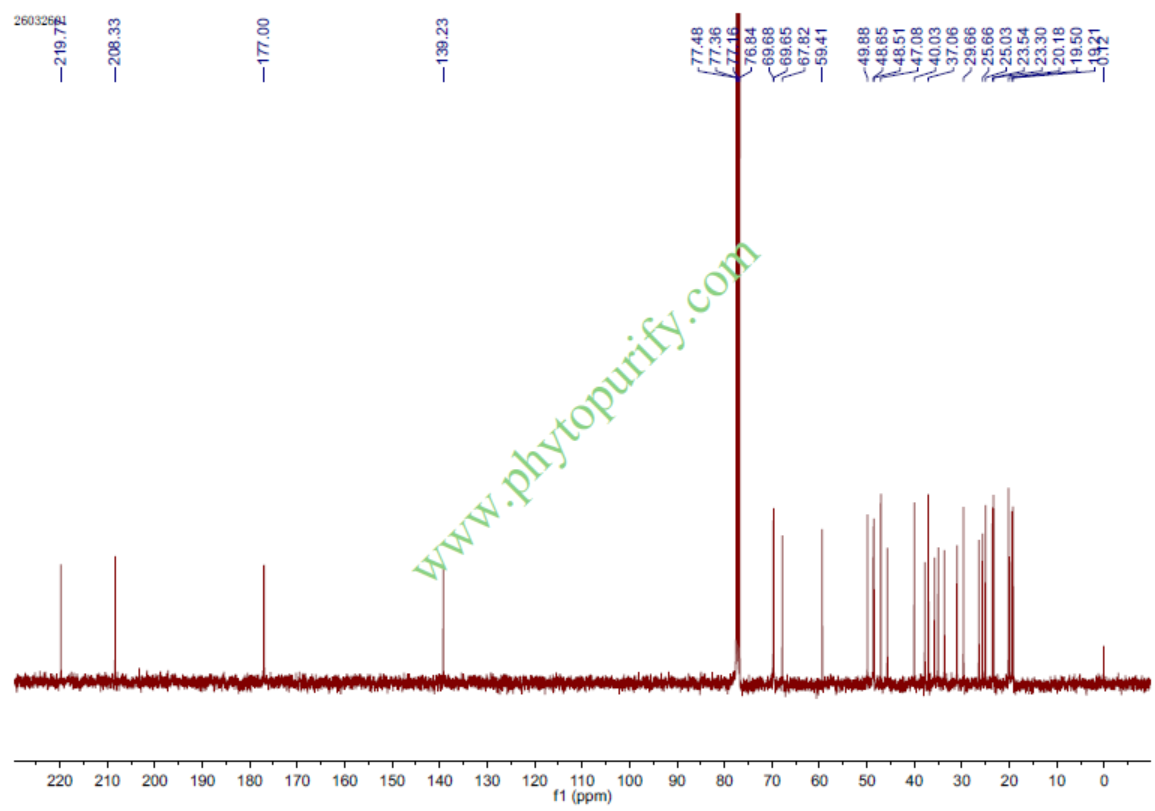
NMR of Alisol C
HPLC of Alisol C
Storage conditions:Short-term storage at 2~8℃, long-term storage at -20 ~ -80℃
87.1300
4.5234
4.5232
.0036
3.1269
10.3573
High
80.6879
5.2938
No
No
No
No
No
No
0.0
No
No
No
No
Natural products, as an important source of drug discovery, play an indispensable role in the long history of human struggle against diseases. Among them, triterpenoids derived from traditional medicinal plants have always been a hot topic in medicinal chemistry and pharmacology research due to their structural diversity and wide range of biological activities. Zexie, as a traditional Chinese medicine that promotes diuresis and dampness, has a medicinal history dating back to the "Shennong Bencao Jing". It is widely used to treat conditions such as edema, difficulty urinating, diarrhea, and diarrhea. Modern pharmacological research has revealed that the various biological activities of Alisma, especially its significant diuretic effect, are closely related to the triterpenoid components it contains.
Alisol C, as a major triterpenoid compound isolated from Alisma, is one of the key substance bases for the pharmacological effects of Alisma. Since its isolation and identification, Alismatal C has attracted widespread attention from scholars both domestically and internationally due to its unique chemical structure and potential medicinal value. Early research mainly focused on its diuretic activity, but in recent years, with the deepening of research, the potential of Alismatal C in metabolic regulation, anti-inflammatory, anti-tumor and other fields has been gradually explored, showing multi-target and multi pathway action characteristics. However, compared with other triterpenoids with higher content in Alisma, such as Alismatal A and B, there is relatively little systematic research on Alismatal C. Its mechanism of action, pharmacokinetic characteristics, and potential for drug development in vivo still need to be further elucidated.
This article aims to provide a systematic review of the current research status of Alismatal C. Starting from its chemical structure and physicochemical properties, this article will review its plant origin and extraction methods, focusing on its pharmacological activities such as diuresis and metabolic regulation, as well as related molecular mechanisms of action. It will also evaluate its potential for development based on its pharmacological parameters, and finally explore its clinical application prospects and future research directions. Through the organization of this article, it is expected to provide valuable references for the in-depth research, development, and utilization of Alismatal C.
Alisol C is a naturally occurring protostane type tetracyclic triterpenoid compound. Its chemical structure has typical characteristics of triterpenoids, with a core skeleton consisting of four rings (A, B, C, D rings), where A/B rings are trans fused, B/C rings are trans fused, and C/D rings are cis fused. The uniqueness of Alismatal C lies in its methyl group in the alpha configuration at the C-13 position, R configuration at the C-20 position, and the presence of an alpha, beta unsaturated ketone structural unit on the C-17 side chain (the double bond conjugation between the C-23 carbonyl group and C-22, C-24), which is a key structural feature that distinguishes it from other homologs such as Alismatal A and B. In addition, its molecule also contains multiple hydroxyl groups located at positions C-11, C-24, and C-25, giving the molecule a certain polarity and the ability to form hydrogen bonds.
According to the provided compound information, the molecular formula of Alismatal C is C ∝₀ H ₄₆ O ₅, with a molecular weight of 486.6930. The LogP of its lipid water partition coefficient is 4.5234, indicating that the compound has strong lipophilicity, which is consistent with the hydrophobic properties of its triterpenoid skeleton. A higher LogP value suggests that Alismatal C may be easily able to penetrate biofilms, but it may also have poor solubility in aqueous environments. Its polar surface area (TPSA) is 87.1300 Å ², which reflects the total surface area of polar atoms (such as oxygen atoms) and hydroxyl groups in the molecule. Generally, compounds with TPSA values in the range of 60-140 Å ² are considered to have good oral bioavailability potential, and the TPSA value of Alismatal C falls within this range, indicating its potential for oral absorption. However, its water solubility (0.0036 mg/mL) is extremely low, which poses a significant challenge in its drug development and may affect its dissolution, absorption, and bioavailability in vivo. It is worth noting that the compound is predicted to have high blood-brain barrier penetration ability, which suggests its potential in targeting central nervous system targets, but may also bring risks of central related side effects. In addition, the hERG inhibition prediction was negative, and the Ames test result was 0.0, indicating a low risk of cardiac toxicity and genetic toxicity, which is a favorable factor for it as a candidate drug molecule.
Alismatal C mainly comes from plants in the Alismataceae family, among which the most common medicinal plants include Alisma orientale(Alisma orientale (Sam.) Juzep. and Alisma(Alisma plantago-aquatica Linn.)。 The dried tubers of these two plants are listed in the Chinese Pharmacopoeia as the authentic source of the traditional Chinese medicine "Alisma". The content of Alismatal C in these plants is usually lower than that of Alismatal A and Alismatal B, and it is a minor component. Its content is influenced by various factors, including plant variety, place of origin, harvest season, growth period, and processing methods. Research has shown that there are significant differences in the content of Alisma alcohol C in medicinal materials from different regions, which may be related to environmental factors such as soil and climate. In addition, processing methods such as salt roasting and bran frying can also affect the content and composition of triterpenoids in Alisma.
The traditional method for extracting Alismatal C is mainly based on solvent extraction, utilizing its solubility in organic solvents. Common extraction solvents include methanol, ethanol, ethyl acetate, etc. In order to improve extraction efficiency and selectivity, modern extraction techniques are widely used. For example, ultrasound assisted extraction (UAE) and microwave-assisted extraction (MAE) can significantly shorten extraction time and improve yield by disrupting cell walls and accelerating solvent permeation. In recent years, green extraction techniques such as deep eutectic solvent (DES) extraction have also received attention, aiming to reduce the use of organic solvents.
The crude extract after extraction contains a large amount of impurities, which need to be separated and purified to obtain high-purity alisol C. The classic separation methods include silica gel column chromatography, ODS (octadecyl silane bonded silica gel) reverse phase column chromatography, Sephadex LH-20 gel column chromatography, etc. Usually, the total triterpenoid components are initially separated by silica gel column chromatography using gradient elution with solvents such as petroleum ether ethyl acetate or chloroform methanol in different ratios. The fraction rich in Alismatal C is further purified by ODS reverse phase column chromatography using methanol water or acetonitrile water systems. High performance liquid chromatography (HPLC), especially preparative HPLC, is the most effective method for obtaining high-purity Alismatal C monomer. By optimizing chromatographic conditions, such as selecting appropriate stationary phase (C18 column), mobile phase composition (such as acetonitrile water formic acid system), and detection wavelength (usually 210 nm or 245 nm, targeting its α, β - unsaturated ketone structure), the baseline separation of Alismatal C from other structurally similar compounds can be achieved, thereby obtaining the target compound with a purity of over 98%.
The pharmacological activity research of Alismatal C mainly focuses on its traditional efficacy of "promoting diuresis and promoting diuresis", and gradually expands to the fields of metabolic diseases, inflammation, and tumors.
1. Diuretic activity
Diuretics are the core traditional efficacy of Alisma, and also the earliest confirmed pharmacological activity of Alismatal C. Multiple in vitro and in vivo experiments have confirmed that Alismatal C can significantly increase the urine output of experimental animals and promote the excretion of electrolytes such as Na ⁺, K ⁺, Cl ⁻ in urine. Its diuretic mechanism is complex and not caused by a single target. Research has shown that Alismatal C may exert diuretic effects by regulating the expression and function of renal water salt transporters. For example, it can downregulate the expression of aquaporin 2 (AQP2) on the main cells of the renal collecting duct, reducing water reabsorption; At the same time, it may also affect ion transporters on renal tubular epithelial cells, such as Na ⁺ - K ⁺ -2Cl ⁻ cotransporter (NKCC2, encoded by SLC12A1 gene) and Na ⁺ - Cl ⁻ cotransporter (NCC, encoded by SLC12A3 gene), inhibiting the reabsorption of Na ⁺ and Cl ⁻, thereby producing osmotic diuretic effects. In addition, the antagonistic effect on the mineralocorticoid receptor (NR3C2, or MR) is also considered one of its diuretic mechanisms, similar to the aldosterone receptor antagonist spironolactone, which achieves potassium sparing diuresis by blocking aldosterone mediated Na ⁺ reabsorption and K ⁺ excretion.
2. Metabolic regulatory activity
In recent years, the role of Alismatal C in metabolic regulation has attracted much attention. Research has shown that Alismatal C has significant lipid-lowering and anti fatty liver activity. In various animal models of hyperlipidemia and fatty liver, Alismatal C can effectively reduce serum total cholesterol (TC), triglycerides (TG), and low-density lipoprotein cholesterol (LDL-C) levels, and alleviate liver lipid deposition. The mechanism may be related to inhibiting the synthesis of fatty acids and cholesterol in the liver, promoting β - oxidation of fatty acids, and enhancing lipid transport and excretion. In addition, Alismatal C has been found to have the potential to improve insulin resistance and lower blood sugar levels. It can improve glucose metabolism disorders by activating the AMP activated protein kinase (AMPK) signaling pathway, increasing glucose uptake and utilization, and inhibiting hepatic gluconeogenesis.
3. Anti inflammatory and immune regulatory activity
Inflammation is the common pathological basis of various diseases. Research has shown that Alismatal C exhibits anti-inflammatory activity in various inflammatory models. It can inhibit the production of nitric oxide (NO), prostaglandin E2 (PGE2), as well as pro-inflammatory cytokines such as tumor necrosis factor - α (TNF - α) and interleukin-6 (IL-6) in macrophages stimulated by lipopolysaccharide (LPS). Its anti-inflammatory mechanism may be related to the inhibition of the activation of nuclear factor kappa B (NF - κ B) and mitogen activated protein kinase (MAPK) signaling pathways. By blocking these key inflammatory signaling pathways, Alismatal C can downregulate the expression of inflammatory related enzymes such as inducible nitric oxide synthase (iNOS) and cyclooxygenase-2 (COX-2), thereby exerting anti-inflammatory effects.
4. Antitumor activity
Alismatol C has cytotoxic effects on many tumor cell lines, including liver cancer, lung cancer, breast cancer, colon cancer, etc. Its anti-tumor mechanism involves multiple aspects: firstly, it can induce tumor cell apoptosis by activating the caspase cascade reaction, upregulating the expression of pro apoptotic protein Bax and downregulating the expression of anti apoptotic protein Bcl-2. Secondly, Alismatal C can induce cell cycle arrest, blocking tumor cells in the G0/G1 or G2/M phase, thereby inhibiting cell proliferation. In addition, it can also inhibit the migration and invasion ability of tumor cells, which may be related to the inhibition of the expression and activity of matrix metalloproteinases (MMPs). It is worth noting that Alismatal C has relatively low toxicity to normal cells, demonstrating a certain degree of selective anti-tumor potential.
The pharmacological activity of Alismatal C is the result of its interaction with multiple molecular targets, exhibiting characteristics of multi-target and multi pathway action. Based on the provided target information, its mechanism of action can be summarized as follows:
1. Diuretic effect related target network
The diuretic effect of Alismatal C is not achieved through a single mechanism, but acts on multiple targets in different segments of the nephron, forming a synergistic network.
- Mineralocorticoid receptor (NR3C2)NR3C2 is a receptor for aldosterone, highly expressed in renal collecting duct main cells. After binding with NR3C2, aldosterone promotes Na ⁺ reabsorption and K ⁺, H ⁺ excretion. Zexatol C may act as an antagonist of NR3C2, competitively inhibiting the binding of aldosterone, thereby reducing Na ⁺ reabsorption and producing a diuretic effect of eliminating Na ⁺ and preserving K ⁺, similar to spironolactone.
- Na ⁺ - Cl ⁻ Co transporter (SLC12A3/NCC)NCC is mainly distributed in the renal distal tubules, responsible for the synergistic reabsorption of Na ⁺ and Cl ⁻. Alismatal C may inhibit the activity of NCC, reduce the reabsorption of Na ⁺ and Cl ⁻, increase their concentration in the lumen, and produce osmotic diuretic effects, similar to thiazide diuretics.
- Na ⁺ - K ⁺ -2Cl ⁻ Co transporter (SLC12A1/NKCC2)NKCC2 is located in the thick segment of the ascending branch of the renal medullary loop and is a target of loop diuretics such as furosemide. Alismatal C may also exert a potent diuretic effect by inhibiting NKCC2, blocking the reabsorption of Na ⁺, K ⁺, and Cl ⁻.
- Aquaporins (AQP1, AQP2, AQP3)AQP2 is the most important aquaporin protein in the renal collecting duct, regulated by antidiuretic hormone (AVP). Alismatal C has been found to downregulate the expression of AQP2, thereby reducing water reabsorption, which is one of the important mechanisms of its diuretic effect. In addition, the regulation of AQP1 and AQP3 may also be involved.
- Introverted rectifier potassium channel (KCNJ1)KCNJ1 (ROMK) participates in the circulation and excretion of K ⁺ in the kidneys, coupled with Na ⁺ reabsorption. Alismatal C may indirectly regulate electrolyte balance by affecting KCNJ1 channel activity.
- Arginine vasopressin receptor 2 (AVPR2)AVPR2 is the receptor for AVP, located on the basolateral membrane of the collecting duct. After binding to AVPR2, AVP promotes phosphorylation and membrane translocation of AQP2 through the cAMP signaling pathway, increasing water permeability. Alismatal C may inhibit AVP mediated water reabsorption by antagonizing AVPR2 or interfering with its downstream signals.
2. Metabolic regulation and anti-inflammatory mechanism
- AMPK signaling pathway AMPK is a key sensor for cellular energy metabolism. Alismatal C has been shown to activate AMPK, phosphorylate and inhibit acetyl CoA carboxylase (ACC), reduce fatty acid synthesis, and promote fatty acid oxidation. Meanwhile, AMPK activation can enhance GLUT4 translocation, promote glucose uptake, and inhibit the expression of key hepatic gluconeogenesis enzymes, thereby improving glucose and lipid metabolism.
- NF - κ B and MAPK signaling pathways In the inflammatory response, resveratrol C inhibits the phosphorylation and degradation of I κ B α, prevents the nuclear translocation of NF - κ B, and downregulates the expression of various pro-inflammatory genes. At the same time, it can also inhibit the phosphorylation of MAPKs such as p38, JNK, and ERK, blocking the cascade amplification of inflammatory signals.
3. Anti tumor mechanism
- Apoptotic pathway Alismatal C induces apoptosis through the mitochondrial pathway (endogenous pathway), manifested by a decrease in mitochondrial membrane potential, release of cytochrome c, and activation of caspase-9 and caspase-3.
- cell cycle regulation Alismatal C can upregulate the expression of cyclin dependent kinase inhibitors (such as p21, p27), inhibit the activity of cyclin CDK complexes, and lead to cell cycle arrest.
Based on the provided pharmacological parameters, a preliminary evaluation of the pharmacological properties of Alismatal C can be conducted. Its molecular weight (486.69 Da) is slightly higher than the limit of molecular weight less than 500 in Lipinski's Rule of Five, but still within an acceptable range. A high LogP value (4.52) indicates strong lipophilicity, which is beneficial for membrane permeability, but may also lead to poor water solubility and high metabolic clearance rate. The TPSA value (87.13 Å ²) is moderate, indicating good oral absorption potential. However, its extremely low water solubility (0.0036 mg/mL) is the main bottleneck limiting its oral bioavailability. High blood-brain barrier penetration ability is a double-edged sword, which is advantageous for treating central nervous system diseases, but may increase the risk of central side effects for treating peripheral diseases. HERG inhibition and negative Ames test are important safety advantages.
At present, research on the pharmacokinetics of Alismatal C in vivo is relatively limited. Previous studies have shown that after oral administration of Alismatal C, its absorption may be poor and its absolute bioavailability may be low, mainly due to its low water solubility and possible first pass effect. It is widely distributed in the body and may tend to accumulate in tissues such as the liver and fat due to its strong lipophilicity. In terms of metabolism, Alismatal C mainly undergoes phase I metabolism (such as hydroxylation and oxidation) and phase II metabolism (such as glucuronic acid binding and sulfate binding), with the liver being its main metabolic organ. The cytochrome P450 enzyme system (especially CYP3A4) may be involved in its metabolism. Its excretion pathway may be mainly through bile excretion, with some being excreted through the kidneys.
In order to improve the pharmacological properties of Alismatal C, future research needs to focus on the following aspects: 1) Improve solubility By using formulation techniques such as preparing phospholipid complexes, cyclodextrin inclusion complexes, solid dispersions, or nanoparticles, their water solubility and dissolution rate can be significantly improved. 2) Improve bioavailability Explore non oral administration routes, such as transdermal or injection administration, to avoid the problem of poor oral absorption. 3) Structural modification By means of medicinal chemistry, hydrophilic groups (such as phosphate groups and amino acid esters) are introduced to synthesize prodrugs or analogues while maintaining their core pharmacophores, in order to improve their solubility and pharmacokinetic properties. 4) In depth pharmacokinetic research Establish sensitive and specific biological sample analysis methods (such as LC-MS/MS), systematically study their absorption, distribution, metabolism, and excretion (ADME) processes in animal bodies, and clarify their metabolic pathways and metabolites.
As a natural triterpenoid compound derived from traditional Chinese medicine, the unique chemical structure and multifaceted pharmacological activities of Alismatal C indicate broad clinical application prospects.
1. Development of new diuretics
Given its multi-target diuretic mechanism, Alismatal C or its derivatives are expected to be developed as a novel diuretic with mild action and minimal side effects. Compared with traditional thiazide or loop diuretics, its potential potassium preserving properties (by antagonizing NR3C2) may reduce the risk of hypokalemia. Compared with aldosterone receptor antagonists such as spironolactone, it may have a wider range of diuretic targets. Therefore, Alismatal C has potential application value in the treatment of diseases that require diuretic therapy, such as hypertension, heart failure, liver cirrhosis ascites, and nephrotic syndrome.
2. Candidate drugs for the treatment of metabolic diseases
Alismatol C has significant activities in reducing blood lipid, anti fatty liver and improving insulin resistance, making it a potential candidate drug for the treatment of nonalcoholic fatty liver disease (NAFLD), type 2 diabetes, atherosclerosis and other metabolic syndrome related diseases. Its pleiotropic effect by activating the AMPK pathway is consistent with the mechanism of action of many metabolic disease treatment drugs currently available.
3. Anti inflammatory and anti-tumor adjuvant drugs
Its anti-inflammatory activity suggests that Alismatal C may be used to treat chronic inflammatory diseases such as rheumatoid arthritis and inflammatory bowel disease. Its selective anti-tumor activity, especially high sensitivity to liver cancer, lung cancer, etc., makes it potential as a chemotherapy sensitizer or adjuvant therapy drug to enhance chemotherapy efficacy and reduce toxic side effects.
Future research directions:
Despite the bright prospects, the clinical translation of Alismatal C still faces many challenges. Future research should focus on:
- Deep analysis of mechanism Using systems biology and network pharmacology methods, comprehensively reveal the "multi-target multi pathway" action network of Alismatal C, especially its direct binding mode with diuretic related targets such as NR3C2, SLC12A3, AQP2, etc.
- Study on Structure Activity Relationship Systematically study the structure-activity relationship of Alismatal C and its structural analogues, clarify its key pharmacophores, and provide guidance for structural optimization and lead compound discovery.
- Pharmacokinetic optimization Focus on solving the problems of poor water solubility and low bioavailability, and improve its pharmacokinetic properties through prodrug design, new dosage form development, and other means.
- safety evaluation Conduct comprehensive preclinical toxicology studies, including long-term toxicity, reproductive toxicity, genetic toxicity, etc., with particular attention to the central nervous system toxicity that may be caused by its high blood-brain barrier penetration.
- Clinical translational research After completing sufficient preclinical research, design rigorous clinical trials to validate their effectiveness and safety in the target indication.
As an important triterpenoid active ingredient in Alisma, the research on Alismatal C has expanded from traditional diuretic effects to multiple cutting-edge fields such as metabolic regulation, anti-inflammatory, and anti-tumor effects. Its unique chemical structure, especially the alpha, beta unsaturated ketone units, endows it with diverse biological activities. By acting on a series of targets related to renal water and salt metabolism, such as NR3C2, SLC12A3, AQP2, etc., Alismatal C exhibits a multi-target synergistic diuretic mechanism. Meanwhile, its regulation of key signaling pathways such as AMPK and NF - κ B is the basis for its metabolic regulation and anti-inflammatory effects.
However, the clinical development path of Alismatal C is not smooth. Its extremely low water solubility and potential high metabolic clearance rate are the main bottlenecks restricting its drug development. Future research must not only thoroughly elucidate its mechanism of action, but also focus on addressing its shortcomings in solubility and bioavailability, and systematically evaluate its safety. Through medicinal chemical modification, modern formulation technology, and in-depth pharmacokinetic research, it is expected to transform this natural product into innovative drugs with clinical application value. The continuous exploration of Alisma C not only helps to reveal the scientific connotation of traditional Chinese medicine Alisma, but also provides valuable lead molecules for the development of new natural therapeutic drugs.
