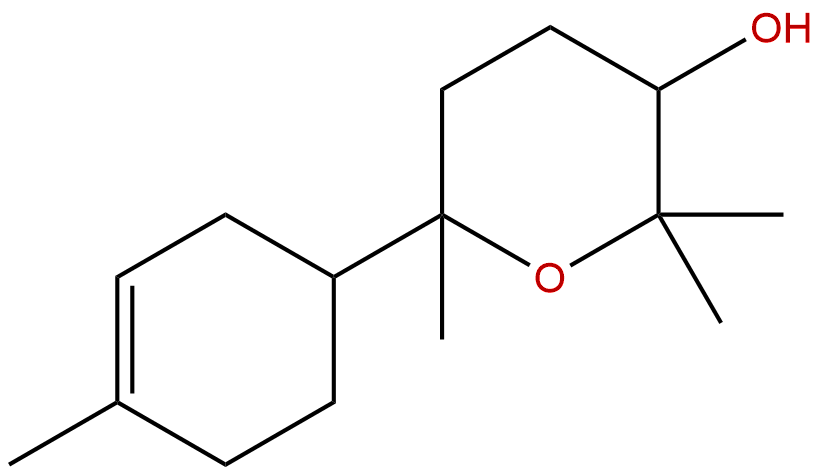
| Catalog No | Package | Original Price | Price | Inventory | Quantity | Operating |
|---|---|---|---|---|---|---|
| BP0277-5mg | 5mg | $260.00 | Sign in |
|


Product name: Bisabolol Oxide A
Synonym name:
Catalogue No.: BP0277
Cas No.: 22567-36-8
Formula: C15H26O2
Mol Weight: 238.371
Botanical Source:
Type of Compound:
Purity: 95%~99%
Analysis Method: HPLC-DAD or/and HPLC-ELSD
Identification Method: Mass, NMR
Packing: Brown vial or HDPE plastic bottle
Storage: Store in a well closed container, protected from air and light. Put into refrigerate or freeze for long term storage.
Whenever possible, you should prepare and use solutions on the same day. However, if you need to make up stock solutions in advance, we recommend that you store the solution as aliquots in tightly sealed vials at -20℃. Generally, these will be useable for up to two weeks.
The product could be supplied from milligrams to grams
Inquire for bulk scale.
For Reference Standard and R&D, Not for Human Use Directly.
Storage conditions:Short-term storage at 2~8℃, long-term storage at -20 ~ -80℃
Bisabolol Oxide A, a sesquiterpene compound derived from natural plants, has attracted much attention due to its significant anti-inflammatory and anti allergic activities. As an important active ingredient in Matricaria chamomilla and related plants, sweet myrrh terpenoid alcohol oxide A is widely used in traditional herbal medicine to alleviate inflammation and pain. In recent years, with the deepening development of natural product pharmacology, the pharmacological mechanism, molecular targets, and pharmacological evaluation of this compound have gradually become clear, providing theoretical basis and technical support for its clinical application. This article provides a systematic review of the chemical structure, plant origin, pharmacological activity, mechanism of action, pharmacological properties, and future clinical application prospects of terpenoid alcohol oxide A in sweet myrrh, aiming to provide reference for the development of natural product drugs.
The chemical structure of sweet myrrh terpenoid alcohol oxide A belongs to sesquiterpene oxides, with a molecular formula of C15H26O2 and a molecular weight of 238.37. Its structural features include an oxygen-containing cyclic terpene skeleton with high lipid solubility (LogP about 3.8), which provides favorable conditions for its penetration into cell membranes and biological membranes. Its polar surface area (TPSA) is 37.3 Å ², indicating that the overall polarity of the molecule is low and conducive to oral absorption. The molecule contains two hydrogen bond receptor sites that may participate in interactions with biological targets.
In terms of physicochemical properties, sweet myrrh terpenoid alcohol oxide A exhibits good stability and moderate lipid solubility, and its blood-brain barrier permeability is low, indicating that its risk of side effects in the central nervous system is relatively low. In addition, toxicological evaluations showed that the compound had no significant hepatotoxicity, cardiotoxicity, or hERG channel inhibitory activity, indicating high safety. However, Ames mutagenicity test data is still lacking and further research is needed.
Sweet myrrh terpenoid oxide A mainly exists in the Asteraceae plant Matricaria chamomilla and its related varieties. Sweet myrrh, as a traditional medicinal plant, is widely distributed in Europe, North America, and some parts of Asia. Its inflorescence contains abundant volatile oils and sesquiterpenes.
The extraction method usually uses steam distillation or solvent extraction techniques to extract volatile oils from dried flower clusters, and then purify them by chromatography to obtain sweet myrrh terpenoid alcohol oxide A. Modern extraction processes combined with supercritical CO2 extraction technology can improve extraction efficiency and purity, reduce the use of organic solvents, and comply with green chemistry principles.
During the purification process, commonly used methods such as silica gel column chromatography and reverse phase high-performance liquid chromatography (RP-HPLC) are used to separate the extract, ensuring the acquisition of high-purity sweet myrrh terpenoid alcohol oxide A to meet the needs of pharmacological research and formulation development.
The pharmacological activities of sweet myrrh terpenoid alcohol oxide A mainly focus on anti-inflammatory, anti allergic, and analgesic effects. Numerous in vitro and in vivo experiments have shown that this compound can significantly inhibit the release of inflammatory mediators and activation of inflammatory cells, exerting anti-inflammatory and pain relieving effects.
Sweet myrrh terpenoid oxide A reduces the intensity of inflammatory response by inhibiting the synthesis of inflammatory mediators such as prostaglandins and leukotrienes. For example, in the mouse foot swelling model, oral or local application of this compound can significantly reduce tissue swelling and inflammatory cell infiltration. In addition, it has a regulatory effect on the expression of pro-inflammatory cytokines such as TNF - α and IL-1 β, demonstrating broad-spectrum anti-inflammatory potential.
This compound has shown good efficacy in anti allergic research, as it can inhibit mast cell degranulation and histamine release, and alleviate allergic symptoms. Related targets include lipoxygenase 5 (ALOX5), histamine H1 receptor (HRH1), interleukin 4 (IL4), interleukin 5 (IL5), interleukin 13 (IL13), high affinity IgE receptor alpha chain (FCER1A), thromboxane A2 receptor (TBXA2R), signal transducer and activator of transcription factor 6 (STAT6), and thymic stromal lymphopoietin (TSLP), which play critical roles in the occurrence and maintenance of allergic reactions.
Sweet myrrh terpenoid oxide A has oral activity and can alleviate pain by regulating inflammatory mediators and neurotransmitters. Animal models have shown that it has a certain inhibitory effect on both inflammatory pain and neuropathic pain, indicating its potential application value in pain management.
The mechanism of action of sweet myrrh terpenoid alcohol oxide A involves multiple signaling pathways and molecular targets, mainly exerting pharmacological effects by regulating immune cell function and the generation of inflammatory mediators.
Sweet myrrh terpenoid oxide A works synergistically through multiple targets and pathways to inhibit the expression of pro-inflammatory factors and enzymes, regulate immune cell function, and alleviate tissue inflammation and pain. Its regulation of signaling pathways such as NF - κ B and MAPK helps to downregulate the transcription of inflammation related genes and alleviate inflammatory responses.
Sweet myrrh terpenoid alcohol oxide A exhibits good potential in medicinal properties. Its molecular weight is moderate (238.37 Da), which conforms to Lipinski's rule. A LogP value of 3.8 indicates that it has good lipid solubility and is beneficial for oral absorption. TPSA37.3 Å ² and 2 hydrogen bond acceptors both support its excellent membrane permeability.
Toxicological evaluation shows that the compound has no significant hepatotoxicity, cardiotoxicity, or hERG channel inhibition, and is relatively safe. However, the mutagenicity test data of Ames is not yet clear, and further toxicological studies are needed.
In terms of pharmacokinetics, sweet myrrh terpenoid oxide A exhibits good oral bioavailability and low blood-brain barrier permeability, reducing the risk of central nervous system side effects. Its metabolic pathway may involve oxidation and binding reactions of liver enzymes, but specific metabolites and kinetic parameters still need to be systematically studied.
Based on its significant anti-inflammatory, anti allergic, and analgesic activities, sweet myrrh terpenoid alcohol oxide A has broad application prospects in the treatment of various diseases. Especially in the fields of allergic diseases (such as asthma, allergic rhinitis, skin allergies), inflammatory diseases (such as arthritis, skin inflammation), and pain management, sweet myrrh terpenoid oxide A can be used as a new natural drug candidate molecule.
Future research should focus on:
In addition, combining modern drug delivery technologies such as nanocarriers and sustained-release formulations is expected to improve its bioavailability and targeting, promoting the clinical translation of sweet myrrh terpenoid alcohol oxide A.
Sweet myrrh terpenoid oxide A, as a natural sesquiterpene compound with significant anti-inflammatory and anti allergic activities, exhibits good medicinal properties and safety. Its multi-target and multi mechanism mode of action provides new ideas for the treatment of inflammation and allergic diseases. Although significant progress has been made in current research, further in-depth exploration of its pharmacological mechanisms, pharmacokinetics, and clinical application potential is still needed. With the continuous advancement of natural product pharmacology and modern drug development technology, sweet myrrh terpenoid alcohol oxide A is expected to become an important candidate molecule for future natural drug development, contributing new therapeutic options to human health.
