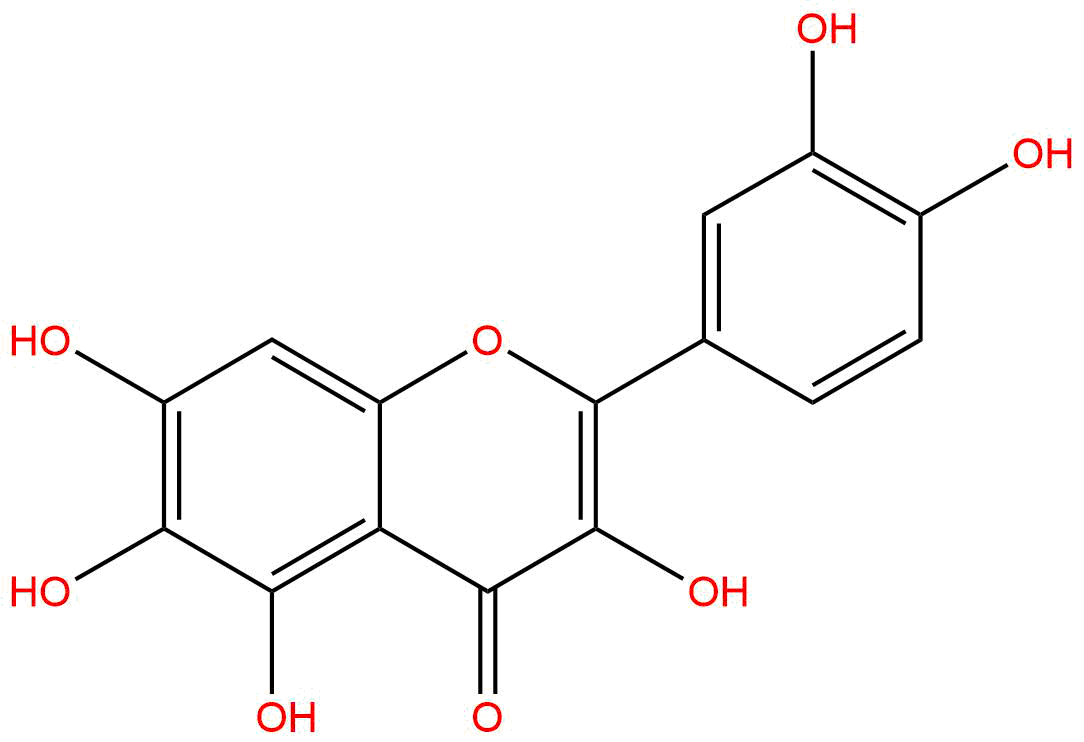


Product name: Quercetagetin
Synonym name: 3,3',4',5,6,7-Hexahydroxyflavone; 3,5,6,7,3',4'-Hexahydroxyflavone; 6-Hydroxyquercetin
Catalogue No.: BP4114
Cas No.: 90-18-6
Formula: C15H10O8
Mol Weight: 318.237
Botanical Source: Tagetes erecta L
Physical Description:
Type of Compound: Flavonoids
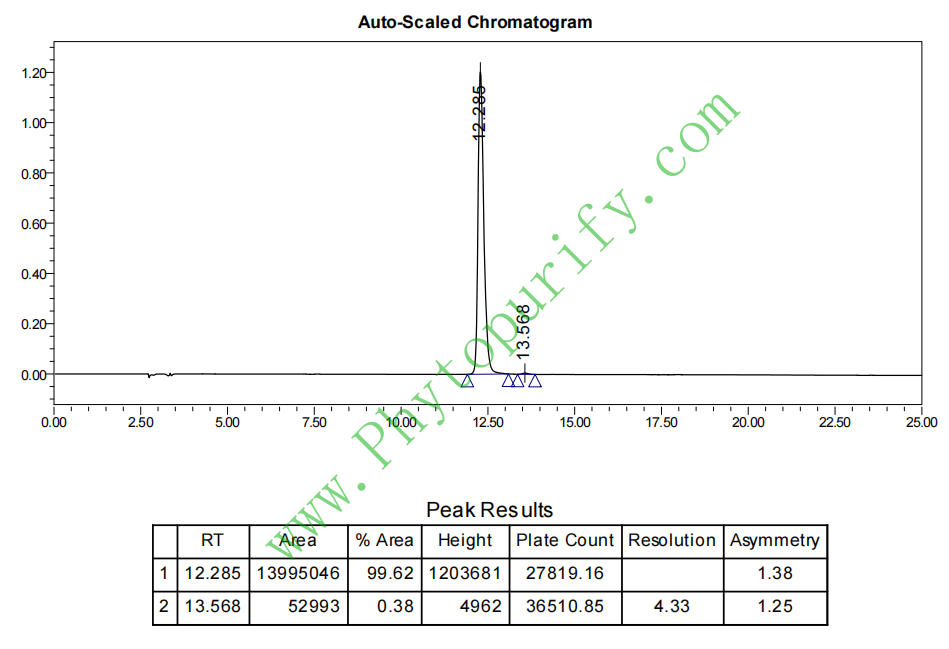
Purity: 95%~99%
Analysis Method: HPLC-DAD or/and HPLC-ELSD
Identification Method: Mass, NMR
Packing: Brown vial or HDPE plastic bottle
Storage: Store in a well closed container, protected from air and light. Put into refrigerate or freeze for long term storage.
Whenever possible, you should prepare and use solutions on the same day. However, if you need to make up stock solutions in advance, we recommend that you store the solution as aliquots in tightly sealed vials at -20℃. Generally, these will be useable for up to two weeks.
The product could be supplied from milligrams to grams
Inquire for bulk scale.
For Reference Standard and R&D, Not for Human Use Directly.
Description:
Quercetagetin may be a potent inhibitor of the STAT1 signal, which could be a new molecular target for anti-inflammatory treatment, and may thus have therapeutic applications as an immune modulator in inflammatory diseases such as AD. It has stronger inhibitory effects on the protein and mRNA expression of TARC and MDC than other flavonoids.
References:
Biomolecules and Therapeutics, 2013, 21(2):138-145.
Anti-Inflammatory Effect of Quercetagetin, an Active Component of Immature Citrus unshiu, in HaCaT Human Keratinocytes.
Citrus fruit contain various flavonoids that have multiple biological activities. However, the content of these flavonoids are changed during maturation and immature Citrus is known to contain larger amounts than mature. Chemokines are significant mediators for cell migration, while thymus and activation-regulated chemokine (TARC/CCL17) and macrophage-derived chemokine (MDC/CCL22) are well known as the typical inflammatory chemokines in atopic dermatitis (AD), a pruritic and chronic inflammatory skin disease. We reported recently that the EtOH extract of immature Citrus unshiu inhibits TARC and MDC production.
METHODS AND RESULTS:
Therefore, we investigated the activity of flavonoids contained in immature Citrus on TARC and MDC levels. As a result, among the various flavonoids, Quercetagetin has stronger inhibitory effects on the protein and mRNA expression of TARC and MDC than other flavonoids. Quercetagetin particularly has better activity on TARC and MDC level than quercetin. In HPLC analysis, the standard peak of Quercetagetin matches the peaks of extract of immature C. unshiu.
CONCLUSIONS:
This suggests that Quercetagetin is an anti-inflammatory component in immature C. unshiu.
HPLC of Quercetagetin
Storage conditions:Short-term storage at 2~8℃, long-term storage at -20 ~ -80℃
Quercetagetin (CAS number: 90-18-6) is a natural flavonoid compound belonging to the 6-hydroxyquercetin derivative. As a secondary metabolite of plants, quercetin has attracted widespread attention in the field of natural product pharmacology in recent years due to its unique chemical structure and diverse biological activities. It exhibits significant pharmacological activities in antioxidant, anti-inflammatory, and anti-tumor aspects, especially as a moderate intensity and selective Pim-1 kinase inhibitor, demonstrating potential anti-cancer therapeutic value. This article will provide a systematic review of the chemical structure, plant sources, pharmacological effects, mechanisms of action, pharmacological evaluation, and clinical application prospects of Quercus acutissima extract, in order to provide theoretical basis and reference for its subsequent research and development.
The chemical name of quercetin is 6-hydroxyquercetin, with a molecular formula of C15H10O8 and a molecular weight of 318.2370. Its structural core is a typical flavonoid skeleton (2-phenyl-4H-1-benzopyran-4-one), which introduces a hydroxyl group at the C-6 position on the basis of quercetin, endowing it with unique chemical properties and biological activity. The topological polar surface area (TPSA) of Quercus marigold extract is 151.59 Å ², indicating its high polarity and hydrogen bond donor/acceptor ability, which is of great significance for its binding to biomolecule targets. The LogP value is 1.8223, indicating that it has moderate lipid solubility, which is beneficial for cell membrane permeation, but its water solubility is low (0.0382 mg/mL), suggesting that its solubility in water is limited and may affect its bioavailability.
In addition, the blood-brain barrier permeability of quercetin is low, indicating its limited distribution in the central nervous system. The hERG channel inhibition experiment showed a negative result, indicating a low risk of cardiac toxicity. The Ames mutagenicity test value is 1.2, indicating that its genotoxicity risk is relatively low and has a good safety basis.
Quercetin is mainly found in plants of the Asteraceae family, especially in plants of the Tagetes genus (Tagetes spp.), which are abundant in content. As a traditional medicinal and ornamental plant, marigold can be used as a source of quercetin in its flowers, leaves, stems, and other parts. In addition to marigold, some other plants with high flavonoid content have also been reported.
The common methods for extracting quercetin from Quercus acutissima include organic solvent extraction, ultrasound assisted extraction, and high-performance liquid chromatography (HPLC) separation and purification. Generally, ethanol or methanol is used as the extraction solvent, combined with ultrasonic assisted technology to improve the extraction efficiency. After concentration, liquid-liquid separation, and silica gel column chromatography, the extract was purified by reverse phase HPLC to obtain high-purity quercetin marigold extract. In recent years, the application of supercritical CO2 extraction technology and molecular imprinting technology has also provided new ideas for the efficient extraction and separation of quercetin.
Quercet marigold extract, as an important member of flavonoids, exhibits significant antioxidant capacity. It exerts a protective effect by clearing free radicals, inhibiting lipid peroxidation, and regulating the endogenous antioxidant enzyme system. In vitro experiments have shown that quercetin can effectively activate the nuclear factor erythroid 2-related factor 2 (Nrf2) signaling pathway, induce the expression of downstream antioxidant enzymes such as superoxide dismutase (SOD1, SOD2), catalase (CAT), glutathione peroxidase (GPX1), and heme oxygenase 1 (HMOX1), thereby enhancing the antioxidant defense ability of cells. In addition, the regulation of matrix metalloproteinases (MMP1, MMP3) and tyrosinase (TYR) by Quercus acutissima extract indirectly participates in tissue repair and anti-inflammatory processes.
Quercet marigold extract exerts anti-inflammatory effects by inhibiting the production and release of inflammatory mediators. It can downregulate the expression of pro-inflammatory cytokines such as tumor necrosis factor - α (TNF - α), interleukin-6 (IL-6), and cyclooxygenase-2 (COX-2), reducing inflammatory response. The relevant mechanisms involve inhibition of the NF - κ B signaling pathway and regulation of the MAPK pathway, thereby reducing the transcriptional activity of inflammation related genes. Animal model studies have also confirmed the protective effect of quercetin in inflammatory diseases.
Quercetin, as a moderate intensity and selective Pim-1 kinase inhibitor (IC50 0.34 μ M), has shown potential in anti-tumor research. Pim-1 kinase is an important molecule regulating cell proliferation, survival, and apoptosis, and overexpression is closely related to the occurrence and development of various tumors. Quercet marigold extract inhibits Pim-1 kinase activity, blocks the proliferation signal of cancer cells, induces cell cycle arrest and apoptosis. In addition, it can also affect the migration and invasion ability of cancer cells, and inhibit tumor metastasis. Multiple tumor cell line experiments in vitro and in vivo tumor models all support the anti-tumor effect of Quercetin marigold extract.
The pharmacological effects of Quercus acutissima extract are synergistic across multiple targets and pathways, mainly involving the following aspects:
Pim-1 kinase inhibition
Pim-1 kinase, as the main target of quercetin, directly affects the expression of cell cycle regulatory proteins (such as Cyclin D1) and anti apoptotic proteins (such as Bcl-2 family) through its inhibitory effect, promoting cancer cell apoptosis. Quercetin inhibits enzyme activity by competitively binding to the Pim-1 kinase ATP binding site.
Regulation of antioxidant signaling pathway
Quercetin activates Nrf2 transcription factor, promotes its nuclear translocation, enhances the expression of antioxidant enzyme genes, and reduces oxidative stress damage. Its regulation of SOD1, SOD2, CAT, GPX1, and HMOX1 helps maintain intracellular redox balance.
Inhibition of inflammatory signaling pathway
By inhibiting the NF - κ B and MAPK signaling pathways, quercetin reduces the production of pro-inflammatory factors and alleviates inflammatory reactions. This mechanism of action is of great significance for chronic inflammation related diseases.
Matrix metalloproteinases regulation
The inhibition of MMP1 and MMP3 by Quercus marigold extract helps prevent extracellular matrix degradation, block tumor cell invasion and metastasis.
Overall, Quercetin Marigold exerts its comprehensive pharmacological effects of antioxidant, anti-inflammatory, and anti-tumor through multi-target synergistic regulation.
The pharmacological parameters of Quercetin Marigold indicate that it has good potential for drug development. The molecular weight of 318.2370 conforms to Lipinski's rule, with a LogP of 1.8223, indicating moderate lipid solubility and favorable absorption and distribution in vivo. A higher TPSA value (151.59 Å ²) indicates strong polarity, which may limit oral absorption and cell membrane permeability, but its cell permeability has still been confirmed to have a certain level.
Low water solubility may become a challenge in formulation development, and its solubility and bioavailability need to be improved through drug carriers or chemical modifications. The low permeability of the blood-brain barrier reduces the risk of central nervous system side effects, but limits its application in neurological diseases.
In terms of safety, hERG channel inhibition negative and Ames test low mutagenicity suggest lower risks of cardiac and genetic toxicity, meeting drug safety requirements.
At present, there is limited pharmacokinetic data on quercetin and marigold extract. Preliminary studies have shown that its in vivo metabolism is mainly carried out through the liver enzyme system, and the activity and toxicity of metabolites need further exploration. In the future, systematic research on absorption, distribution, metabolism, excretion (ADME) and toxicology is needed to provide a basis for clinical development.
Given the multiple activities of Quercus acutissima extract in antioxidant, anti-inflammatory, and anti-tumor aspects, it has broad application prospects in the treatment of various diseases. Especially in the field of tumor therapy, as a Pim-1 kinase inhibitor, Quercetin Marigold is expected to become a new candidate drug for targeted therapy. Its anti-inflammatory and antioxidant properties also provide the possibility for adjuvant therapy of chronic inflammatory diseases, cardiovascular diseases, and metabolic syndrome.
However, the clinical translation of Quercetin still faces many challenges, including poor water solubility, low bioavailability, and lack of systematic pharmacokinetic data. Future research should focus on:
In addition, the synergistic effect of Quercus acutissima extract with other drugs and its potential in multi-target drug development are also important directions for future research.
Quercet marigold extract, as a natural flavonoid with multiple biological activities, has shown great potential for drug development due to its significant pharmacological effects such as antioxidant, anti-inflammatory, and anti-tumor effects. The discovery of it as a Pim-1 kinase inhibitor provides a new approach for targeted therapy of tumors. Although there are still certain limitations in pharmacokinetics and clinical applications, with the continuous advancement of extraction technology, drug design, and clinical research, quercetin is expected to become an important candidate molecule for future natural product drug development. Future systematic research will lay a solid foundation for its clinical translation and promote its widespread application in disease prevention and treatment.
