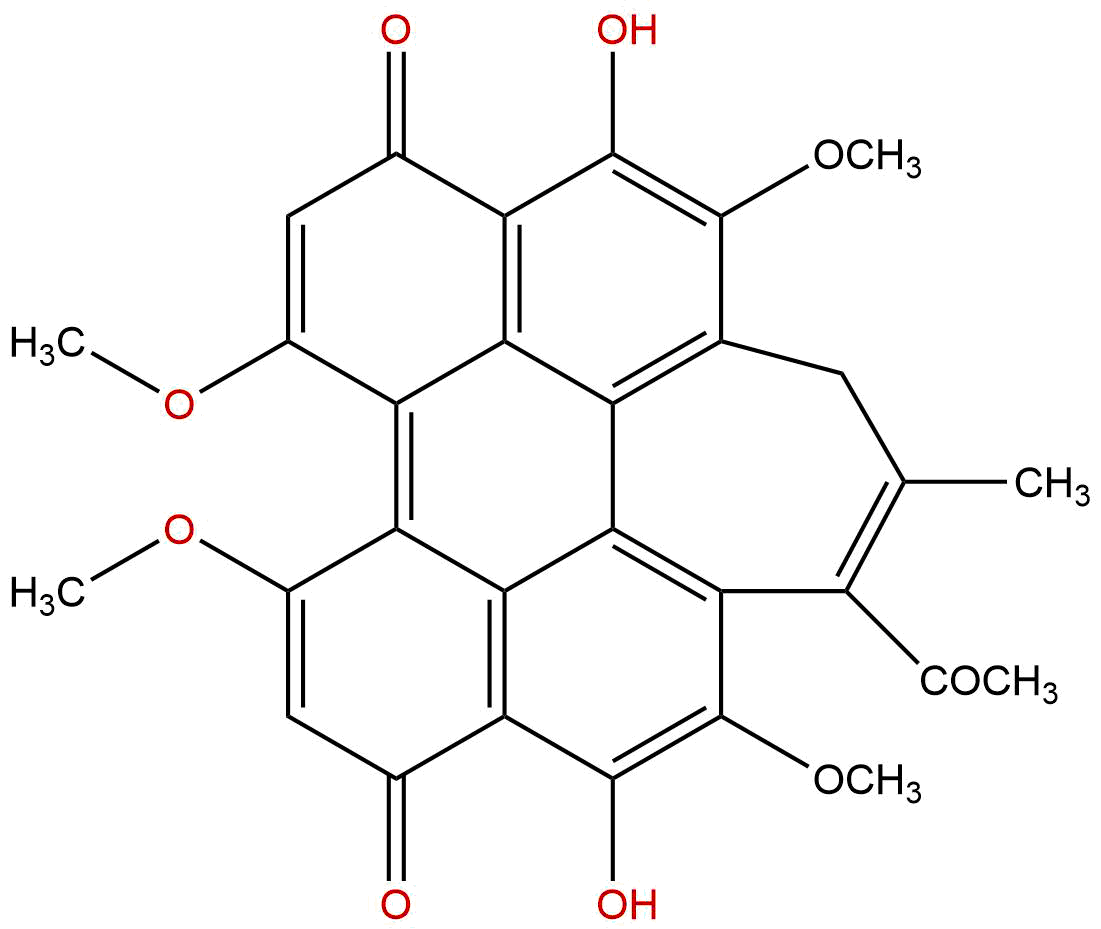


Product name: Hypocrellin B
Synonym name:
Catalogue No.: BP0755
Cas No.: 123940-54-5
Formula: C30H24O9
Mol Weight: 528.513
Botanical Source: Hypocrella bambusae (Berk. et Br.) Sacc
Physical Description:
Type of Compound: Anthraquinones
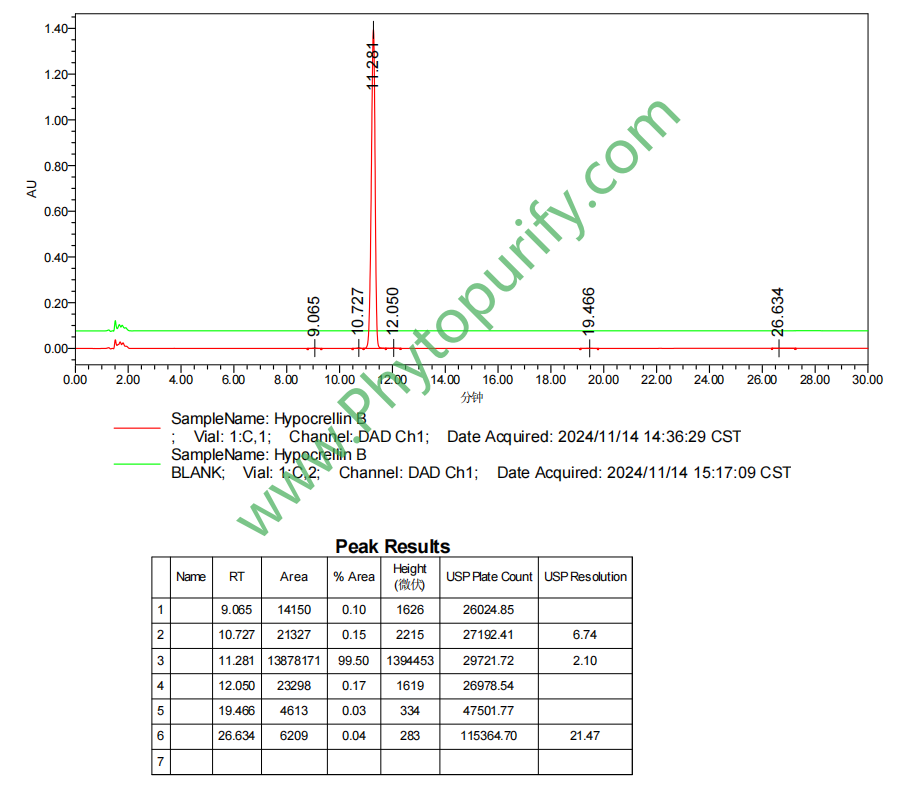
Purity: 95%~99%
Analysis Method: HPLC-DAD or/and HPLC-ELSD
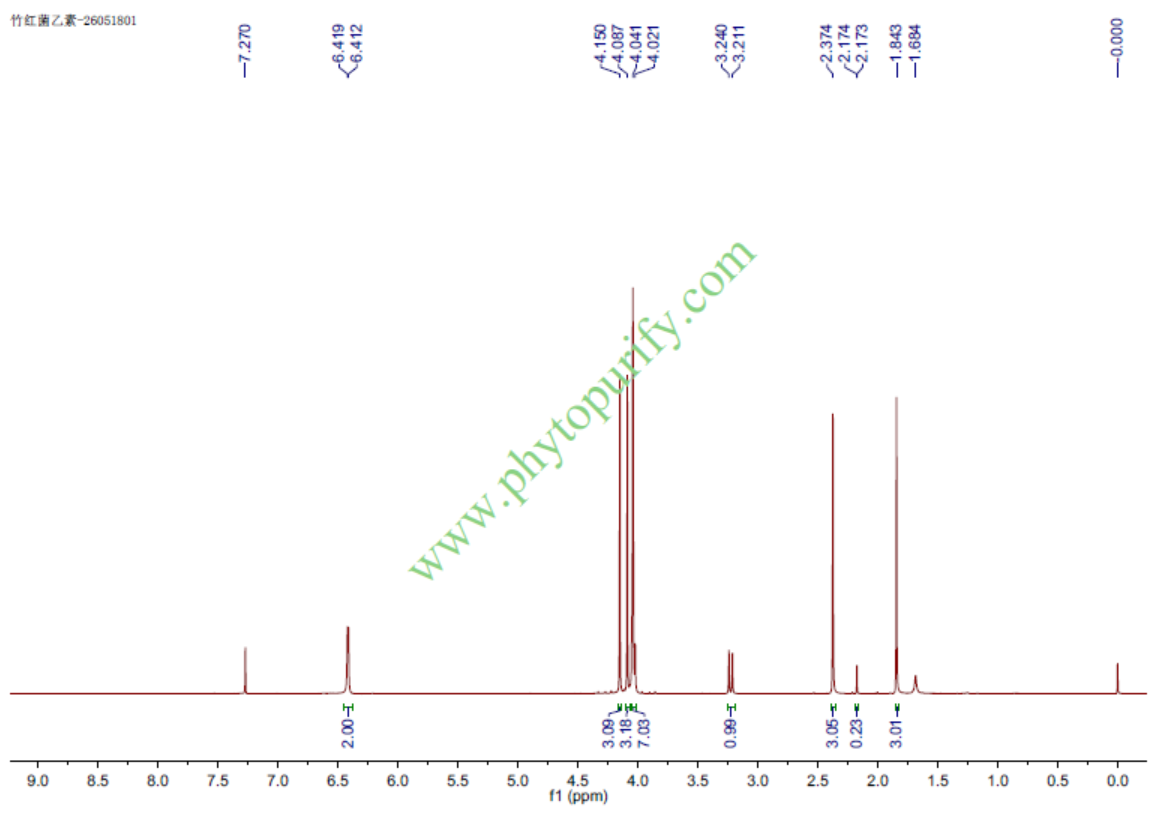
Identification Method: Mass, NMR
Packing: Brown vial or HDPE plastic bottle
Storage: Store in a well closed container, protected from air and light. Put into refrigerate or freeze for long term storage.
Whenever possible, you should prepare and use solutions on the same day. However, if you need to make up stock solutions in advance, we recommend that you store the solution as aliquots in tightly sealed vials at -20℃. Generally, these will be useable for up to two weeks.
The product could be supplied from milligrams to grams
Inquire for bulk scale.
Description:
Hypocrellin B has sonodynamic action to induce mitochondrial damage, survival inhibition, apoptosis and inhibit adhesion and migration of cancer cells. Photodynamic therapy with Hypocrellin B can remarkably induce apoptosis and inhibit adhesion and migration of cancer cells in vitro.
References:
Int J Radiat Biol. 2014 Jul;90(7):575-9.
Effect of photodynamic therapy with hypocrellin B on apoptosis, adhesion, and migration of cancer cells.
In the present study, we investigated effects of photodynamic therapy with Hypocrellin B on apoptosis, adhesion, and migration of cancer cells in vitro.
METHODS AND RESULTS:
Human ovarian cancer HO-8910 cell as a cancer model cell was incubated with Hypocrellin B at a concentration of 2.5 μM for 5 h and irradiated by light from a light-emitting diodes (LED) source. Cell apoptosis was analyzed by flow cytometry with annexin V/propidium iodide (PI) staining and nuclear staining 6 h after Hypocrellin B photoirradiation. Cell adhesion was assessed using the 3-(4, 5-dimthylthiazol-2-yl)-2, 5 diphenyl-tetrazolium bromide (MTT) assay 4 h after photodynamic treatment. Cell migration was measured 48 h after photodynamic treatment. Flow cytometry with annexin V/PI staining showed that early apoptotic and late apoptotic (necrotic) rates following photodynamic therapy with Hypocrellin B markedly increased to 16.40% and 24.67%, respectively. Nuclear staining found nuclear condensation and typical apoptotic body in the treated cells. The number of cell migration was significantly decreased to 183 ± 28 after photodynamic therapy with Hypocrellin B (p < 0.01). Light irradiation alone and Hypocrellin B alone had no significant effect on cell migration. The cell adhesion inhibitory rate due to photodynamic action of Hypocrellin Bwas 53.2 ± 1.8%, significantly higher than 2.7 ± 2.1% of light treatment alone and 1.0 ± 0.4% of Hypocrellin B treatment alone (p < 0.01).
CONCLUSIONS:
The findings demonstrated that photodynamic therapy with Hypocrellin B remarkably induced apoptosis and inhibited adhesion and migration of cancer cells in vitro.
Ultrasonics. 2012 Apr;52(4):543-6.
Hypocrellin B-mediated sonodynamic action induces apoptosis of hepatocellular carcinoma cells.
The present study aims to investigate apoptosis of hepatocellular carcinoma cells induced by Hypocrellin B-mediated sonodynamic action.
METHODS AND RESULTS:
The Hypocrellin B concentration was kept constant at 2.5 μM and cells from the hepatocellular carcinoma HepG2 cell line were exposed to ultrasound with an intensity of 0.46 W/cm(2) for 8s. Cell cytotoxicity was quantified using an MTT assay 24 h after sonodynamic therapy (SDT) of Hypocrellin B. Apoptosis was investigated using a flow cytometry with Annexin V-FITC and propidium iodine staining. Intracellular reactive oxygen species (ROS) levels were detected using a flow cytometry with 2,7-dichlorodihydrofluorecein diacetate (DCFH-DA) staining. The cytotoxicity of Hypocrellin B-mediated sonodynamic action on HepG2 cells was significantly higher than those of other treatments including ultrasound alone, Hypocrellin B alone and sham treatment. Flow cytometry showed that Hypocrellin B-induced sonodynamic action markedly enhanced the apoptotic rate of HepG2 cells. Increased ROS was observed in HepG2 cells after being treated with Hypocrellin B-mediated sonodynamic action.
CONCLUSIONS:
Our data demonstrated that Hypocrellin B-mediated sonodynamic action remarkably induced apoptosis of HepG2 cells, suggesting that apoptosis is an important mechanism of cell death induced by Hypocrellin B-mediated SDT.
HPLC of Hypocrellin B
HNMR of Hypocrellin B
Storage conditions:Short-term storage at 2~8℃, long-term storage at -20 ~ -80℃
Hypocrellin B (CAS number: 123940-54-5) is a natural pigment derived from the fungi Hypocrella bambusae and Shiraia bambusicola, belonging to the class of furanthraquinone compounds. As a photosensitizer, Caryophyllin B has shown unique application value in the field of photodynamic therapy (PDT), especially in anti-tumor therapy, which has attracted widespread attention. In addition, Caryophyllin B also exhibits significant antibacterial and anti leishmania activities, demonstrating its multi-target and multifunctional pharmacological potential. In recent years, with the deepening of research on its molecular mechanism and medicinal properties, Caryophyllin B has gradually become one of the hotspots in the pharmacological study of natural products.
This review aims to systematically summarize the chemical structure and physicochemical properties, sources and extraction methods, pharmacological activity and mechanism of action of Caryophyllum B, and comprehensively analyze its potential and challenges as a new natural drug candidate molecule, based on its pharmacological evaluation and clinical application prospects, providing theoretical basis and reference for related research.
Zhuhongjunsu B is a natural pigment of furan anthraquinone class, with a molecular formula of C28H24O10 and a molecular weight of 528.5130. Its structural features include a polycyclic anthraquinone core, connected by furan rings and multiple hydroxyl and methoxy substituents, endowing it with unique photosensitive activity. Its LogP value is 3.7202, indicating moderate hydrophobicity that facilitates membrane penetration. The topological polar surface area (TPSA) is 128.5900, indicating moderate polarity, which may affect its bioavailability and pharmacokinetic characteristics.
The extremely low water solubility (0.0001 mg/mL) limits its solubility in aqueous phase, indicating the need for appropriate carriers or solvent systems in formulation development to improve its bioavailability. The low penetration ability of the blood-brain barrier indicates that its application in the central nervous system may be limited. The hERG channel inhibition experiment showed a negative result, indicating that the risk of prolonged QT interval in the heart is low for hypocrellin B. The Ames mutagenicity test result is 0.9, indicating a low risk of genotoxicity and a good safety basis.
Caryophyllin B is mainly isolated from the fungi Hypocrella bambusae and Shiraia bambusicola in the genus Caryophyllum. Shiraia bambusicola is a filamentous fungus that parasitizes bamboo plants and is widely distributed in Asian regions, especially in bamboo forests in southern China. The natural accumulation of Caryophyllum B makes this fungus an important natural product resource.
The traditional extraction method usually adopts a strategy of combining organic solvent extraction with separation and purification. Common extraction solvents include ethanol, methanol, ethyl acetate, etc., combined with ultrasound assisted extraction or reflux extraction to improve extraction efficiency. The extraction solution was further purified by techniques such as silica gel column chromatography and reverse phase high performance liquid chromatography (RP-HPLC), ultimately obtaining high-purity gibberellin B.
In recent years, with the demand for green chemistry and process optimization, new technologies such as supercritical CO2 extraction and microwave-assisted extraction have been introduced to improve extraction efficiency, reduce solvent usage, and protect active ingredients. In addition, the study of biosynthetic pathways based on genetic engineering and fermentation technology also provides new possibilities for the large-scale production of Caryophyllin B.
As a photosensitizer, the anti-tumor effect of Rhododendron B in photodynamic therapy has been widely reported. It can produce reactive oxygen species (ROS) under light conditions, inducing apoptosis and necrosis of tumor cells. A variety of tumor cell lines (including lung cancer, breast cancer, liver cancer, etc.) showed sensitivity to hypocrellin B photodynamic therapy, showing significant cytotoxicity.
In addition to photodynamic effects, Caryophyllin B also exhibits certain non light dependent anti-tumor activity. Research has shown that it can inhibit tumor cell proliferation, migration, and invasion by regulating multiple signaling pathways and molecular targets. Its targets include anti apoptotic proteins MCL1 and BCL2, signal transduction factor STAT3, matrix metalloproteinase MMP2, DNA topoisomerases TOP1 and TOP2A, transcription factors HIF1A, MAPK1, estrogen receptor ESR1, and aromatase CYP19A1, reflecting its multi-target regulatory characteristics.
Bamboo red fungus B exhibits inhibitory effects on various bacteria, especially with strong activity against Gram positive bacteria. In addition, its inhibitory effect on Leishmania spp. has also been confirmed, demonstrating potential anti parasitic application value. Its antibacterial mechanism may be related to cell membrane disruption, ROS generation, and DNA damage.
Some studies suggest that Caryophyllum B has anti-inflammatory and immunomodulatory effects, but the relevant mechanisms have not been systematically elucidated and further in-depth research is needed.
The anti-tumor mechanism of Caryophyllum B mainly depends on its photosensitivity and multi-target regulatory ability. Under light conditions, Caryophyllin B generates singlet oxygen and other reactive oxygen species through photoexcitation, leading to a significant increase in oxidative stress levels in tumor cells, inducing mitochondrial membrane potential loss, cytochrome c release, and activating endogenous apoptosis pathways.
At the molecular level, Caryophyllin B can downregulate the expression of anti apoptotic proteins MCL1 and BCL2, thereby relieving cell apoptosis inhibition. Its inhibition of the STAT3 signaling pathway blocks the proliferation and immune escape of tumor cells. By inhibiting MMP2, Caryophyllin B reduces matrix degradation of tumor cells, inhibits cell migration and invasion. The interference of DNA topoisomerases TOP1 and TOP2A hinders the DNA replication and repair process of tumor cells.
In addition, Caryophyllin B can also inhibit HIF1A, reduce tumor hypoxia adaptation ability, and enhance the efficacy of photodynamic therapy. The regulation of MAPK1 and ESR1 affects tumor cell signaling and hormone dependent tumor growth. Inhibition of aromatase CYP19A1 may affect estrogen synthesis and further exert its anti breast cancer effect.
The antibacterial and anti leishmania activities of Caryophyllum B are also closely related to the generation of reactive oxygen species and cell membrane damage, leading to microbial cell death.
The pharmacological evaluation of Zhuhongjunsu B shows that it has certain advantages and challenges. Its molecular weight is 528.5130, slightly higher than the ideal range of traditional oral small molecule drugs, but still within an acceptable range. The LogP is 3.7202, indicating moderate lipid solubility that facilitates membrane penetration, but extremely low water solubility (0.0001 mg/mL), which limits its oral bioavailability and in vivo distribution.
The low penetration ability of the blood-brain barrier suggests that it is not easy to enter the central nervous system, reducing the risk of neurotoxicity, but limiting its application in central nervous system diseases. HERG channel inhibition is negative, indicating a low risk of cardiac toxicity. The Ames test results show that its genotoxicity risk is low and its safety is good.
In terms of pharmacokinetics, the absorption, distribution, metabolism, and excretion (ADME) characteristics of Caryophyllin B in vivo have not been systematically reported. Considering its low water solubility, oral absorption may be limited, and it is necessary to use nanocarriers, liposomes, or other delivery systems to improve bioavailability. The metabolic pathway may involve the liver enzyme system, and further research is needed on its metabolites and toxicity.
In the application of photodynamic therapy, local administration or intravenous injection combined with specific wavelength light irradiation can achieve targeted killing of tumor cells and reduce systemic toxic side effects.
Bamboo red fungus B has broad prospects as a photosensitizer in photodynamic therapy for cancer. Its efficient photosensitivity and multi-target anti-tumor mechanism provide new strategies for the treatment of various solid tumors. In the future, its pharmacokinetic properties and targeting can be optimized through structural modification and drug carrier technology to enhance therapeutic efficacy and safety.
Antibacterial and anti leishmanian activities provide the possibility for its development in the field of infectious diseases, especially in the context of increasingly severe drug-resistant strains and parasitic infections, hypocrellin B is expected to become a new anti infective drug candidate.
However, the low water solubility and pharmacokinetic limitations of Caryophyllin B are the main obstacles to its clinical translation. Further systematic pharmacokinetic, toxicological, and preclinical studies are needed to clarify its safety and effective dose range. Meanwhile, the optimization of the light source equipment and illumination parameters for photodynamic therapy is also crucial for achieving clinical applications.
Future research should also focus on the combined application of Caryophyllin B with other anticancer drugs, explore synergistic mechanisms, and improve treatment efficacy. In addition, genetic engineering synthesis and fermentation process optimization will promote its large-scale production and cost control.
Bamboo red fungus B, as a natural furan anthraquinone pigment derived from the bamboo red fungus genus, has shown great potential as a new photodynamic therapy drug due to its unique photosensitivity and multi-target anti-tumor activity. Its antibacterial and anti leishmania activities have further expanded its pharmacological applications. Despite challenges such as poor water solubility and pharmacokinetic limitations, modern pharmaceutical formulation technology and biosynthetic methods provide strong support for its clinical translation.
In the future, hypocrellin B is expected to become an important breakthrough in the field of natural product pharmacology and bring new hope for the treatment of cancer and infectious diseases through in-depth analysis of its mechanism of action, optimization of drug properties and expansion of clinical indications.
