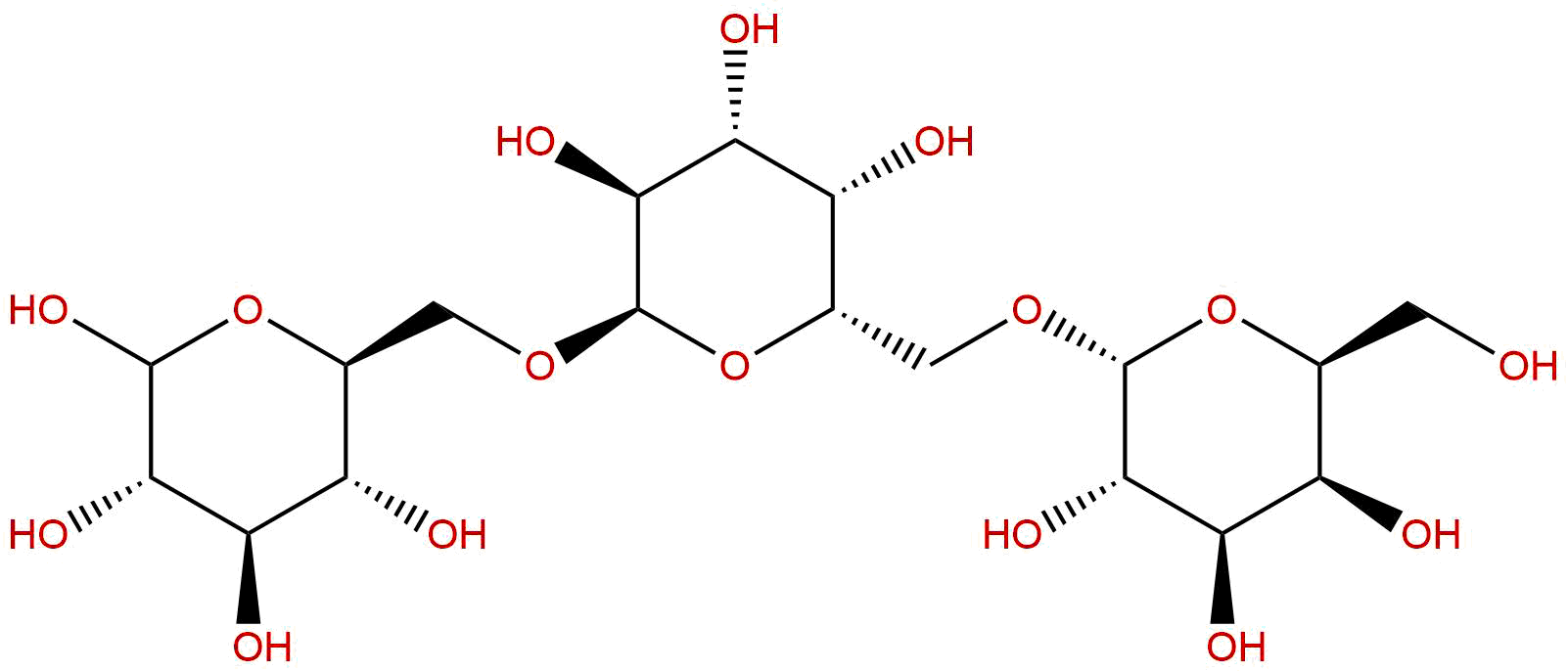


Product name: Manninotriose
Synonym name:
Catalogue No.: BP3247
Cas No.: 13382-86-0
Formula: C18H32O16
Mol Weight: 504.438
Botanical Source:
Physical Description:
Type of Compound:
Purity: 95%~99%
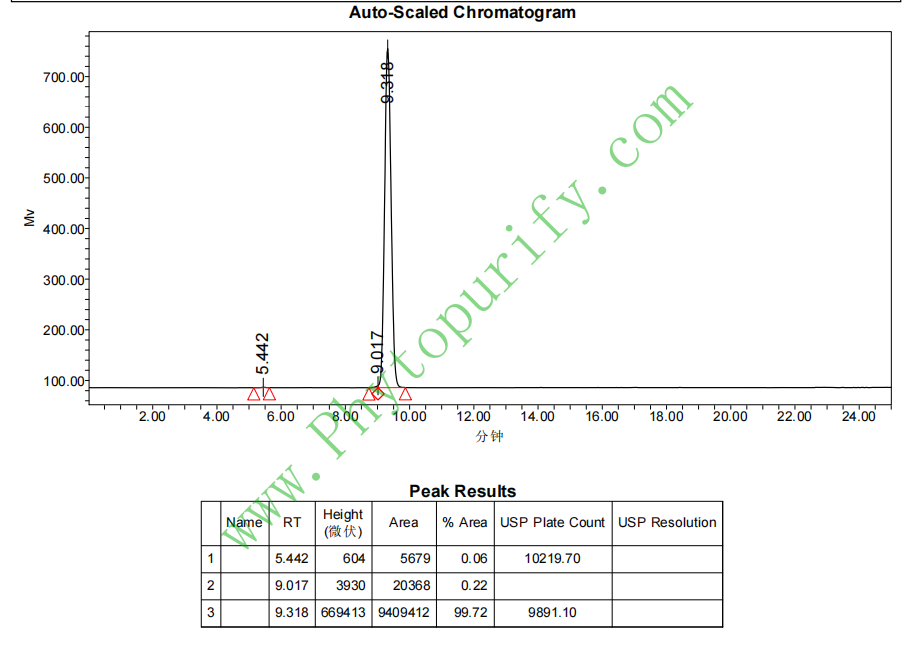
Analysis Method: HPLC-DAD or/and HPLC-ELSD
Identification Method: Mass, NMR
Packing: Brown vial or HDPE plastic bottle
The product could be supplied from milligrams to grams. Inquire for bulk scale.
We provide solution to improve the water-solubility of compounds, thereby facilitating the variety of activity tests and clinic uses.
For Reference Standard and R&D, Not for Human Use Directly.
HPLC of Manninotriose
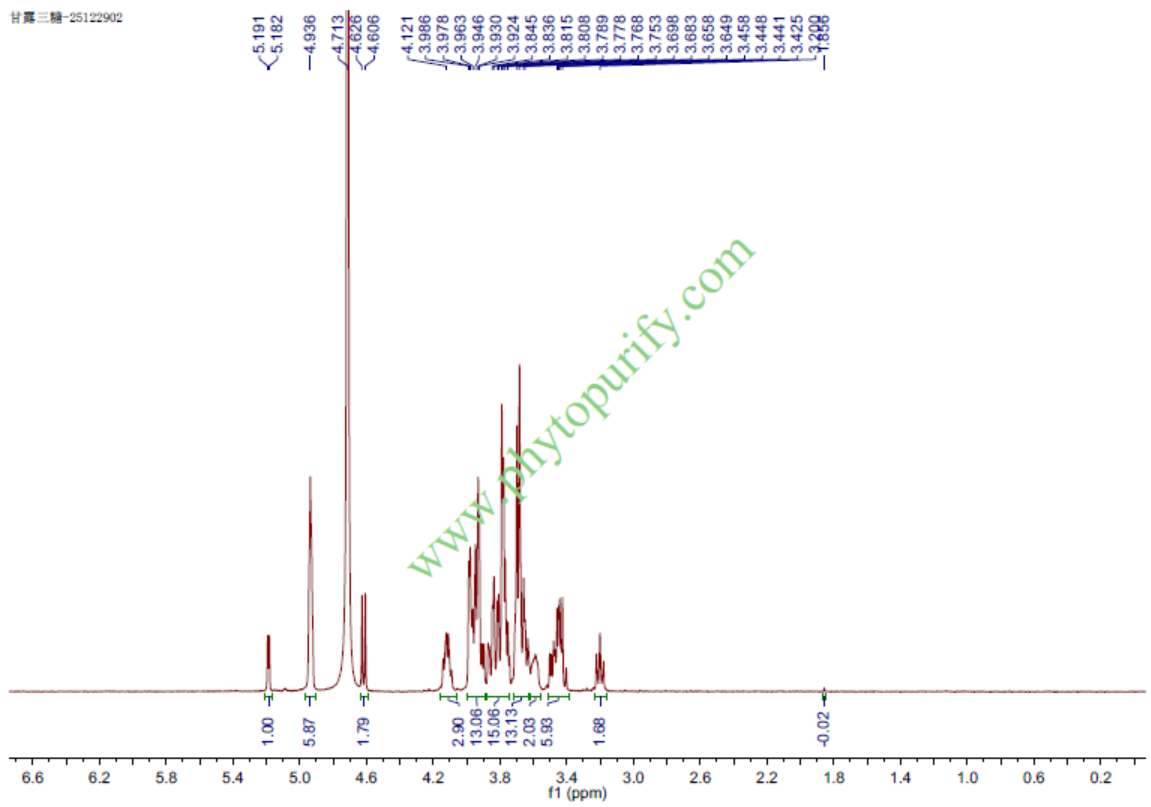
HNMR of Manninotriose
Storage conditions:Short-term storage at 2~8℃, long-term storage at -20 ~ -80℃
268.6800
-3.3241
-3.3247
110.0125
.3037
.1765
Low
12.8507
4.7183
Yes
No
No
No
No
No
0.9
Yes
Yes
Yes
Yes
Manninotriose (CAS number: 13382-86-0) is a naturally occurring trisaccharide compound with the chemical formula C18H32O16 and a molecular weight of 504.44. It was initially identified as Ono sesame(Lamium amplexicaule L., The main carbohydrate components in the family Lamiaceae. As a member of the oligosaccharides in the raffinose family, mannose is composed of one molecule of galactose, one molecule of glucose, and one molecule of mannose linked by specific glycosidic bonds. For a long time, this type of oligosaccharide has been recognized for its role as a plant energy reserve and stress resistant molecule, but its biological activity research in mammalian systems is relatively limited.
In recent years, with the deepening of research on the interaction between gut microbiota and host health, naturally sourced non digestible oligosaccharides have attracted much attention due to their excellent prebiotic potential and regulatory effects on gut barrier function. Ganlu trisaccharide, as a potential bioactive oligosaccharide, is gradually shifting its research focus from plant chemistry to pharmacology. In particular, its structure is similar to that of fermentable substrates in the gut microbiota, suggesting that it may play a key role in maintaining gut homeostasis and intervening in gut related diseases by regulating gut microbiota composition, enhancing gut barrier integrity, and regulating local immune responses. This review aims to systematically summarize the chemical characteristics, plant sources, pharmacological activities, molecular mechanisms of action, and potential medicinal properties of Ganlu trisaccharide, providing scientific basis for its in-depth research and application development in the field of intestinal health.
The chemical structure of Ganlu trisaccharide is clear, belonging to the cotton seed sugar series oligosaccharides. Its specific structure is α - D-galactopyranosyl - (1 → 6) - α - D-glucopyranosyl - (1 → 2) - β - D-mannopyranoside. This trisaccharide structure gives it a certain spatial conformation and molecular recognition properties.
In terms of physicochemical properties, Ganlu trisaccharide exhibits typical hydrophilic oligosaccharide characteristics. Its calculated lipid water partition coefficient (LogP) is -3.32, indicating that it has extremely strong hydrophilicity and very low lipid solubility. The topologically polar surface area (TPSA) is as high as 268.68 Å ², further confirming that its molecular surface is rich in hydrophilic hydroxyl groups and has strong interaction ability with water molecules. Therefore, Ganlu trisaccharide has excellent water solubility, with a theoretical value of about 110 g/L, and is easy to dissolve and disperse in aqueous systems. Its molecular weight is 504.44 Da, belonging to the category of small molecule compounds, but it has exceeded the common "five rules" of most drugs, mainly related to the characteristics of its carbohydrate substances.
These physicochemical properties determine the basic behavior of mannotriose in the body: it is difficult to passively cross the lipid bilayer, mainly exists in the gastrointestinal tract after oral administration, is not easily absorbed by gastrointestinal epithelial cells into the systemic circulation, and is also difficult to pass through the blood-brain barrier. These characteristics precisely enable it to target the local area of the intestine, serving as a fermentation substrate for the gut microbiota or interacting with pattern recognition receptors on the surface of intestinal epithelial cells.
Ganlu trisaccharide was originally derived from the small wild sesame plant in the family Lamiaceae(Lamium amplexicaule L. The important soluble carbohydrates isolated and identified in the plant are particularly high in specific growth stages or organs. In addition to small field sesame, subsequent studies have also found the presence of mannotriose or its derivatives in other plants, such as some leguminous plant seeds and some medicinal plants, but its role as the main sugar storage is particularly prominent in small field sesame.
The extraction of mannotriose from plant materials usually follows the general extraction and purification process for water-soluble sugars in natural products. The main steps are as follows:
1. Extract Usually, hot water or a certain concentration of ethanol aqueous solution is used for extraction. Hot water extraction has high efficiency, but there are more co extracts; Ethanol aqueous solution (such as 50-80%) can reduce the dissolution of impurities such as proteins and polyphenols while extracting sugars.
2. Remove impurities After filtration, the extract is often decolorized using activated carbon to remove pigments, or partially removed from organic acids, phenols, and other non sugar impurities through a macroporous adsorption resin column.
3. Separation and purification This is a key step in obtaining high-purity mannotriose. Column chromatography techniques are commonly used, such as activated carbon diatomaceous earth columns, ion exchange chromatography (such as boric acid complex chromatography), and high performance liquid chromatography (HPLC). Among them, HPLC equipped with differential refractive index detector (RID) or evaporative light scattering detector (ELSD) is a commonly used method for analyzing and preparing mannotriose. Amino columns or hydrophilic interaction chromatography (HILIC) columns are often used, with acetonitrile water as the mobile phase for gradient elution.
4. Identification and verification The purified compound was structurally confirmed by techniques such as nuclear magnetic resonance (NMR, including ¹ H NMR and ¹ ³ C NMR) and mass spectrometry (MS).
With the development of synthetic biology, the use of enzymatic or microbial cell factories to synthesize specific structures of oligosaccharides (including Ganlu trisaccharide) has become a potential and sustainable large-scale production pathway.
Although direct pharmacological research on Ganlu trisaccharide is still in its infancy, extensive studies on its structural analogues (such as α - galactose oligosaccharides like raffinose and raffinose) and preliminary in vitro and animal experimental evidence suggest that it has multiple potential pharmacological activities in the field of intestinal health.
The beneficial effects of Ganlu Trisaccharide on intestinal health involve a complex regulatory network of multiple targets and pathways. Its mechanism of action can be divided into indirect mechanisms (mediated by gut microbiota) and direct mechanisms (interacting with host cells).
Indirect mechanism (microbiota dependent pathway):
Ganlu trisaccharide is fermented by gut microbiota to produce SCFAs (especially butyric acid). Butyric acid is not only the main energy source for colonic epithelial cells, but also an important signaling molecule. It can regulate gene expression, promote epithelial cell proliferation and differentiation, enhance barrier function, and induce regulatory T cell (Treg) differentiation by activating G protein coupled receptors (such as GPR41, GPR43), inhibiting histone deacetylase (HDAC). Key transcription factors of Treg cells FOXP3 It is its core functional symbol. In addition, SCFAs can promote the secretion of intestinal epithelial cells MUC2 Mucin strengthens the mucus barrier; It can also induce intestinal endocrine cells to secrete glucagon like peptide-2 (GLP-2), indirectly promoting intestinal health.
Direct mechanism (microbiota independent pathway):
Ganlu trisaccharide or its metabolites may directly interact with pattern recognition receptors (PRRs) on the surface of intestinal epithelial cells and immune cells, regulating related signaling pathways:
* TLR4 signaling pathway TLR4 is a key receptor for recognizing lipopolysaccharides (LPS), and its excessive activation leads to strong inflammation mediated by NF - κ B. There are studies suggesting that certain oligosaccharides may exert anti-inflammatory effects by interfering with the binding of LPS to TLR4/MD2 complex, or regulating TLR4 endocytosis and downstream signaling.
* NOD2 signaling pathway NOD2 is an intracellular bacterial peptidoglycan sensor that is highly expressed in Paneth cells and is crucial for maintaining intestinal homeostasis and antimicrobial defense. NOD2 functional defects are associated with an increased risk of Crohn's disease. Whether Ganlu trisaccharide affects NOD2 signaling remains to be studied, but this pathway is an important target for intestinal immune regulation.
* Endoplasmic reticulum stress and unfolded protein response (UPR) pathway Intestinal inflammation is often accompanied by endoplasmic reticulum stress. XBP1 is a key transcription factor for UPR, and its splicing activated form (XBP1s) is crucial for the survival, function, and MUC2 production of intestinal epithelial cells, especially goblet cells. Certain protective substances can protect the gut by reducing endoplasmic reticulum stress and promoting the XBP1s pathway.
* Cytokines and Growth Factor Network Ganlu trisaccharide may affect the expression balance of multiple cytokines. For example, promoting anti-inflammatory cytokines IL-10 The emergence of; Inhibit key pro-inflammatory factors TNF Overexpression; adjust TGFB1(with dual anti-inflammatory and pro fibrotic effects) activity. These factors collectively shape the intestinal immune microenvironment.
* Autophagy related pathways Autophagy is an important process for cells to clear damaged components and maintain internal environmental stability. ATG16L1 is a key protein involved in autophagosome formation, and its genetic polymorphism is associated with the risk of Crohn's disease. Certain prebiotics or metabolites can enhance the clearance ability of intestinal epithelial cells towards intracellular pathogens and maintain homeostasis by affecting autophagy flow.
* IL-23/Th17 pathway IL-23 is produced by innate immune cells and is the core cytokine driving Th17 cell-mediated inflammatory responses. IL-23R is its receptor, and this pathway plays an important role in the pathogenesis of inflammatory bowel disease (IBD). Regulating this pathway is an important strategy for IBD treatment.
In summary, Ganlu Trisaccharide may form a comprehensive network of functions through one or more of the aforementioned targets, ranging from maintaining physical barriers (MUC2), regulating immune balance (TLR4, TNF, IL10, FOXP3, IL23R), responding to cellular stress (XBP1), to regulating cellular autophagy (ATG16L1) and growth repair (TGFB1).
Based on the provided parameters and the characteristics of sugar substances, a preliminary evaluation of the medicinal properties of Ganlu trisaccharide is conducted
In summary, Ganlu Trisaccharide conforms to the characteristics of colon targeted prebiotics that are "locally active and difficult to absorb". The focus of its pharmacological development is not on increasing systemic exposure, but on optimizing its colonic delivery efficiency, evaluating its long-term safety, and clarifying its effective dosage range.
Ganlu trisaccharide has shown broad clinical application potential in the field of intestinal health, but its translational research still needs to be further explored.
Potential application directions:
1. Adjuvant therapy for inflammatory bowel disease (IBD)Based on its potential anti-inflammatory, barrier repair, and immune regulatory effects, mannotriose may be used as a dietary supplement or adjuvant therapy for ulcerative colitis and Crohn's disease to alleviate symptoms and maintain remission.
2. Management of Irritable Bowel Syndrome (IBS)By regulating the microbiota, producing SCFAs, and reducing low-grade inflammation, it is possible to improve the symptoms of bloating, abdominal pain, and disordered bowel habits in IBS patients.
3. Intervention of intestinal barrier dysfunction related diseases Like antibiotic associated diarrhea, traveler's diarrhea, necrotizing enterocolitis (NEC), etc., mannotriose can exert protective effects by enhancing barriers and antagonizing pathogen colonization.
4. Intestinal regulation of metabolic diseases The imbalance of intestinal flora is closely related to obesity and type 2 diabetes. Ganlu trisaccharide, as a prebiotic, may indirectly improve host metabolism by improving microbial community structure and increasing SCFAs production.
5. Functional food and specialty food additives As a safe natural oligosaccharide, it can be directly used to develop health foods that promote intestinal health, infant formula milk powder, or specific full nutrition formula foods.
Challenges and Future Prospects:
1. The mechanism of action needs to be deepened Currently, most mechanisms are speculated to be based on structural analogues or related pathways. It is necessary to design rigorous in vitro and in vivo experiments to directly verify the interaction between mannotriose and the aforementioned targets (TLR4, NOD2, XBP1, etc.), and clarify whether it is a direct effect or an indirect effect solely dependent on microbial metabolites.
2. Lack of high-quality clinical evidence It is urgent to conduct randomized controlled clinical trials to evaluate its effectiveness, optimal dosage, and safety in specific populations such as IBD and IBS patients.
3. Structural optimization and formulation development Can moderate chemical modifications be made to Ganlu Trisaccharide to enhance its selectivity towards specific bacterial communities or increase its affinity for host receptors? How to develop dosage forms (such as coated tablets, microcapsules) that can ensure precise delivery to the colon?
4. Individualized application The gut microbiota exhibits high individual variability. Future research needs to explore how to predict the response of patients to mannotriose based on their baseline microbiota characteristics, in order to achieve personalized nutritional interventions.
Ganlu trisaccharide, a natural trisaccharide derived from small field sesame, is transforming from a simple plant carbohydrate to a bioactive molecule with potential pharmacological value. Its excellent hydrophilicity and non digestibility give it unique advantages in targeting the colon, regulating intestinal microbiota, and local immunity. Although its direct pharmacological research is still in its early stages, the theory and preliminary evidence surrounding the core targets of intestinal health (such as TLR4, TNF, IL10, MUC2, XBP1, etc.) have drawn an exciting blueprint for its application in intestinal diseases such as inflammatory bowel disease and irritable bowel syndrome. The current research has preliminarily suggested its good safety features. However, to translate this potential into practical clinical benefits, it is necessary to bridge the gap from mechanism elucidation to clinical validation. In the future, interdisciplinary collaboration is needed to uncover the precise dialogue mechanism between mannotriose and the host microbiota interaction network, and to confirm its efficacy and safety through rigorous clinical trials. With the continuous deepening of research, Ganlu trisaccharide is expected to become an important natural candidate molecule in the field of intestinal health, providing new ideas and choices for the development of novel microecological regulators and intestinal barrier protectors.
