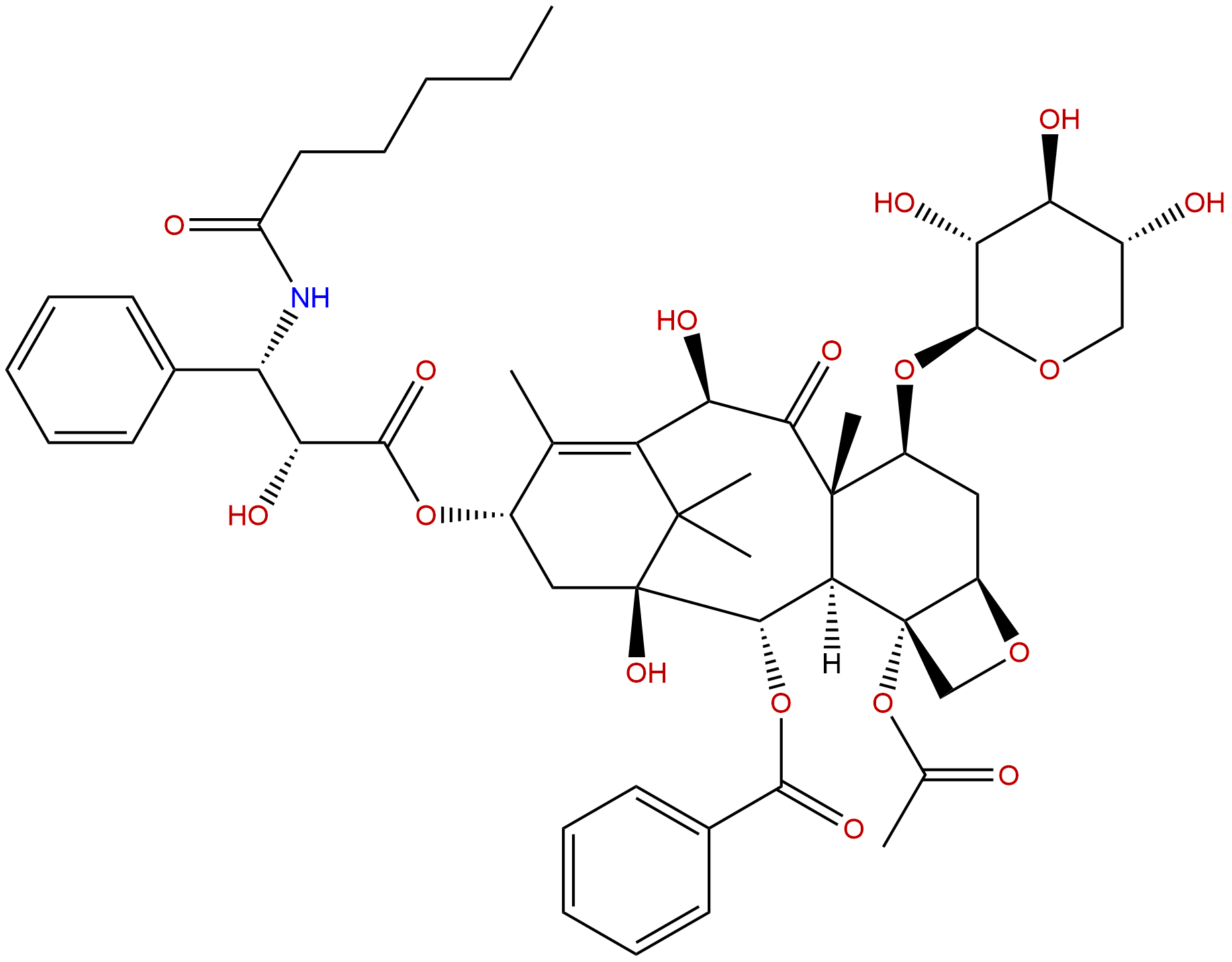
7-Xylosyl-10-deacetylpaclitaxel C: a natural anti-tumor product derived from Taxus chinensis, in-depth analysis
1. Overview
7-Xylosyl-10-deacetyl paclitaxel C (CAS: 90332-65-3) is a structurally complex and biologically active taxane diterpenoid compound. As one of the natural derivatives of the star anti-cancer drug Paclitaxel, it is mainly derived from plants in the Taxus genus, such as Taxus chinensis)Separated from the middle. This compound has attracted much attention in the fields of natural product chemistry and tumor pharmacology research, not only due to its unique chemical structure, but also because of its demonstrated in vitro and in vivo models Antitumor activity For example, the inhibitory effect on the growth of S180 sarcoma.
The research on paclitaxel and its derivatives is a milestone in the history of natural medicine development. Since the discovery of paclitaxel from the bark of Taxus chinensis in the 1960s, scientists have continuously isolated and identified hundreds of structurally similar taxane compounds from Taxus plants, aiming to find new candidate drugs with better activity, lower toxicity, or the ability to overcome paclitaxel resistance. 7-Xylosyl-10-deacetylpaclitaxel C was discovered in this context. Compared with classical paclitaxel, its structural feature is that a C-7 position is connected to a Xylose group At the same time, the C-10 position lacks an acetyl group. This structural modification may significantly affect its physicochemical properties, interaction modes with targets, and ultimately pharmacological activity and pharmacokinetic behavior, making it a highly valuable molecular entity for research.
2. Chemical structure and physicochemical properties
The molecular formula of 7-xyloyl-10-deacetylpaclitaxel C is C49H63NO17, with a molecular weight of up to 938.0330 g/mol It belongs to large molecule complex natural products. The SMILES string provides a detailed description of its stereochemical structure: a highly functionalized tetracyclic core skeleton of taxane (6/8/6/4 ring system), with an important side chain (N-benzoyl-3-phenylisoserine ester) attached at the C-13 position, a xylose monomer connected at the C-7 position via a glycosidic bond, a hydroxyl group (deacetylated) at the C-10 position, a typical alkene bond at the C-4 (20) position, and benzoyloxy and acetoxy substituents at the C-2 and C-4 positions, respectively.
From the analysis of drug parameters, it can be concluded that The coefficient of lipid water partition (LogP) is 2.6225 This indicates that the molecule has a certain degree of lipophilicity, but not extreme hydrophobicity.Topological Polarity Surface Area (TPSA) up to 274.14 Å ²This is mainly attributed to the numerous hydroxyl, ester, amide, and sugar units in the molecule, which form a large number of hydrogen bond donor and acceptor sites. High TPSA is usually associated with Low membrane permeability and Low blood-brain barrier (BBB) penetrability Related, this is consistent with the database's judgment of "BBB penetration: low". its The water solubility is only 0.0272 mg/mL It belongs to insoluble compounds, which poses challenges for its formulation development.
The molecular weight is close to 1000 Da, far beyond the range of conventional small molecule drugs (usually<500 Da), which may pose difficulties when crossing cell membranes. These physical and chemical properties collectively determine the absorption, distribution, and permeation behavior of the compound in vivo, which is a key basis for evaluating its potential as a drug.
3. Plant sources and traditional applications
The natural source of 7-xyloyl-10-deacetylpaclitaxel C is Taxaceae, Taxus plants, specifically as Taxus chinensis The genus Taxus is widely distributed worldwide and has abundant species resources in China, such as Southern Taxus, Yunnan Taxus, Northeast Taxus, etc. This type of plant grows slowly and is a precious relic tree species.
In traditional medicine, the application records of Taxus chinensis are relatively limited, and there has not been a systematic experience of medication like ginseng, licorice and other medicinal herbs. This is mainly because the whole plant of Taxus chinensis (except for the red false seed coat) contains a large amount of biologically toxic taxane compounds, and improper use may lead to poisoning. However, there have been sporadic records of using Chinese yew decoction to treat "swelling" and "accumulation syndrome" in some areas, which may inadvertently touch the edge of its anti-tumor effect. Modern pharmacological research has confirmed that the scientific principle behind this traditional experience is the strong inhibition of cell proliferation by taxanes.
Modern natural product chemistry research reveals that the Taxus chinensis plant is a "treasure trove" of taxane compounds. Plants synthesize these compounds through complex secondary metabolic pathways, which may serve as defense mechanisms against pests and diseases. 7-Xylosyl-10-deacetylpaclitaxel C is one of these secondary metabolites, often coexisting with other paclitaxel analogues in plant bark, branches, leaves, or cell cultures. Its content is usually low, making separation and purification difficult, which has also driven research on semi synthetic and biosynthetic methods to achieve sustainable supply.
4. Pharmacological activity and mechanism of action
The core pharmacological activity of this compound is antitumor activity Existing studies have shown that it can inhibit the growth of mouse S180 sarcoma, indicating its inhibitory effect on certain rapidly proliferating tumor cells. Although its mechanism of action has not been fully elucidated, based on its taxane like parent nucleus structure and known target information, it can be inferred that it may exert anticancer effects through multi-target and multi pathway pathways.
The target information provided by the database reveals its potential network of action:
- BCL2 and BAX BCL2 is an important anti apoptotic protein, while BAX is a pro apoptotic protein, both of which jointly regulate the mitochondrial pathway of cell apoptosis. Many taxane drugs can indirectly affect the balance of BCL2 family proteins and promote apoptosis. 7-Xylosyl-10-deacetylpaclitaxel C may disrupt the apoptosis tolerance of tumor cells and induce programmed cell death by interfering with the function of BCL2 or upregulating the expression of BAX.
- TP53 and CDKN1A TP53 is a well-known tumor suppressor gene, and its encoded p53 protein is activated during DNA damage and cellular stress, which can induce cell cycle arrest (by upregulating proteins such as CDKN1A/p21) or apoptosis. This compound may promote tumor cell arrest in G1/S phase by stabilizing p53 protein or activating p53 signaling pathway, creating conditions for DNA repair or initiating apoptosis.
- ESR1 Some taxane compounds have been reported to have weak estrogen receptor regulatory activity, namely estrogen receptor alpha. Although this is not the main mechanism of action, this additional effect may produce synergistic or interference effects in estrogen receptor positive breast cancer, which deserves further study.
Core mechanism speculation As a derivative of paclitaxel, its most classic and possible main mechanism of action is still Promote microtubule protein polymerization, stabilize microtubule structure, and inhibit its depolymerization This can lead to abnormal spindle function during cell mitosis, causing the cell cycle to stagnate in the G2/M phase and ultimately leading to apoptosis. The xylosylation at C-7 and deacetylation at C-10 may alter the strength and pattern of the interaction between the molecule and the microtubule binding pocket, thereby affecting its effectiveness, selectivity, and ability to overcome resistance caused by microtubule mutations in inhibiting microtubule depolymerization.
In addition, its multi-target nature suggests that it may have Overcoming single target drug resistance The potential. The resistance of tumor cells to paclitaxel often involves overexpression of drug efflux pumps (such as P-gp), microtubule protein mutations, and defects in the apoptotic pathway. The unique structure of this derivative may affect its efficiency in recognition and efflux by P-gp, while its ability to promote apoptosis through multiple pathways such as p53 and BCL2 may still be effective against tumor cells with apoptotic signal defects.
5. Evaluation of drug properties
Based on the provided pharmacokinetic parameters, we can conduct a preliminary evaluation of the compound as a candidate drug for oral or injection administration, and combine it with Lipinski's Five Rules(Rule of Five, Ro5) for analysis:
- Molecular weight (MW):938.0330 This far exceeds the recommended upper limit of 500 Da for Ro5. This usually indicates Oral absorption may be poor Because large molecules are difficult to passively diffuse through the intestinal epithelial cell membrane.
- Lipid water partition coefficient (LogP):2.6225 Within the recommended range of Ro5 (<5), it indicates that the molecular lipophilicity is moderate and not the main factor leading to absorption failure.
- Hydrogen bond donor (HBD) and acceptor (HBA)From the structural inference, it is likely that the number of HBDs and HBAs will exceed the limit of Ro5 (HBD ≤ 5, HBA ≤ 10). extremely high TPSA(274.14) Indirectly confirming this, highly polar surfaces severely impede transmembrane passive transport.
- Number of rotatable keys A complex and rigid four ring skeleton with side chains and sugar groups may have a large number of rotatable bonds, which may affect conformational stability and oral bioavailability.
Analysis of other key parameters:
- Permeability The low values of Caco-2 cell permeability (0.3071) and effective permeability coefficient (Peff: 0.4653) confirm its Extremely poor intestinal absorption potential This is consistent with its high MW and high TPSA characteristics.
- distribution The plasma protein binding rate (PPB) is as high as 85.9995%This means that the proportion of free drugs in the blood is low, which may affect the efficiency and efficacy of their diffusion into tissues. BBB has low penetration and is not suitable for the treatment of central nervous system tumors.
- Metabolism and toxicity The key toxicity indicators such as Ames test, chromosomal aberration, and hERG inhibition are all negative or "none/no", which is a positive signal indicating their Low risk of genetic toxicity and cardiac toxicity However, the liver toxicity markers (Ser_ST, Ser_LT) indicate "yes", which means that signs of liver cell damage may be observed under experimental conditions and need to be closely monitored in subsequent development.
- solubility The extremely low water solubility (0.0272 mg/mL) is the primary challenge in formulation development, which may require complex solubilization techniques (such as using surfactants, making liposomes or nano formulations).
Comprehensive Assessment 7-Xylosyl-10-deacetylpaclitaxel C as a Lead Compound Its unique activity deserves further investigation. However, from the classic Ro5 standard, it seriously violates (especially in terms of molecular weight and polarity),Not possessing good oral drug properties Its development path is more likely to point towards Injection administration Even as an injection, it is necessary to address its water solubility issue and carefully evaluate its therapeutic window (balance between efficacy and potential liver toxicity). Its greater value may lie in serving as The starting point of pharmaceutical chemistry optimization By modifying the structure (such as simplifying xylose groups, preparing prodrugs, covalently linking targeting groups, etc.) to improve their drug like properties, or as a tool molecule for studying the structure-activity relationship and mechanism of action of taxane drugs.
6. Research Status and Application Prospects
At present, there is relatively limited public research literature on 7-xyloyl-10-deacetylpaclitaxel C, and its research depth is far less than that of paclitaxel and docetaxel. Current research mainly focuses on Isolation and Identification of Chemical Components in Plants、Preliminary in vitro cytotoxic activity screening And models like the S180 sarcoma model Preliminary in vivo pharmacological evaluation The precise molecular mechanism of action, detailed pharmacokinetic characteristics, potential toxic side effect profiles, and activity profiles targeting different types of tumor cells all require systematic and in-depth research.
Future research directions This may include:
1. Deepening research on the mechanism of action Using chemical biology methods such as molecular docking, surface plasmon resonance (SPR), and cellular thermal shift analysis (CETSA), directly verify its interactions with targets such as microtubule proteins and BCL2, and elucidate the specific effects of xylosylation.
2. Research on Structural Optimization and Structure Activity Relationship (SAR)Using it as the parent nucleus, perform systematic semi synthetic modifications. For example, exploring whether the xylose group is an essential functional group; Perform different esterification or derivatization on the C-10 hydroxyl group; Simplify the side chain structure, etc., in order to significantly improve water solubility and pharmacokinetic properties while maintaining or enhancing activity.
3. Application of New Formulation Technology Given its insolubility, advanced delivery systems such as nanocrystals, polymer micelles, liposomes, and albumin bound nanoparticles can be actively explored to improve their stability and tumor targeting after injection and reduce systemic toxicity.
4. Combination therapy research Explore its synergistic effects with other anticancer drugs with different mechanisms of action, such as DNA damaging agents, immune checkpoint inhibitors, and targeted drugs, to provide a basis for developing new combination therapy regimens.
5. Biological synthesis research Analyzing its biosynthetic pathway in Taxus chinensis plants and identifying key enzyme genes, it is expected to achieve efficient and sustainable production in microbial or plant cell factories through synthetic biology methods, and solve resource bottlenecks.
Application Prospects Despite the challenges in the direct development of drugs, the value of 7-xyloyl-10-deacetylpaclitaxel C as a naturally occurring taxane compound cannot be ignored. It is not only the discovery of new anti-cancer drugs lead compound The important source of understanding taxane drugs is also structure-activity relationship And overcome clinical resistance Key research tools. With the advancement of synthetic biology, precision drug design, and high-end formulation technology, the potential of such natural products is expected to be more fully explored, and ultimately a new generation of anti-tumor drugs with independent intellectual property rights, better efficacy, or fewer side effects may be derived, providing new choices for cancer treatment.