


Synonym name:
Catalogue No.: BP0225
Cas No.: 27548-93-2
Formula: C31H38O11
Mol Weight: 586.634
Botanical Source: Taxus baccata
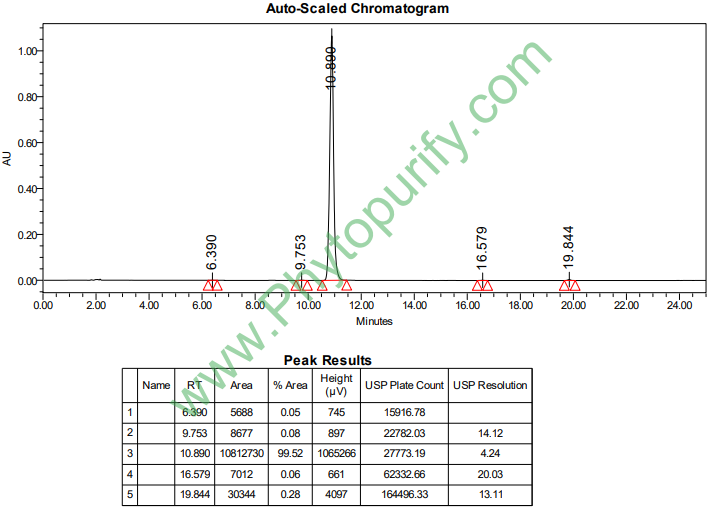
Purity: 95%~99%
Analysis Method: HPLC-DAD or/and HPLC-ELSD
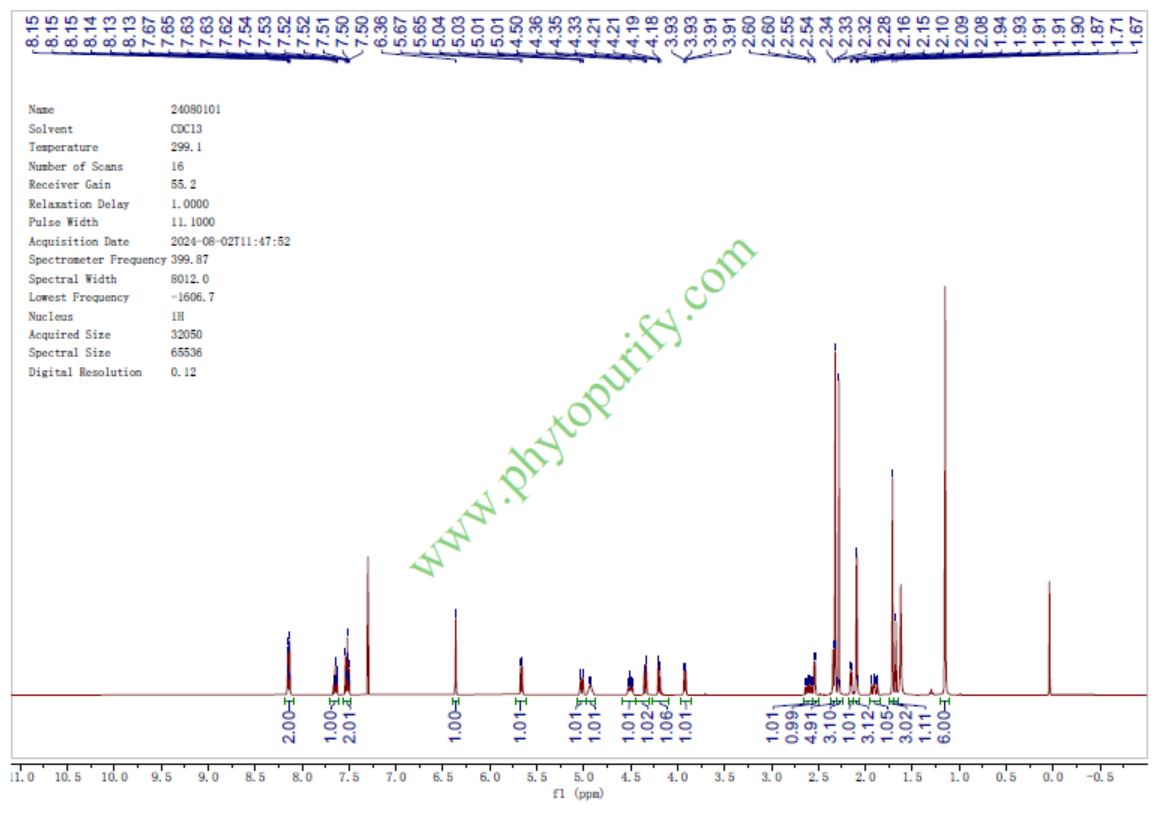
Identification Method: Mass, NMR
Packing: Brown vial or HDPE plastic bottle
Can be supplied from milligrams to grams.
For Reference Standard and R&D, Not for Human Use Directly.
Inquire for bulk scale.
Description:
Baccatin III, which is the precursor for the semisynthesis of paclitaxel,exerts anti-tumor immunomodulatory activity in very low doses (0.05-0.5mg/kg),it reduces tumor progression by inhibiting the accumulation and suppressive function of MDSCs. Baccatin III also exerts immunomodulatory activities in vivo as well as in vitro on the MHC-restricted antigen presentation.
References:
Int Immunopharmacol. 2014 Aug;21(2):487-93.
Baccatin III, a precursor for the semisynthesis of paclitaxel, inhibits the accumulation and suppressive activity of myeloid-derived suppressor cells in tumor-bearing mice.
Myeloid-derived suppressor cells (MDSCs) mediate tumor-associated immune suppression in both cancer patients and tumor-bearing animals. Reduction or elimination of MDSCs reduces the rate of tumor progression and improves cancer therapies that employ mechanisms of immunity.
METHODS AND RESULTS:
Here we show that Baccatin III, which is the precursor for the semisynthesis of paclitaxel, exerts anti-tumor immunomodulatory activity in very low doses (0.05-0.5mg/kg), although it is regarded as an inactive derivative of paclitaxel. Oral administration of Baccatin III significantly reduced the growth of tumors induced by engrafting BALB/c mice with either 4 T1 mammary carcinoma or CT26 colon cancer cells. Baccatin III (0.5mg/kg) did not exert anti-tumor activity in athymic nude mice. Baccatin III decreased the accumulation of MDSCs in the spleens of the tumor-bearing mice. Furthermore, MDSCs isolated from Baccatin III-treated mice, compared with those isolated from vehicle-treated mice, had a significantly reduced suppressive effect on T cells treated with the anti-CD3 and anti-CD28 monoclonal antibodies. Moreover, these cells produced significantly reduced amounts of reactive oxygen species and nitric oxide.
CONCLUSIONS:
These results suggest that Baccatin III reduced tumor progression by inhibiting the accumulation and suppressive function of MDSCs.
Int Immunopharmacol. 2011 Aug;11(8):985-91.
Baccatin III, a synthetic precursor of taxol, enhances MHC-restricted antigen presentation in dendritic cells.
Baccatin III, a precursor for the semisynthesis of taxol, is widely considered to be an inactive derivative of taxol. Here we show that Baccatin III efficiently enhances MHC-restricted antigen presentation in dendritic cells.
METHODS AND RESULTS:
Baccatin III increased both class I- and class II-restricted presentation of exogenous OVA in bone marrow-derived dendritic cells (BM-DCs). Baccatin III also increased class I-restricted presentation of virus-encoded endogenous OVA in BM-DCs. Baccatin III did not affect the phagocytic activity of BM-DCs. The antigen presentation-enhancing activity of Baccatin III was examined further with nanoparticles containing OVA and Baccatin III. Inclusion of Baccatin III to nanoparticles containing OVA greatly enhanced their capacity to induce class I-restricted OVA peptide presentation in DCs both in vitro and in vivo. Accordingly, nanoparticles containing both OVA and Baccatin III were much more efficient in inducing an OVA-specific CTL response in mice compared to those containing OVA only.
CONCLUSIONS:
These results demonstrate that Baccatin III exerts immunomodulatory activities in vivo as well as in vitro on the MHC-restricted antigen presentation.
HPLC of Baccatin III
HNMR of Baccatin III
Storage conditions:Short-term storage at 2~8℃, long-term storage at -20 ~ -80℃
184.7700
2.5000
2.0000
No
Unknown
Unknown
Unknown
Unknown
No
Unknown
Unknown
Baccatin III (CAS number: 27548-93-2) is a natural product originally isolated from plants of the Taxus genus. As a key precursor compound of paclitaxel, Bacardine III occupies an important position in the field of anti-tumor drug synthesis. In recent years, with in-depth research on the tumor microenvironment and immune regulatory mechanisms, Bacardine III has been found to be not only an inactive precursor of paclitaxel, but also has unique biological activity, especially in regulating the transforming growth factor - β 1 (TGF - β 1) signaling pathway and myeloid derived suppressor cell (MDSC) activation, showing significant selective inhibitory effects. It targets the AKT/STAT6 and Smad2/3 signaling pathways, blocking TGF - β 1-induced fibroblast differentiation and MDSC mediated immune suppression, demonstrating potential for anti-inflammatory, anti fibrotic, and immunomodulatory effects.
In addition, the role of Bacatin III in regulating the tumor immune microenvironment, inhibiting macrophage activation, and extracellular matrix deposition provides new ideas for its therapeutic research in various diseases such as pulmonary fibrosis, liver disease, and cancer. This article will provide a systematic review of the chemical structure and physicochemical properties, plant sources and extraction methods, pharmacological activity and mechanism of action, pharmacological evaluation and pharmacokinetic characteristics of Bacatin III, and explore its clinical application prospects and future development directions.
The molecular formula of Bacatin III is C31H42O13, with a molecular weight of 578.63, and it belongs to the taxane diterpenoid class. Its structural core is a taxane skeleton, containing multiple hydroxyl and ester groups, with high polarity and complex stereochemical characteristics. The molecular structure contains 11 hydrogen bond acceptors, which greatly affect its solubility and bioavailability.
In terms of physical and chemical properties, the LogP value of Bacardine III is about 2.5, indicating its moderate lipophilicity, which facilitates cell membrane permeation but is not easily accumulated in the lipid environment. The topological polar surface area (TPSA) is 184.77 Å ², indicating its high polarity, which may limit its passage through the blood-brain barrier (BBB), which is of great significance in drug design. Bacardin III is not easily able to penetrate the BBB, reducing the risk of central nervous system side effects. There is currently no clear data on safety indicators such as hepatotoxicity, cardiotoxicity, and hERG channel inhibition, and further in-depth research is needed.
Bacardin III mainly comes from plants of the Taxus genus, especially Pacific Taxus brevifolia and European Taxus baccata. Taxus plants are widely studied for their unique secondary metabolites, and Bacardine III, as a precursor of paclitaxel, is typically present in the bark, leaves, and branches of plants.
The traditional extraction methods include organic solvent extraction and column chromatography separation. Commonly used solvents include methanol, ethanol, and ethyl acetate, which are purified and identified using liquid chromatography (HPLC) or high-performance liquid chromatography-mass spectrometry (LC-MS) techniques. In recent years, green extraction techniques such as ultrasound assisted extraction, microwave-assisted extraction, and supercritical fluid extraction have gradually been applied to the extraction of Bacardine III, improving extraction efficiency and purity, reducing solvent use and environmental pollution.
In terms of biosynthetic pathways, Bacardine III is a key intermediate in the biosynthesis chain of paclitaxel, forming a complex taxane skeleton through multiple enzymatic reactions. The introduction of genetic engineering and metabolic engineering technologies has provided new possibilities for the industrial production of Bacatin III.
Bacatin III, as an orally effective natural product, exhibits multiple pharmacological activities, mainly focused on anti-tumor, anti-inflammatory, anti fibrotic, and immune regulation.
Although Bacardin III itself does not have direct cytotoxicity of paclitaxel, as a precursor of paclitaxel, it can be converted into active ingredients in vivo and exert anti-tumor effects. More importantly, Bacardin III indirectly enhances anti-tumor immune response by regulating immune cells in the tumor microenvironment, particularly inhibiting the activation of MDSCs. MDSC is an important cell type for tumor immune escape, and inhibiting its function helps restore the immune system's ability to recognize and clear tumors.
Bacatin III exerts anti fibrotic effects by blocking the TGF - β 1 signaling pathway, inhibiting the transformation of fibroblasts into myofibroblasts, reducing extracellular matrix (ECM) deposition. TGF - β 1 is a core regulatory factor in fibrotic diseases, regulating the differentiation and function of various cell types. Bacatin III can also inhibit the activation of macrophages, reduce the release of inflammatory mediators, and alleviate tissue inflammatory responses.
Bacatin III targets the AKT/STAT6 and Smad2/3 signaling pathways, blocks TGF - β 1-mediated immune suppression, and regulates the tumor immune microenvironment. By inhibiting the activation of MDSCs, improving the functional status of immune cells, and enhancing the immune system's ability to attack tumor cells. In addition, Bacardin III may affect various immune related targets, such as liver disease-related ABCB1, PRKCA, IDH1, etc., suggesting its potential role in immune metabolism regulation.
The main mechanism of action of Bacatin III is focused on regulating the TGF - β 1 signaling pathway and related downstream molecules, including:
TGF - β 1 promotes fibroblast differentiation and ECM deposition by activating Smad2/3 protein, leading to tissue fibrosis. Bacatin III can effectively block the phosphorylation and nuclear translocation of Smad2/3, inhibit the transformation of fibroblasts into myofibroblasts, and alleviate the fibrosis process.
AKT and STAT6 are key pathways that regulate immune cell function. Bacatin III restores the anti-tumor effect of the immune system by inhibiting AKT activation, reducing STAT6 phosphorylation levels, blocking MDSC activation and immune suppression functions.
Bacatin III may also affect the following molecular targets and participate in signal regulation related to liver disease and tumors:
The regulation of these targets provides a molecular basis for the potential therapeutic effects of Bacardin III in various diseases.
Bacardin III has certain advantages in terms of drug efficacy, but there are also challenges:
At present, the pharmacokinetic data of Bacardin III is relatively limited, and future research needs to focus on its absorption, distribution, metabolism, and excretion (ADME) characteristics, as well as its conversion efficiency and kinetic relationship with paclitaxel.
Bacardine III, as a key intermediate in the synthesis of paclitaxel, has been widely used in the production of anti-tumor drugs. However, its inherent biological activity demonstrates broader potential for clinical treatment.
By inhibiting MDSC activation and regulating the tumor immune microenvironment, Bacardine III is expected to serve as an adjuvant drug for tumor immunotherapy, enhancing the efficacy of immune checkpoint inhibitors and other immunotherapy methods. It selectively regulates the TGF - β 1 signaling pathway, which can alleviate tumor associated immune suppression and promote the anti-tumor activity of immune cells.
The inhibitory properties of Bacatin III on fibroblast differentiation and extracellular matrix deposition make it potentially valuable for the treatment of chronic fibrotic diseases such as pulmonary fibrosis and liver fibrosis. Its dual anti-inflammatory and anti fibrotic effects help to block disease progression and improve tissue function.
Given that Bacardin III affects multiple liver disease related targets, it may be developed as a therapeutic drug for diseases such as liver fibrosis, hepatitis, and liver cancer in the future. Bacardin III is expected to play a protective role in the liver by regulating oxidative stress, inflammatory response, and cellular metabolism.
Bacatin III, as a natural taxane compound, has shown broad research and application prospects in the fields of anti-tumor, anti-inflammatory, anti fibrotic, and immune regulation due to its unique structure and multi-target regulatory ability. As an inactive precursor of paclitaxel, it not only plays an irreplaceable role in the synthesis of anticancer drugs, but also becomes a potential new drug candidate for regulating the tumor immune microenvironment and treating fibrotic diseases due to its selective inhibitory effect on the TGF - β 1 signaling pathway and MDSC activation.
In the future, by combining modern medicinal chemistry, molecular biology, and drug delivery technologies, we can deeply analyze the mechanism of action and pharmacokinetic characteristics of Bacardine III, which is expected to promote its clinical translation and benefit more patients. With the continuous revelation of tumor immunity and fibrosis mechanisms, Bacardine III will play a more important role in the fields of natural product pharmacology and precision medicine.
