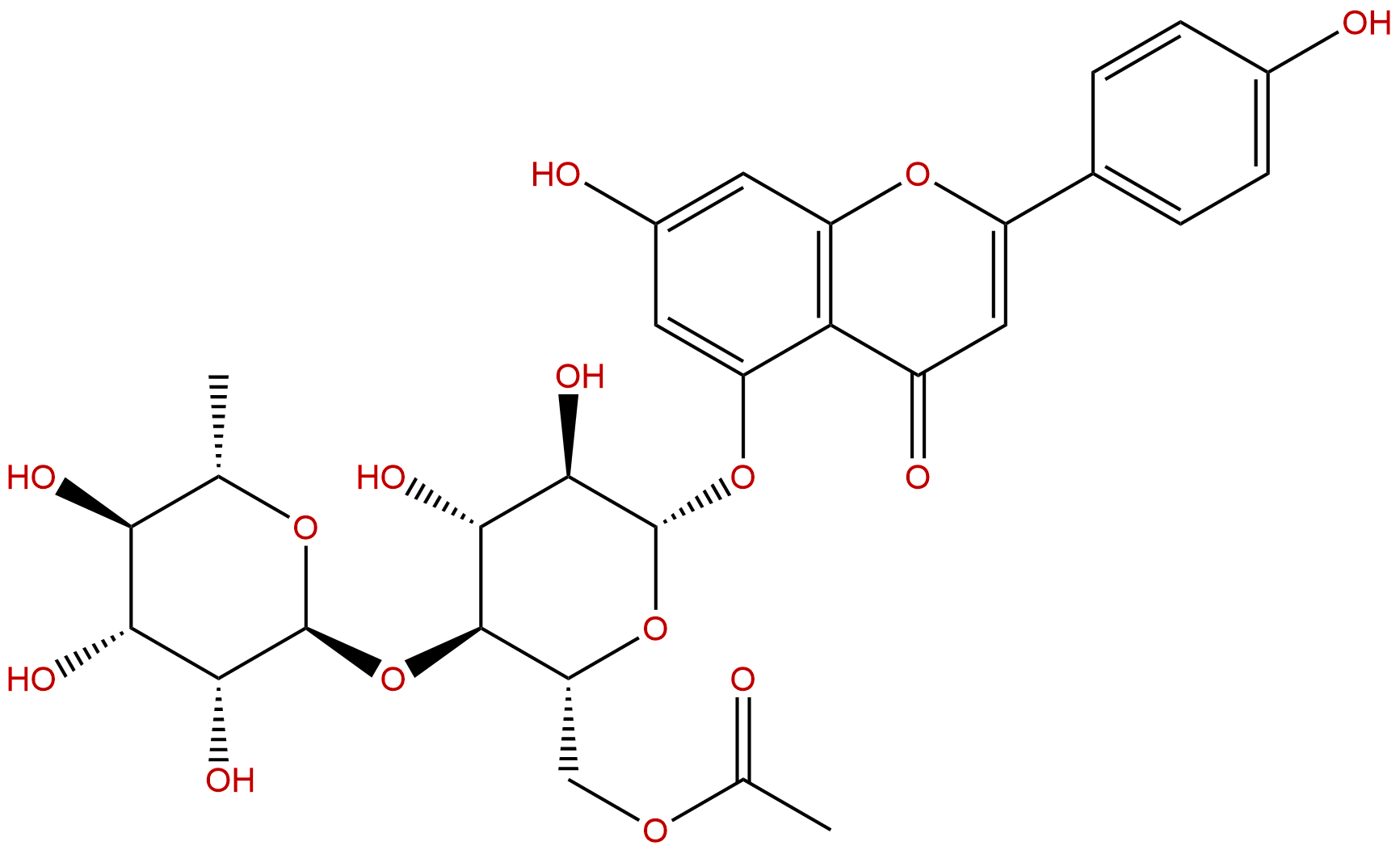


Product name: Camellianin A
Synonym name:
Catalogue No.: BP3609
Cas No.: 109232-77-1
Formula: C29H32O15
Mol Weight: 620.56
Botanical Source:
Physical Description:
Type of Compound: Flavonoids
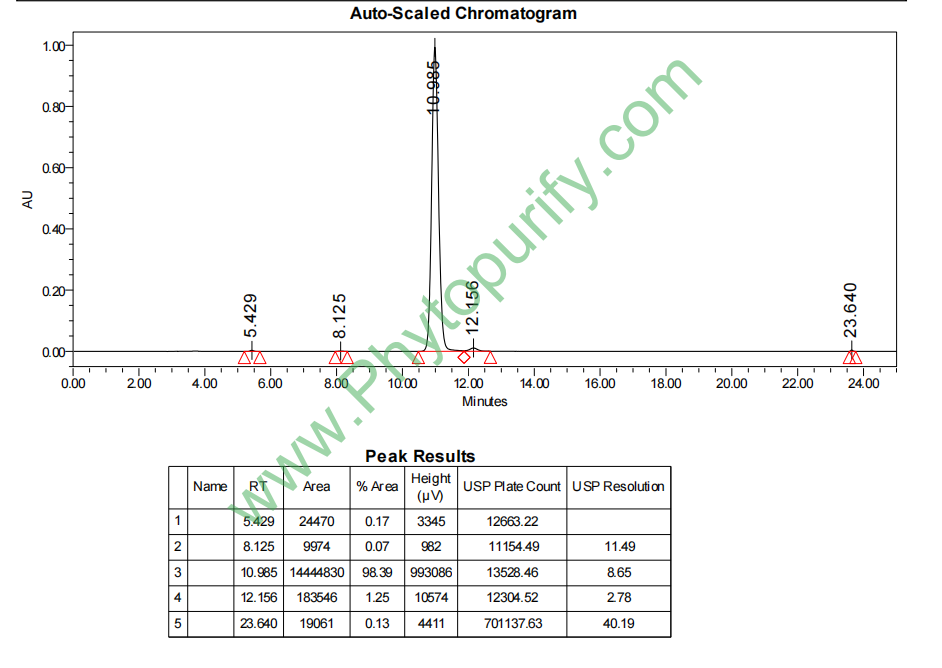
Purity: 95%~99%
Analysis Method: HPLC-DAD or/and HPLC-ELSD
Identification Method: Mass, NMR
Packing: Brown vial or HDPE plastic bottle
The product could be supplied from milligrams to grams. Inquire for bulk scale.
We provide solution to improve the water-solubility of compounds, thereby facilitating the variety of activity tests and clinic uses.
For Reference Standard and R&D, Not for Human Use Directly.
HPLC of Camellianin A
Storage conditions:Short-term storage at 2~8℃, long-term storage at -20 ~ -80℃
Natural products, as important resources for drug development, have attracted much attention due to their structural diversity and biological activity. Flavonoids, as a large class of natural products, are widely present in plants and have various biological activities such as antioxidant, anti-inflammatory, anticancer, and cardiovascular protection. Camellia A is a major flavonoid compound isolated from the leaves of A. nitida plants in the Theaceae family. In recent years, it has become a research hotspot due to its significant anti-cancer activity and inhibitory effect on angiotensin-converting enzyme (ACE). This article provides a systematic review of the chemical structure and physicochemical properties, plant sources and extraction methods, pharmacological activity and mechanism of action, pharmacological evaluation and pharmacokinetic characteristics of Shanshanning A. It also explores its clinical application prospects and future development directions, aiming to provide scientific basis and reference for the drug development of this natural product.
The chemical name of Camellia A is Camellia A, with a CAS number of 109232-77-1. It belongs to the flavonoid class and has a molecular weight of 620.56. Its molecular structural features include a typical flavonoid skeleton, connecting multiple hydroxyl and sugar groups, giving it high polarity. In terms of physical and chemical properties, the LogP value of Shanshanning A is 0.0723, indicating its low lipid solubility and good water solubility (solubility of about 2.7533), which is consistent with its presence of multiple hydrophilic groups. Its topological polar surface area (TPSA) is 235.04 Å ², indicating that the molecule has strong polarity and hydrogen bond donor/acceptor ability, which has important implications for its biological activity and pharmacokinetic properties. In addition, Shanshanning A has low blood-brain barrier permeability, negative hERG channel inhibition test results, and an Ames mutagenicity test score of 0.6, indicating its good safety and low toxicity risk.
Shanshanning A mainly exists in the leaves of A. nitida, a plant in the Theaceae family. A. Nitida is distributed in southern China and some parts of Southeast Asia, and is widely used as a traditional herb and tea ingredient. The leaves are rich in flavonoids, among which Shanshanning A is one of the main components.
The common methods for extracting Shanshanning A include solvent extraction, column chromatography separation, and high-performance liquid chromatography (HPLC) purification. Generally, ethanol or methanol is used as the extraction solvent, and ultrasound assisted extraction is used to improve efficiency. After concentration, liquid-liquid distribution, and silica gel column chromatography separation of the extract, high-purity Camellia sinensis A was purified by reverse phase HPLC. In recent years, supercritical CO ₂ extraction and membrane separation techniques have also been attempted to be applied to the extraction of this compound in order to improve yield and purity, reduce solvent residue and environmental burden.
Shanshanning A exhibits significant anti proliferative effects in various tumor cell lines. In vitro studies showed that Camellia A could effectively inhibit the proliferation of human hepatoma cells (HepG2) and breast cancer cells (MCF-7) in a dose-dependent manner. Cell cycle analysis showed that Shanshanning A induces tumor cells to stagnate in the G0/G1 phase, blocks cell cycle progression, and thereby inhibits cell division. The mechanism of action suggests that Shanshanning A may exert anti-cancer effects by regulating the expression of cell cycle related proteins, interfering with the cell cycle regulatory network.
In addition, some studies have reported that Shanshanning A can induce apoptosis in tumor cells, regulate the expression of apoptosis related proteins such as Bcl-2 family members and caspase enzymes, and enhance cell suicide signals. Its antioxidant properties may also inhibit the growth and metastasis of tumor cells by reducing oxidative stress.
Shanshanning A has an inhibitory effect on angiotensin-converting enzyme, indicating its potential application value in regulating blood pressure and cardiovascular protection. ACE is a key enzyme involved in the production of angiotensin II, regulating blood pressure and water salt metabolism. Shanshanning A can help dilate blood vessels, lower blood pressure, and prevent hypertension and related cardiovascular diseases by inhibiting ACE activity and reducing angiotensin II levels.
In vitro enzyme activity assays showed that Shanshanning A had a significant inhibitory effect on ACE and had no significant toxic side effects. Its multi hydroxyl structure may inhibit enzyme activity by forming hydrogen bonds and hydrophobic interactions with ACE active sites.
The biological activity of Shanshanning A is mainly achieved by regulating the cell cycle and enzyme activity. In terms of anti-cancer mechanisms, Shanshanning A induces G0/G1 phase arrest in tumor cells, which may involve downregulation of Cyclin D1, cyclin dependent kinase 4/6 (CDK4/6), and upregulation of cell cycle inhibitors p21 and p27. In addition, Shanshanning A can activate the p53 signaling pathway, promote cell cycle arrest and apoptosis.
In terms of anti ACE activity, Camellia A blocks the transformation from angiotensin I to angiotensin II, inhibits vasoconstriction and sodium water retention, and plays a hypotensive role by competitively binding to the active site of ACE. Molecular docking and dynamic simulation studies support its high affinity binding with ACE active centers.
In addition, the antioxidant activity of Shanshanning A indirectly participates in anti-cancer and cardiovascular protection by clearing free radicals, inhibiting lipid peroxidation, and enhancing endogenous antioxidant enzyme activity, reducing oxidative stress damage.
The pharmacological parameters of Shanshanning A indicate that it has certain potential for development. Although the molecular weight of 620.56 is slightly higher than the Lipinski rule recommendation of 500 or less, its LogP value is extremely low (0.0723), indicating good water solubility and favorable oral absorption. The TPSA value is 235.04, and higher polarity may limit its cell membrane permeability, especially with lower blood-brain barrier permeability, reducing the risk of central nervous system side effects.
In terms of safety, the hERG ion channel inhibition test was negative, indicating a low risk of cardiac toxicity. The Ames test score is 0.6, indicating low mutagenicity and good safety.
Pharmacokinetic studies are still in the preliminary stage. The characteristics of absorption, distribution, metabolism, and excretion (ADME) in the body need further clarification. Due to its high polarity and molecular weight, Shanshanning A may have a low oral bioavailability issue, and its pharmacokinetic performance needs to be improved through drug formulation or structural modification.
Shanshanning A, as a natural flavonoid compound, has shown broad application prospects in the fields of tumor treatment and cardiovascular disease prevention and treatment due to its anti-cancer and anti ACE activities. Its dual effects of inducing tumor cell cycle arrest and inhibiting ACE activity provide the possibility for developing multi-target drugs.
Future research should focus on the following aspects:
In depth mechanism research Through genomics, proteomics, and metabolomics techniques, comprehensively analyze the functional network and molecular targets of Shanshanning A, and reveal its molecular mechanisms of anti-cancer and cardiovascular protection.
Pharmacokinetic and Toxicological Evaluation Conduct pharmacokinetic studies in vivo, clarify its absorption, distribution, metabolism, and excretion characteristics, evaluate long-term toxicity and safety, and provide a basis for clinical application.
Structural optimization and formulation development Targeting its high polarity and molecular weight, we will carry out structural modifications and design new drug carrier systems to improve bioavailability and targeting.
Preclinical and clinical research Conduct animal models to validate its efficacy and safety, gradually advance clinical trials, and evaluate its therapeutic potential in tumors and cardiovascular diseases.
Combination therapy strategy Explore the combined application of Shanshanning A with existing anti-cancer or antihypertensive drugs, evaluate the synergistic effect and enhance toxicity and efficacy.
Shanshanning A, as the main flavonoid natural product derived from A. nitida leaves, has become an important object of natural product pharmacology research due to its unique chemical structure and significant biological activity. Its anti-cancer and anti ACE activities provide new ideas for the development of novel anti-tumor and cardiovascular disease drugs. Although research on its pharmacological mechanism and pharmacokinetics is still limited, existing data indicates that it has good safety and potential for drug development. In the future, through interdisciplinary collaboration and technological innovation, it is expected to promote the clinical application of Shanshanning A from laboratory research, benefit patients, and promote progress in the field of natural product drug development.
