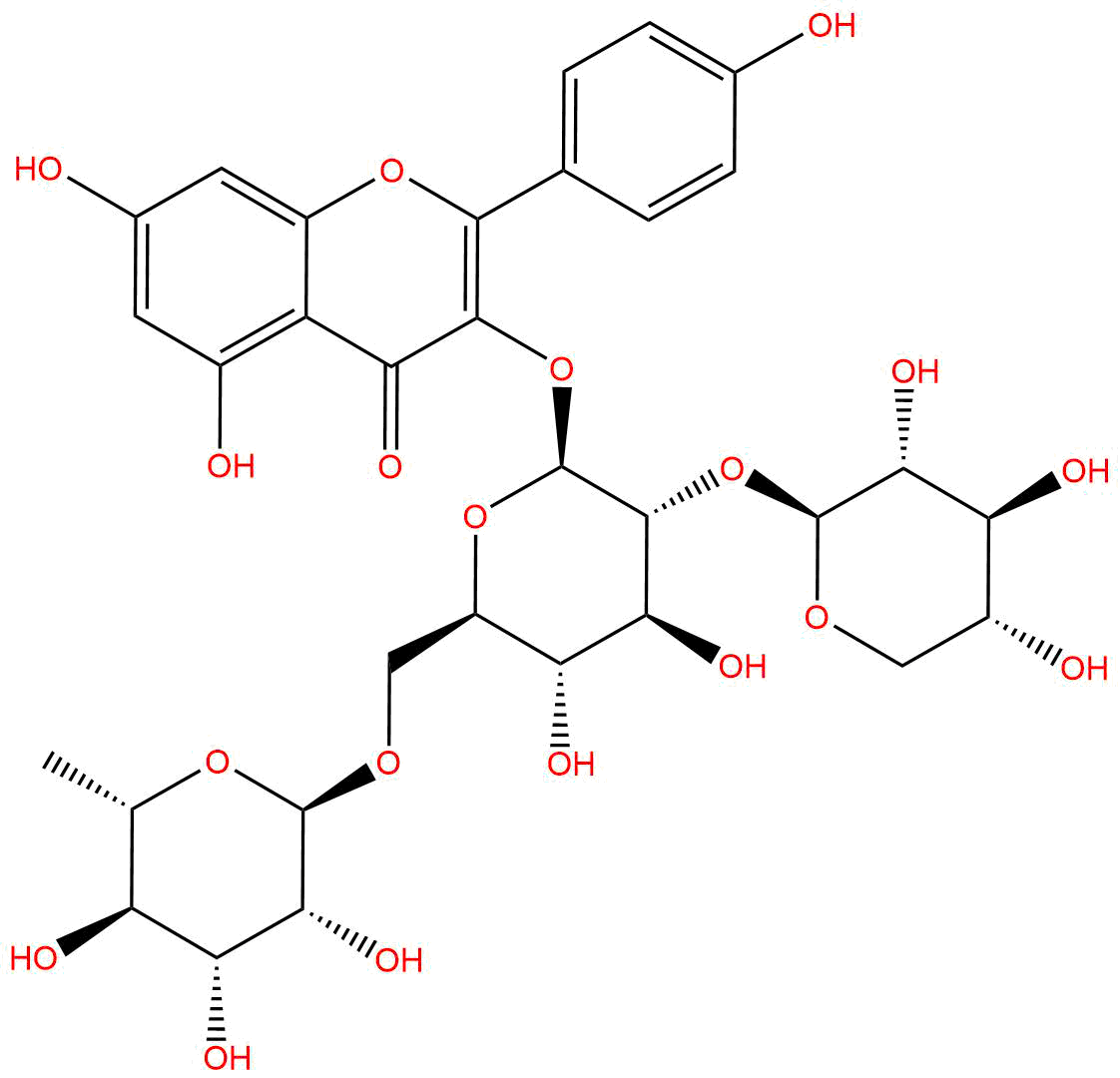


Product name: Camelliaside B
Synonym name:
Catalogue No.: BP1471
Cas No.: 131573-90-5
Formula: C32H38O19
Mol Weight: 726.637
Botanical Source: Camellia oleifera Abel.
Physical Description:
Type of Compound: Flavonoids
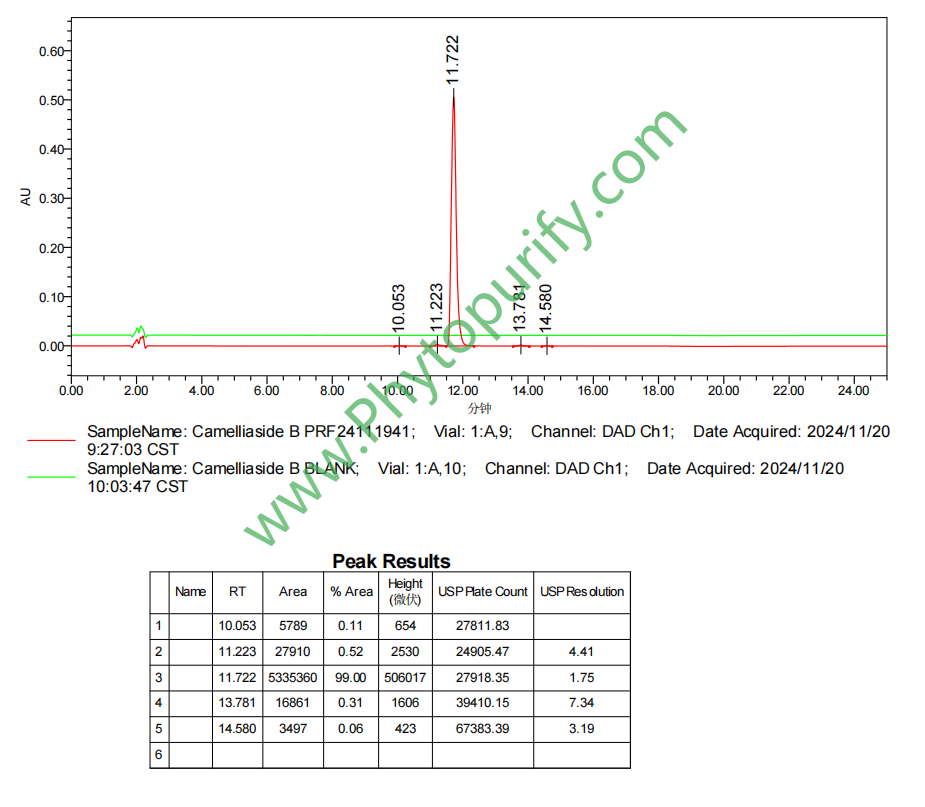
Purity: 95%~99%
Analysis Method: HPLC-DAD or/and HPLC-ELSD
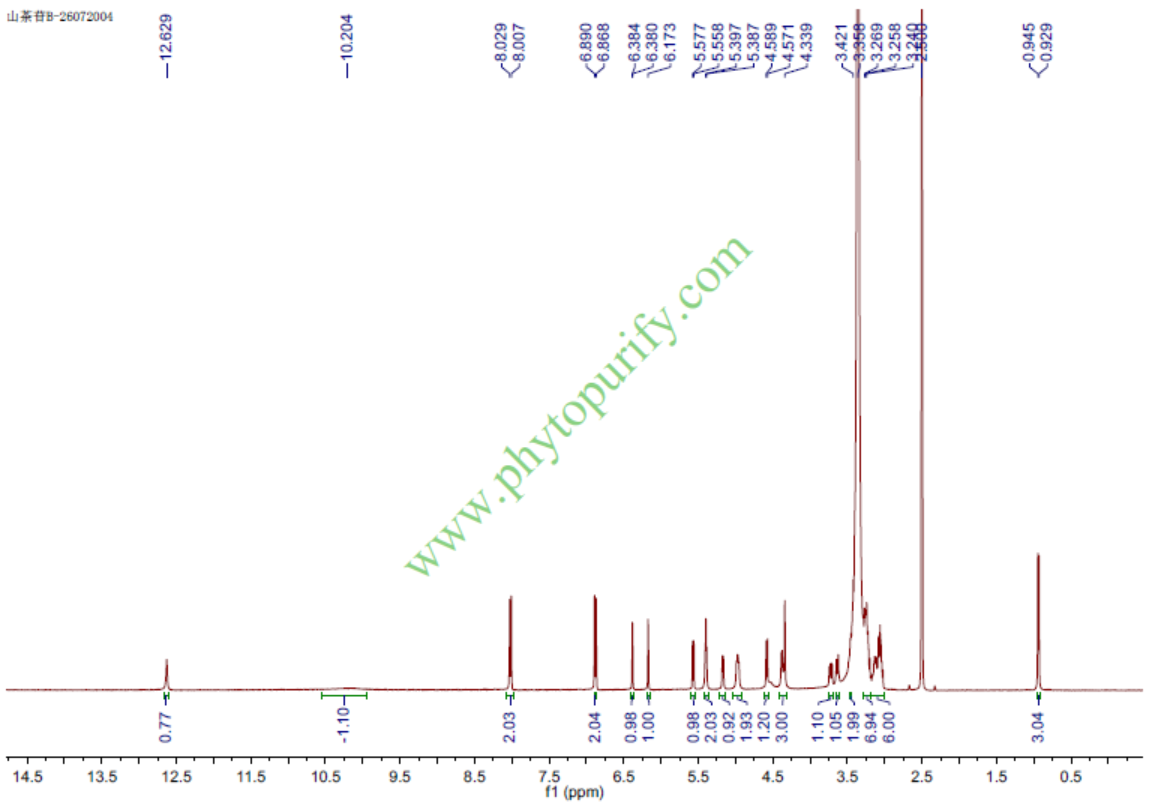
Identification Method: Mass, NMR
Packing: Brown vial or HDPE plastic bottle
Storage: Store in a well closed container, protected from air and light. Put into refrigerate or freeze for long term storage.
Whenever possible, you should prepare and use solutions on the same day. However, if you need to make up stock solutions in advance, we recommend that you store the solution as aliquots in tightly sealed vials at -20℃. Generally, these will be useable for up to two weeks.
The product could be supplied from milligrams to grams
Inquire for bulk scale.
Description:
Camelliaside B is a natural product from Camellia oleifera Abel.
References:
J Sci Food Agric. 2011 Oct;91(13):2315-21.
Isolation and anti-inflammatory effect of astragalin synthesized by enzymatic hydrolysis of tea seed extract.
The application of tea seed extract (TSE) has been widely investigated because of its biological activities. In this paper, two flavonol triglycosides in TSE-camelliaside A (CamA) and Camelliaside B(CamB)-were subjected to hydrolysis in the presence of two commercial enzyme complexes (Pectinex™ series): Smash and Mash.
METHODS AND RESULTS:
Smash hydrolyzed only the xylosyl moiety of CamB, and the main product was kaempferol diglycoside (nicotiflorin, NF). On the other hand, Mash induced the hydrolysis of both CamA and CamB, and kaempferol monoglycoside (astragalin, AS) was found to be a main product. Pure AS with > 96% purity was prepared by enzymatic hydrolysis of TSE using Mash, and the chemical structure of AS was confirmed by (1)H- and (13)C-nuclear magnetic resonance analyses. The prepared pure AS showed anti-inflammatory activities by significantly inhibiting cellular nitrite oxide (IC(50) = 363 μg mL(-1)), prostaglandin E(2) (IC(50) = 134 μg mL(-1)) and interleukin-6 production (IC(50) = 289 μg mL(-1)) by lipopolysaccharide -stimulated RAW 264.7 cells.
CONCLUSIONS:
It was concluded that pure AS can be prepared by enzymatic partial hydrolysis of TSE and employed as an anti-inflammatory material. This is the first study to address the preparation of pure AS from natural sources.
HPLC of Camelliaside B
HNMR of Camelliaside B
Storage conditions:Short-term storage at 2~8℃, long-term storage at -20 ~ -80℃
308.1200
-.7273
-.8164
4.1618
.3199
.1493
Low
76.5726
5.2705
Yes
No
Yes
No
Yes
No
0.6
Yes
Yes
Yes
Yes
Natural products, as an important source of drug discovery and development, play an irreplaceable role in the history of human disease treatment. Flavonoids, as one of the major categories, have attracted much attention due to their wide range of biological activities and low toxicity. Camellia glycoside B (CAS: 131573-90-5) is a type of flavonoid glycoside isolated from the seed residue of Camellia oleifera. Its unique chemical structure endows it with diverse pharmacological activities, especially in the field of anti-tumor, showing great potential. In recent years, with a deeper understanding of the molecular mechanisms of tumor occurrence and development, as well as the rise of multi-target therapy strategies, theanine B has become a research hotspot due to its regulatory effects on multiple key tumor related targets. This article aims to provide a systematic review of the chemical properties, plant sources, pharmacological activities, molecular mechanisms of action, pharmacological evaluation, and clinical application prospects of camellia glycoside B, in order to provide comprehensive scientific references for the in-depth research and development of this natural product.
Camellia glycoside B is a flavonoid glycoside compound. Its molecular formula is C ∝₂ H ∝₈ O ₁₉, and its molecular weight is 726.6370. Its core structure is the flavonol skeleton, which connects multiple sugar groups through glycosidic bonds. The typical structure of camellia glycoside B often contains quercetin or kaempferol as aglycones, which are linked to multiple monosaccharide units such as glucose and rhamnose to form a polysaccharide glycosidic chain. This highly glycosylated structure is the main characteristic that distinguishes it from other simple flavonoid glycosides.
Based on its chemical structure, camellia glycoside B exhibits the following key physicochemical properties:
1. solubility The calculated water solubility value is 4.1618, indicating that it has a certain solubility in water, mainly due to the presence of multiple hydrophilic hydroxyl and sugar groups in the molecule. Meanwhile, it can also dissolve in polar organic solvents such as methanol and ethanol.
2. Lipophilic nature The calculated LogP value is -0.7273, confirming that it is a compound with strong hydrophilicity, and its transmembrane passive diffusion ability may be limited.
3. Polar Surface Area The topologically polar surface area is as high as 308.1200 Å ², which further confirms its strong polarity and hydrophilicity characteristics, and suggests that it may have broad potential for hydrogen bonding interactions with biomolecules such as proteins.
4. Stability As a glycoside compound, it may undergo hydrolysis under acidic or specific enzyme conditions (such as β - glucosidase), releasing aglycones. Glycosides usually have stronger cell membrane permeability, but lower water solubility.
These physical and chemical properties directly affect their bioavailability, in vivo distribution, and subsequent formulation development strategies.
Camellia glycoside B mainly comes from plants of the Camellia genus in the Theaceae family, especially Camellia oleifera Oil tea is an important woody oil crop in China, whose seeds are used to extract tea oil, and the large amount of residue (tea meal) produced after oil extraction is traditionally used as fertilizer or fuel. Research has found that tea meal contains abundant bioactive components, and theaflavins B are one of the important active substances isolated and identified from its methanol extract.
Its extraction and separation usually follow the following process:
1. Raw material pretreatment Oil tea seed meal is dried, crushed, and sieved to obtain a uniform powder.
2. Solvent extraction The most commonly used is methanol or Methanol water Mixing solvents for extraction or reflux extraction. Ethanol is also a feasible alternative solvent due to its high safety. The extraction process may be supplemented with ultrasound, microwave, or heating to improve efficiency.
3. Extraction and Enrichment After vacuum concentration, the crude extract was subjected to liquid-liquid extraction using organic solvents such as petroleum ether, ethyl acetate, and n-butanol in sequence. Camellia glycoside B is mainly enriched in due to its strong polarity n-butanol or water In the middle.
4. Separation and purification: The enriched parts are finely separated by modern chromatographic techniques, such as silica gel column chromatography, reversed phase C18 column chromatography (ODS), Sephadex gel column chromatography (LH-20), high performance liquid chromatography (HPLC) and preparative liquid chromatography (prep HPLC). Structural identification was performed using techniques such as nuclear magnetic resonance (NMR) and mass spectrometry (MS).
This extraction process reflects the "turning waste into treasure" idea of high-value development and utilization of natural active ingredients from agricultural by-products, and has dual economic and environmental significance.
Numerous in vitro and in vivo studies have shown that camellia glycoside B has a wide range of pharmacological activities, among which Antitumor activity The most prominent and in-depth.
Antitumor activity:
Other potential activities Based on the commonality of flavonoids, camellia glycoside B may also have antioxidant, anti-inflammatory and other activities, but there is relatively little specialized research in these areas, which is its future research direction that can be expanded.
The anti-tumor effect of camellia glycoside B is not achieved through a single pathway, but through a synergistic regulatory network of multiple targets and pathways, which is consistent with its characteristics as a natural product. The key targets and pathways studied include:
In summary, camellia glycoside B forms a synergistic anti-tumor effect network by simultaneously acting on multiple key links such as apoptosis regulation, signal transduction, extracellular matrix remodeling, DNA metabolism, and tumor microenvironment adaptation.
Despite the significant pharmacological activity of camellia glycoside B, its drug affinity is the key to determining its successful development as a drug.
Preliminary evaluation based on computational parameters:
Pharmacokinetic challenges and strategies:
The research on camellia glycoside B is in a transitional stage from basic activity discovery to exploration of translational applications.
Direct application prospects:
Prospects for drug development:
Future research focus:
Camellia glycoside B is a flavonoid glycoside with significant anti-tumor activity discovered from the by-products of Camellia oleifera. It exhibits multidimensional effects in inhibiting tumor cell proliferation, inducing apoptosis, preventing invasion and metastasis, and angiogenesis by synergistically regulating multiple key targets such as MCL1, BCL2, STAT3, MMP2, and HIF1A. However, its large molecular weight, strong polarity, and complex sugar based structure constitute the main obstacles to its transformation into traditional small molecule drugs, manifested as low predicted oral bioavailability and drug development challenges. In the future, the research value of camellia glycoside B will focus more on its optimization as a multi-target lead compound, as well as the development of new targeted formulations using modern pharmaceutical technologies, especially nanotechnology. The combination of the multi efficacy advantages of natural products with modern drug design concepts is the key to promoting the clinical application of camellia glycoside B from the laboratory. At the same time, its in-depth development also meets the strategic needs of high-value utilization and sustainable development of agricultural resources, and has important scientific significance and socio-economic value.
