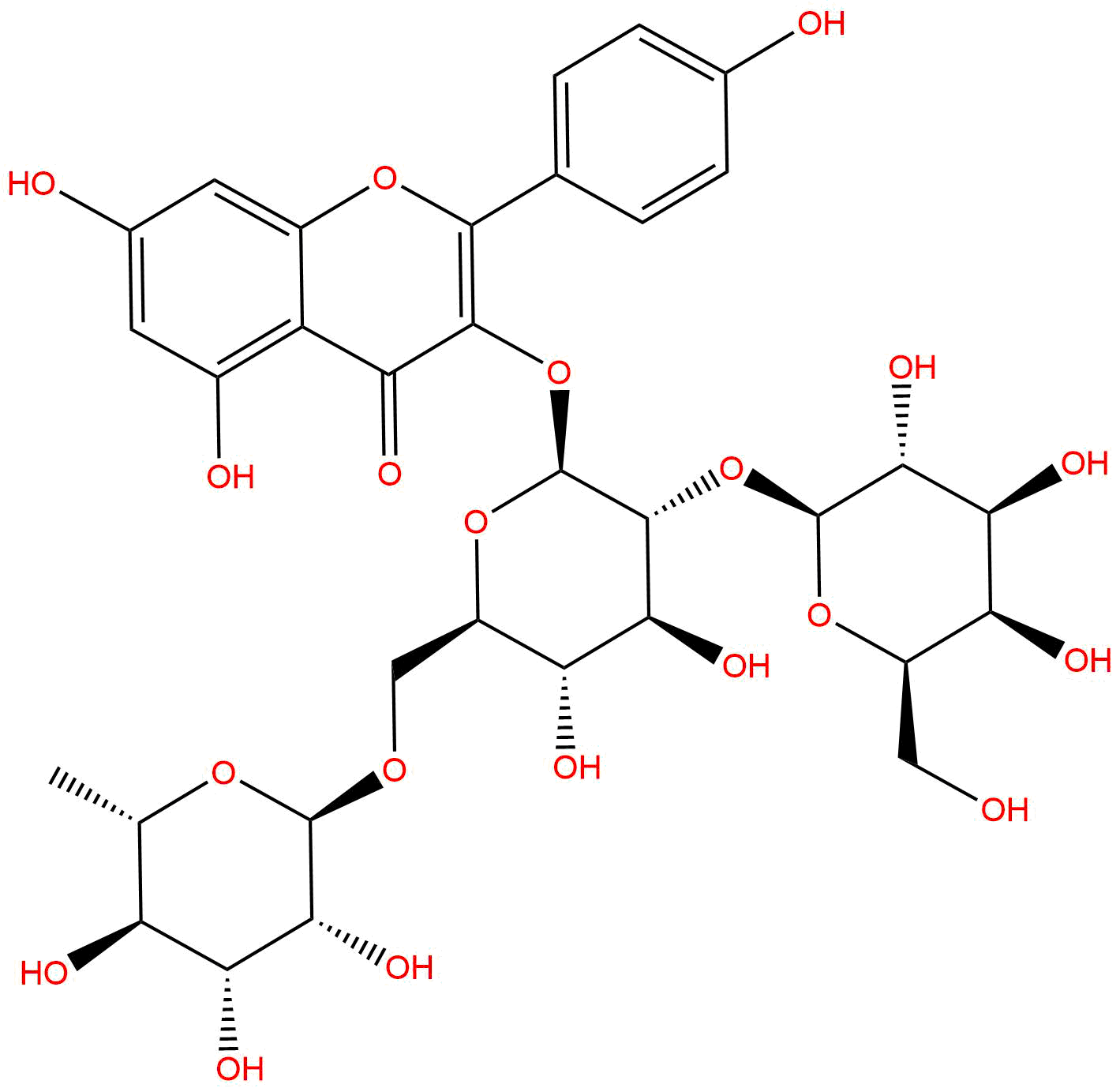


Product name: Camelliaside A
Synonym name:
Catalogue No.: BP1470
Cas No.: 135095-52-2
Formula: C33H40O20
Mol Weight: 756.663
Botanical Source: Camellia oleifera Abel.
Physical Description:
Type of Compound: Flavonoids
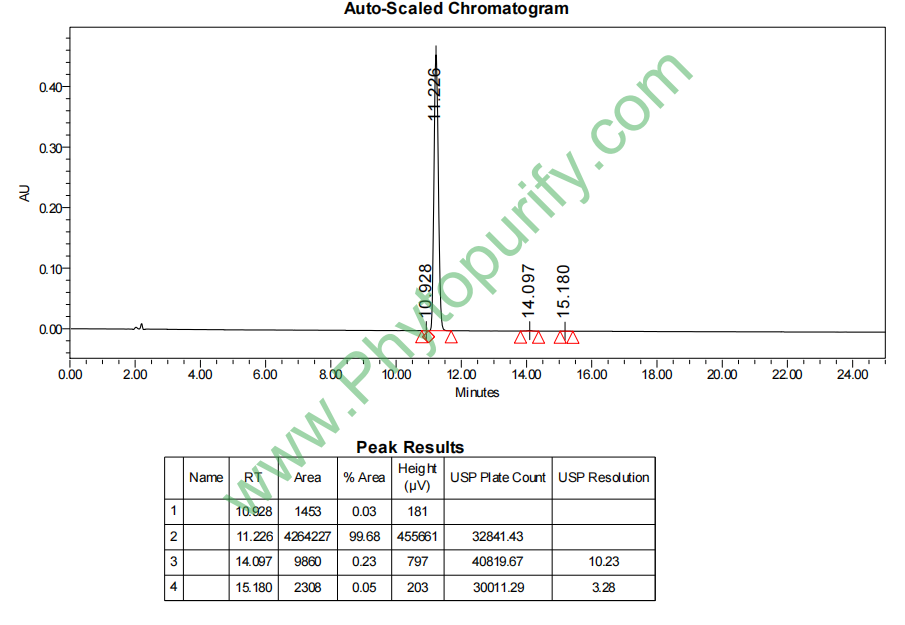
Purity: 95%~99%
Analysis Method: HPLC-DAD or/and HPLC-ELSD
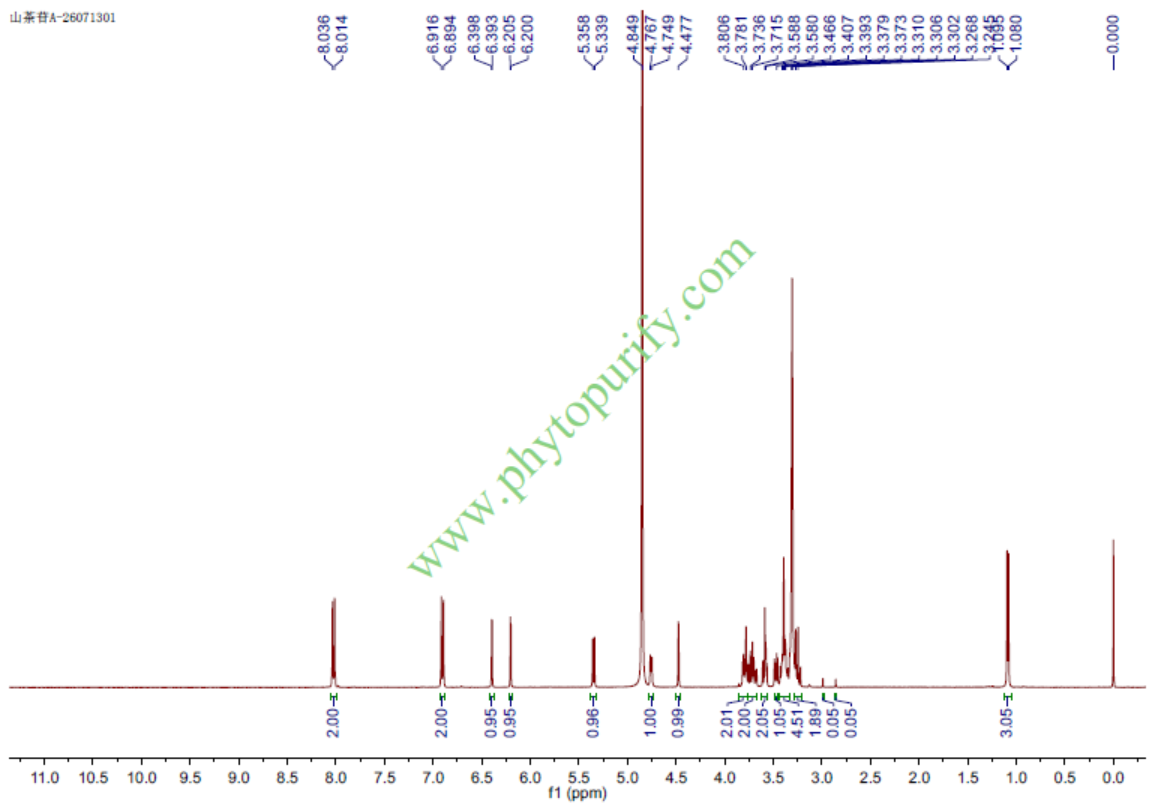
Identification Method: Mass, NMR
Packing: Brown vial or HDPE plastic bottle
Storage: Store in a well closed container, protected from air and light. Put into refrigerate or freeze for long term storage.
Whenever possible, you should prepare and use solutions on the same day. However, if you need to make up stock solutions in advance, we recommend that you store the solution as aliquots in tightly sealed vials at -20℃. Generally, these will be useable for up to two weeks.
The product could be supplied from milligrams to grams
Inquire for bulk scale.
Description:
Camelliaside A is a natural product from Camellia oleifera Abel.
References:
J Sci Food Agric. 2011 Oct;91(13):2315-21.
Isolation and anti-inflammatory effect of astragalin synthesized by enzymatic hydrolysis of tea seed extract.
The application of tea seed extract (TSE) has been widely investigated because of its biological activities. In this paper, two flavonol triglycosides in TSE-Camelliaside A (CamA) and camelliaside B (CamB)-were subjected to hydrolysis in the presence of two commercial enzyme complexes (Pectinex™ series): Smash and Mash.
METHODS AND RESULTS:
Smash hydrolyzed only the xylosyl moiety of CamB, and the main product was kaempferol diglycoside (nicotiflorin, NF). On the other hand, Mash induced the hydrolysis of both CamA and CamB, and kaempferol monoglycoside (astragalin, AS) was found to be a main product. Pure AS with > 96% purity was prepared by enzymatic hydrolysis of TSE using Mash, and the chemical structure of AS was confirmed by (1)H- and (13)C-nuclear magnetic resonance analyses. The prepared pure AS showed anti-inflammatory activities by significantly inhibiting cellular nitrite oxide (IC(50) = 363 µg mL(-1)), prostaglandin E(2) (IC(50) = 134 µg mL(-1)) and interleukin-6 production (IC(50) = 289 µg mL(-1)) by lipopolysaccharide -stimulated RAW 264.7 cells.
CONCLUSIONS:
It was concluded that pure AS can be prepared by enzymatic partial hydrolysis of TSE and employed as an anti-inflammatory material. This is the first study to address the preparation of pure AS from natural sources.
HPLC of Camelliaside A
HNMR of Camelliaside A
Storage conditions:Short-term storage at 2~8℃, long-term storage at -20 ~ -80℃
328.3500
-1.0524
-1.1308
5.0132
.2940
.1153
Low
73.8969
5.3222
Yes
No
Yes
No
Yes
No
0.0
Yes
Yes
Yes
Yes
Breast cancer is the most common malignant tumor among women in the world. Its pathogenesis is complex and heterogeneous. Human epidermal growth factor receptor 2 (HER2) positive breast cancer accounts for about 20-30%, which is characterized by strong invasion and poor prognosis. Although the targeted drugs represented by trastuzumab have significantly improved the prognosis of HER2 positive breast cancer patients, drug resistance and adverse reactions still need to be resolved. Therefore, exploring new, efficient, and low toxicity HER2 related inhibitors or modulators from natural products has become an important direction in the development of anti-tumor drugs. Camellia glycoside A, as a natural glycoside compound isolated from Camellia plants, has attracted widespread attention from natural product pharmacology researchers in recent years due to its unique chemical structure and potential association with the HER2 signaling pathway. The purpose of this paper is to systematically review the chemical characteristics, plant origin, pharmacological activity, molecular mechanism of action, pharmaceutical evaluation and the application prospect of cameloside A in the treatment of breast cancer, in order to provide a comprehensive scientific reference for the in-depth research and development of the compound.
Camellia glycoside A, with a CAS number of 135095-52-2, is a structurally complex flavonol triterpenoid compound. Its molecular formula is C ∝③ H ₄₀ O ₂₁, and its molecular weight is 756.6630. Its core structure is Kaempferol glycoside, which is connected to three molecular sugar groups through glycosidic bonds, usually including glucose, rhamnose, etc. This structure of multiple hydroxyl and polysaccharide groups endows it with unique physicochemical properties.
From the analysis of the parameters related to drug properties, camellia glycoside A exhibits typical polar molecular characteristics. The calculated lipid water partition coefficient (LogP) is -1.0524, indicating its high hydrophilicity. The topologically polar surface area (TPSA) is as high as 328.35 Å ², mainly attributed to the numerous hydroxyl groups and oxygen atoms on the sugar ring in the molecule. The high TPSA and negative LogP values together explain its good water solubility (predicted value of approximately 5.0132 mg/mL). These properties determine the distribution characteristics of camellia glycoside A in organisms: its ability to cross the blood-brain barrier is predicted to be "low", which limits its potential effects on central nervous system tumors, but may also reduce the associated risk of neurotoxicity. In addition, preliminary computer simulation toxicity predictions showed no inhibitory risk on hERG potassium channels (hERG inhibition: No), and the Ames test predicted a value of 0.0, suggesting that it may not be mutagenic and has relatively good preliminary safety characteristics. However, these theoretical predictions need to be validated through subsequent in vitro and in vivo experiments.
Theapein A mainly comes from Camellia plants in the Theaceae family, especially from the leaves, flowers, or seeds of Camellia oleifera. Camellia plants are widely distributed and have abundant resources in China and East Asia. Their extracts are often used in traditional medicine for anti-inflammatory, antioxidant and other purposes, providing clues for the discovery of camellia glycoside A.
At present, the extraction and separation of camellia glycoside A mainly use solvent extraction combined with modern chromatographic techniques. The common process is as follows: first, dry and crushed mountain tea leaves or flowers are heated and refluxed with a mixed solvent of alcohol and water (such as 70-80% ethanol or methanol) or ultrasound assisted extraction to fully extract the polar components. The crude extract was obtained by vacuum concentration of the extraction solution. Subsequently, preliminary enrichment was carried out using macroporous adsorption resin column chromatography, often using gradient elution with ethanol water solutions of different concentrations. Theanine A was mostly enriched in the medium polarity elution site. Further purification relies on high-performance liquid chromatography technology, especially preparative reverse phase high performance liquid chromatography (Prep HPLC), which uses a C18 column and a methanol water or acetonitrile water system as the mobile phase for fine separation. It is monitored by a UV detector (usually with characteristic absorption of flavonoids near 265 nm and 350 nm) to ultimately obtain high-purity camellia glycoside A monomer. With the development of technology, preparation techniques such as high-speed countercurrent chromatography can also be used for large-scale separation. Optimizing the extraction process to improve yield and purity is the foundation for future resource development and utilization.
At present, studies on the pharmacological activities of cameloside A are mainly concentrated in the field of anti-tumor, especially for breast cancer. Although early reports indicated that it had no inhibitory activity on the mycelial growth of the plant pathogen Rhizoctonia solani, suggesting that it may not have broad-spectrum direct antifungal activity, this does not affect its significant biological activity in mammalian cell systems.
A large number of in vitro cell experiments have shown that cameloside A can inhibit the proliferation and induce apoptosis of many human breast cancer cell lines. Studies have shown that cameloside A can inhibit the activity of breast cancer cells overexpressing HER2 (such as SK-BR-3, BT-474) and estrogen receptor positive (ER+) breast cancer cells (such as MCF-7) in a dose-dependent and time-dependent manner. Its half maximal inhibitory concentration (IC ₅₀) value is usually in the micromolar range, indicating potential anti-tumor efficacy. In addition to inhibiting proliferation, camellia glycoside A can also induce cell cycle arrest, such as blocking cells in the G2/M phase, thereby preventing them from entering mitosis. More importantly, it can significantly induce tumor cell apoptosis, manifested as nuclear condensation, phosphatidylserine efflux, and activation of Caspase cascade reaction.
In terms of in vivo pharmacodynamics, preliminary animal model experiments (such as nude mouse transplantation tumor model) confirmed that cameloside A could inhibit the growth of breast cancer transplantation tumor to a certain extent after intragastric or intraperitoneal administration, and it may show synergistic effect when combined with some chemotherapy drugs. At the same time, no significant weight loss and other systemic toxicity were observed, suggesting that its tolerance is good. In addition, in addition to its direct cytotoxic effects, some studies suggest that theaflavins A may have anti-inflammatory and immunomodulatory potential, which may be related to the known activity of its core glycoside, kaempferol, but the specific mechanism remains to be elucidated.
The anti-tumor effect of camellia glycoside A is not achieved through a single pathway, but involves the synergistic regulation of multiple targets and pathways, which reflects the complexity of the mechanism of action of natural products. According to existing research, its mechanism of action network is mainly constructed around the following aspects:
Regulation of HER2 signaling pathway As a HER2 ligand, theaflavins A may interfere with HER2 activation and downstream signaling through direct or indirect means. HER2 dimerization is key to activating downstream survival and proliferation pathways such as PI3K/Akt and MAPK/ERK. Camellia glycoside A may inhibit the homodimerization or heterodimerization of HER2 through competitive binding, thereby blocking the abnormal activation of these key pathways and leading to the inhibition of tumor cell growth.
Target regulation of inducing cell apoptosis Camellia glycoside A can upregulate the expression of pro apoptotic proteins such as Bax, while downregulating the expression of anti apoptotic proteins B cell lymphoma 2 (BCL2) and myeloid leukemia 1 (MCL1), thereby disrupting mitochondrial membrane potential, promoting cytochrome C release, and activating endogenous apoptotic pathways. In addition, it can also inhibit the phosphorylation and nuclear translocation of signal transduction and transcription activator 3 (STAT3). STAT3 is an important oncogenic transcription factor, and its sustained activation is closely related to cell proliferation, anti apoptosis, and immune escape. The inhibition of STAT3 by camellia glycoside A further enhances its pro apoptotic effect.
Inhibit tumor invasion and metastasis Tumor metastasis is the main reason for treatment failure of breast cancer. Camellia glycoside A has been shown to downregulate the expression of matrix metalloproteinase-2 (MMP2). MMP2 is the main enzyme that degrades extracellular matrix and plays a central role in tumor invasion and angiogenesis. Meanwhile, camellia glycoside A can also inhibit the stability and activation of hypoxia inducible factor-1 α (HIF1A). Under hypoxic conditions in the tumor microenvironment, HIF1A can upregulate various genes such as vascular endothelial growth factor (VEGF), promoting angiogenesis and tumor adaptation. Inhibiting HIF1A helps to resist angiogenesis and inhibit metastasis.
Affects DNA metabolism and hormone signaling Camellia glycoside A exhibits certain inhibitory activity against topoisomerase I (TOP1) and topoisomerase II α (TOP2A). Topoisomerase is a key enzyme in DNA replication and transcription, and its inhibitors can exert cytotoxic effects by causing DNA damage. In addition, for ER+breast cancer, cameloside A may interfere with estrogen dependent tumor growth pathway by regulating estrogen receptor (ESR1) signal or affecting aromatase (CYP19A1) activity.
MAPK pathway regulation Its regulation of mitogen activated protein kinase 1 (MAPK1, ERK2) is another manifestation of its intervention in the cell proliferation signaling network.
In summary, camellia glycoside A acts synergistically on HER2, STAT3, BCL2 family MMP2、HIF1A、 Topoisomerase and other key targets form a multi-level network of anti-tumor effects, thereby inhibiting the proliferation of breast cancer cells, inducing apoptosis and blocking invasion and metastasis.
Although camellia glycoside A has shown good anti-tumor activity in vitro and preliminary in vivo models, its ultimate development into a drug depends on systematic pharmacological evaluation and pharmacokinetic studies.
From the above physical and chemical properties, it can be seen that Theanine A has good water solubility, but its molecular weight is large and polarity is high, which may pose challenges to its oral bioavailability. High polarity compounds are often difficult to penetrate the intestinal epithelial cell membrane through passive diffusion and may become substrates for intestinal efflux transporters (such as P-glycoprotein), which are then pumped into the ileal lumen. Therefore, its oral absorption may be limited. At present, the publicly available research data on the pharmacokinetics of camellia glycoside A system is not sufficient. Based on its structural characteristics, it can be inferred that it may undergo the following processes in the body: if it can be absorbed, it may mainly exist in its original form in the blood; Due to its glycosidic structure, it is likely to be hydrolyzed by β - glucosidase and other enzymes in the gut microbiota and/or liver, and metabolized into its glycoside kaempferol and glycosyl portion. Shanna phenol itself has biological activity and higher lipid solubility, which may make it easier to enter cells and exert its effects. Therefore, camellia glycoside A may partially act in the form of prodrug in the body, and its ultimate efficacy is the result of the combined action of the prototype drug and metabolites.
In terms of distribution, its low blood-brain barrier permeability limits its effect on brain tumors, but as mentioned earlier, it also reduces potential central side effects. In terms of excretion, highly water-soluble compounds and their metabolites are mainly excreted through the kidneys and urine.
In order to improve its pharmacological properties, future research may require the use of pharmaceutical strategies for structural optimization or dosage form improvement. For example, by preparing prodrugs (such as esterifying partial hydroxyl groups to enhance lipid solubility) or developing nanocarrier systems (such as liposomes, polymer nanoparticles) to encapsulate camellia glycoside A, it can improve its oral absorption, prolong circulation time, enhance tumor targeting, and reduce systemic toxicity.
As a multi target natural lead compound against breast cancer, cameloside A has broad clinical application prospects, but also faces many challenges.
Potential application directions:
1. Adjuvant treatment of HER2 positive breast cancer As a regulator of the HER2 signaling pathway, Theanine A may be used to treat patients who develop resistance to existing HER2 targeted drugs such as trastuzumab and lapatinib. Its multi-target mechanism of action may help overcome drug resistance caused by bypass activation.
2. Combination therapy strategy The combination of camellia glycoside A with conventional chemotherapy drugs (such as doxorubicin, paclitaxel) or endocrine therapy drugs (such as tamoxifen) may produce a synergistic effect, reduce the dosage of chemotherapy drugs, thereby reducing toxic side effects and improving treatment index.
3. Treatment of ER positive breast cancer: By regulating ESR1 or CYP19A1, cameloside A may provide new treatment options for ER+breast cancer patients, especially those who are resistant to aromatase inhibitors.
4. Preventing tumor metastasis It inhibits the activities of MMP2 and HIF1A, suggesting that it has potential value in inhibiting the invasion and metastasis of breast cancer, or it can be used as an adjuvant treatment after surgery to prevent recurrence and metastasis.
Challenges faced and future research directions:
1. In depth mechanism research It is necessary to more accurately elucidate the direct interaction mode (such as binding site, affinity) between camellia glycoside A and targets such as HER2, and to verify the specific contributions of each target in mediating its pharmacological effects using techniques such as gene knockout/knockdown.
2. Optimization of drug properties in the system It is necessary to conduct comprehensive preclinical pharmacokinetic studies (including absorption, distribution, metabolism, and excretion), and based on this, carry out reasonable structural modifications or develop new delivery systems to solve the problem of low bioavailability.
3. Comprehensive evaluation of safety Although preliminary predictions indicate low risks of cardiac and genetic toxicity, standardized GLP toxicology studies are still needed, including acute toxicity, long-term toxicity, reproductive toxicity, etc., to clarify its safe dose window.
4. Expand activity spectrum research: In addition to breast cancer, it is necessary to explore the activity of cameloside A on other types of cancer (such as lung cancer, liver cancer) and non tumor diseases (such as inflammatory diseases based on its anti-inflammatory potential).
5. Resources and Sustainability Develop efficient and environmentally friendly extraction and synthesis processes, or achieve their biosynthesis through synthetic biology methods, to meet potential large-scale demands in the future.
Camellia glycoside A is a natural product with significant research value discovered from the traditional medicinal plant Camellia sinensis. With its unique glycoside structure, it has demonstrated its anti-tumor pharmacological activity in multiple ways by interfering with multiple key targets closely related to the occurrence and development of breast cancer, such as HER2, STAT3, BCL2, MMP2, and HIF1A. Although there may be a bottleneck in its pharmaceutical performance, especially in oral absorption, its multi target mechanism of action, low preliminary toxicity prediction and rich plant resource background make it a potential lead compound against breast cancer. Future research should focus on in-depth revealing the details of its molecular role, and use modern pharmaceutical chemistry and pharmaceutical means to overcome its pharmaceutical shortcomings, promote its transformation from laboratory research to preclinical and clinical research, and bring new hope to breast cancer patients. The study of theaflavins A once again confirms the eternal value of searching for innovative drug sources from natural treasure trove.
