Introduction/Overview
Natural products, as an important source of drug discovery, play an irreplaceable role in the history of human disease treatment. They have diverse structures and broad biological activities, providing rich chemical frameworks and lead compounds for the development of new therapeutic drugs. Among the many plants with medicinal value, orchids have attracted much attention due to their rich secondary metabolites and long history of traditional applications. Hand ginseng(Gymnadenia conopsea)As a traditional medicinal plant used for nourishing, stopping cough, and relieving asthma, its roots and stems contain unique and diverse chemical components. In recent years, a series of succinic acid derivative ester compounds isolated from it have attracted the interest of pharmacological researchers, among which Dactylorhin A (CAS: 256459-34-4) has become a research focus due to its potential neuroprotective and anti-inflammatory activities.
Dactylorhin A is a succinic acid derivative ester isolated from the rhizome of ginseng. Preliminary pharmacological studies have shown that the compound has a moderate inhibitory effect on the production of nitric oxide (NO) by RAW 264.7 macrophages, suggesting its anti-inflammatory potential. More importantly, based on its chemical structural characteristics and preliminary activity clues, researchers have extended its pharmacological research to the field of neurodegenerative diseases, especially Alzheimer's Disease (AD). AD is a degenerative disease of the central nervous system characterized by progressive cognitive impairment and behavioral damage. Its pathological mechanism is complex, involving multiple links such as β - amyloid (A β) deposition, excessive phosphorylation of Tau protein, neuroinflammation, oxidative stress, and neuronal apoptosis. At present, clinical treatment drugs are limited and can only alleviate symptoms, but cannot prevent or reverse the progression of the disease. Therefore, the search for novel compounds that can intervene in the pathological process of AD with multiple targets is currently a hot and difficult topic in drug development.
This article aims to provide a systematic review of the chemical structure, plant origin, extraction methods, pharmacological activity, mechanism of action, medicinal properties, and application prospects of Dactylorhin A in the treatment of Alzheimer's disease, in order to provide comprehensive scientific references for the in-depth research and development of this compound.
Chemical structure and physicochemical properties
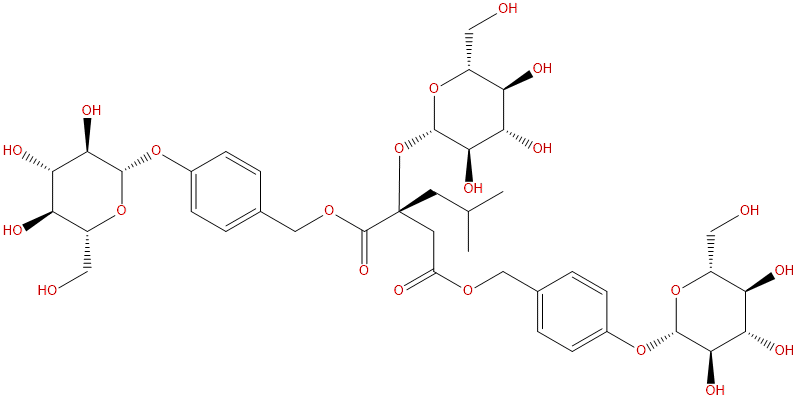
The chemical structure of Dactylorhin A belongs to the succinate derivative esters. Its molecular formula is C ₄₂ H ₅₆ O ₂, with a molecular weight of 888.8660 Da. The core structural feature of this compound is that it is composed of a succinic acid (succinic acid) unit connected to two glycosylated (possibly glucose or other hexose) aromatic alcohol or phenolic ligands through ester bonds, forming a symmetrical or asymmetrical polyester structure. This structure is relatively unique in natural products, endowing it with specific spatial conformation and physicochemical properties.
From the analysis of physicochemical parameters related to drug properties, Dactylorhin A exhibits typical polar molecular characteristics. The LogP value of the compound is -0.1600, indicating strong hydrophilicity and weak hydrophobicity. The topologically polar surface area (TPSA) is as high as 350.7400 Å ², which is closely related to the presence of multiple hydroxyl, ester, and potential sugar ring structures in its molecule, which are the main sources of hydrogen bond donors and acceptors. The high TPSA and negative LogP values together determine its good water solubility, with a calculated value of approximately 4.3445 mg/mL, which is beneficial for its dissolution and distribution in organisms.
However, these polar features also pose challenges to its ability to cross biological barriers. Especially, its high polarity leads to a predicted "low" level of blood-brain barrier (BBB) permeability. The blood-brain barrier is a key structure that protects the central nervous system, but for drugs used to treat central nervous system diseases such as AD, sufficient brain exposure is a prerequisite for effective treatment. Therefore, the brain permeability of Dactylorhin A is a key property that needs to be considered and possibly optimized for its development as a neuroprotective drug.
In the preliminary toxicity risk screening, Dactylorhin A showed good safety potential. The risk of hERG inhibition is' no ', indicating that the compound may not significantly block the rapid delayed rectifier potassium current in the heart at conventional concentrations, reducing the risk of cardiac toxicity in inducing acquired long QT syndrome and apical torsion ventricular tachycardia. In addition, the Ames test result was 0.0, which preliminarily indicates that there is no mutagenicity in this testing system and the risk of genetic toxicity is low. These data provide preliminary security support for the further development of Dactylorhin A.
Plant sources and extraction methods
Dactylorhin A is mainly derived from the genus Panax in the Orchidaceae family(Gymnadenia conopsea Dried tubers of (L.) R. Br. Hand ginseng is widely distributed in temperate and cold temperate regions of Europe and Asia, and is mainly found in high-altitude mountainous areas in Northeast, North, Northwest, and Southwest China. Its tubers are fleshy and resemble the shape of a palm, hence the name "Hand Ginseng", which is often used as a nourishing and strengthening medicine in folk medicine.
The extraction and separation of Dactylorhin A from plant materials usually follow the conventional process of natural product chemistry, but corresponding adjustments need to be made for its highly polar characteristics. The general steps are as follows:
-
Extract After crushing the dried ginseng roots and stems, extraction is usually carried out using a medium polarity organic solvent. In order to fully extract polar components including Dactylorhin A, methanol, ethanol, or different proportions of ethanol water mixed solvents (such as 70% -95% ethanol) are often used for reflux extraction or room temperature immersion extraction. Sometimes ultrasound assisted extraction is also used to improve efficiency and yield.
-
Coarse separation The extract is concentrated under reduced pressure to obtain a paste. Due to the complex composition of the extract, solvent partitioning is often used for preliminary separation. Due to the strong hydrophilicity of Dactylorhin A, it is mainly enriched in the aqueous layer or n-butanol extraction layer. The system solvent extraction method is commonly used, sequentially extracting with petroleum ether, ethyl acetate, n-butanol, and water. Dactylorhin A is mainly distributed in the n-butanol fraction due to its structural characteristics.
-
Fine separation and purification After concentration, the n-butanol fraction needs to be further separated using various chromatographic techniques. Silica gel column chromatography is commonly used for preliminary fractionation using gradient elution systems such as chloroform methanol water. Subsequently, reverse phase chromatography techniques (such as ODS/C18 column chromatography) were used to purify the fraction containing Dactylorhin A, with methanol water or acetonitrile water systems as the eluent. High performance liquid chromatography (HPLC), especially preparative HPLC, is a key step in obtaining high-purity Dactylorhin A. It typically uses a reverse phase C18 column to achieve separation from structurally similar compounds by optimizing the mobile phase ratio and flow rate.
-
appraisal The isolated pure compound needs to be structurally identified through spectroscopic methods. Including mass spectrometry (MS) to determine molecular weight and formula, nuclear magnetic resonance hydrogen spectroscopy (¹ H NMR), carbon spectroscopy (¹ ³ C NMR), and two-dimensional nuclear magnetic resonance techniques (such as HSQC, HMBC, COSY, etc.) are used to analyze its planar and relative stereo structure. Finally, its structure was confirmed through comparison with literature data or X-ray single crystal diffraction analysis.
Pharmacological activity research
The pharmacological activity research of Dactylolin A is currently in its early stages, but it has shown potential in two important fields: anti-inflammatory and neuroprotective.
-
anti-inflammatory activity:
The most direct evidence comes from its intervention effect on macrophage inflammation models. In the RAW 264.7 model of mouse monocytic macrophage leukemia cells induced by lipopolysaccharide (LPS), Dactylorhin A exhibited a moderate inhibitory effect on the inflammatory mediator nitric oxide (NO) produced by LPS stimulation. NO is an important biomarker for macrophage activation, which is overproduced during inflammation and participates in various pathological processes such as neurotoxicity and abnormal vasodilation. This inhibitory effect suggests that Dactylorhin A may exert anti-inflammatory effects by regulating the activation status of macrophages. Although the specific concentration effect relationship and its impact on other inflammatory factors (such as TNF - α, IL-1 β, IL-6, PGE2, etc.) need further investigation, this result provides a basis for explaining its possible multi-target neuroprotective effects in the inflammatory pathway.
-
Neuroprotective and Anti Alzheimer's Disease Potential:
This is currently the most attractive research direction for Dactylorhin A. Although direct cell or animal model data is still lacking, based on its structural characteristics and preliminary activity, combined with computational biology predictions such as network pharmacology and molecular docking, researchers have linked it to multiple key pathological stages of AD. Its potential neuroprotective effects may be reflected in the following aspects:
- Inhibit A β - related toxicity One of the core pathological features of AD is the abnormal aggregation of A β peptides in the brain, forming senile plaques. Dactylorhin A may reduce the production of A β by potentially affecting the processing of amyloid precursor protein (APP) or directly inhibiting the activity of β - secretase 1 (BACE1).
- Anti neuronal apoptosis Neuronal loss is the structural basis of cognitive decline in Alzheimer's disease. This compound may inhibit neuronal apoptosis induced by A β, oxidative stress, etc. by upregulating the expression of anti apoptotic proteins Bcl-2 and Mcl-1, or affecting related signaling pathways.
- Regulating neuroinflammation As mentioned earlier, its ability to resist macrophage activation suggests that it may alleviate the persistent neuroinflammation mediated by microglia and astrocytes in the AD brain, thereby reducing inflammation related neuronal damage.
- Affects other pathological pathways It may also involve regulating the energy metabolism sensor AMPK, affecting apolipoprotein mediated cholesterol metabolism (ABCA1), regulating the Notch signaling pathway, and tryptophan metabolism (IDO1), all of which are closely related to the occurrence and development of AD.
It should be pointed out that most of the above activities are still based on target association predictions, and it is urgent to verify them in experimental systems such as A β - induced neuronal injury cell models and transgenic AD mouse models to clarify their exact neuroprotective effects in vitro and in vivo.
Mechanism of action and molecular targets
The mechanism of action of Dactylolin A is still under exploration, and its multi-target properties are considered advantageous for intervening in complex diseases such as AD. Based on existing information, its potential mechanism of action may be achieved by intervening in the following key targets and pathways:
-
AMPK (PRKAA1) pathway AMPK is a core regulatory factor in cellular energy metabolism. In AD, AMPK activation can regulate autophagy, reduce A β production, and Tau phosphorylation, but excessive or sustained activation may also be harmful. How Dactylorhin A precisely regulates AMPK activity may play a decisive role in determining the direction of its neuroprotective effects.
-
Apoptosis regulatory targets (MCL1, BCL2)Mcl-1 and Bcl-2 are important anti apoptotic proteins. Dactylorhin A may inhibit the intrinsic apoptotic pathway of neurons by upregulating the expression or enhancing the function of these proteins, stabilizing mitochondrial outer membrane permeability, and preventing the release of cytochrome C.
-
Notch1 signaling pathway Notch signaling is crucial in neural development, synaptic plasticity, and glial cell function. In AD, Notch signal dysregulation may be associated with cognitive impairment and neuroinflammation. Regulating Notch1 may become a mechanism by which Dactylorhin A affects neuronal fate and inflammatory response.
-
Cholesterol metabolism and transport targets (ABCA1)ABCA1 mediates the efflux of cholesterol and phospholipids from cells to apolipoprotein A-I, affecting high-density lipoprotein formation and A β clearance in the brain. Upregulation of ABCA1 expression may promote the clearance of A β, which is a potential strategy for AD treatment.
-
Retinoic acid receptor alpha (RARA)Retinoic acid signaling plays an important role in neural development, learning and memory, and is associated with AD pathology. Through RARA mediated transcriptional regulation, it may affect neural plasticity, inflammatory response, and A β metabolism.
-
Immune and inflammatory related targets (IDO1, TLR4):
- IDO1 It is the rate limiting enzyme for tryptophan metabolism along the kynurenine pathway in dogs, and its products have neurotoxicity. Inhibition of IDO1 can reduce the accumulation of neurotoxic metabolites and may regulate immune tolerance.
- TLR4 TLR4 is a key pattern recognition receptor that recognizes damage related molecular patterns such as A β, and its activation drives neuroinflammation. Inhibition of TLR4 signaling may be one of the mechanisms by which Dactylorhin A exerts anti-inflammatory effects and reduces A β toxicity.
-
Core pathological targets of AD (APP, BACE1):
- APP As a precursor of A β, the balance of its metabolic pathway is crucial.
- BACE1 It is a key rate limiting enzyme for generating A β and a popular target for AD drug development. Whether and how Dactylorhin A inhibits BACE1 activity is key to verifying its hypothesis of reducing A β production.
In summary, Dactylorhin A may exert its effects through a multi-target network, while regulating multiple AD related pathological processes such as neuroinflammation, neuronal apoptosis, A β metabolism, and cellular energy homeostasis. This multi-channel collaborative intervention strategy may have advantages over single target drugs for multifactorial diseases such as AD. However, all of these mechanistic hypotheses require subsequent extensive biochemical, cellular, and molecular biology experiments to confirm and refine.
Evaluation of drug properties and pharmacokinetics
Based on known physicochemical parameters and preliminary toxicity data, a preliminary evaluation of the pharmacological properties of Dactyloronin A can be conducted, and the key directions for future pharmacokinetic research can be identified.
Pharmaceutical advantages:
1. Good water solubility A water solubility of approximately 4.34 mg/mL is beneficial for making formulations such as injections or oral liquids, ensuring sufficient solubility in the gastrointestinal tract or blood circulation, which is one of the prerequisites for oral absorption.
2. Lower initial toxicity risk The absence of hERG inhibition warning and negative Ames test results has opened a good start for its safety assessment, reducing the risk of cardiac toxicity and genetic toxicity in early development.
3. Natural product sources As a component of plant extracts, its chemical structure has undergone natural evolutionary screening and usually has good biocompatibility.
Challenges and research questions in drug development:
1. Poor blood-brain barrier permeability This is the biggest challenge facing the development of Dactylorhin A as a central nervous system drug. The high TPSA (>350 Å ²) and low LogP (negative value) are the main reasons for the predicted "low" BBB permeability. Drugs must effectively enter brain tissue in order to directly target AD pathological targets. Therefore, how to increase its brain exposure is the core topic of future pharmaceutical or structural modification research. The strategy may include developing nano drug delivery systems (such as liposomes, polymer nanoparticles), designing prodrugs (increasing lipid solubility, enzymatic interpretation of radiopharmaceuticals in the brain), or combining with BBB penetration enhancers.
2. Oral bioavailability unknown Although it has good water solubility, oral administration requires a complex process of absorption, distribution, metabolism, and excretion. Its high polarity may lead to poor intestinal permeability; The ester and glycosidic bonds in the molecule may be easily hydrolyzed or metabolized in the gastrointestinal tract or liver, resulting in a lower proportion of the original drug entering the systemic circulation (absolute bioavailability). A systematic oral pharmacokinetic study is required.
3. Metabolic stability As an ester compound, Dactylorhin A may be rapidly hydrolyzed by esterases in blood and tissues, resulting in a short half-life and requiring frequent administration. The metabolic stability needs to be evaluated in systems such as liver microsomes and plasma.
4. Protein binding rate The degree of binding between drugs and plasma proteins affects their free concentration, distribution volume, and clearance rate, and there is currently no data available.
5. Pharmacodynamic validation in vivo All in vitro activities and target predictions ultimately need to be validated on AD animal models (such as APP/PS1 transgenic mice) to improve cognitive function, reduce pathological plaques, alleviate neuroinflammation, and establish the relationship between in vivo exposure and efficacy (PK/PD model).
Prospects of Pharmacokinetic Research:
In the future, systematic preclinical pharmacokinetic studies are needed, including: ① studying the drug time curves of intravenous and oral administration in different animal species (rats, mice), calculating key parameters such as AUC, Cmax, Tmax, t1/2, clearance rate, distribution volume, and absolute bioavailability; ② Study its organizational distribution, especially the concentration in brain tissue; ③ Conduct quality balance research to identify its main metabolites and excretion pathways; ④ Examine its potential for interaction with common CYP450 enzymes. These data will comprehensively evaluate its pharmacological properties and guide subsequent formulation development and dosage regimen design.
Clinical application prospects and prospects
Dactylorhin A, as a natural product with multi-target intervention potential for AD, has promising clinical application prospects but also faces many obstacles that need to be overcome.
Potential application directions:
1. Prevention or treatment of Alzheimer's disease This is the most core application direction. If its multi-target neuroprotective effect is confirmed in an in vivo model, it may be developed as a drug for early intervention or adjuvant therapy of AD. Its comprehensive effects of anti-inflammatory, anti apoptotic, and potential anti A β production may help delay disease progression and improve patients' cognitive function.
2. Neuroinflammatory related diseases Based on its inhibitory effect on macrophage NO production, Dactylolin A may also have application value in other diseases characterized by neuroinflammation, such as Parkinson's disease, multiple sclerosis, cerebral ischemia-reperfusion injury, etc.
3. As a lead compound for structural optimization Even if it is difficult to become a drug due to poor BBB permeability or pharmacokinetic properties, its unique succinate dimer chemical structure can serve as a valuable lead compound. Through medicinal chemical modifications such as simplifying structures, introducing lipophilic groups, preparing prodrugs, etc., it is expected to significantly improve drug properties while retaining or enhancing their pharmacological activity, thereby developing more promising candidate drugs.
challenges faced:
1. Brain delivery efficiency As mentioned earlier, low BBB permeability is the primary technical bottleneck. Developing an efficient brain targeted delivery system is the key to pushing it into clinical practice.
2. The mechanism of action is unclear Currently, most of the targets and pathways are based on computational predictions, lacking direct molecular and cellular level experimental evidence. Further mechanism research is needed to clarify its primary target and key signaling pathways.
3. Lack of in vivo efficacy verification It is urgent to conduct systematic behavioral and histopathological pharmacological evaluations in recognized AD animal models, as this is the cornerstone of demonstrating its therapeutic value.
4. Comprehensive preclinical safety evaluation In addition to preliminary hERG and Ames tests, a complete safety evaluation of acute toxicity, long-term toxicity, reproductive toxicity, carcinogenicity, etc. under GLP regulations is also required.
5. Raw material sources and synthesis The extraction and isolation yield from plants is limited, making it difficult to meet the needs of large-scale research and production. Therefore, it is necessary to develop its fully synthetic or semi synthetic routes to achieve stable and sustainable supply.
Future Prospects:
Future research should steadily advance along the path of "activity validation mechanism elucidation drug efficacy optimization preclinical evaluation". Firstly, its neuroprotective and cognitive improvement effects should be confirmed in various AD related cell and animal models. Secondly, by comprehensively utilizing technologies such as chemical biology, proteomics, gene editing, etc., the exact targets and molecular networks of its action are elucidated. At the same time, experts in medicinal chemistry and pharmacy should intervene to optimize the structure or develop new formulations targeting the BBB permeability and pharmacokinetic shortcomings. Only through interdisciplinary collaboration can Dactylorhin A be truly promoted from a potential natural compound to a new drug candidate with clinical application value. In addition, exploring its potential for combination therapy with other marketed AD drugs is also a strategy worth considering.
Conclusion
Dactylorhin A, as a unique succinic acid derivative ester derived from the traditional medicinal plant ginseng, has become a noteworthy research object in the field of natural product neuropharmacology due to its preliminary anti-inflammatory activity and potential association with multiple key pathological targets of Alzheimer's disease. Its chemical structure is clear, with high polarity, good water solubility, and low initial toxicity risk, but it also faces the main challenge of poor blood-brain barrier permeability in the development of central nervous system drugs.
The current research is still in its early stages, and its broad pharmacological activity, especially the potential for multi-target intervention in the complex pathological network of AD, is mostly based on computational predictions and limited in vitro experiments. It urgently needs to be rigorously validated in in in vivo and in vitro models that are closer to the disease state. The ambiguity of the mechanism of action is another core issue, and in the future, it is necessary to reveal in depth how it regulates key pathways such as AMPK, apoptotic proteins, inflammatory signaling, and A β metabolism from the molecular, cellular, and overall animal levels.
Despite the challenges ahead, including brain delivery bottlenecks, mechanism elucidation, in vivo efficacy confirmation, and comprehensive drug efficacy optimization, the strategy represented by Dactylorhin A to search for multi-target neuroprotective agents from natural products provides new ideas and chemical entities for addressing the unmet clinical need of Alzheimer's disease. Through continuous interdisciplinary efforts, in-depth exploration of it may not only generate new drug candidates, but also enhance our understanding of the scientific connotation of natural products in the prevention and treatment of neurodegenerative diseases.