


Product name: Alpha-Solanine
Synonym name: Alpha-Solanin; Solatunine
Catalogue No.: BP0156
Cas No.: 20562-02-1
Formula: C45H73NO15
Mol Weight: 868.071
Botanical Source: Alkaloid from potato (Solanum tuberosum) and very many other Solanum spp. (Solanaceae)
Purity: 95%~99%
Analysis Method: HPLC-DAD or/and HPLC-ELSD
Identification Method: Mass, NMR
Packing: Brown vial or HDPE plastic bottle
Can be supplied from milligrams to grams.
For Reference Standard and R&D, Not for Human Use Directly.
Inquire for bulk scale.
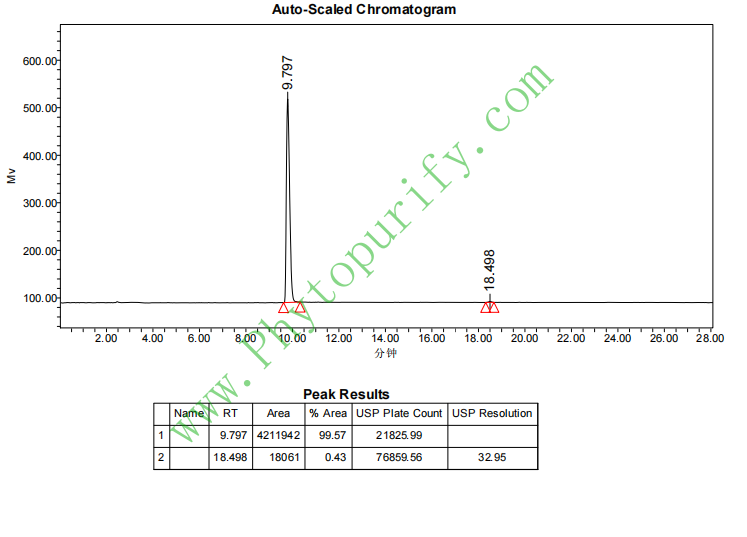
HPLC of Alpha-Solanine
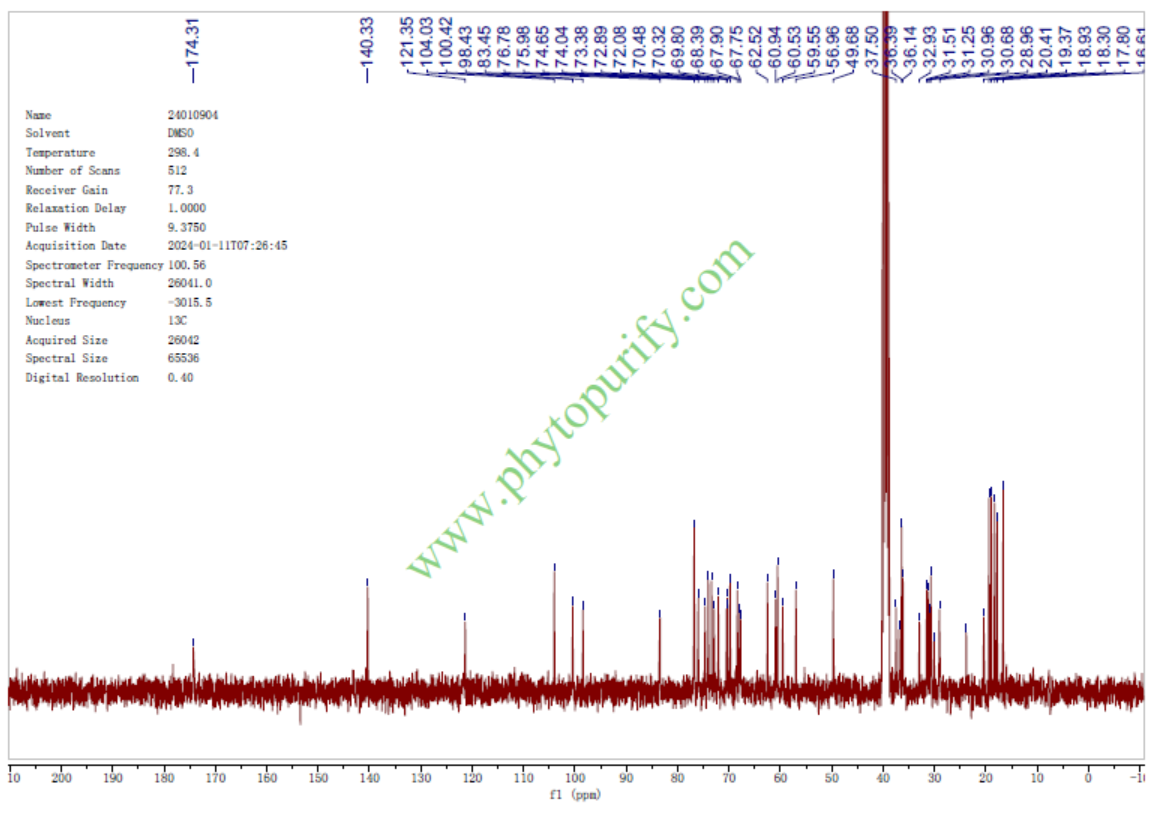
NMR of Alpha-Solanine
Storage conditions:Short-term storage at 2~8℃, long-term storage at -20 ~ -80℃
278.4000
1.0000
No
No
Unknown
Unknown
Yes
No
Positive
Alpha Solanine is a natural glycosaminoglycan alkaloid mainly found in Solanaceae plants, especially potatoes(Solanum tuberosum)In the stems, leaves, and immature tubers. As a trisaccharide derivative of solanine, solanine not only plays an important role in plant defense mechanisms, but also has become a hot topic in natural product pharmacology research due to its significant biological activity. In recent years, solanine has gradually attracted attention as a potential candidate molecule for anti-cancer and metabolic disease treatment due to its multiple pharmacological effects such as anti-tumor, apoptosis induction, and regulation of oxidative stress. In addition, the role of solanine in regulating lipid metabolism and antioxidant enzyme activity suggests its potential application in metabolic diseases such as hyperlipidemia.
This article will provide a systematic review of the chemical structure and physicochemical properties, plant sources, and extraction methods of solanine, with a focus on analyzing its pharmacological activity and mechanism of action. Combining molecular targets, it will explore its pharmacological properties and pharmacokinetic characteristics, and finally look forward to its clinical application prospects, providing theoretical basis and reference for subsequent research and development.
Longkuisu (CAS number: 20562-02-1) is a glycosylated alkaloid with the molecular formula C45H73NO15 and a molecular weight of 852.06. Its structural core is the steroid saponin skeleton, which belongs to organic heterocyclic compounds with three sugar groups (usually glucose, galactose, and xylose) attached, making it highly polar and water-soluble. The LogP value of solanine is approximately 1.0, indicating a balance between its lipophilicity and hydrophilicity. However, its large polar surface area (TPSA of approximately 278.4 Å ²) and the number of hydrogen bond receptors (15) limit its ability to penetrate cell membranes and the blood-brain barrier.
From a chemical perspective, solanine has high stability, but under strong acid or alkali conditions, glycosidic bonds are easily hydrolyzed, releasing solanine mother nuclei. The steroid skeleton in its structure endows it with the potential to bind to various biomolecules, while the glycosyl portion affects its biological distribution and metabolic pathways. The cardiac toxicity of solanine is significant, with an LD50 of approximately 10 mg/kg, indicating caution in dose control and safety assessment.
Longkuisu is mainly distributed in Solanaceae plants, especially in the bud eyes, green parts, and immature tubers of potatoes, where its content is relatively high. Except for potatoes, night eggplant(Solanum nigrum)Eggplant(Solanum melongena)Plants also contain a certain amount of solanine. The content of solanine in plants is significantly affected by variety, maturity, environmental conditions, and storage methods.
Traditional extraction methods often use polar solvents (such as methanol, ethanol, water mixed solutions) to extract plant dry powder, followed by enrichment and purification through liquid-liquid distribution, column chromatography, and other methods. In recent years, the combination of ultrasound assisted extraction, microwave-assisted extraction, and high-performance liquid chromatography (HPLC) technology has improved extraction efficiency and purity. During the extraction process, attention should be paid to avoiding high temperature and strong acid-base conditions to prevent hydrolysis of glycosidic bonds and degradation of solanine.
Purified solanine is usually subjected to structural identification and content determination by mass spectrometry (MS), nuclear magnetic resonance (NMR), and infrared spectroscopy (IR) to ensure its chemical purity and biological activity.
Longkuisu exhibits significant inhibitory effects on proliferation in various tumor cell lines. Research has shown that solanine has concentration dependent cytotoxicity against liver cancer cells (such as HepG2), melanoma cells, and colon cancer cells. Its anti-tumor mechanism is mainly achieved by inducing cell apoptosis, blocking the cell cycle, and inhibiting tumor cell migration and invasion. The induction of cell apoptosis involves activation of the mitochondrial pathway, activation of caspase family proteins, and regulation of Bcl-2 family protein expression. In addition, solanine can exert anti-inflammatory and anti-tumor synergistic effects by inhibiting the NF - κ B signaling pathway and regulating the MAPK pathway.
Longkuisu can significantly alter the activity of antioxidant enzymes in the fat body and midgut, including glutathione S-transferase (GST), superoxide dismutase (SOD), and catalase (CAT). At the same time, solanine reduces the concentration of lipid peroxidation products malondialdehyde (MDA) and protein carbonyl (PCO), alleviates oxidative damage, indicating its important role in the antioxidant defense system. These effects not only help protect cells from oxidative stress damage, but also provide a molecular basis for their anti-tumor and anti-inflammatory activities.
In the model of hyperlipidemia, solanine significantly reduces serum cholesterol and triglyceride levels by regulating lipid metabolism related targets such as PTPN1, STAT3, NR1H4, etc. At the same time, solanine regulates the NFE2L2 (nuclear factor erythroid 2-related factor 2) signaling pathway, enhances cellular antioxidant capacity, and reduces oxidative stress and inflammatory reactions caused by lipid metabolism disorders.
The pharmacological effects of solanine involve multiple molecular targets and signaling pathways, reflecting its multi-target and multi mechanism characteristics.
PTPN1 (protein tyrosine phosphatase 1B)As a key enzyme that negatively regulates the insulin signaling pathway, inhibition of PTPN1 helps improve insulin resistance and lipid metabolism disorders. Longkuisu promotes lipid metabolism balance by regulating PTPN1 activity.
STAT3 (Signal Transduction and Transcription Activation Factor 3)STAT3 plays a central role in tumor cell proliferation, survival, and immune escape. Longkuisu inhibits STAT3 phosphorylation, blocks its transcriptional activity, and induces tumor cell apoptosis.
ABCB1 (ATP binding cassette transporter B1)As a multidrug resistance associated protein, inhibition of ABCB1 helps enhance the sensitivity of tumor cells to chemotherapy drugs. Longkuisu may reverse tumor drug resistance by inhibiting ABCB1 expression.
IDH1 (isocitrate dehydrogenase 1)IDH1 mutations are associated with multiple tumor metabolic reprogramming. The regulatory effect of solanine on IDH1 suggests its potential in tumor metabolism intervention.
NFE2L2 (nuclear factor erythroid 2 related factor 2)NFE2L2 is the main regulator of cellular antioxidant stress. Longkuisu activates the NFE2L2 signaling pathway, enhances antioxidant enzyme expression, and reduces oxidative damage.
TOP1 (Topoisomerase I)TOP1 is involved in DNA replication and transcription, and inhibiting TOP1 helps to block tumor cell proliferation. The effect of solanine on TOP1 may be one of its anti-tumor mechanisms.
HIF1A (hypoxia inducible factor 1 alpha)HIF1A regulates the hypoxic microenvironment and metabolic adaptation of tumors. Longkuisu inhibits tumor growth and angiogenesis by regulating HIF1A expression.
HSD11B1 (11 β - hydroxysteroid dehydrogenase type 1)Regulating glucocorticoid activity and affecting metabolic balance. The regulation of HSD11B1 by solanine can help improve metabolic syndrome.
NR1H4 (farnesol X receptor, FXR)Participate in bile acid metabolism and lipid homeostasis. Longkuisu activates NR1H4, which helps regulate lipid metabolism and inflammatory response.
SIRT1 (silencing information regulatory factor 2 related enzyme 1)SIRT1 regulates cellular metabolism, stress response, and lifespan. Longkuisu promotes cellular metabolism regulation and anti-inflammatory effects by activating SIRT1.
In summary, solanine exhibits a wide range of pharmacological activities by synergistically regulating cellular metabolism, apoptosis, and antioxidant mechanisms through multiple targets.
The pharmacological evaluation of Longkuisu shows that it has certain challenges. The high molecular weight (852 Da) and high polarity (TPSA 278.4 Å ²) limit its oral bioavailability and cell membrane permeability. Its LogP is 1.0, indicating moderate lipid solubility, but the high number of hydrogen bond receptors may reduce its membrane penetration ability. Longkuisu is not easily able to pass through the blood-brain barrier, which limits its application in central nervous system diseases.
In terms of toxicity, the LD50 of Longkuisu is about 10 mg/kg, indicating high acute toxicity and a risk of cardiac toxicity. It is necessary to be alert to its potential cardiovascular adverse reactions. A positive Ames test suggests that it may have genotoxicity, and further safety assessment and structural optimization are necessary. The hepatotoxicity and hERG inhibitory effects are not yet clear, and more in vitro and in vivo toxicological studies are needed.
In terms of pharmacokinetics, the metabolism of solanine in vivo is relatively complex, mainly through the liver enzyme system, and the hydrolysis of glycosidic bonds is one of its metabolic pathways. Its lower plasma half-life and limited tissue distribution affect its sustained efficacy. To enhance its drug efficacy, strategies such as nanocarriers, liposome encapsulation, and structural modification are being explored.
Although solanine has shown good anti-tumor and metabolic regulatory activities in vitro and animal models, its clinical application still faces many challenges. Firstly, toxicity issues limit its dosage range and administration method, requiring structural optimization to reduce cardiac toxicity and genotoxicity. Secondly, low oral bioavailability and adverse pharmacokinetic characteristics require the development of novel drug delivery systems to improve their in vivo distribution and stability.
Future research should focus on:
Structural modification and drug design Reduce toxicity, improve membrane permeability and metabolic stability, and enhance efficacy and safety through chemical modification.
Drug delivery system development Using nanotechnology, liposomes, and polymer carriers to achieve targeted delivery and reduce systemic toxic side effects.
In depth analysis of the mechanism Combining multiple omics techniques, further elucidate the molecular network and signaling pathways of the action of solanine, and discover potential synergistic targets.
Preclinical and clinical research Conduct systematic toxicological evaluation and dose optimization to promote the clinical trial phase of solanine and its derivatives.
Combination therapy strategy Explore the combination application of solanine with existing chemotherapy drugs or metabolic modulators to enhance efficacy and reduce the risk of drug resistance.
In summary, as a multifunctional natural product, solanine has broad potential for drug development, but it needs to overcome safety and pharmacokinetic limitations in order to achieve clinical translation.
As an important glycosaminoglycan alkaloid in Solanaceae plants, solanine exhibits rich pharmacological activity, especially in the fields of anti-tumor and metabolic diseases, with significant potential. Its multi-target mechanism of action and ability to regulate cell apoptosis and oxidative stress provide valuable examples for the pharmacological research of natural products. However, the high toxicity and unsatisfactory pharmacokinetic properties of solanine limit its direct clinical application.
In the future, combining modern medicinal chemistry and drug delivery technology, in-depth analysis of its molecular mechanism, optimization of structure and administration methods will help overcome existing bottlenecks and promote the development of solanine towards a safe and efficient drug direction. As an important research object in natural product pharmacology, the study of solanine not only enriches the natural product drug library, but also provides innovative ideas and theoretical support for new drug development.
